


Buying a used car without checking its history can lead to expensive mistakes. This guide explains how car reports work, what information they show, and how buyers can use VIN checks, auction history, and title records to avoid hidden problems. Learn how to spot red flags, compare reports correctly, and make smarter used car buying decisions while staying within budget.
What Is a Car Report?
Buying a used car without checking its history can be risky, especially when shopping online or at auto auctions. A vehicle may look clean in photos but still have hidden problems like accident damage, flood history, odometer fraud, or title issues.
That is why car reports are so important. They help buyers understand a vehicle’s past before spending money. For budget-conscious shoppers, a good vehicle history report can prevent expensive mistakes and help identify better long-term value.
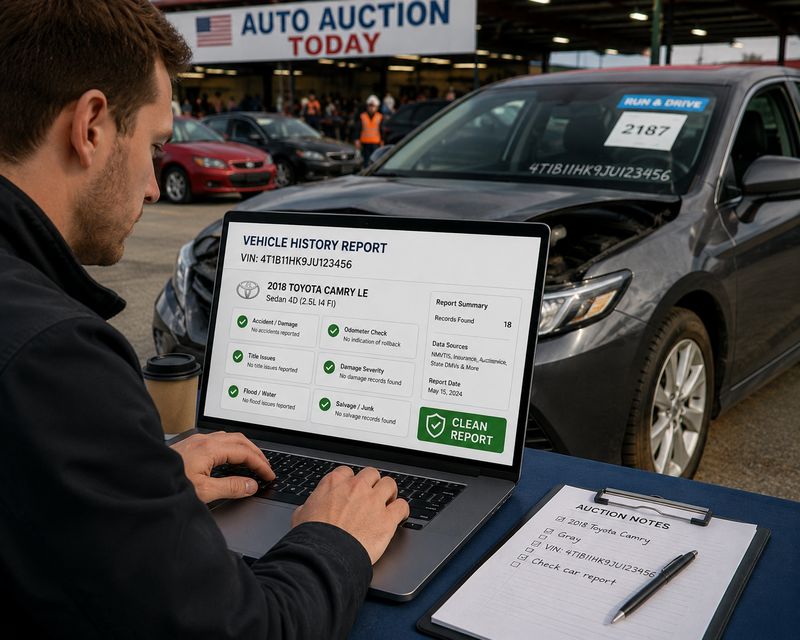
Definition of a Vehicle History Report
A vehicle history report, often called a car report, is a document that contains important information about a vehicle’s past.
The report is usually created using the vehicle’s VIN (Vehicle Identification Number) and gathers data from multiple sources such as:
- Insurance companies
- DMV records
- Auto auctions
- Service shops
- Police reports
- Dealerships
- Registration agencies
A typical car report may include:
- Accident history
- Title information
- Mileage records
- Previous owners
- Service history
- Auction sales records
- Flood or salvage history
- Recall information
For example, a used SUV may appear clean at first glance, but the report could show previous flood damage or repeated auction sales that raise concerns.
Vehicle history reports help buyers make more informed decisions before purchasing a used car.
Why Car Reports Matter for Used Car Buyers
Used cars always carry some level of risk because buyers usually do not know how previous owners treated the vehicle.
A car report helps reduce that uncertainty.
It allows buyers to identify possible warning signs before purchasing, including:
- Major accidents
- Odometer rollbacks
- Salvage titles
- Flood damage
- Airbag deployment
- Frequent ownership changes
For example, a low-priced hybrid SUV may seem like a great deal until the report reveals severe collision damage and multiple insurance claims.
Without a vehicle report, buyers may discover expensive problems only after purchase.
This is especially important in today’s market where many vehicles move quickly through online auctions and dealership inventory.
A few minutes spent reviewing a report can save thousands of dollars later.
How Car Reports Help Budget Buyers Avoid Expensive Mistakes
Budget-conscious buyers often focus heavily on price, but the cheapest vehicle is not always the smartest purchase.
A vehicle with hidden problems can quickly become far more expensive than expected.
Car reports help buyers avoid mistakes such as:
- Purchasing flood-damaged vehicles
- Buying cars with rolled-back mileage
- Overpaying for poorly repaired vehicles
- Missing salvage or rebuilt title history
- Ignoring repeated auction sales
For example, imagine a buyer finds a Toyota Corolla listed well below market price. The vehicle looks clean in photos, but the history report later shows structural damage from a major accident.
Without checking the report, the buyer could easily end up with expensive repair bills and weak resale value.
For people shopping on limited budgets, avoiding one major mistake can save far more money than trying to find the absolute cheapest vehicle available.
Vehicle History Report vs Vehicle Inspection
Many buyers mistakenly believe a vehicle history report replaces a mechanical inspection. In reality, they serve completely different purposes.
A vehicle history report shows documented past events, while an inspection evaluates the vehicle’s current physical condition.
A history report may reveal:
- Accident records
- Title branding
- Ownership history
- Mileage records
- Previous auction sales
A mechanical inspection may reveal:
- Engine problems
- Transmission issues
- Suspension wear
- Fluid leaks
- Brake condition
- Poor repair quality
For example, a car report may show no accident history, but a mechanic could still find severe engine problems during inspection.
At the same time, a vehicle may drive perfectly but still carry hidden salvage history that reduces resale value.
Smart buyers use both tools together.
The report helps identify past risks, while the inspection helps evaluate the vehicle’s current condition.
Vehicle History Report vs CARFAX
Many people use the term “CARFAX” when talking about any vehicle history report, but CARFAX is actually just one company that provides vehicle history services.
Other providers include:
- AutoCheck
- NMVTIS reports
- Auction-based history services
- Insurance reporting databases
CARFAX is one of the most recognized brands because it collects large amounts of data from dealerships, service centers, insurance companies, and registration agencies.
However, no single report is perfect.
Different providers may contain slightly different information depending on where the data was collected.
For example:
- One report may show auction photos
- Another may show additional service history
- Some reports may update faster than others
That is why experienced buyers sometimes compare multiple report sources before purchasing expensive vehicles.
The important point is not just using CARFAX specifically, but checking reliable vehicle history information before buying any used car.
Why Auction Buyers Should Always Check a Car Report
Checking a car report becomes even more important when buying from online auto auctions.
Auction vehicles are often sold quickly, and buyers may not have the opportunity to inspect them in person before bidding.
A vehicle history report helps auction buyers identify important risks before committing money.
This includes:
- Salvage title history
- Flood damage
- Previous accident severity
- Airbag deployment
- Odometer inconsistencies
- Previous auction sales
- Insurance total loss records
For example, a vehicle listed as “Run and Drive” may still have major structural damage hidden in its history.
Auction reports can also reveal if a vehicle failed to sell multiple times previously, which may suggest hidden problems or overpriced expectations.
At BidNDrive, many buyers use vehicle reports to compare auction inventory and reduce the risk of purchasing problematic vehicles.
What Information Is Included in a Car Report?
A car report contains much more than just accident history. Modern vehicle history reports collect information from many different databases to help buyers understand a vehicle’s past before making a purchase.
For budget-conscious buyers, this information can reveal expensive problems that are not visible in photos or seller descriptions. It can also help identify well-maintained vehicles with better long-term value.
The more information buyers review before purchasing, the lower the risk of unexpected repair bills or title problems later.
VIN and Vehicle Specifications
Every vehicle history report starts with the VIN, or Vehicle Identification Number.
The VIN is a unique 17-character code assigned to every vehicle. It works like a fingerprint for the car and allows databases to track the vehicle’s history over time.
The VIN helps identify:
- Vehicle manufacturer
- Production year
- Engine type
- Assembly plant
- Body style
- Safety equipment
Without the VIN, most vehicle history reports cannot be generated accurately.
Buyers should always verify that the VIN on the report matches the VIN displayed on the vehicle itself.
Year, Make, Model, and Trim Details
Car reports also confirm basic vehicle information such as:
- Year
- Make
- Model
- Trim package
This helps buyers verify that the vehicle is being advertised correctly.
For example, a seller may advertise a vehicle as a higher trim with premium features, but the report may reveal it is actually a lower trim level.
Trim details can affect:
- Vehicle value
- Insurance costs
- Feature availability
- Resale demand
This information is especially useful for buyers comparing similar vehicles at auctions.
Engine and Transmission Information
Many reports include details about the vehicle’s drivetrain configuration.
This may include:
- Engine size
- Fuel type
- Turbocharged or hybrid systems
- Transmission type
- Drive configuration
For example, the report may show whether a Toyota RAV4 is front-wheel drive or all-wheel drive.
This information matters because certain engines and transmissions may have stronger reliability reputations or higher resale value.
Buyers also use this information to estimate future maintenance and fuel costs.
Ownership History
Ownership history helps buyers understand how the vehicle was used throughout its life.
The report may show:
- Ownership dates
- Registration periods
- Ownership changes
- States where the vehicle was registered
Vehicles with stable ownership history often create more buyer confidence than vehicles that changed hands repeatedly.
A car owned by one family for several years may feel less risky than a vehicle transferred between multiple owners in a short time.
Number of Previous Owners
The number of previous owners can affect buyer confidence and resale value.
Generally, fewer owners may suggest:
- More stable ownership
- Better maintenance consistency
- Lower usage uncertainty
However, the number alone does not tell the full story.
For example:
- One careless owner may damage a vehicle severely
- Multiple careful owners may maintain a vehicle very well
Buyers should use owner history together with maintenance records and accident reports for a more complete picture.
Personal, Commercial, Rental, and Fleet Use
Vehicle usage type is another important part of many reports.
The report may indicate whether the vehicle was used as:
- Personal transportation
- Rental vehicle
- Commercial vehicle
- Fleet vehicle
- Taxi or ride-share vehicle
This matters because different usage types affect wear and tear differently.
For example, rental vehicles may experience frequent driver changes and aggressive driving habits.
Fleet vehicles often accumulate higher mileage quickly, but some receive consistent maintenance schedules.
Commercial vehicles may experience heavier daily use compared to privately owned cars.
Registration History by State
Vehicle reports often show where the car was registered throughout its life.
State registration history can reveal important clues about potential risks.
For example:
- Coastal states may increase rust exposure
- Flood-prone states may increase water damage risk
- Frequent state changes may sometimes indicate title washing attempts
Title laws also vary between states, which is why registration history can become important for identifying hidden title problems.
Buyers should pay extra attention when vehicles move repeatedly between multiple states in short periods.
Mileage and Odometer Records
Mileage records are one of the most important parts of a car report.
The report may show mileage updates from:
- DMV registrations
- Service visits
- Emissions inspections
- Auction sales
- Insurance claims
This helps buyers verify whether the odometer reading appears accurate.
Mileage consistency matters because odometer fraud still exists in the used vehicle market.
For example, if mileage suddenly decreases between records, that may indicate odometer rollback manipulation.
Buyers should carefully review mileage timelines for inconsistencies.
Accident and Damage History
Accident history is one of the main reasons buyers check vehicle reports.
The report may include:
- Collision records
- Damage severity
- Airbag deployment
- Insurance claim details
- Structural damage information
Not every accident automatically makes a vehicle a bad purchase.
Minor cosmetic damage may have little long-term impact, while severe structural collisions can significantly reduce safety and resale value.
Understanding accident severity is extremely important for auction buyers.
Insurance Claims and Reported Damage
Insurance records may reveal damage events even if the vehicle was repaired later.
This may include:
- Collision claims
- Storm damage claims
- Theft claims
- Total loss declarations
Insurance data helps buyers understand how serious previous damage may have been.
For example, repeated insurance claims could suggest a vehicle experienced ongoing problems or multiple accidents.
Flood, Fire, Hail, and Storm Damage
Environmental damage history can be extremely important.
Vehicle reports may identify:
- Flood exposure
- Fire damage
- Hail damage
- Storm-related insurance claims
Flood vehicles are especially risky because water can damage:
- Electronics
- Wiring systems
- Hybrid batteries
- Safety sensors
Fire damage can also create major long-term reliability issues even if repairs appear cosmetic.
Buyers should inspect these vehicles very carefully before purchasing.
Structural and Frame Damage
Structural damage is one of the most serious warning signs in a vehicle report.
Frame damage can affect:
- Crash safety
- Suspension alignment
- Tire wear
- Long-term durability
Some vehicles may drive normally after repairs but still carry reduced resale value because of structural history.
Auction buyers often avoid heavily damaged frame vehicles unless repair costs are extremely low.
Salvage and Rebuilt Title Information
Title branding information is critical when evaluating used vehicles.
Reports may show titles such as:
- Clean title
- Salvage title
- Rebuilt title
- Flood title
- Lemon title
A salvage title usually means the insurance company declared the vehicle a total loss at some point.
A rebuilt title means the vehicle was repaired and returned to the road legally.
These titles often reduce resale value but may create lower purchase prices for budget buyers willing to accept additional risks.
Theft Records and Recovery History
Vehicle reports may also show theft history.
This includes:
- Theft reports
- Recovery status
- Insurance theft claims
Recovered theft vehicles can vary greatly in condition.
Some may have only minor cosmetic damage, while others may suffer from stripped interiors, missing parts, or hidden electrical problems.
Buyers should inspect recovered theft vehicles carefully before purchase.
Open Recalls and Safety Issues
Many reports also include manufacturer recall information.
This helps buyers identify unresolved safety problems such as:
- Airbag defects
- Brake system recalls
- Engine fire risks
- Steering issues
Open recalls are usually repaired free by authorized dealerships, but buyers should still verify whether recall repairs were completed.
Service and Maintenance Records
Maintenance history helps buyers understand how well the vehicle was cared for.
Reports may show:
- Oil changes
- Brake service
- Tire replacements
- Transmission repairs
- Dealer maintenance visits
Vehicles with consistent maintenance history often create more buyer confidence and stronger resale demand.
Missing records do not always mean poor maintenance, but complete documentation is usually a positive sign.
Emissions and Inspection History
Some reports include emissions testing and state inspection records.
These records may help verify:
- Mileage consistency
- Registration history
- Vehicle roadworthiness
Repeated inspection failures may also indicate ongoing mechanical or emissions-related problems.
Auction Sales History
Auction history is especially important for online auction buyers.
The report may show:
- Previous auction dates
- Auction locations
- Vehicle condition announcements
- Sale attempts
Repeated auction appearances may sometimes indicate hidden problems or unsuccessful resale attempts.
Auction records also help buyers understand how the vehicle moved through the market over time.
Previous Sale Prices
Some reports include previous auction sale prices.
This information helps buyers compare:
- Current pricing
- Market trends
- Past resale activity
For example, a vehicle purchased recently at a very low auction price and immediately relisted at a much higher price may deserve closer inspection.
Price history can help buyers avoid overpaying.
Photos From Previous Auctions
Previous auction photos are extremely valuable because they may reveal damage before repairs were completed.
These photos can help buyers identify:
- Previous collision severity
- Flood exposure signs
- Missing parts
- Structural damage
- Poor repair quality
For example, a vehicle currently appearing clean may have previously shown severe front-end damage in older auction photos.
This information can dramatically affect buying decisions.
Lien and Loan Information
Some reports may include lien records showing whether a lender previously held financial interest in the vehicle.
Open liens can create legal ownership problems if not resolved properly before sale.
Understanding VIN Numbers in a Car Report
The VIN is one of the most important pieces of information in any vehicle history report. Without it, buyers cannot properly verify ownership history, accident records, title status, or auction history.
For used car buyers — especially people shopping at online auto auctions — understanding how VIN numbers work can help avoid fraud, title problems, and expensive buying mistakes.
A VIN may look like a random combination of letters and numbers, but it actually contains a large amount of useful information about the vehicle.
What Is a VIN?
VIN stands for Vehicle Identification Number.
It is a unique 17-character code assigned to every vehicle produced for sale in modern markets. No two vehicles should have the same VIN.
The VIN works like the vehicle’s fingerprint and allows databases to track its history throughout its lifetime.
A VIN can help identify:
- Manufacturer
- Country of production
- Vehicle model
- Production year
- Engine type
- Body style
- Safety equipment
- Assembly plant
Vehicle history reports use the VIN to collect data from insurance companies, DMVs, auctions, service centers, and registration records.
Without an accurate VIN, buyers cannot generate reliable vehicle history information.
How to Decode a VIN
Each section of the VIN contains specific information about the vehicle.
The 17 characters are divided into several parts:
- Manufacturer identification
- Vehicle description
- Production year
- Factory information
- Serial production number
For example:
- The first characters usually identify the manufacturer and country
- Middle characters describe the vehicle type and engine
- Later characters identify the production year and assembly plant
A VIN decoder can help buyers confirm whether a vehicle is actually equipped as advertised.
This is especially useful when buying used cars online because sellers may incorrectly describe trim levels or engine options.
For example, a seller may advertise a vehicle as a higher trim package with upgraded features, while the VIN reveals it is actually a lower trim model.
Auction buyers also use VIN decoding to verify drivetrain configurations such as:
- Front-wheel drive
- All-wheel drive
- Hybrid systems
- Turbocharged engines
This information can affect both market value and future ownership costs.
Where to Find the VIN on a Vehicle
The VIN appears in several locations on most vehicles.
The most common location is:
- On the dashboard near the windshield on the driver’s side
The VIN is usually visible from outside the vehicle through the windshield.
Other common VIN locations include:
- Driver-side door sticker
- Engine bay
- Vehicle registration documents
- Insurance paperwork
- Title documents
Buyers should compare VIN numbers across multiple locations to make sure they match exactly.
This is extremely important when purchasing vehicles from auctions or private sellers.
If the VIN on the dashboard does not match the title paperwork or vehicle report, buyers should investigate carefully before proceeding.
Why VIN Accuracy Matters
VIN accuracy is critical because even one incorrect character can completely change the vehicle history report.
A wrong VIN may produce:
- Incorrect accident history
- Wrong title information
- Different mileage records
- Another vehicle’s ownership history
This can create serious legal and financial problems later.
For example, a buyer may believe they are purchasing a clean-title SUV, but an incorrect VIN could hide salvage history tied to the actual vehicle.
VIN accuracy is especially important when:
- Buying from private sellers
- Purchasing salvage vehicles
- Exporting vehicles internationally
- Registering vehicles with DMVs
- Ordering parts or insurance coverage
Auction buyers should always verify that the VIN in the listing matches the VIN visible in auction photos and paperwork.
Even simple typographical mistakes can create major confusion.
Red Flags Related to VIN Mismatches
VIN mismatches are one of the biggest warning signs buyers can encounter.
A mismatch may indicate:
- Title fraud
- Stolen vehicle parts
- Illegal vehicle reconstruction
- Clerical errors
- VIN tampering
Some common warning signs include:
- Different VIN numbers on paperwork and vehicle
- Missing VIN stickers
- Scratched or damaged VIN plates
- Loose dashboard VIN plates
- Signs of tampering around VIN areas
For example, if the dashboard VIN differs from the door sticker VIN, buyers should stop and investigate immediately.
How to Read a Car Report Step by Step
Many buyers open a vehicle history report, see dozens of records and technical terms, and immediately feel overwhelmed. However, learning how to read a car report properly can help buyers avoid major financial mistakes.
A vehicle report is not just a list of random data. It tells the story of how the car was owned, used, repaired, and sold over time.
For budget-conscious buyers, understanding these details is extremely important because hidden problems can turn a cheap vehicle into an expensive long-term headache.
Checking Basic Vehicle Information
The first step is verifying the vehicle’s basic information.
Always confirm that the report matches the actual vehicle being sold.
Check details such as:
- VIN number
- Year
- Make
- Model
- Trim level
- Engine type
- Transmission
- Drive configuration
This may seem simple, but mistakes happen more often than many buyers realize.
For example, a seller may advertise a higher trim package with premium features, while the report reveals the vehicle is actually a lower trim version.
Auction buyers should also verify drivetrain information carefully because all-wheel drive, hybrid systems, and larger engines can significantly affect value and ownership costs.
If any basic information does not match the vehicle, buyers should investigate before continuing.
Reviewing Ownership Timeline
The ownership timeline helps buyers understand how the vehicle was used throughout its life.
Look for:
- Number of owners
- Ownership length
- Registration states
- Frequent ownership changes
Generally, stable ownership history creates more confidence.
For example, a vehicle owned by one family for eight years may feel less risky than a car transferred between multiple owners within short periods.
However, ownership history should always be viewed together with maintenance and accident records.
Frequent ownership changes can sometimes suggest:
- Ongoing mechanical problems
- Failed resale attempts
- Poor reliability
- Hidden damage issues
Auction buyers should pay close attention to vehicles that appear repeatedly in the market over short periods.
Understanding Accident Severity
Not every accident is equally serious.
One of the most important parts of reading a car report is understanding the difference between minor cosmetic damage and major structural collisions.
Minor damage may include:
- Small dents
- Bumper scratches
- Cosmetic panel repairs
Major damage may include:
- Frame damage
- Airbag deployment
- Suspension damage
- Structural repairs
A vehicle with minor cosmetic repairs may still provide excellent value for budget buyers.
However, major structural damage can reduce:
- Safety
- Reliability
- Resale value
Buyers should carefully review accident descriptions, repair records, and auction photos whenever available.
The severity of damage matters far more than simply seeing the word “accident” on a report.
Identifying Repeated Damage Patterns
Repeated damage history is another major warning sign.
One isolated accident may not be a serious concern, but repeated collisions can suggest ongoing problems or careless ownership.
Look for patterns such as:
- Multiple front-end collisions
- Repeated rear damage
- Frequent insurance claims
- Several auction appearances after repairs
For example, if a vehicle shows front-end damage three separate times over several years, buyers should inspect the vehicle carefully for hidden structural or alignment issues.
Repeated damage patterns may also reduce long-term resale value even if repairs appear acceptable.
Budget buyers should always consider how future buyers may react to extensive accident history later.
Reading Title History Correctly
Title history is one of the most important sections of any vehicle report.
The title tells buyers about the vehicle’s legal and insurance status.
Common title types include:
- Clean title
- Salvage title
- Rebuilt title
- Flood title
- Lemon title
Many buyers panic immediately after seeing salvage or rebuilt history, but context matters.
For example:
- A lightly damaged rebuilt-title vehicle may still offer strong value
- A flood-title vehicle may carry much higher long-term risks
Buyers should understand why the title changed and how severe the original damage was.
Title branding laws also vary between states, so buyers should review state registration history carefully.
Spotting Odometer Rollbacks
Odometer fraud remains a serious issue in the used car market.
A car report helps buyers identify mileage inconsistencies that may suggest rollback manipulation.
Look for:
- Mileage decreases between records
- Large unexplained mileage gaps
- Sudden jumps in usage patterns
For example, if a vehicle shows:
- 120,000 miles in one year
- 85,000 miles later in another record
that is a major red flag.
Mileage fraud can significantly inflate vehicle value and hide actual wear and tear.
Even if the vehicle looks clean cosmetically, high hidden mileage may mean:
- More engine wear
- Transmission problems
- Suspension fatigue
- Higher future repair costs
Buyers should always compare odometer readings across multiple report entries.
Evaluating Maintenance History
Maintenance records help buyers understand how responsibly previous owners cared for the vehicle.
Look for records such as:
- Oil changes
- Brake service
- Tire replacements
- Cooling system repairs
- Transmission servicing
Consistent maintenance history usually increases buyer confidence.
For example, a high-mileage Toyota Corolla with regular maintenance records may actually be a safer purchase than a lower-mileage vehicle with no service history at all.
Missing maintenance records do not automatically mean neglect, but complete service history is always a positive sign.
Buyers should also look for signs of expensive major repairs that may indicate ongoing mechanical problems.
Reviewing Auction Announcements
Auction announcements provide important information about the vehicle’s condition at the time of sale.
These announcements may include terms such as:
- Run and Drive
- Engine Starts
- Non-Runner
- Flood Damage
- Structural Damage
- Airbags Deployed
Many buyers misunderstand these terms.
For example, “Run and Drive” does not guarantee the vehicle has no mechanical problems. It only means the vehicle moved under its own power during auction intake.
Auction announcements should always be reviewed together with:
- Photos
- Title history
- Damage records
- Vehicle inspections
Auction buyers who ignore announcements often underestimate repair costs.
Understanding Vehicle Usage History
Usage history helps buyers understand how the vehicle was likely treated over time.
Reports may identify use as:
- Personal vehicle
- Rental vehicle
- Commercial vehicle
- Fleet vehicle
- Taxi or ride-share vehicle
Different usage types create different wear patterns.
For example:
- Rental vehicles may experience aggressive driving
- Fleet vehicles may accumulate high highway mileage quickly
- Ride-share vehicles may show heavy interior wear
However, fleet vehicles sometimes receive more consistent maintenance than privately owned cars.
Usage history should always be considered together with mileage and service records.
Identifying Potential Fraud Indicators
One of the most valuable uses of a car report is identifying possible fraud or hidden risks.
Common warning signs include:
- VIN mismatches
- Odometer inconsistencies
- Frequent title transfers
- Repeated auction sales
- Sudden state registration changes
- Missing ownership history
- Large history gaps
For example, title washing schemes sometimes involve moving salvage vehicles between states to hide title branding.
Title Information Explained
Vehicle title information is one of the most important parts of any car report. The title tells buyers about the legal and insurance history of the vehicle and can strongly affect resale value, financing, insurance eligibility, and future ownership risks.
Many budget buyers focus only on price, but title status often matters just as much as mileage or vehicle condition.
A cheap vehicle with the wrong title history can become difficult to insure, register, resell, or repair properly later.
Understanding title branding helps buyers make smarter decisions before purchasing used vehicles from dealerships, private sellers, or online auto auctions.
What Is a Clean Title?
A clean title means the vehicle has not been officially declared a total loss by an insurance company.
This is generally considered the safest and most desirable title type.
Clean-title vehicles usually offer:
- Higher resale value
- Easier financing approval
- Lower insurance complications
- Greater buyer confidence
However, a clean title does not automatically mean the vehicle has never been damaged.
Some accidents and repairs may never appear on the title itself.
For example, a vehicle may have experienced moderate collision repairs while still keeping a clean title because repair costs did not exceed insurance total-loss thresholds.
That is why buyers should always combine title checks with full vehicle history reports and inspections.
What Is a Salvage Title?
A salvage title means the vehicle was declared a total loss by an insurance company.
This usually happens when repair costs become too high compared to the vehicle’s value.
Common reasons include:
- Major collision damage
- Flood damage
- Fire damage
- Theft recovery
- Severe storm damage
Salvage-title vehicles are often sold at insurance auctions because insurers choose not to repair them.
These vehicles usually cost significantly less than clean-title vehicles, which attracts many budget buyers.
However, salvage vehicles also carry higher risks, including:
- Hidden structural damage
- Insurance limitations
- Lower resale value
- Registration complications in some states
A salvage title does not automatically mean the vehicle is unusable. Some lightly damaged vehicles can still provide strong value after proper repairs.
The key is understanding the type and severity of the original damage.
What Is a Rebuilt Title?
A rebuilt title means the vehicle previously had a salvage title but was later repaired and approved for road use after inspection.
Once repaired, the vehicle can legally return to public roads in most states.
Rebuilt-title vehicles often attract budget buyers because they may offer:
- Lower purchase prices
- Newer vehicles at reduced cost
- Better features for the money
However, rebuilt vehicles still carry risks.
The quality of repairs can vary significantly depending on:
- Who performed the repairs
- The type of damage
- Parts used during rebuilding
- Structural repair quality
For example, a properly repaired rebuilt-title Toyota Corolla may provide excellent long-term value, while a poorly repaired luxury SUV may create expensive future problems.
Buyers should inspect rebuilt vehicles carefully and review auction photos showing pre-repair damage whenever possible.
What Is a Flood Title?
A flood title indicates the vehicle suffered water damage severe enough to be declared a total loss.
Flood vehicles are among the riskiest used vehicles buyers can purchase.
Water damage can affect:
- Electronics
- Wiring systems
- Airbags
- Sensors
- Hybrid batteries
- Engine components
Some flood damage problems may not appear immediately and can continue causing issues months or years later.
Flood-title vehicles may look clean cosmetically after repairs, especially if interiors were replaced.
However, hidden corrosion and electrical problems can become extremely expensive later.
Budget buyers should approach flood-title vehicles very carefully unless they fully understand the repair risks.
What Is a Lemon Title?
A lemon title usually means the vehicle had repeated manufacturer defects that could not be fixed properly under warranty.
Lemon laws vary by state, but these titles generally indicate serious recurring problems.
Examples may include:
- Repeated transmission failures
- Electrical system defects
- Engine problems
- Safety-related issues
Lemon-title vehicles may sell for lower prices because buyers worry about long-term reliability.
Some vehicles are repaired successfully after buyback, but others continue experiencing ongoing problems.
Buyers should carefully research the specific reason behind the lemon title before purchasing.
What Is an Odometer Exempt Title?
An odometer exempt title means the vehicle’s mileage is legally exempt from federal mileage reporting requirements.
This often applies to:
- Older vehicles
- Classic cars
- Certain heavy-duty trucks
In many states, vehicles above a certain age no longer require official mileage verification during title transfers.
This does not automatically mean fraud exists, but it does reduce mileage transparency.
For buyers, this means odometer readings may not be fully verified by official records.
Older vehicles with exempt titles should be inspected carefully for wear and maintenance condition instead of relying only on mileage numbers.
What Is a Bonded Title?
A bonded title is issued when ownership documentation is incomplete or disputed.
This title type helps establish temporary legal ownership while protecting future buyers and previous owners financially through a surety bond.
Bonded titles may occur when:
- Previous title paperwork was lost
- Ownership history is unclear
- Vehicles were abandoned
- Improper title transfers occurred
Bonded-title vehicles can sometimes offer lower purchase prices, but buyers should proceed carefully.
Potential concerns include:
- Ownership disputes
- Registration complications
- Lower resale demand
Some bonded-title vehicles eventually receive standard titles after certain legal waiting periods, depending on state regulations.
State Title Branding Differences
Title branding rules are not identical across all states.
A vehicle branded as salvage in one state may receive different title classifications elsewhere.
This creates complications because:
- Some states use stricter total-loss rules
- Others allow easier rebuilding procedures
- Certain states may not use the same branding terminology
This difference sometimes leads to “title washing.”
Title washing happens when vehicles move between states to hide previous salvage or flood branding.
For example, a flood-damaged vehicle may receive different title treatment after being transferred to another state with different title laws.
Buyers should always review:
- Full registration history
- State transfer patterns
- Vehicle history reports
Multiple state transfers within short periods can sometimes be a warning sign.
Which Titles Are Best for Budget Buyers
The best title depends on the buyer’s goals, budget, and risk tolerance.
For most buyers, clean-title vehicles remain the safest choice because they provide:
- Easier financing
- Better resale value
- Fewer insurance complications
- Lower long-term risk
However, rebuilt-title vehicles can sometimes provide excellent value for budget-conscious buyers if repairs were completed properly.
For example, a lightly damaged rebuilt-title Honda CR-V repaired professionally may cost thousands less than a similar clean-title vehicle while still providing reliable transportation.
Accident and Damage History Explained
Accident and damage history is one of the most important parts of a vehicle history report. Many used vehicles have some type of previous damage, but not all damage creates the same level of risk.
For budget-conscious buyers, understanding accident history correctly can help avoid expensive mistakes while still finding good-value vehicles.
Some repaired vehicles can provide years of reliable transportation, while others may hide serious structural or electrical problems that become very costly later.
The key is learning how to evaluate the severity and type of damage instead of reacting emotionally to every accident record.
Minor vs Major Accidents
Not every accident automatically makes a vehicle a bad purchase.
Minor accidents usually involve:
- Small dents
- Bumper damage
- Cosmetic scratches
- Light panel replacement
These repairs are often relatively simple and may have little impact on long-term reliability if completed properly.
Major accidents are much more serious and may involve:
- Structural frame damage
- Airbag deployment
- Suspension damage
- Heavy front-end collisions
- Roof or rollover damage
Major collisions can affect:
- Crash safety
- Alignment
- Tire wear
- Resale value
- Long-term durability
For example, a lightly damaged Toyota Corolla with a replaced bumper may still provide excellent value for a budget buyer.
However, a vehicle with major frame damage and deployed airbags may carry much higher long-term risks even if it looks clean after repairs.
Understanding accident severity is far more important than simply seeing the word “accident” on a report.
Cosmetic Damage vs Structural Damage
Cosmetic damage and structural damage are completely different levels of risk.
Cosmetic damage usually affects appearance only.
Examples include:
- Scratched paint
- Dented panels
- Cracked bumpers
- Minor hail dents
These repairs are often affordable and may not affect the vehicle’s safety or mechanical reliability.
Structural damage is far more serious.
This may include damage to:
- The frame
- Structural supports
- Crumple zones
- Suspension mounting points
Structural repairs can permanently affect how the vehicle drives and performs during future collisions.
Even if repairs appear visually clean, hidden alignment or frame issues may still remain underneath.
Budget buyers sometimes save money by purchasing vehicles with cosmetic damage only because these vehicles may sell below market price while still remaining mechanically sound.
Structural damage requires much more caution and professional inspection.
Airbag Deployment Records
Airbag deployment is an important warning sign in any vehicle report.
When airbags deploy, it usually means the collision was serious enough to trigger the vehicle’s safety systems.
Airbag deployment may indicate:
- Moderate or severe collision impact
- Front-end structural damage
- Side-impact damage
- Expensive repair history
Replacing airbags properly can be very expensive.
Some poorly repaired vehicles may contain:
- Missing airbags
- Fake airbag covers
- Incomplete repairs
- Dashboard warning light manipulation
This creates major safety risks.
For example, a vehicle may appear repaired cosmetically while still having improperly restored safety systems underneath.
Buyers should inspect airbag history carefully and verify repairs professionally whenever possible.
Flood Damage Warning Signs
Flood-damaged vehicles are among the riskiest used cars buyers can purchase.
Water exposure can damage:
- Electronics
- Wiring systems
- Sensors
- Airbags
- Hybrid batteries
- Engine components
Flood problems may not appear immediately. Some issues develop slowly over time as corrosion spreads through electrical systems.
Common warning signs include:
- Musty interior smell
- Rust under seats or carpets
- Moisture inside lights
- Corroded wiring
- Water stains in interior panels
Flood vehicles are especially dangerous for:
- Modern luxury vehicles
- Hybrid vehicles
- Electric vehicles
These vehicles contain complex electronics that are extremely expensive to repair after water damage.
Even if the vehicle looks clean in photos, hidden electrical problems can create long-term ownership nightmares.
Fire Damage Risks
Fire-damaged vehicles also carry significant risks.
Even relatively small fires can damage:
- Electrical systems
- Wiring harnesses
- Sensors
- Engine components
- Interior materials
Heat exposure may weaken parts that are difficult to inspect visually.
Some fire-damaged vehicles are repaired cosmetically and later sold cheaply at auctions.
However, electrical problems caused by fire can continue appearing long after repairs are completed.
Buyers should be cautious with vehicles showing:
- Burned engine bay components
- Melted wiring
- Smoke-damaged interiors
- Electrical warning lights
Fire history usually reduces resale value significantly, even after repairs.
Hail Damage Information
Hail damage is generally less serious than flood or structural damage.
Most hail damage affects:
- Roof panels
- Hood surfaces
- Trunk lids
- Exterior paint
Mechanical systems are usually unaffected unless severe storms also caused flooding.
This is one reason some budget buyers actively search for hail-damaged vehicles.
These vehicles may sell for reduced prices while still offering:
- Clean drivability
- Reliable mechanical condition
- Lower ownership risk compared to collision vehicles
However, severe hail damage can still become expensive to repair cosmetically.
Buyers should inspect glass, paint quality, and roof condition carefully before purchasing.
Why Some Damage Never Appears on Reports
Vehicle history reports are useful, but they are not perfect.
Some damage never appears because not all repairs are officially reported.
This often happens when:
- Owners pay cash for repairs
- Small shops do not report data
- Insurance claims are never filed
- Repairs happen privately
For example, a vehicle may have experienced moderate collision damage repaired outside insurance systems without ever appearing in official databases.
That is why a “clean” report does not guarantee the vehicle has never been damaged.
Buyers should still perform:
- Physical inspections
- Paint thickness checks
- Frame inspections
- Mechanical evaluations
Vehicle reports reduce risk, but they cannot replace careful inspection.
When Accident History Is Not a Deal Breaker
Many buyers automatically reject any vehicle with accident history, but this is not always necessary.
Some repaired vehicles can still provide excellent value if:
- Damage was minor
- Repairs were completed properly
- Structural components were unaffected
- Maintenance history remains strong
For example, a Toyota Camry with previous bumper damage and professional repairs may still provide many years of reliable transportation at a lower purchase price.
For budget buyers, this can create opportunities to save money compared to paying full market value for completely accident-free vehicles.
Mileage and Odometer Records
Mileage is one of the first things most buyers check when shopping for a used car. Lower mileage often increases resale value and buyer confidence because people associate it with less wear and a longer remaining lifespan.
However, mileage alone never tells the full story.
A well-maintained high-mileage vehicle may be far more reliable than a neglected low-mileage car. That is why understanding odometer records correctly is extremely important for budget-conscious buyers.
Vehicle history reports help buyers track mileage over time and identify possible fraud, inconsistencies, or ownership risks before purchasing a used vehicle.
How Mileage Is Reported
Mileage records are collected from multiple sources throughout a vehicle’s life.
These records may come from:
- DMV registrations
- Emissions inspections
- Service centers
- Dealership maintenance visits
- Insurance claims
- Auction sales
Each time mileage is officially recorded, it may appear in the vehicle history report.
This creates a timeline showing how the vehicle’s mileage increased over time.
For example, a report may show:
- 22,000 miles during a service visit
- 35,000 miles during registration renewal
- 48,000 miles during an auction sale
This history helps buyers confirm whether the odometer reading appears realistic and consistent.
Vehicles with complete mileage records usually create more buyer confidence than vehicles with large gaps in reporting history.
Signs of Odometer Fraud
Odometer fraud happens when someone illegally changes the mileage reading to make the vehicle appear less used than it actually is.
This type of fraud can significantly increase a vehicle’s selling price while hiding actual wear and tear.
Common warning signs include:
- Mileage decreasing between records
- Sudden mileage inconsistencies
- Excessive interior wear compared to displayed mileage
- Missing mileage history for long periods
- Pedal, steering wheel, or seat wear inconsistent with mileage
For example, a vehicle showing:
- 140,000 miles in one record
- 92,000 miles later in another record
is a major red flag.
Modern digital odometers are harder to manipulate than older mechanical systems, but fraud still exists.
Odometer rollback can affect:
- Vehicle value
- Maintenance expectations
- Future repair costs
- Financing decisions
That is why buyers should always compare odometer records across the full vehicle history timeline.
Understanding Mileage Inconsistencies
Not every mileage inconsistency automatically means fraud.
Sometimes reporting errors happen because of:
- Clerical mistakes
- Data entry errors
- Incorrect service records
- Typographical mistakes
For example, a mechanic may accidentally enter 82,000 miles instead of 28,000 miles during a service visit.
However, buyers should still investigate any unusual mileage patterns carefully.
Important warning signs include:
- Large unexplained mileage jumps
- Mileage decreasing over time
- Long periods with no recorded mileage updates
Auction buyers should pay extra attention because some vehicles may move quickly between auctions and dealerships without consistent reporting.
If mileage history looks suspicious, buyers should request additional inspection or documentation before purchasing.
High Mileage vs Poor Maintenance
Many buyers automatically avoid high-mileage vehicles, but mileage alone is not always the biggest risk factor.
A high-mileage vehicle with excellent maintenance history may actually be a safer purchase than a neglected low-mileage car.
For example:
- A Toyota Camry with 180,000 highway miles and full maintenance records may still run reliably
- A luxury SUV with 70,000 miles and poor maintenance history may already have serious mechanical problems
Highway mileage is often easier on vehicles than repeated short city trips because engines experience:
- Less stop-and-go driving
- Fewer cold starts
- More stable operating temperatures
What matters most is how the vehicle was maintained throughout its life.
Buyers should evaluate:
- Oil change history
- Transmission service records
- Cooling system maintenance
- Tire and brake condition
- Suspension wear
Mileage is important, but maintenance quality often matters even more.
Why Maintenance Matters More Than Mileage Sometimes
Proper maintenance can dramatically extend the lifespan of modern vehicles.
Reliable vehicles from brands like Toyota, Honda, and Lexus often continue performing well at very high mileage when serviced consistently.
Good maintenance helps prevent:
- Engine damage
- Transmission failure
- Cooling system problems
- Suspension wear
- Expensive breakdowns
For example, a regularly serviced Toyota Corolla with 200,000 miles may still provide dependable daily transportation for years.
Meanwhile, a neglected vehicle with half the mileage may already need major repairs.
Budget-conscious buyers should focus on the total ownership picture instead of chasing the absolute lowest mileage possible.
Service and Maintenance Records
Service and maintenance records help buyers understand how well a vehicle was cared for throughout its life. These records can reveal whether previous owners followed basic maintenance schedules or ignored important repairs.
For budget-conscious buyers, maintenance history is extremely important because it often predicts future reliability better than appearance alone.
A clean-looking vehicle with poor maintenance may become very expensive later, while a higher-mileage car with consistent service history may still provide excellent long-term value.
That is why experienced used car buyers always review maintenance records carefully before purchasing from dealerships, private sellers, or online auto auctions.
Oil Change History
Oil change history is one of the most important maintenance indicators in a vehicle report.
Regular oil changes help protect:
- Engine components
- Internal lubrication systems
- Cooling performance
- Long-term engine reliability
Engines that receive proper oil service usually last significantly longer than neglected engines.
Most vehicle reports show oil changes recorded by:
- Dealerships
- Service centers
- Repair shops
Consistent oil change intervals create buyer confidence because they suggest responsible ownership.
For example, a Toyota Camry with regular oil changes every few thousand miles may still run reliably even at higher mileage.
On the other hand, long gaps between oil changes may suggest neglect.
Poor oil maintenance can lead to:
- Sludge buildup
- Engine wear
- Oil consumption problems
- Expensive repairs later
Budget buyers should always pay attention to oil service consistency.
Brake and Tire Service
Brake and tire records help buyers evaluate how well the vehicle was maintained for safety and everyday driving.
Maintenance records may show:
- Brake pad replacement
- Rotor service
- Tire replacement
- Wheel alignment work
- Tire rotation history
Consistent brake and tire service often indicates responsible ownership.
For example, regular tire rotations may suggest the owner followed preventive maintenance schedules carefully.
Uneven tire wear or repeated alignment repairs may also reveal possible suspension or structural issues.
Brake service records can help buyers estimate future ownership costs as well.
A vehicle needing immediate brakes and tires after purchase may require several hundred or even thousands of dollars in additional expenses.
Transmission and Engine Repairs
Major engine and transmission repairs are some of the most important records buyers should review carefully.
These repairs may include:
- Transmission replacement
- Engine rebuilds
- Timing chain repairs
- Head gasket replacement
- Cooling system repairs
Not every major repair is automatically a bad sign.
For example, a properly replaced transmission with warranty documentation may actually reduce future risk compared to an original failing transmission.
However, repeated repairs involving the same system may suggest ongoing mechanical problems.
Buyers should pay close attention to:
- Multiple transmission repairs
- Repeated overheating problems
- Frequent engine warning issues
- Long repair histories within short periods
Understanding repair history helps buyers estimate future reliability and ownership costs more realistically.
Dealer Service vs Independent Shops
Vehicle reports may show maintenance completed at dealerships or independent repair shops.
Both can be acceptable, but there are differences buyers should understand.
Dealer service records often provide:
- More detailed documentation
- Manufacturer-trained technicians
- Easier verification history
Independent shops may offer:
- Lower repair costs
- Specialized local expertise
- More affordable long-term maintenance
Some excellent independent mechanics maintain vehicles extremely well.
However, not all independent shops report service information to vehicle history databases consistently.
This means a vehicle with missing report records may still have received proper maintenance privately.
Buyers should not automatically assume poor maintenance simply because dealer service records are missing.
Missing Service Records Explained
Missing maintenance history is very common in the used car market.
There are several reasons records may not appear:
- Owners performed maintenance themselves
- Independent shops did not report data
- Records were lost
- Service providers were not connected to reporting systems
For example, a careful owner may change oil regularly at home without creating official records.
This means missing service history does not automatically mean neglect.
However, complete maintenance documentation still creates more buyer confidence because it provides proof of consistent care.
Vehicles with no maintenance records at all should usually receive more careful inspection before purchase.
Buyers should especially verify condition carefully when:
- Mileage is high
- Ownership history is unclear
- The vehicle was used commercially
- Auction history is extensive
How Maintenance Records Affect Vehicle Value
Strong maintenance history can significantly increase a vehicle’s value and resale demand.
Buyers are often willing to pay more for vehicles with:
- Complete service documentation
- Consistent oil changes
- Major repairs already completed
- Dealer maintenance records
- Long-term ownership stability
Maintenance history matters because it reduces uncertainty.
For example, two identical Honda CR-Vs may have similar mileage and appearance, but the one with complete service records will usually sell faster and for a higher price.
Auction History in a Car Report
Auction history is one of the most valuable sections of a vehicle report, especially for buyers shopping through online auto auctions. Auction records can reveal important information about a vehicle’s condition, damage history, pricing trends, and resale activity over time.
Many vehicles move through multiple auctions before reaching a final buyer. Understanding those records helps budget-conscious buyers identify possible risks and avoid expensive surprises later.
Auction history can also help buyers compare market value more accurately and understand how the vehicle was treated before appearing for sale again.
Why Auction Records Matter
Auction records help buyers track how a vehicle moved through the used car market.
These records may reveal:
- Previous auction dates
- Auction locations
- Sale attempts
- Condition announcements
- Previous damage descriptions
This information matters because it helps buyers understand whether the vehicle experienced:
- Major damage
- Failed resale attempts
- Frequent ownership changes
- Repeated repair cycles
For example, a vehicle that appeared at multiple auctions within a short period may suggest hidden mechanical or structural problems.
Auction history also helps buyers estimate realistic market value by showing how much similar vehicles sold for previously.
For budget buyers, this information can prevent overpaying for vehicles with questionable histories.
Understanding Auction Condition Announcements
Auction condition announcements provide important details about the vehicle at the time it entered the auction.
Common announcements may include:
- Run and Drive
- Engine Starts
- Non-Runner
- Flood Damage
- Structural Damage
- Airbags Deployed
- Mechanical Damage
These announcements are important because they help buyers estimate repair risks before bidding.
However, buyers should understand that auction announcements are limited observations, not full inspections.
For example:
- “Run and Drive” does not guarantee perfect mechanical condition
- “Engine Starts” does not mean the vehicle drives properly
- “Non-Runner” may range from a dead battery to major engine failure
Auction buyers should always combine announcements with:
- Vehicle history reports
- Auction photos
- Inspections when possible
Understanding auction terminology correctly helps reduce expensive misunderstandings later.
Run and Drive Status Explained
“Run and Drive” is one of the most common auction terms, but many buyers misunderstand what it actually means.
Generally, “Run and Drive” means the vehicle:
- Started under its own power
- Moved forward
- Moved backward
at the time of auction intake.
It does not guarantee:
- Long-term reliability
- No warning lights
- Transmission health
- Safe road condition
- No hidden mechanical issues
For example, a vehicle with serious suspension damage or transmission problems may still qualify as “Run and Drive” if it could move briefly during inspection.
This status is still valuable because buyers usually prefer vehicles that appear operational over completely non-running inventory.
However, buyers should never rely only on “Run and Drive” status when estimating repair costs.
Previous Auction Sale Prices
Some vehicle reports include previous auction sale prices.
This information helps buyers understand:
- Historical market value
- Pricing trends
- Dealer markup potential
- Previous resale attempts
For example, if a vehicle sold recently at auction for a very low price and immediately reappears for sale much higher, buyers may want to investigate why.
Previous pricing can also reveal whether:
- Repairs were completed after prior sales
- The vehicle failed to resell previously
- Dealers attempted quick flips
Auction pricing history is especially useful for budget buyers trying to avoid emotional overbidding during competitive auctions.
Knowing realistic past sale values helps buyers stay disciplined.
Reviewing Past Auction Photos
Previous auction photos are extremely valuable because they may show damage before repairs were completed.
These images can reveal:
- Collision severity
- Flood exposure
- Missing parts
- Structural damage
- Airbag deployment
- Poor repair quality
For example, a vehicle currently appearing clean may have shown major front-end destruction in older auction photos.
This gives buyers a much clearer understanding of repair history than reading damage descriptions alone.
Auction photos are especially important for:
- Salvage vehicles
- Rebuilt-title vehicles
- Flood vehicles
- Theft recovery vehicles
Visual evidence often helps buyers identify risks that may not appear clearly in written reports.
Dealer-Only Auction Records
Some auction records come from dealer-only wholesale auctions.
These auctions typically include:
- Trade-ins
- Lease returns
- Fleet vehicles
- Rental inventory
- Dealer surplus vehicles
Dealer auction history can help buyers understand how the vehicle moved between dealerships before retail sale.
For example, repeated dealer auction appearances may suggest:
- The vehicle failed inspections
- Dealers struggled to resell it
- Mechanical issues discouraged retail sale
However, dealer auctions also contain many clean-title, well-maintained vehicles.
Fleet-maintained vehicles sometimes provide excellent value because maintenance schedules were followed consistently.
The key is reviewing the full history carefully instead of assuming every auction vehicle is problematic.
Salvage Auction Information
Salvage auction records are especially important because they often involve vehicles declared total losses by insurance companies.
These vehicles may include:
- Collision-damaged cars
- Flood vehicles
- Theft recoveries
- Fire-damaged vehicles
- Hail-damaged vehicles
Salvage auction history helps buyers estimate:
- Damage severity
- Repair feasibility
- Potential resale value
For example, a lightly damaged Toyota Corolla with cosmetic front-end damage may still provide strong value after repairs.
Meanwhile, a flood-damaged luxury EV may create major electrical problems long-term.
Auction history helps buyers understand what type of damage originally caused the salvage title.
Why Repeated Auction Sales Can Be a Red Flag
Repeated auction appearances can sometimes indicate hidden problems.
A vehicle that moves through several auctions in a short period may suggest:
- Mechanical issues
- Structural damage concerns
- Failed dealer resale attempts
- Unrealistic pricing expectations
- Hidden title problems
For example, if a vehicle appears at multiple auctions every few weeks without selling successfully, buyers should investigate carefully.
Repeated sales do not automatically mean the vehicle is bad, but they should raise questions.
What a Car Report Does NOT Show
Vehicle history reports are extremely useful, but many buyers make the mistake of treating them like perfect inspections. A clean report does not automatically mean the vehicle is problem-free.
Car reports only show information that was officially recorded and reported to databases. Many important problems may still remain hidden.
That is why smart buyers combine:
- Vehicle history reports
- Physical inspections
- Test drives
- Professional mechanic evaluations
Understanding the limits of a car report is just as important as understanding the information it contains.
Unreported Accidents
Not every accident appears on a vehicle history report.
Many repairs never get reported because:
- Owners pay cash instead of using insurance
- Small repair shops do not report data
- Minor accidents are repaired privately
- Damage is repaired before official records are created
For example, a vehicle may have experienced moderate front-end collision damage repaired outside insurance systems without ever appearing in a report.
This means a clean history report does not guarantee the vehicle has never been damaged.
Buyers should still inspect vehicles carefully for:
- Paint inconsistencies
- Panel gaps
- Overspray
- Frame repairs
- Replacement body panels
Vehicle reports reduce risk, but they cannot reveal every previous accident.
Hidden Mechanical Problems
Car reports also cannot fully detect hidden mechanical issues.
A report may show maintenance history and previous repairs, but it cannot evaluate the current health of:
- The engine
- The transmission
- Suspension components
- Cooling systems
- Turbochargers
- Hybrid batteries
For example, a vehicle may have a clean report and stable ownership history while still developing serious transmission problems internally.
Mechanical failures often appear gradually and may not generate official records immediately.
This is especially important when buying:
- High-mileage vehicles
- Luxury vehicles
- Performance cars
- Salvage vehicles
Professional inspections remain critical because reports alone cannot identify hidden mechanical wear.
Current Engine or Transmission Condition
A vehicle history report cannot tell buyers whether the engine or transmission is currently operating properly.
For example, a report cannot confirm:
- Compression health
- Transmission slipping
- Oil consumption problems
- Internal engine wear
- Cooling system pressure issues
A vehicle may appear clean on paper while still needing expensive repairs soon after purchase.
This becomes especially risky with auction vehicles because buyers may not always test-drive them beforehand.
For budget-conscious buyers, one major engine or transmission repair can completely eliminate any savings from purchasing a cheaper vehicle.
That is why mechanical inspections are still extremely important even when the report looks excellent.
Future Reliability
Vehicle history reports cannot predict the future.
Even a perfectly maintained vehicle with a clean report may still develop problems later.
Reports cannot forecast:
- Future breakdowns
- Component lifespan
- Upcoming repair needs
- Reliability under future driving conditions
For example, a well-maintained vehicle may still eventually need:
- Suspension repairs
- Air conditioning repairs
- Battery replacement
- Timing chain service
Vehicle history reports only show past recorded events — not future reliability guarantees.
Buyers should research common problems for specific models separately before purchasing.
Cosmetic Problems Not Reported
Many cosmetic problems never appear in official records.
This may include:
- Scratches
- Dents
- Interior wear
- Cracked trim
- Paint fading
- Small rust spots
Because cosmetic damage often does not involve insurance claims or official repair records, vehicle reports may not mention it at all.
Auction buyers especially should examine photos carefully because cosmetic condition strongly affects:
- Resale value
- Repair costs
- Buyer satisfaction
For example, a vehicle may have a clean report but still require expensive paintwork or interior restoration.
Visual inspection remains extremely important.
Illegal Repairs or Poor Workmanship
Vehicle reports also cannot confirm whether repairs were completed correctly.
Some vehicles receive:
- Cheap body repairs
- Improper frame straightening
- Fake airbag replacements
- Poor electrical repairs
- Unsafe welding work
A report may show an accident occurred, but it usually cannot evaluate the quality of repairs afterward.
For example, a rebuilt-title vehicle may look clean cosmetically while hiding dangerous structural repairs underneath.
Poor workmanship can create:
- Safety risks
- Alignment problems
- Water leaks
- Electrical failures
- Premature tire wear
This is why rebuilt and salvage vehicles should always receive professional inspections before purchase.
Missing Maintenance Done Outside Reporting Networks
Many vehicle owners perform maintenance without generating official records.
This happens when:
- Owners service vehicles themselves
- Independent shops do not report data
- Local mechanics use private systems
- Small repair facilities avoid database reporting
As a result, some well-maintained vehicles may appear to have little or no service history in reports.
For example, a careful owner may perform oil changes every few thousand miles at home without any official documentation appearing online.
This means missing service history does not always indicate neglect.
However, buyers should still be more cautious when very little maintenance information is available.
Why Some Vehicles Have Limited History
Some vehicles simply have limited recorded history.
This may happen because:
- The vehicle is relatively new
- It spent years in areas with limited reporting participation
- Owners performed private maintenance
- Few official service events were recorded
Imported vehicles and auction vehicles may also show incomplete histories depending on how they were registered and sold previously.
Limited history does not automatically mean the vehicle is problematic, but it does increase uncertainty.
How Accurate Are Car Reports?
Vehicle history reports are extremely useful tools for used car buyers, but they are not perfect. Many people assume a clean report guarantees a perfect vehicle, while others believe reports cannot be trusted at all. In reality, the truth is somewhere in the middle.
Car reports are generally very helpful for identifying major risks like salvage titles, accident history, flood damage, and mileage inconsistencies. However, reports only contain information that was officially recorded and shared with reporting databases.
For budget-conscious buyers, understanding both the strengths and limitations of vehicle reports is extremely important before purchasing a used vehicle.
Where Vehicle History Data Comes From
Vehicle history reports collect information from many different sources.
These may include:
- DMV registration records
- Insurance companies
- Auto auctions
- Dealership service departments
- Repair shops
- Police reports
- Emissions testing stations
- Fleet management companies
Every time a vehicle is:
- Registered
- Serviced
- Sold at auction
- Inspected
- Repaired through insurance
new information may be added to the report.
For example, an insurance company may report a collision claim, while an auction may later report the vehicle as salvage.
The more databases connected to the reporting provider, the more complete the report may become.
However, no provider has access to every single repair or ownership event.
Why Some Information Is Missing
One of the biggest misunderstandings about vehicle reports is the belief that every accident or repair automatically appears in the system.
That is not how reporting works.
Information may be missing because:
- Repairs were paid in cash
- Insurance claims were never filed
- Small repair shops did not report data
- Owners performed repairs privately
- Some states share limited information
For example, a vehicle may have experienced moderate collision damage repaired at a local body shop without generating any official insurance record.
In that situation, the accident may never appear on the report.
This is why a clean report does not automatically mean the vehicle was never damaged.
Buyers should still perform:
- Physical inspections
- Test drives
- Paint and body evaluations
- Professional mechanic inspections
Vehicle reports reduce risk, but they cannot eliminate uncertainty completely.
Delays in Reporting Data
Vehicle history information does not always appear immediately.
Some records may take:
- Days
- Weeks
- Months
to appear in reporting databases.
For example:
- A recent insurance claim may not yet be visible
- A newly issued salvage title may still be processing
- Service records may appear later after data uploads
This delay can create temporary gaps in the report.
Auction buyers should understand this especially well because vehicles sometimes move through auctions quickly after accidents before all records become fully updated.
For example, a recently damaged vehicle may still show a relatively clean report while title processing is incomplete.
That is why buyers should combine history reports with careful inspection and auction photo review whenever possible.
Common Errors in Vehicle Reports
Although vehicle reports are generally reliable, mistakes can still happen.
Common reporting errors may include:
- Incorrect mileage entries
- Wrong trim information
- Duplicate records
- Clerical mistakes
- Incorrect accident severity descriptions
For example, a service shop employee may accidentally enter:
- 120,000 miles instead of 12,000 miles
- The wrong VIN character
- Incorrect repair information
These errors can create confusion for future buyers.
Sometimes one incorrect entry can make a vehicle appear far riskier than it actually is.
Buyers should carefully review the full timeline instead of reacting to one isolated record immediately.
If something looks suspicious or inconsistent, additional verification may be necessary.
How to Verify Information Independently
Smart buyers never rely only on one source of information.
The safest approach is combining:
- Vehicle history reports
- Physical inspections
- VIN verification
- Auction photo review
- Mechanic evaluations
- Market research
Buyers can independently verify information by:
- Comparing VIN numbers across documents
- Inspecting repair quality in person
- Reviewing previous auction photos
- Checking title records carefully
- Running multiple report providers when necessary
For example, one vehicle report may contain auction photos while another may show additional service history.
Where to Get a Car Report
Vehicle history reports are available from many different sources today. Some reports focus heavily on accident history and ownership records, while others specialize in auction information, title branding, or insurance data.
For budget-conscious buyers, knowing where to get reliable vehicle information can help avoid expensive mistakes before purchasing a used car.
Different report providers may contain different records, which is why experienced buyers sometimes compare multiple sources before making final decisions.
CARFAX
CARFAX is one of the most recognized vehicle history report providers in the United States.
Many buyers use CARFAX reports because they often include:
- Accident history
- Ownership records
- Service and maintenance history
- Mileage records
- Title information
- Recall information
CARFAX collects data from many dealerships, insurance companies, DMVs, and repair facilities.
One of its biggest advantages is the large amount of maintenance information it often provides.
For example, buyers may see regular oil changes, dealer service visits, and inspection history over several years.
However, CARFAX reports are not perfect. Some accidents and repairs may still be missing if they were never officially reported.
AutoCheck
AutoCheck is another major vehicle history provider commonly used by dealerships and auction buyers.
AutoCheck reports often include:
- Title history
- Auction records
- Odometer information
- Accident records
- Ownership history
Many wholesale dealerships and auction platforms rely heavily on AutoCheck because it integrates well with auction inventory systems.
One feature buyers often notice is the AutoCheck Score, which compares the vehicle against similar models.
Some buyers prefer AutoCheck for auction vehicles because it may show auction activity more clearly in certain cases.
However, just like CARFAX, AutoCheck only contains data that was officially reported.
NMVTIS Reports
National Motor Vehicle Title Information System (NMVTIS) reports focus mainly on title and total-loss information.
NMVTIS is a U.S. government-supported system designed to reduce vehicle fraud and title washing.
These reports may include:
- Salvage title records
- Junk title information
- Insurance total loss history
- Odometer data
- Theft records
NMVTIS reports are often cheaper than full CARFAX or AutoCheck reports.
However, they may contain less detailed maintenance and service information.
For budget buyers mainly concerned about title fraud and salvage history, NMVTIS can still provide valuable protection at a lower cost.
Insurance Companies
Insurance companies also maintain large databases of vehicle damage and claims history.
When vehicles experience:
- Collision claims
- Flood claims
- Theft claims
- Total-loss declarations
insurance records may later appear in vehicle history reports.
In some cases, insurance companies provide claim-related information directly during underwriting or inspection processes.
Insurance data is especially important because it often reveals damage severity and total-loss events that significantly affect resale value.
However, not all insurance claims become immediately visible in public vehicle reports due to reporting delays.
Dealerships
Many dealerships provide free or discounted vehicle history reports for cars listed in their inventory.
This often includes:
- CARFAX reports
- AutoCheck reports
- Internal inspection summaries
Dealerships use these reports to build buyer confidence and justify pricing.
However, buyers should still review reports carefully instead of assuming dealership inventory is automatically problem-free.
For example, a vehicle may still carry:
- Previous accident history
- Rebuilt title history
- Multiple ownership changes
even if it appears clean on the lot.
Smart buyers always verify the report independently when possible.
Credit Unions and Banks
Some banks and credit unions also provide vehicle history tools for customers financing used vehicles.
Financial institutions use vehicle reports to evaluate:
- Vehicle value
- Ownership risks
- Title status
- Fraud indicators
In some situations, buyers may receive discounted report access through financing programs or partner services.
Lenders want to avoid financing problematic vehicles because title issues and fraud can create major financial risks later.
This is especially important for salvage-title or rebuilt-title vehicles, which some lenders refuse to finance entirely.
Online Auction Platforms
Online auto auction platforms are one of the most important sources of vehicle history information for auction buyers.
Auction listings often include:
- VIN numbers
- Auction announcements
- Damage descriptions
- Title status
- Auction photos
- Previous sale history
At BidNDrive, buyers can review auction inventory and access important vehicle information before placing bids.
Auction history is extremely valuable because it may reveal:
- Previous collision damage
- Flood exposure
- Airbag deployment
- Structural damage
- Repeated auction appearances
Auction photos can also help buyers see damage before repairs were completed.
For budget buyers shopping online auctions, reviewing these records carefully is essential before bidding.
Free VIN Check Websites
Several websites offer free VIN checks with limited vehicle information.
Free VIN tools may provide:
- Basic title status
- Recall information
- Theft records
- Vehicle specifications
Some free services also offer limited accident or auction history.
However, free reports are usually less detailed than paid services.
They may not include:
- Full maintenance records
- Detailed accident history
- Auction photos
- Ownership timelines
Free VIN checks are still useful as an initial screening tool before purchasing a full report.
Budget buyers often use free checks first to avoid paying for reports on vehicles that already show obvious warning signs.
Paid vs Free Vehicle History Reports
Paid reports generally provide much more detailed information than free VIN checks.
Paid reports may include:
- Full ownership history
- Maintenance records
- Auction sales history
- Accident severity details
- Mileage timelines
- Auction photos
- Insurance claim records
Free reports are useful for quick checks, but they rarely provide enough detail for major purchase decisions.
How Much Does a Car Report Cost?
Vehicle history reports are one of the most important tools used car buyers can purchase before making a decision. While some buyers hesitate to spend money on reports, the cost is usually very small compared to the financial risk of buying a vehicle with hidden damage or title problems.
For budget-conscious buyers, understanding how vehicle report pricing works can help reduce unnecessary expenses while still providing valuable protection during the buying process.
The price of a report depends on the provider, the amount of information included, and whether buyers purchase single reports or larger packages.
Single Report Pricing
Most major vehicle history providers offer single-report pricing for buyers checking one vehicle at a time.
A single report from providers such as:
- CARFAX
- AutoCheck
usually costs somewhere between approximately $25 and $45 depending on the provider and current pricing promotions.
Single reports often include:
- Accident history
- Title records
- Mileage history
- Ownership information
- Auction records
- Service history when available
For buyers seriously considering one specific vehicle, paying for a single report is often a smart investment.
For example, spending $40 on a report that reveals flood damage or odometer fraud may save thousands of dollars later.
Multi-Report Packages
Many buyers compare several vehicles before making a final decision, especially when shopping at online auto auctions.
Because of this, most major providers offer multi-report packages that reduce the cost per report.
These packages may include:
- 3-report bundles
- 5-report bundles
- Unlimited reports for limited periods
Multi-report packages are especially useful for:
- Auction buyers
- Dealers
- Exporters
- Buyers comparing multiple vehicles
For example, someone searching for a Toyota RAV4 Hybrid across several auctions may need to review multiple VINs before finding the best option.
Buying reports individually for every vehicle can become expensive quickly.
Multi-report plans usually provide much better value for active shoppers.
Free Vehicle History Report Options
Some vehicle history information is available for free.
Free options may include:
- Basic VIN checks
- Recall searches
- Theft records
- Limited title information
- Basic vehicle specifications
Some dealerships and auction platforms also provide free reports for vehicles listed in inventory.
At BidNDrive, buyers can review auction inventory and access important vehicle information before bidding.
However, free reports are usually limited compared to paid services.
Free checks often do not include:
- Full maintenance history
- Detailed accident records
- Auction photos
- Complete ownership timelines
- Comprehensive insurance claim data
Free reports are still useful for basic screening, especially when buyers want to eliminate obviously risky vehicles before paying for detailed reports.
Are Paid Reports Worth It?
For most used car buyers, paid reports are absolutely worth the cost.
A vehicle history report can reveal expensive hidden risks such as:
- Salvage titles
- Flood damage
- Odometer fraud
- Structural damage
- Airbag deployment
- Repeated auction sales
For example, a buyer may find a luxury SUV listed far below market price. A paid report could reveal severe collision history or previous flood damage that explains the lower price.
Without that information, the buyer could face:
- Expensive repairs
- Insurance problems
- Registration complications
- Poor resale value
For budget-conscious buyers especially, avoiding one major mistake is usually worth far more than the cost of several reports.
Vehicle reports are not perfect, but they dramatically reduce buying risk when combined with inspections and research.
How Buyers Can Save Money on Reports
There are several smart ways buyers can reduce report expenses while still protecting themselves.
Many experienced buyers:
- Use free VIN checks first
- Narrow down inventory before purchasing reports
- Buy multi-report packages instead of single reports
- Request reports directly from sellers or dealerships
- Compare several vehicles before paying for inspections
When You Should Check a Car Report
Many buyers think vehicle history reports are only necessary after they become seriously interested in a car. In reality, checking a car report early can save time, money, and frustration before making important decisions.
A vehicle history report helps buyers identify hidden risks before they commit financially. It can also help sellers, exporters, lenders, and insurance companies verify important information about the vehicle.
For budget-conscious buyers, checking a report at the right time can prevent expensive mistakes and improve confidence during the buying process.
Before Buying a Used Car
The most important time to check a vehicle history report is before buying any used car.
Even clean-looking vehicles may hide serious problems such as:
- Accident history
- Flood damage
- Salvage titles
- Odometer fraud
- Repeated auction sales
For example, a used SUV may look excellent in photos and appear fairly priced, but the report could reveal major structural damage from a previous collision.
Without checking the report first, buyers may unknowingly purchase vehicles with:
- Reduced resale value
- Safety concerns
- Expensive future repairs
Vehicle reports help buyers narrow down safer options before spending money on inspections or transportation.
Checking the report early also helps buyers avoid wasting time on vehicles with obvious warning signs.
Before Bidding at an Auction
Vehicle reports become even more important before bidding at online auto auctions.
Auction vehicles are often sold quickly, and buyers may not have the opportunity to inspect them in person beforehand.
A vehicle report can help auction buyers identify:
- Salvage title history
- Flood damage
- Airbag deployment
- Previous auction sales
- Odometer inconsistencies
- Structural damage records
For example, a vehicle listed as “Run and Drive” may still have serious previous accident history hidden in its report.
Auction buyers often compete aggressively for popular inventory, which creates pressure to bid quickly.
At BidNDrive, many buyers review vehicle reports before placing bids to better understand potential repair risks and resale value.
Checking the report before bidding helps buyers stay disciplined and avoid emotional purchasing decisions.
Before Selling Your Vehicle
Vehicle history reports are also useful for sellers.
Checking the report before listing a vehicle helps owners understand what buyers will likely see during the sale process.
This can help sellers:
- Verify mileage accuracy
- Identify title issues
- Confirm ownership history
- Review accident records
- Prepare pricing expectations
For example, a seller may discover previous damage records they were unaware of after purchasing the vehicle themselves years earlier.
Understanding the report beforehand allows sellers to:
- Price the vehicle more realistically
- Prepare documentation
- Build buyer trust through transparency
Some sellers even provide reports directly to buyers to speed up negotiations and create confidence.
Before Exporting a Vehicle
Export buyers should always check vehicle history reports before shipping cars internationally.
Exporting a problematic vehicle can create major financial losses because repair costs, import restrictions, and resale demand vary greatly between countries.
Vehicle reports help exporters verify:
- Title status
- Salvage history
- Flood damage
- Mileage records
- Auction history
- Ownership documentation
Some countries also restrict imports of certain title types or heavily damaged vehicles.
For example, a flood-title vehicle may become difficult or impossible to register in some international markets.
Checking the report before export helps buyers avoid expensive shipping mistakes and legal complications later.
Before Financing or Insuring a Car
Banks, credit unions, and insurance companies often review vehicle history information before approving loans or insurance coverage.
This is especially important for:
- Salvage-title vehicles
- Rebuilt vehicles
- Flood-damaged vehicles
- Luxury vehicles with high repair costs
Some lenders may refuse financing entirely if the vehicle carries severe title branding or questionable history.
Insurance companies may also charge:
- Higher premiums
- Limited coverage
- Reduced payouts
for certain vehicle histories.
For example, a rebuilt-title sports car may qualify for only limited insurance options compared to a clean-title family SUV.
Buyers should check reports before financing decisions to avoid unexpected approval problems later.
Before Buying From a Private Seller
Private-party purchases carry additional risk because buyers usually receive fewer protections compared to dealership sales.
A private seller may honestly not know the vehicle’s full history, or in some cases may intentionally hide problems.
Checking a report before buying from a private seller helps buyers identify:
- Title branding
- Accident history
- Odometer inconsistencies
- Theft records
- Ownership problems
- Previous auction activity
For example, a seller may claim the vehicle has never been in an accident, while the report reveals major insurance repair history.
9 Red Flags to Watch for in a Car Report
Vehicle history reports contain valuable information, but buyers need to know how to recognize warning signs hidden inside the data. Some problems are obvious, while others require careful attention to timelines, title records, and ownership patterns.
For budget-conscious buyers, identifying red flags early can prevent expensive mistakes before purchasing a used vehicle.
One warning sign alone does not always mean the vehicle is bad. However, when several red flags appear together, buyers should investigate very carefully before moving forward.
1. Multiple Owners in a Short Period
Frequent ownership changes within short periods can sometimes indicate hidden problems.
For example, if a vehicle had:
- Four owners in three years
- Multiple quick resale attempts
- Frequent dealership transfers
buyers should ask why people kept selling the vehicle so quickly.
Possible reasons may include:
- Reliability problems
- Expensive repairs
- Poor fuel economy
- Hidden accident damage
- Buyer dissatisfaction
However, context still matters.
Some vehicles may change owners frequently because they were:
- Rental vehicles
- Fleet vehicles
- Lease returns
The important factor is reviewing ownership changes together with maintenance and accident history.
A stable long-term ownership pattern usually creates more buyer confidence.
2. Inconsistent Mileage Records
Mileage inconsistencies are one of the most serious warning signs in any vehicle report.
Buyers should carefully review the mileage timeline for:
- Odometer decreases
- Large unexplained jumps
- Missing mileage updates
For example, if the report shows:
- 140,000 miles during one service visit
- 96,000 miles later during registration
that may indicate odometer rollback fraud or reporting errors.
Mileage fraud can significantly inflate vehicle value while hiding actual wear and tear.
Even if the vehicle looks clean cosmetically, hidden mileage may mean:
- Higher engine wear
- Transmission fatigue
- Suspension problems
- Expensive future repairs
Any suspicious mileage history deserves additional investigation before purchase.
3. Salvage or Flood History
Salvage and flood titles are major red flags because they indicate the vehicle was previously declared a total loss.
Flood history is especially risky because water damage can affect:
- Electronics
- Wiring systems
- Sensors
- Hybrid batteries
- Safety systems
Flood problems may continue appearing long after repairs are completed.
Salvage history may result from:
- Major collisions
- Floods
- Fire damage
- Theft recovery
- Severe storms
Not every salvage vehicle is automatically a bad purchase. Some lightly damaged vehicles can still provide strong value after professional repairs.
However, buyers should always inspect salvage vehicles carefully and review pre-repair auction photos whenever possible.
4. Repeated Auction Sales
Repeated auction appearances can sometimes indicate hidden problems.
If a vehicle appears at several auctions within short periods, possible reasons may include:
- Mechanical problems
- Structural issues
- Failed dealer resale attempts
- Poor repair quality
- Weak market demand
For example, a vehicle sold at auction three times in a few months may have unresolved issues discouraging buyers from keeping it.
Repeated auction history does not always mean the vehicle is bad, but buyers should investigate carefully before bidding aggressively.
Auction records become especially important for:
- Salvage vehicles
- Luxury vehicles
- Performance cars
- High-mileage inventory
Understanding why a vehicle repeatedly returns to auction can help buyers avoid expensive mistakes.
5. Long Gaps in Vehicle History
Large gaps in vehicle history can increase uncertainty.
For example, if a vehicle has:
- No service records for several years
- Missing ownership information
- Large periods without mileage updates
buyers should proceed carefully.
Long gaps may occur for harmless reasons, such as:
- Private maintenance
- Storage periods
- Limited reporting participation
However, gaps may also hide:
- Unreported accidents
- Odometer manipulation
- Registration problems
- Extended downtime after major damage
The less information available about a vehicle, the more important physical inspection becomes.
Budget buyers should always remember that missing information creates additional risk.
6. Frequent Repairs
Repeated repairs involving the same systems may indicate ongoing reliability problems.
Examples include:
- Multiple transmission repairs
- Repeated cooling system work
- Frequent engine warning repairs
- Recurring suspension problems
For example, a vehicle showing several transmission repairs within a short period may continue experiencing drivetrain problems later.
Frequent repairs may suggest:
- Poor maintenance
- Manufacturing defects
- Heavy abuse
- Incomplete previous repairs
Buyers should pay attention not only to repair quantity, but also to repair patterns.
One properly completed repair is very different from repeated unresolved issues.
7. Airbag Deployment Records
Airbag deployment usually indicates a moderate or severe collision.
When airbags deploy, buyers should investigate carefully because the vehicle may have experienced:
- Structural damage
- Front-end impact
- Side-impact damage
- Expensive repair history
Improper airbag repairs can create serious safety risks.
Some poorly repaired vehicles may contain:
- Missing airbags
- Fake replacement covers
- Dashboard warning light manipulation
Even if the vehicle currently looks clean, hidden safety problems may still remain underneath.
Airbag deployment does not automatically make the vehicle unsafe, but it should always trigger more careful inspection.
8. Title Washing Risks
Title washing is a serious fraud risk in the used vehicle market.
This happens when vehicles move between states to hide previous salvage or flood branding.
Because title laws vary between states, some vehicles may receive less severe branding after being transferred.
For example, a flood-damaged vehicle may later appear with a cleaner title history after crossing state lines.
Warning signs may include:
- Frequent state registration changes
- Sudden title status changes
- Inconsistent branding records
- Missing ownership timelines
Buyers should review full title and registration history carefully instead of focusing only on the current title status.
9. Suspicious Registration Changes Between States
Frequent state changes can sometimes indicate hidden problems or fraud attempts.
Vehicles moving rapidly between multiple states may raise questions about:
- Title washing
- Salvage branding avoidance
- Registration complications
- Insurance fraud
For example, a vehicle moving through several flood-prone states shortly after storm damage may deserve closer inspection.
However, not every multi-state vehicle is problematic.
Car Reports for Salvage Auction Buyers
Salvage auto auctions can offer major savings opportunities for budget-conscious buyers. Many vehicles sell far below retail market prices because they were previously declared total losses by insurance companies.
However, salvage vehicles also carry much higher risk compared to clean-title cars.
That is why vehicle history reports become extremely important for auction buyers. A detailed report helps buyers understand what happened to the vehicle before bidding and whether repairs may still make financial sense.
For many experienced buyers, research is the difference between finding a profitable deal and buying an expensive mistake.
Why Salvage Buyers Need Extra Research
Salvage vehicles require far more research than normal used cars.
A clean-title vehicle may already carry some risk, but salvage vehicles often involve:
- Collision damage
- Flood exposure
- Theft recovery
- Fire damage
- Structural repairs
Auction photos alone rarely tell the full story.
For example, a vehicle with minor visible bumper damage may also have hidden suspension or frame problems underneath.
Salvage buyers should always review:
- Vehicle history reports
- Auction announcements
- Previous auction photos
- Title records
- Repair estimates
Budget buyers sometimes focus only on low auction prices, but hidden damage can quickly eliminate any savings after repairs begin.
Extra research helps buyers avoid vehicles with unrealistic repair costs or poor resale potential.
Understanding Insurance Total Loss Vehicles
Most salvage auction vehicles become available because insurance companies declared them total losses.
This usually happens when repair costs exceed a certain percentage of the vehicle’s market value.
Insurance companies may total vehicles because of:
- Collision damage
- Flood damage
- Theft recovery
- Hail damage
- Fire damage
A total loss does not automatically mean the vehicle is destroyed beyond repair.
For example, a relatively new SUV with expensive airbag deployment may receive salvage status even if the damage appears repairable.
Insurance companies often choose to total vehicles because:
- Labor costs are high
- Parts are expensive
- Repair timelines are long
Some salvage vehicles can still provide excellent value after proper repairs, especially for buyers willing to handle cosmetic or moderate repair work.
Repairable vs Non-Repairable Vehicles
Not every salvage vehicle can legally return to the road.
Some vehicles receive:
- Salvage titles
- Rebuilt titles
- Non-repairable titles
- Parts-only designations
Repairable salvage vehicles can usually be repaired, inspected, and registered again after meeting state requirements.
Non-repairable vehicles are often limited to:
- Parts use
- Scrap recycling
- Export only in some situations
This distinction is extremely important before bidding.
For example, a buyer expecting to rebuild a vehicle for daily driving may later discover the title only allows dismantling for parts.
Vehicle history reports and auction documentation help buyers verify title eligibility before purchase.
How to Estimate Repair Costs
Accurately estimating repair costs is one of the most important skills for salvage auction buyers.
Buyers should calculate:
- Parts costs
- Labor expenses
- Paint and body work
- Mechanical repairs
- Transportation costs
- Inspection fees
- Registration costs
For example, a vehicle with:
- Airbag deployment
- Suspension damage
- Cooling system damage
may require far more repairs than visible exterior damage suggests.
Budget buyers should always leave room for unexpected repairs because salvage vehicles frequently contain hidden issues discovered after dismantling.
One common mistake is underestimating labor costs.
A cheap salvage vehicle can quickly become more expensive than a clean-title car after repairs are completed.
Experienced buyers focus on total finished cost — not just the initial auction price.
Checking Damage Before Bidding
Careful damage evaluation is essential before placing bids at salvage auctions.
Buyers should examine:
- Damage location
- Structural impact areas
- Airbag deployment
- Wheel alignment signs
- Suspension damage
- Water exposure indicators
Front-end damage often affects:
- Radiators
- Cooling systems
- Airbags
- Sensors
- Suspension components
Rear damage may affect:
- Trunk structure
- Rear suspension
- Backup sensors
Flood damage deserves especially careful attention because electrical issues may continue appearing long after repairs.
Buyers should also review auction condition announcements such as:
- Run and Drive
- Engine Starts
- Non-Runner
These announcements provide useful clues but should never replace careful inspection and research.
Why Auction Photos Matter
Auction photos are one of the most valuable tools available to salvage buyers.
These images often show the vehicle before repairs were completed and help buyers understand true damage severity.
Auction photos may reveal:
- Structural damage
- Missing parts
- Interior condition
- Water lines from flooding
- Airbag deployment
- Wheel and suspension damage
For example, a rebuilt vehicle currently appearing clean may have shown severe front-end structural damage in older auction photos.
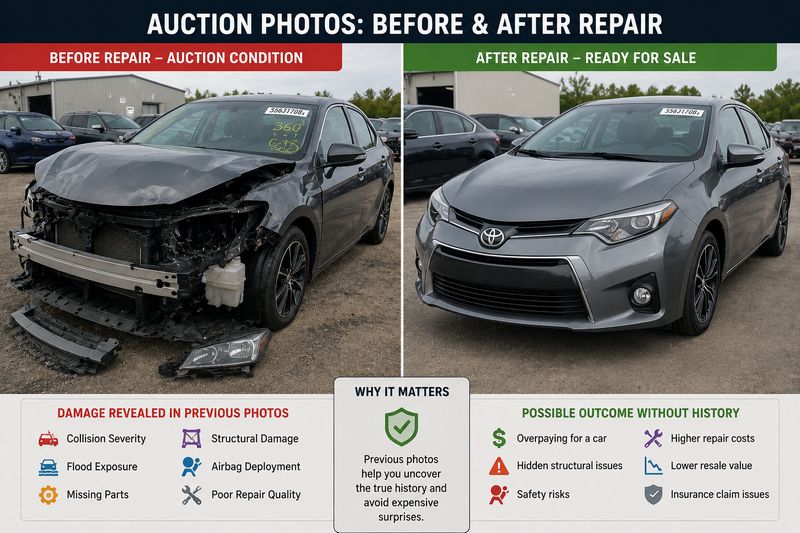
Photos can also help buyers identify:
- Poor-quality repairs
- Mismatched paint
- Hidden body damage
- Corrosion risks
Many experienced salvage buyers spend more time studying photos than reading auction descriptions.
Visual evidence often reveals problems that written reports do not fully explain.
How BidNDrive Helps Buyers Review Auction Vehicles
BidNDrive helps buyers access major U.S. online salvage auto auctions and review vehicle information before bidding.
For budget-conscious buyers searching for repairable vehicles, this can create opportunities to purchase inventory below traditional dealership prices.
Buyers can review:
- Auction listings
- Vehicle photos
- VIN information
- Title status
- Damage descriptions
- Auction announcements
Vehicle history reports and auction records help buyers better understand previous damage and ownership history before making decisions.
This is especially useful for popular models like:
- Toyota hybrids
- Honda SUVs
- Lexus crossovers
- Pickup trucks
- Fuel-efficient commuter cars
Because salvage vehicles carry higher risk, careful research becomes extremely important before bidding.
What to Do After Getting a Car Report
Getting a vehicle history report is an important step, but it should never be the final step before buying a used car. A report helps buyers identify risks and understand the vehicle’s history, but buyers still need to verify the vehicle’s actual condition carefully.
For budget-conscious buyers, taking a few extra steps after reviewing the report can prevent expensive surprises and improve the chances of finding a reliable vehicle with strong long-term value.
The smartest buyers combine history reports with inspections, test drives, and careful research before making a final decision.
Compare the Report With the Actual Vehicle
The first thing buyers should do is compare the information in the report with the actual vehicle.
Check whether the vehicle matches the report in areas such as:
- VIN number
- Trim level
- Mileage
- Exterior color
- Engine type
- Title status
This helps identify possible mistakes, fraud, or undisclosed modifications.
For example, if the report shows previous front-end collision damage, buyers should inspect the front body panels carefully for:
- Paint differences
- Uneven panel gaps
- Replacement parts
- Overspray
If the vehicle’s condition does not match the report or seller description, buyers should investigate further before continuing.
Take the Vehicle for a Test Drive
A vehicle history report cannot fully reveal how the car currently drives.
A test drive helps buyers evaluate:
- Engine performance
- Transmission behavior
- Brake response
- Suspension condition
- Steering feel
- Warning lights
- Road noise
For example, a vehicle may have a clean history report but still suffer from:
- Transmission slipping
- Suspension clunks
- Engine vibration
- Alignment problems
Buyers should test the vehicle in different driving conditions whenever possible, including:
- Highway speeds
- Stop-and-go traffic
- Tight turns
- Braking situations
Even reliable vehicles can develop hidden mechanical problems over time.
Inspect for Signs of Poor Repairs
Vehicles with accident history should be inspected carefully for repair quality.
Poor repairs can create:
- Safety risks
- Water leaks
- Alignment issues
- Premature rust
- Electrical problems
Buyers should look for:
- Uneven paint texture
- Overspray on trim
- Mismatched body panels
- Poor weld quality
- Crooked panel gaps
For example, a rebuilt vehicle may appear clean from a distance while hiding low-quality structural repairs underneath.
Signs of poor repair work can significantly reduce long-term reliability and resale value.
This is especially important for:
- Salvage-title vehicles
- Rebuilt vehicles
- Flood vehicles
- Luxury vehicles with expensive electronics
Get a Pre-Purchase Inspection (PPI)
A pre-purchase inspection, often called a PPI, is one of the best investments buyers can make before purchasing a used vehicle.
A professional mechanic can identify problems that do not appear in vehicle history reports.
A PPI may reveal:
- Engine leaks
- Transmission problems
- Suspension wear
- Brake issues
- Cooling system problems
- Previous structural repairs
For example, a vehicle may have no accident records while still showing signs of hidden frame repairs discovered during inspection.
PPIs are especially important when buying:
- High-mileage vehicles
- Salvage vehicles
- Luxury vehicles
- Performance cars
- Auction vehicles
For budget buyers, spending money on an inspection can save thousands of dollars in future repairs.
Verify VIN Numbers on the Vehicle
Buyers should always verify that the VIN on the report matches the VIN on the actual vehicle.
Common VIN locations include:
- Dashboard near windshield
- Driver-side door sticker
- Engine bay
- Vehicle paperwork
VIN mismatches can indicate:
- Title fraud
- Vehicle reconstruction
- Clerical errors
- Stolen parts
For example, if the dashboard VIN does not match the door sticker VIN, buyers should stop and investigate immediately.
Even one incorrect VIN character can create major legal and registration problems later.
VIN verification is especially important when purchasing vehicles from:
- Private sellers
- Auctions
- Small dealerships
Check for Open Recalls
Many vehicle history reports include recall information, but buyers should still verify recall status independently when possible.
Open recalls may involve:
- Airbag defects
- Brake system problems
- Fire risks
- Steering issues
- Engine defects
Manufacturers usually repair recalls free of charge through authorized dealerships.
However, unresolved recalls can still affect:
- Safety
- Insurance concerns
- Future resale value
Buyers should confirm whether recall repairs were already completed before finalizing the purchase.
This is especially important for older vehicles with known manufacturer defects.
Negotiate the Price Based on the Report
Vehicle reports can provide strong negotiating power during the buying process.
Buyers may use report findings to negotiate lower pricing for issues such as:
- Accident history
- Salvage title branding
- High mileage
- Missing maintenance records
- Previous auction sales
- Cosmetic damage
For example, a seller asking full market price for a vehicle with multiple accidents may need to lower expectations after buyers review the report.
The goal is not simply finding flaws, but understanding realistic market value based on the vehicle’s history and condition.
Budget-conscious buyers who research carefully often negotiate far better deals than buyers who skip the report entirely.
Decide Whether the Vehicle Is Worth Buying
The final step is deciding whether the vehicle still makes financial sense after reviewing all available information.
Buyers should evaluate:
- Purchase price
- Repair costs
- Insurance expenses
- Fuel economy
- Reliability history
- Resale value
- Overall condition
Not every accident history or salvage title automatically makes a vehicle a bad purchase.
For example, a lightly damaged rebuilt-title Toyota Corolla with proper repairs may still provide excellent value for a budget buyer.
Do You Still Need a Vehicle Inspection?
Many buyers believe a clean vehicle history report is enough to safely purchase a used car. In reality, a car report and a vehicle inspection serve completely different purposes.
A history report shows documented past events, while an inspection evaluates the vehicle’s current physical and mechanical condition.
For budget-conscious buyers, combining both tools is one of the smartest ways to reduce risk before purchasing a used vehicle.
Skipping an inspection may save a little money upfront, but hidden mechanical problems can easily cost thousands later.
Why a Car Report Is Not Enough
Vehicle history reports are extremely helpful, but they have limitations.
Reports only show information that was officially recorded and reported to databases.
They usually cannot confirm:
- Current engine condition
- Transmission health
- Suspension wear
- Hidden leaks
- Electrical problems
- Repair quality
For example, a vehicle may have:
- A clean title
- No accident history
- Stable ownership records
while still developing major mechanical problems internally.
Some issues may never appear in reports because:
- Repairs were paid privately
- Damage was never reported
- Problems developed recently
- Shops did not share service data
This is why buyers should never rely only on vehicle history reports before making final decisions.
Mechanical Inspection vs History Report
A vehicle history report and a mechanical inspection work together, but they provide different types of information.
A history report helps identify:
- Accident history
- Title branding
- Ownership records
- Mileage inconsistencies
- Auction history
A mechanical inspection evaluates:
- Engine condition
- Transmission operation
- Suspension wear
- Brake performance
- Fluid leaks
- Tire condition
For example, a report may reveal previous collision damage, while an inspection determines whether repairs were completed properly.
At the same time, a vehicle with a perfectly clean report may still have serious transmission or cooling system problems discovered only during inspection.
Smart buyers use both tools because each fills gaps the other cannot cover.
What Mechanics Can Find That Reports Cannot
Professional mechanics can often detect problems that never appear in vehicle history databases.
A skilled inspection may reveal:
- Hidden oil leaks
- Suspension damage
- Engine noise
- Transmission slipping
- Frame repairs
- Electrical issues
- Cooling system problems
Mechanics may also identify signs of poor repairs, including:
- Uneven welds
- Cheap replacement parts
- Poor paintwork
- Improper airbag repairs
For example, a rebuilt vehicle may appear visually clean while still showing alignment problems caused by previous structural damage.
Some mechanical issues develop slowly over time and may not generate official records until much later.
This is especially important for:
- High-mileage vehicles
- Luxury vehicles
- Salvage-title cars
- Performance vehicles
- Auction inventory
Professional inspections help buyers understand the vehicle’s real condition beyond paperwork alone.
Best Inspection Checklist for Used Cars
A good used car inspection should cover both cosmetic and mechanical areas.
Important inspection points include:
- Engine performance
- Transmission operation
- Brake condition
- Suspension and steering
- Tire wear patterns
- Fluid leaks
- Cooling system condition
- Warning lights
- Frame and structural integrity
- Paint consistency
- Interior electronics
- Air conditioning and heating systems
Buyers should also inspect for signs of:
- Flood damage
- Rust
- Poor body repairs
- Water leaks
- Airbag replacement issues
A test drive is also important because some problems only appear during real driving conditions.
For example:
- Transmission slipping may appear at highway speeds
- Suspension noises may appear over bumps
- Brake vibration may appear during hard braking
The more thorough the inspection, the lower the risk of expensive surprises later.
Why Inspections Are Critical for Auction Vehicles
Vehicle inspections become even more important when buying auction cars.
Auction vehicles are often sold:
- As-is
- Without warranties
- Without test drives
- Without full mechanical guarantees
Even when auction listings include terms like “Run and Drive,” buyers should understand that this does not guarantee the vehicle is mechanically healthy.
Auction vehicles may still contain:
- Hidden frame damage
- Transmission problems
- Electrical failures
- Cooling system damage
- Flood-related corrosion
For example, a vehicle may start and move during auction intake while still requiring thousands of dollars in repairs afterward.
Tips for Buying a Used Car With Confidence
Buying a used car can feel stressful, especially for budget-conscious buyers trying to avoid expensive mistakes. Many vehicles look attractive in photos or advertisements, but hidden problems can quickly turn a cheap deal into a costly ownership experience.
The good news is that careful research and smart preparation greatly reduce the risk.
Confident buyers do not rely on luck. They combine vehicle history reports, inspections, pricing research, and realistic budgeting before making decisions.
A little extra preparation upfront can save thousands of dollars later.
Combine Reports, Inspections, and Research
The safest way to buy a used car is by combining multiple sources of information.
No single tool tells the entire story.
Smart buyers combine:
- Vehicle history reports
- Mechanical inspections
- Test drives
- Market research
- Auction photos
- Ownership history
For example, a clean CARFAX report may still miss hidden suspension or engine problems discovered during inspection.
At the same time, a vehicle with previous accident history may still provide excellent value if repairs were completed properly and the inspection looks strong.
Buyers who combine research methods usually make far safer decisions than buyers who rely only on seller descriptions or photos.
This is especially important when shopping at online auto auctions where vehicles often sell quickly.
Know the Market Value Before Buying
Understanding market value helps buyers avoid overpaying.
Before purchasing a vehicle, buyers should compare:
- Similar models
- Mileage levels
- Trim packages
- Vehicle condition
- Accident history
- Local market prices
For example, a Toyota RAV4 Hybrid with low mileage and a clean title will naturally cost more than one with salvage history or higher mileage.
Some sellers intentionally price vehicles emotionally rather than realistically.
Without market research, buyers may overpay simply because a vehicle looks attractive or appears rare.
Auction buyers should also review previous auction sale prices whenever possible.
Knowing realistic market value helps buyers:
- Set better bidding limits
- Negotiate more confidently
- Avoid emotional overspending
Budget-conscious buyers benefit heavily from disciplined pricing research.
Avoid Emotional Purchases
Emotional buying is one of the biggest reasons people overpay for used vehicles.
This often happens when buyers become too focused on:
- Appearance
- Color
- Luxury features
- Popular models
- Competitive auction bidding
For example, buyers may ignore serious accident history simply because they love the vehicle’s design or rare trim package.
Auction environments can make emotional decisions even worse because bidding pressure creates urgency.
Buyers may continue bidding past safe price limits because they do not want to “lose” the vehicle.
Confident buyers stay disciplined by:
- Setting firm budgets
- Researching repair costs beforehand
- Avoiding rushed decisions
- Walking away from risky vehicles
There will always be another vehicle available later.
Patience often saves more money than aggressive bidding.
Understand Repair and Ownership Costs
The purchase price is only one part of vehicle ownership.
Buyers should also calculate:
- Insurance costs
- Fuel expenses
- Maintenance costs
- Tire replacement
- Registration fees
- Repair risks
- Transportation costs
For example, a cheap luxury SUV may require:
- Expensive tires
- Premium fuel
- High insurance premiums
- Complex electronic repairs
Meanwhile, a slightly more expensive Toyota Corolla may cost far less to own long-term.
Budget-conscious buyers should focus on total ownership cost instead of only initial purchase price.
A cheaper vehicle can quickly become expensive if repairs and maintenance are ignored during the buying process.
Focus on Value Instead of Perfect History
Many buyers search only for perfect vehicles with:
- Zero accidents
- One owner
- Full service history
- Extremely low mileage
While ideal vehicles are attractive, they are also usually much more expensive.
Sometimes vehicles with minor imperfections provide far better overall value.
For example:
- A rebuilt-title Honda Civic with professional repairs
- A high-mileage Toyota Camry with excellent maintenance history
- A vehicle with minor cosmetic damage only
may still offer reliable transportation at a significantly lower price.
The goal is not finding a perfect vehicle.
The goal is finding the best balance between:
- Price
- Reliability
- Condition
- Ownership cost
- Future resale value
Smart budget buyers focus on overall value rather than chasing perfection.
Best Types of Vehicles for Budget Buyers
Some vehicle types consistently provide stronger value for budget-conscious buyers.
Reliable, fuel-efficient models with affordable maintenance costs usually create the best ownership experience.
Popular choices often include:
- Toyota Corolla
- Honda Civic
- Toyota Camry
- Honda CR-V
- Toyota RAV4
- Lexus RX
- Mazda3
These vehicles are popular because they typically offer:
- Strong reliability
- Good fuel economy
- Lower repair costs
- Strong resale value
- Large parts availability
Hybrid models are also becoming increasingly attractive because of rising fuel prices.
For example, a Toyota Corolla Hybrid or RAV4 Hybrid may reduce long-term fuel expenses significantly for commuters.
Final Thoughts on Car Reports
Vehicle history reports have become one of the most important tools for used car buyers. Whether purchasing from a dealership, private seller, or online auction, understanding a vehicle’s history helps buyers reduce risk and make more informed financial decisions.
For budget-conscious shoppers especially, researching a vehicle properly can prevent expensive surprises and improve the chances of finding reliable transportation at a fair price.
A car report may not guarantee a perfect vehicle, but it gives buyers valuable information that helps separate smarter purchases from risky ones.
Why Research Saves Money
Many expensive used car problems can be avoided through careful research before purchase.
Vehicle history reports help buyers identify warning signs such as:
- Salvage titles
- Flood damage
- Odometer inconsistencies
- Repeated auction sales
- Major accident history
- Frequent ownership changes
For example, a vehicle may appear clean in photos and seem attractively priced, but a report could reveal severe collision history or title branding that dramatically affects long-term value.
Without proper research, buyers may later face:
- Expensive repairs
- Insurance complications
- Poor resale value
- Registration problems
For budget-conscious buyers, avoiding one major mistake can save far more money than focusing only on finding the absolute cheapest vehicle available.
Research creates confidence and reduces uncertainty before making large financial decisions.
How Car Reports Help Buyers Make Smarter Decisions
A vehicle history report helps buyers understand the story behind the car.
Instead of relying only on seller descriptions or appearance, buyers can review:
- Ownership history
- Mileage records
- Service history
- Auction records
- Accident information
- Title status
This information helps buyers compare vehicles more realistically.
For example:
- A higher-mileage Toyota Camry with excellent maintenance records may be a smarter purchase than a lower-mileage luxury SUV with poor repair history
- A rebuilt-title vehicle with documented repairs may still offer strong value if priced appropriately
Vehicle reports help buyers focus on total ownership quality instead of emotional decisions.
The more information buyers review beforehand, the better prepared they become to negotiate pricing and avoid risky inventory.
The Importance of Combining Reports With Inspections
Even the best vehicle history report cannot replace a proper inspection.
Reports show documented past events, but inspections reveal the vehicle’s current physical and mechanical condition.
That is why smart buyers combine:
- Vehicle history reports
- Test drives
- Mechanic inspections
- Auction photo review
- VIN verification
A clean report does not guarantee:
- A healthy engine
- A strong transmission
- Proper repairs
- Good suspension condition
For example, a vehicle with no accident history may still suffer from hidden transmission problems or poor previous repair work.
At the same time, some vehicles with accident history may still provide excellent value if repairs were completed professionally.
Using both reports and inspections together gives buyers the clearest possible understanding of the vehicle before purchase.
How BidNDrive Helps Buyers Find Better Auction Vehicles
BidNDrive helps buyers access online auto auction inventory from across the United States, including insurance and dealer auction vehicles.
For buyers searching for affordable used cars, this creates opportunities to compare a large number of vehicles while reviewing important information before bidding.
Auction buyers can use:
- VIN information
- Vehicle history reports
- Auction photos
- Title details
- Damage descriptions
- Auction announcements
to better evaluate vehicle condition and potential risks.
This is especially useful for budget-conscious buyers looking for:
- Reliable commuter cars
- Fuel-efficient hybrids
- Family SUVs
- Repairable salvage vehicles
- Lower-cost alternatives to dealership pricing
Careful research remains one of the most important parts of buying any used vehicle.
By combining vehicle reports, inspections, pricing research, and auction information, buyers can make smarter decisions and improve their chances of finding dependable vehicles at better prices.
Further Reading:
Unlock Savings: Why You Need a Vehicle History Report Before Buying
Understanding CarFax: How Often Is It Updated?
How to Check a Car Title by VIN
How to Get a Pre-Purchase Inspection When Buying a Used Car
Frequently Asked Questions
- How to see CARFAX report for free?
- Where is the best place to get a vehicle report?
- What does a car report show?
- What is the $3000 rule for cars?