


Choosing between interstate and intrastate trucking can directly impact your costs when moving vehicles. This quick guide explains the key differences, pricing factors, and how to pick the most cost-effective option. You’ll learn how to avoid overpaying, plan smarter deliveries, and make better decisions when buying or transporting cars from auctions.
What Do Interstate and Intrastate Trucking Mean?
If you’re buying cars from auctions or planning delivery, you’ll often hear the terms interstate and intrastate trucking. They sound technical, but the idea is simple. These terms describe where and how a truck moves goods — and they directly affect cost, rules, and delivery options. For budget buyers and small dealers, understanding this difference can help you avoid overpaying and choose the right transport.
Definition of Interstate Trucking
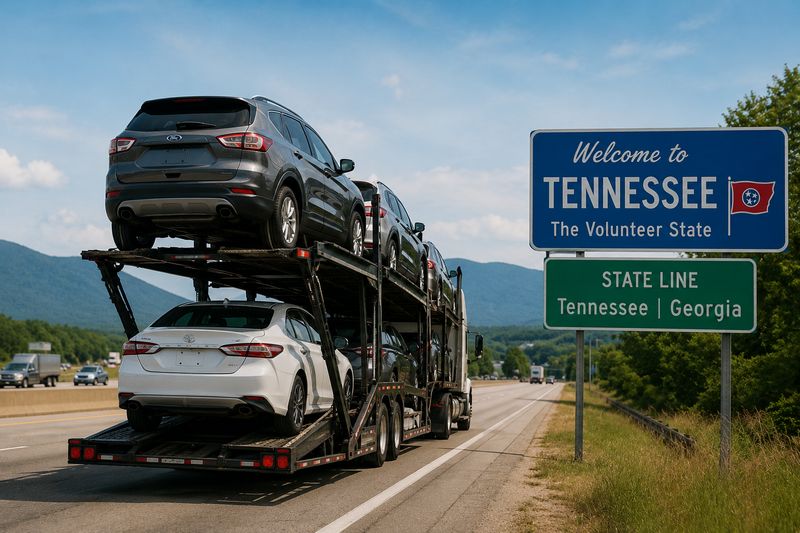
Interstate trucking means transporting goods across state lines.
If a truck picks up a vehicle in one state and delivers it to another, that’s interstate transport.
Example:
- Car bought at an auction in Texas → delivered to Florida
- Vehicle shipped from California → delivered to Nevada
Even if the trip is short, crossing a state border makes it interstate.
Interstate trucking is regulated at the federal level, which usually means:
- More paperwork
- Higher insurance requirements
- Stricter compliance rules
Because of this, interstate transport is often more expensive — but it’s necessary when you’re moving vehicles between states.
Definition of Intrastate Trucking
Intrastate trucking means transporting goods within the same state.
The entire trip — pickup and delivery — happens inside one state.
Example:
- Car bought in Atlanta, Georgia → delivered to another city in Georgia
- Vehicle moved from a local auction yard to your storage lot in the same state
Intrastate transport is regulated by state laws, not federal rules.
In many cases, this means:
- Simpler requirements
- Lower costs
- Faster scheduling
For budget buyers, intrastate trucking is usually the cheaper and easier option — when it’s possible.
Simple Real-World Examples (Auction Delivery, Local Transport)
Let’s break it down with real situations that buyers and dealers deal with every day.
Example 1: Local auction purchase (intrastate)
You buy a car at an auction in your state. The vehicle needs to be delivered to your yard 50 miles away.
→ This is intrastate trucking.
→ Lower cost, fewer restrictions.
Example 2: Out-of-state auction deal (interstate)
You find a better deal at an auction in another state. The car needs to be shipped to your location.
→ This is interstate trucking.
→ Higher cost, more rules, longer transit.
Example 3: Dealer moving inventory locally
A small dealer moves cars between two locations in the same state.
→ Intrastate transport.
Example 4: Buyer expanding sourcing strategy
A buyer starts purchasing cars from multiple states to get better prices.
→ Interstate transport becomes necessary.
These situations are common for budget-focused buyers trying to balance savings on the purchase price with delivery costs.
Why These Terms Matter in the Auto Transport Industry
Understanding the difference between interstate and intrastate trucking is not just theory — it directly affects your money.
Here’s why it matters:
- Cost → Interstate shipping is usually more expensive due to regulations and distance
- Availability → More carriers operate locally, which can lower intrastate prices
- Timing → Intrastate deliveries are often faster and easier to schedule
- Compliance → Interstate transport requires stricter rules, which can affect pricing and delays
Example:
You find a car $1,000 cheaper in another state. But interstate shipping costs $1,200.
→ You didn’t actually save money.
Key Differences Between Interstate and Intrastate Trucking
At first glance, interstate and intrastate trucking may seem similar — both involve moving vehicles from point A to point B. But the differences go much deeper. These two types of transport follow different rules, cost structures, and operational models. For budget buyers and dealers, understanding these differences helps avoid delays, unexpected fees, and poor decisions when shipping vehicles.
Distance and State Line Crossing
The most basic difference is simple: state borders.
- Interstate trucking → crosses one or more state lines
- Intrastate trucking → stays within a single state
It’s not about distance — it’s about geography.
Example:
- 300 miles within Texas → still intrastate
- 20 miles from Georgia to Alabama → interstate
This distinction matters because the moment a truck crosses a state line, it falls under federal rules.
Federal vs State Regulation
Interstate and intrastate trucking are governed by different authorities.
- Interstate trucking → regulated by federal agencies (nationwide rules)
- Intrastate trucking → regulated by individual state laws
Federal regulations are typically stricter and more standardized across all states.
State regulations can vary:
- Some states are more flexible
- Others have their own strict requirements
For a budget buyer, this affects:
- Who can legally transport your vehicle
- How much the service costs
- How quickly the shipment can be arranged
Licensing and CDL Requirements
Driver licensing requirements also differ between interstate and intrastate operations.
- Interstate drivers often need to meet stricter qualifications
- Intrastate drivers may have fewer restrictions depending on the state
In many cases:
- Interstate drivers must meet federal standards for Commercial Driver’s Licenses (CDL)
- Intrastate drivers may operate under state-specific CDL rules
Example:
A younger driver (under 21) may legally drive commercially within one state, but not across state lines.
This impacts availability:
- Fewer drivers qualify for interstate work
- More drivers can handle local intrastate deliveries
And that directly affects pricing and scheduling.
Insurance Requirements
Insurance is one of the biggest cost drivers in trucking.
- Interstate carriers → must meet higher federal insurance minimums
- Intrastate carriers → follow state-level insurance requirements (often lower)
Higher insurance requirements mean:
- Higher operating costs for carriers
- Higher prices for customers
Example:
A carrier transporting vehicles across multiple states must carry more coverage, which increases the shipping rate compared to a local carrier.
For budget buyers, this is one of the hidden reasons why interstate transport costs more.
Costs and Pricing Structure
Cost is where most buyers feel the difference immediately.
Interstate trucking:
- Higher base rates
- Additional compliance costs
- Longer distances (in most cases)
Intrastate trucking:
- Lower rates
- More flexible pricing
- Shorter distances and faster turnaround
Example:
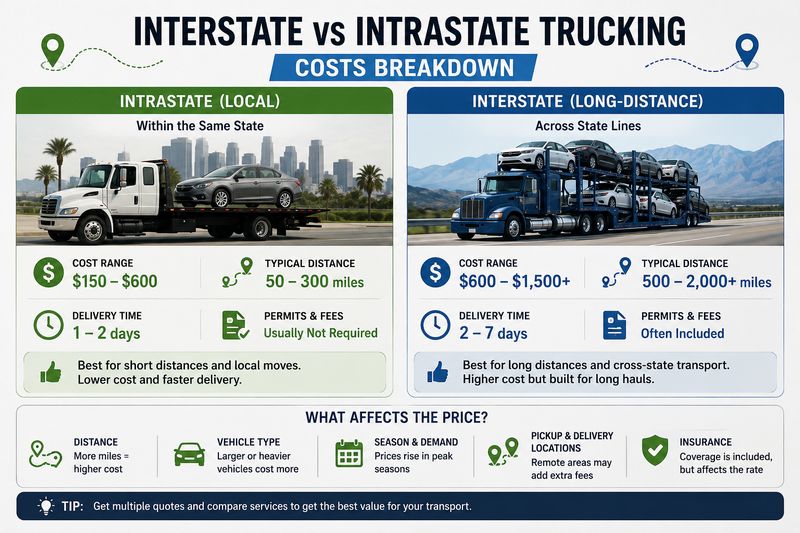
- Local delivery within a state → $150–$400
- Cross-state delivery → $500–$1,200+ depending on distance
Even if the vehicle price is lower out of state, transport costs can cancel out your savings.
Types of Loads and Routes
The type of loads and routes also varies.
Interstate trucking:
- Long-haul routes
- Multi-state deliveries
- Larger shipments and consolidated loads
Intrastate trucking:
- Short-haul routes
- Local deliveries (auction to yard, dealer to customer)
- More flexible scheduling
Example:
A carrier may combine several vehicles for an interstate trip to optimize costs, while intrastate transport is often more direct and faster.
For budget buyers, this affects delivery time and pricing options.
Paperwork and Compliance
Paperwork is another major difference.
Interstate trucking requires:
- Federal registration
- Compliance with national safety rules
- More documentation and tracking
Intrastate trucking involves:
- State-level paperwork
- Fewer compliance layers (in many cases)
More paperwork means:
- More administrative work
- Higher operational costs
- Potential delays if something is missing
Example:
An interstate shipment may require additional verification and documentation, while a local delivery can often be arranged quickly with fewer steps.
Interstate vs Intrastate CDL: What’s the Difference?
If you plan to move vehicles yourself or hire drivers, understanding CDL rules is essential. The difference between interstate and intrastate trucking is not just about distance — it also affects who is legally allowed to drive. For budget buyers and small dealers, this can impact costs, driver availability, and how quickly you can move vehicles from auctions.
CDL Class Requirements
CDL (Commercial Driver’s License) classes are generally the same for both interstate and intrastate trucking.
The main classes include:
- Class A → for combination vehicles (like car haulers and large trailers)
- Class B → for single heavy vehicles (box trucks, straight trucks)
- Class C → for smaller commercial vehicles with specific requirements
The key point:
- The type of vehicle determines the CDL class
- Not whether it’s interstate or intrastate
Example:
A driver hauling multiple cars on a trailer will usually need a Class A CDL, regardless of whether they stay within one state or cross state lines.
Age Restrictions (18 vs 21 Rule)
Age rules are one of the biggest differences between interstate and intrastate CDL use.
- Intrastate driving → allowed from age 18+ (in most states)
- Interstate driving → requires age 21+
This means:
- Younger drivers can legally work within one state
- They cannot cross state lines for commercial transport
Example:
An 19-year-old driver can deliver vehicles from an auction to your yard within the same state, but cannot transport a car to another state.
For budget buyers and small operators, this increases the pool of available drivers for local jobs — often reducing costs.
Medical Certification and DOT Physical
Both interstate and intrastate drivers usually need to meet medical requirements, but interstate rules are stricter.
Interstate CDL drivers must:
- Pass a DOT physical exam
- Maintain a valid medical certificate
- Meet federal health standards
Intrastate drivers:
- May still need a medical exam
- Requirements can vary by state
- Some states allow more flexibility
Why this matters:
Stricter medical requirements reduce the number of eligible interstate drivers — which can increase costs and limit availability.
Endorsements and Restrictions
Some trucking jobs require additional CDL endorsements, depending on the type of cargo or vehicle.
Common endorsements include:
- Trailer combinations
- Hazardous materials (not typical for car transport)
- Special vehicle types
For auto transport:
- Most car haulers require proper trailer-related qualifications
- Endorsements are usually similar for both interstate and intrastate work
However, interstate operations may involve:
- More strict verification of qualifications
- Additional compliance checks
This adds another layer of control — and sometimes cost.
When You Need an Interstate CDL
You need an interstate CDL when:
- You transport goods across state lines
- You work with loads that are part of interstate commerce
- Your route includes multiple states — even for short distances
Example:
- Moving a car from Georgia to Florida → interstate CDL required
- Delivering a vehicle within Georgia → intrastate CDL is enough
Also important:
Even if the trip is within one state, it may still be considered interstate if the shipment is part of a larger cross-state transaction.
Intrastate vs Interstate Operating Authority
Operating authority determines whether a company is legally allowed to transport vehicles — and where they can do it. For buyers and dealers, this affects who you can hire, how much you’ll pay, and how reliable the service will be. Interstate and intrastate carriers follow different authority rules, and understanding them helps you avoid delays, scams, or compliance issues.
What Is Operating Authority (MC Number vs State Authority)
Operating authority is official permission for a carrier or broker to transport goods for hire.
There are two main types:
- Federal authority (MC number) → required for interstate transport
- State authority → used for intrastate transport within one state
An MC number (Motor Carrier number) is issued by the Federal Motor Carrier Safety Administration and allows companies to operate across state lines.
Intrastate carriers may only need:
- State registration
- State-issued permits or authority
Example:
- A carrier moving cars from Texas to Florida needs an MC number
- A carrier working only within Georgia may operate under state authority
This difference affects pricing and availability — interstate carriers usually have higher compliance costs.
When You Need Federal Authority (FMCSA)
Federal authority is required when a carrier operates in interstate commerce.
You need it when:
- Transporting vehicles across state lines
- Hauling goods that are part of interstate trade
- Operating in multiple states
The Federal Motor Carrier Safety Administration oversees:
- Carrier registration
- Safety compliance
- Insurance requirements
Example:
Even if a truck only drives within one state, it may still need federal authority if the shipment is part of a larger interstate move.
For budget buyers, this matters because:
- Interstate carriers are more regulated
- Their services often cost more
- But they can handle long-distance transport legally
State-Level Authority for Intrastate Carriers
Intrastate carriers operate under state rules, which are usually simpler.
They may need:
- State registration
- Local permits
- Compliance with state transport laws
Requirements vary by state:
- Some states have strict rules
- Others are more flexible
Example:
A small transport company moving cars within one state may have fewer regulatory costs, allowing them to offer lower prices.
For budget buyers, this often means:
- Cheaper local transport
- Faster scheduling
- More available carriers
USDOT Number Requirements
A USDOT number is a unique identifier used to track safety and compliance.
Issued by the Federal Motor Carrier Safety Administration, it is required for:
- Most interstate carriers
- Many intrastate carriers (depending on the state and vehicle type)
The USDOT number is used to:
- Monitor inspections and violations
- Track safety performance
- Verify a carrier’s legitimacy
Example:
Before hiring a carrier, you can check their USDOT number to see:
- Safety record
- Inspection history
- Compliance status
For budget buyers, this is a simple way to avoid unreliable or risky transport companies.
Broker vs Carrier Authority Explained
There’s also an important difference between brokers and carriers.
- Carrier → owns trucks and physically transports vehicles
- Broker → connects customers with carriers but doesn’t transport vehicles directly
Both require authority:
- Carriers need operating authority to move goods
- Brokers need separate authority to arrange shipments
Example:
You book transport through a company. That company may be a broker who finds a carrier to move your vehicle.
Why this matters:
- Brokers can help find cheaper options by comparing carriers
- But quality depends on the carrier they assign
For budget buyers:
- Brokers can save time and sometimes money
- Direct carriers may offer more control and transparency
Don’t Lose Money on Transport After You Win the Bid
A cheap car can quickly become expensive if you ignore delivery costs. BidNDrive helps you evaluate total expenses — including auction fees, transport, and risks — before you place a bid.
- ✅ Real total cost estimation before bidding
- ✅ Access to nationwide auction inventory
- ✅ Tools to compare local vs out-of-state deals
- ✅ Support for choosing the most cost-effective option
Interstate vs Intrastate Trucking Regulations
Regulations are one of the biggest differences between interstate and intrastate trucking — and they directly affect cost, timing, and reliability. For budget buyers and dealers, these rules may seem invisible, but they shape the price you pay and how smoothly your vehicle gets delivered. Understanding them helps you avoid delays, fines, and unexpected fees.
Licensing, Registration, and Compliance
Both interstate and intrastate carriers must follow legal requirements, but the level of control is different.
Interstate trucking:
- Requires federal registration
- Must comply with nationwide safety rules
- Needs operating authority and proper documentation
Intrastate trucking:
- Regulated by state agencies
- Requirements vary by state
- Often simpler and faster to manage
Example:
An interstate carrier must meet federal standards across all states they operate in, while a local carrier only needs to follow one state’s rules.
For budget buyers, this means:
- Interstate transport → more compliance → higher cost
- Intrastate transport → simpler process → lower cost
Hours of Service (HOS) Rules
Hours of Service (HOS) rules control how long drivers can work and drive without rest.
Interstate drivers must follow strict federal HOS rules, including:
- Daily driving limits
- Mandatory rest breaks
- Weekly maximum hours
Intrastate drivers:
- May follow state-specific HOS rules
- Some states allow more flexibility
Why this matters:
- HOS limits affect delivery speed
- Strict rules can increase transport time
- Longer routes may require more planning
Example:
A long interstate trip may take longer due to required rest periods, while a local delivery can often be completed faster.
Vehicle Maintenance and Inspections
All commercial vehicles must be maintained properly, but interstate operations face stricter oversight.
Interstate carriers:
- Regular inspections under federal standards
- Detailed maintenance records required
- Higher compliance expectations
Intrastate carriers:
- State-level inspection rules
- Requirements may be less strict (depending on the state)
Example:
An interstate carrier may need to meet stricter inspection schedules, which increases operating costs but also improves reliability.
For buyers, this means:
- Interstate carriers may be more consistent
- Intrastate carriers may offer lower prices
ELD (Electronic Logging Device) Requirements
ELDs are devices that track driving hours and ensure compliance with HOS rules.
Interstate trucking:
- ELD use is generally mandatory
- Drivers must electronically log their hours
Intrastate trucking:
- ELD requirements depend on the state
- Some local carriers may be exempt
Why this matters:
- ELD systems add cost for carriers
- They improve transparency and safety
- They can affect scheduling and flexibility
Example:
An interstate driver must strictly follow logged hours, while a local driver may have more flexibility depending on state rules.
Weight Limits and Road Restrictions
Weight limits and road rules vary between interstate and intrastate transport.
Interstate trucking:
- Standard federal weight limits apply (e.g., 80,000 lbs for most trucks)
- Must follow national highway regulations
Intrastate trucking:
- State-specific weight limits
- Some states allow higher or lower limits
- Local road restrictions may apply
Example:
A truck moving vehicles within one state may use routes or weight allowances not permitted in interstate transport.
For buyers, this can affect:
- Route options
- Delivery time
- Overall cost
Insurance Requirements for Interstate and Intrastate Trucking
Insurance is one of the biggest hidden costs in vehicle transport. It protects the carrier, the cargo, and you as the buyer — but it also directly affects the price you pay for shipping. Interstate and intrastate trucking follow different insurance rules, and understanding them helps you avoid overpaying while still protecting your vehicle.
Federal Insurance Requirements for Interstate Carriers
Interstate carriers must follow federal insurance rules set by the Federal Motor Carrier Safety Administration.
These requirements are strict and apply to any carrier operating across state lines.
Interstate carriers must have:
- Active liability insurance
- Proof of coverage filed with federal authorities
- Continuous compliance to stay authorized
Because interstate transport involves longer distances and higher risk, the required coverage is higher than for local operations.
For budget buyers, this means:
- More protection during long-distance shipping
- But also higher transport costs
Minimum Liability Coverage (FMCSA Standards)
Federal rules require interstate carriers to maintain minimum liability coverage.
Typical minimums include:
- Around $750,000 for general freight
- Often $1,000,000 or more for vehicle transport (depending on the carrier and cargo type)
This coverage protects against:
- Accidents involving the truck
- Damage to other vehicles or property
Important:
Liability insurance does not always cover your vehicle fully — it mainly protects against third-party damage.
That’s why cargo insurance is also important (covered below).
State-Specific Insurance for Intrastate Trucking
Intrastate carriers follow state-level insurance requirements, which are usually less strict than federal rules.
Each state sets its own minimums:
- Some states require lower liability coverage
- Others may have additional local requirements
Because of this:
- Intrastate carriers often have lower insurance costs
- These savings are reflected in cheaper transport rates
Example:
A local carrier moving cars within one state may operate with lower insurance limits, making their service more affordable.
For budget buyers, this can be a cost advantage — especially for short-distance transport.
Cargo Insurance Differences
Cargo insurance is what protects your vehicle during transport.
Key differences:
- Interstate carriers are more likely to carry higher cargo coverage
- Intrastate carriers may offer lower or optional cargo insurance
Typical cargo coverage for car transport:
- $50,000 to $250,000 total coverage per load (varies by carrier)
What to check:
- Maximum coverage per vehicle
- Deductible amount
- What types of damage are included
Example:
If a carrier transports multiple vehicles at once, the total coverage is shared. This means each car may not be fully covered unless limits are high enough.
For budget buyers, always confirm cargo insurance — not just liability coverage.
How Insurance Costs Impact Total Transport Price
Insurance is built into the price you pay for shipping.
Higher insurance requirements lead to:
- Higher operating costs for carriers
- Higher quotes for customers
Example:
- Interstate shipment → higher insurance → higher price
- Intrastate shipment → lower insurance → lower price
This is one of the main reasons why long-distance transport costs more, even beyond fuel and distance.
For budget buyers, this explains why:
- A cheaper car in another state may not actually save money after shipping
- Local purchases can sometimes be more cost-effective overall
Tips to Reduce Insurance Costs for Small Operators
If you’re a small dealer, owner-operator, or frequent buyer, there are ways to reduce insurance-related costs.
Practical tips:
- Work with carriers who have clean safety records (lower risk = better rates)
- Avoid high-risk routes or areas when possible
- Ship multiple vehicles together to spread costs
- Compare quotes from different carriers or brokers
- Choose appropriate coverage — not too low, not excessive
Example:
Instead of shipping one car across states, combining multiple vehicles in one shipment can reduce cost per unit — including insurance.
Types of Trucks Used in Interstate vs Intrastate Trucking
The type of truck used for transport has a direct impact on cost, delivery speed, and how safely your vehicle is moved. Interstate and intrastate trucking often use different equipment based on distance, load size, and route conditions. For budget buyers and small dealers, understanding these options helps you choose the most cost-effective solution.
Long-Haul Trucks for Interstate Transport
Interstate trucking usually relies on long-haul trucks, also known as semi-trucks or tractor-trailers.
These trucks are designed for:
- Long distances across multiple states
- Carrying multiple vehicles at once
- Highway efficiency and fuel optimization
Common features:
- Large trailers (often multi-car haulers)
- High load capacity
- Built for continuous driving over long routes
Example:
If you buy several cars from an out-of-state auction, they may be loaded onto a large car carrier and shipped together. This reduces cost per vehicle compared to shipping one car alone.
For budget buyers:
- Long-haul trucks are efficient for long distances
- But they may require waiting for a full load to optimize pricing
Medium-Duty Trucks for Local Deliveries
Intrastate trucking often uses medium-duty trucks for shorter, local routes.
These trucks are ideal for:
- Moving vehicles within the same state
- Short-distance deliveries (auction to yard, dealer to customer)
- Faster turnaround times
Common advantages:
- Lower operating costs
- Easier access to tight or urban areas
- More flexible scheduling
Example:
A dealer buys a car at a local auction and needs it delivered 30–100 miles away. A medium-duty truck can handle this quickly and at a lower cost than a large interstate carrier.
For budget buyers:
- This is often the cheapest and fastest option for local transport
Hotshot Trucks and Car Haulers
Hotshot trucks are smaller, highly flexible transport options often used for both interstate and intrastate deliveries.
They typically include:
- Pickup trucks with trailers
- Small car haulers (1–3 vehicles)
Best use cases:
- Urgent deliveries
- Single-vehicle transport
- Locations where large trucks can’t easily access
Advantages:
- Faster pickup and delivery
- More flexible routes
- Good for smaller loads
Disadvantages:
- Higher cost per vehicle compared to large carriers
- Limited capacity
Example:
You buy one car at auction and need it delivered quickly. A hotshot service may cost more, but it gets the job done faster.
For budget buyers:
- Good for speed and flexibility
- Not always the cheapest option
Choosing the Right Truck Based on Route and Budget
The best truck type depends on your priorities: cost, speed, and distance.
Here’s a simple way to decide:
- Short distance + tight budget → medium-duty local truck
- Long distance + multiple vehicles → long-haul carrier
- Urgent delivery or single car → hotshot transport
Example:
- Buying one car locally → choose a small local carrier to save money
- Buying several cars from another state → use a large interstate carrier to reduce cost per vehicle
- Need fast delivery → consider hotshot, even if it costs more
For budget buyers, the goal is not just to move the car — it’s to choose the right transport method for your situation.
The Similarities Between Interstate and Intrastate Trucking
While interstate and intrastate trucking have different rules and costs, many core aspects are the same. Both types of transport follow similar principles when it comes to safety, responsibility, and daily operations. For budget buyers and dealers, understanding these similarities helps you focus on what really matters — reliability, timing, and overall service quality.
Core Responsibilities of Truck Drivers
No matter the distance, truck drivers have the same main job: move vehicles safely from pickup to delivery.
Their responsibilities include:
- Securing vehicles properly for transport
- Driving safely under different road conditions
- Following delivery schedules
- Communicating updates if delays occur
Example:
Whether a driver moves a car 50 miles within one state or 1,000 miles across several states, they must ensure the vehicle arrives in the same condition it was picked up.
For buyers, this means the level of professionalism should be the same — regardless of route type.
Safety and Compliance Standards
Safety is a priority in both interstate and intrastate trucking.
Drivers and carriers must:
- Follow traffic laws
- Operate vehicles safely
- Avoid overloading
- Ensure proper cargo securing
While interstate carriers follow stricter federal rules, intrastate carriers still must meet state safety standards.
Example:
A poorly secured vehicle is a risk whether it’s transported locally or across the country. That’s why safety practices are consistent across both types.
For budget buyers, choosing a carrier that takes safety seriously reduces the risk of damage and delays.
Vehicle Maintenance Requirements
All commercial trucks must be maintained in safe working condition.
This includes:
- Regular inspections
- Brake and tire checks
- Engine and system maintenance
- Fixing issues before they become serious problems
Example:
A truck with worn brakes is dangerous on both a short local route and a long interstate trip. Maintenance is not optional — it’s essential.
For buyers, well-maintained trucks mean:
- Lower risk of breakdowns
- Fewer delays
- Safer transport overall
Importance of Route Planning and Scheduling
Good planning is critical in both interstate and intrastate trucking.
Drivers and carriers must:
- Choose efficient routes
- Avoid traffic and delays
- Plan fuel stops and rest breaks
- Schedule pickups and deliveries accurately
Example:
Even a local delivery can be delayed by traffic or poor planning. On long routes, planning becomes even more important to stay on schedule.
For budget buyers, efficient planning can:
- Reduce delivery time
- Lower costs (less wasted fuel and time)
- Improve reliability
Why It’s Important to Know the Difference
At first, interstate and intrastate trucking may seem like technical terms that only carriers care about. But for buyers, dealers, and small operators, this difference directly affects cost, timing, and risk. If you don’t understand how it works, you can easily overpay, choose the wrong transport option, or face unexpected problems during delivery.
Legal Risks of Misclassification
Using the wrong type of carrier for a shipment can create serious legal issues.
If a carrier operates:
- Across state lines without proper federal authority
- Without the correct licensing or insurance
This can lead to:
- Fines for the carrier
- Delays or canceled shipments
- Problems with insurance claims if something goes wrong
Example:
You hire a cheaper local carrier for what turns out to be an interstate shipment. If they are not authorized to operate across states, your delivery may be stopped or delayed.
For buyers, this means one simple rule:
Always make sure the carrier is properly authorized for the route.
Cost Implications for Businesses and Drivers
Understanding the difference helps you control costs more effectively.
Interstate transport usually includes:
- Higher insurance costs
- More compliance expenses
- Longer distances
Intrastate transport often offers:
- Lower rates
- More flexible pricing
- Faster and cheaper local delivery
Example:
A buyer focuses only on a cheaper car in another state but ignores transport type. After adding interstate shipping costs, the total price becomes higher than buying locally.
For budget buyers, the smartest move is to calculate:
vehicle price + correct transport cost — not just the purchase price.
Impact on Vehicle Transport from Auctions
This difference becomes especially important when buying cars from auctions.
Common scenarios:
- Buying locally → intrastate transport (cheaper, faster)
- Buying from another state → interstate transport (more expensive, slower)
Example:
You find a great deal at an out-of-state auction. The car is $800 cheaper than local options. But interstate shipping costs $1,000.
→ You lose money instead of saving it.
On the other hand:
Buying locally with slightly higher vehicle price but cheaper transport may be the better deal overall.
For auction buyers, understanding transport type helps you make smarter sourcing decisions.
Avoiding Delays, Fines, and Unexpected Fees
Choosing the wrong type of transport can lead to more than just higher costs — it can cause real problems.
Potential issues include:
- Shipment delays due to compliance checks
- Additional fees for incorrect booking or route changes
- Fines if regulations are not followed
- Rescheduling costs and lost time
Example:
A shipment planned as intrastate turns out to cross a state line. The carrier must adjust paperwork, pricing, and compliance — causing delays and extra charges.
Interstate vs Intrastate Trucking Costs Breakdown
Transport cost is often the second biggest expense after the vehicle itself. For budget buyers and dealers, knowing how costs are built helps you avoid overpaying and choose the most efficient option. Interstate and intrastate trucking have different cost structures, and even small details can change the final price.
Fuel, Tolls, and Distance Factors
Fuel is one of the largest cost components in any shipment.
Interstate transport:
- Longer distances → higher fuel consumption
- More highway miles → more toll roads in some regions
- Higher total cost, even if cost per mile is lower
Intrastate transport:
- Shorter routes → lower total fuel cost
- Fewer tolls in many cases
- More predictable pricing
Example:
A 50-mile local delivery may cost $150–$300.
A 1,000-mile interstate delivery may cost $800–$1,500+ depending on route and fuel prices.
Distance matters — but it’s not the only factor.
Labor and Driver Pay Differences
Driver pay also affects transport pricing.
Interstate trucking:
- Long-haul drivers often paid per mile
- Higher total labor cost due to long trips
- Overnight stays and time-based expenses
Intrastate trucking:
- Often paid per job or short route
- Lower labor cost for quick deliveries
- Faster turnaround per load
Example:
A local driver can complete multiple deliveries in one day, spreading costs across several jobs. A long-haul driver may spend days on a single shipment.
For budget buyers, this is why local transport is usually cheaper.
Permits and Compliance Costs
Regulatory costs are another key difference.
Interstate trucking includes:
- Federal compliance requirements
- Higher insurance costs
- Additional documentation and oversight
Intrastate trucking includes:
- State-level permits
- Fewer compliance layers (in many cases)
- Lower administrative costs
These costs are built into the shipping price.
Example:
Even if two routes are similar in distance, the interstate shipment may cost more because of regulatory requirements.
Cost Comparison: Local vs Long-Distance Transport
Let’s compare typical scenarios.
Local (intrastate):
- Short distance (20–100 miles)
- Price range: $100–$400
- Faster delivery (same day or next day)
Long-distance (interstate):
- Medium to long distance (300–1,500+ miles)
- Price range: $500–$1,500+
- Longer delivery time
Example:
You buy a car:
- Local auction → $200 delivery
- Out-of-state auction → $1,000 delivery
Even if the out-of-state car is cheaper, the total cost may be higher.
For budget buyers, comparing total cost is critical.
How to Optimize Costs When Shipping Vehicles
There are several ways to reduce transport costs without sacrificing reliability.
Practical tips:
- Choose intrastate transport when possible
- Buy cars closer to your location
- Combine multiple vehicles in one shipment
- Be flexible with delivery timing (avoid rush shipping)
- Compare multiple carrier quotes
- Work with brokers who can find better rates
Example:
Instead of shipping one car across states, buying two cars and shipping them together can lower cost per vehicle.
Another example:
Waiting a few extra days for a carrier to fill their trailer can reduce your rate significantly.
Know When an Out-of-State Deal Is Actually Worth It
Not every cheaper car saves you money. BidNDrive gives you real auction data and pricing insights so you can compare deals correctly — including transport costs, fees, and resale potential.
- ✅ Real sold price data from auctions
- ✅ Clear breakdown of all buying costs
- ✅ Better decision-making for interstate purchases
- ✅ Reduced risk of losing money on delivery
Interstate vs Intrastate for Auto Auction Buyers
If you buy cars from auctions, transport is not optional — it’s part of the deal. The type of trucking you choose can turn a great purchase into real savings or wipe out your profit. For budget buyers and small dealers, the key is to understand when to use intrastate vs interstate transport and how each one affects your total cost.
Moving Cars from Auction to Yard (Intrastate Use Case)
Intrastate transport is the most common and cost-effective option when you buy locally.
Typical scenario:
- You purchase a vehicle at an auction in your state
- The car needs to be delivered to your yard, shop, or home
This is a classic intrastate move:
- Short distance (often 20–100 miles)
- Lower price
- Faster delivery
Example:
You buy a car at a local auction for $5,000. Delivery costs $200.
→ Total: $5,200
For budget buyers, this is ideal:
- Simple logistics
- Lower risk
- Easy to control total cost
This is why many dealers prefer sourcing vehicles within their state whenever possible.
Shipping Vehicles Across States (Interstate Use Case)
Interstate transport becomes necessary when you buy cars from out-of-state auctions.
Typical scenario:
- You find a better deal in another state
- The vehicle needs to be shipped across state lines
This is interstate transport:
- Longer distance
- Higher cost
- More complex logistics
Example:
You find a similar car in another state for $4,300 instead of $5,000 locally. Sounds like a $700 saving.
But shipping costs $1,000.
→ Total: $5,300
In this case, the “cheaper” car actually costs more.
However, interstate buying still makes sense when:
- The price difference is large
- The car is rare or better condition
- You are buying multiple vehicles
Total Cost Calculation: Purchase + Transport + Fees
The biggest mistake auction buyers make is focusing only on the purchase price.
Your real cost always includes:
- Vehicle price
- Auction fees
- Transport cost
- Possible repairs
Example:
Option A (local):
- Car price: $5,200
- Auction fees: $300
- Transport: $200
→ Total: $5,700
Option B (out-of-state):
- Car price: $4,500
- Auction fees: $300
- Transport: $1,000
→ Total: $5,800
Even though Option B looks cheaper at first, it ends up costing more.
For budget buyers, this calculation is essential every time.
How to Choose the Most Cost-Effective Option
To make the right decision, you need to balance price, distance, and risk.
Smart strategy:
- Start by checking local auctions first
- Compare total cost, not just vehicle price
- Use interstate transport only when savings are clear
- Combine shipments if buying multiple cars
- Avoid chasing small price differences across states
Example:
If you save only $300 on the car but spend $800 on shipping, it’s not worth it.
But if you save $2,000 and spend $1,000 on shipping, that’s a smart deal.
What Should You Do After a Truck Accident?
Accidents can happen in both interstate and intrastate trucking — and when they do, the situation can become stressful and expensive very quickly. For drivers, carriers, and even buyers waiting for vehicle delivery, knowing what to do next can protect your safety, your money, and your legal position. Acting correctly in the first minutes and hours makes a big difference.
Immediate Steps to Take
Safety always comes first.
Right after an accident:
- Check yourself and others for injuries
- Call emergency services if needed
- Move to a safe area if possible
- Turn on hazard lights and secure the scene
Then:
- Call the police and wait for an official report
- Do not leave the scene unless instructed
Example:
Even in a minor accident, skipping a police report can create problems later when dealing with insurance or claims.
For drivers, staying calm and following proper steps helps avoid bigger issues.
Insurance and Documentation
Documentation is critical after any accident.
Make sure to:
- Take photos of all vehicles involved
- Capture damage, license plates, and surroundings
- Collect contact details of all parties
- Get witness information if available
Also:
- Report the accident to your insurance company as soon as possible
- Provide accurate and honest information
Example:
If a transported vehicle is damaged, clear photos and reports make the difference between a successful claim and a denied one.
For buyers waiting on delivery, this documentation is what protects your vehicle’s value.
Legal Considerations for Interstate vs Intrastate Cases
Legal handling of accidents depends on whether the trip is interstate or intrastate.
Interstate accidents:
- Fall under federal regulations
- May involve multiple state laws
- Often require more complex claims and reporting
Intrastate accidents:
- Handled under state laws
- Usually simpler legal process
- Fewer regulatory layers
Example:
An accident during a cross-state shipment may involve insurance companies, laws, and authorities from different states — making the process slower and more complicated.
For carriers and buyers, this means interstate accidents can take longer to resolve and may involve higher legal costs.
How Accidents Affect Your Operating Authority
For carriers, accidents don’t just cause damage — they affect business operations.
Serious or repeated accidents can:
- Increase insurance premiums
- Affect safety ratings
- Lead to audits or inspections
- In extreme cases, result in suspension of operating authority
For interstate carriers, the impact is often greater because:
- Safety records are monitored at the federal level
- Violations can affect the ability to operate across states
Example:
A carrier with multiple incidents may face higher costs or lose access to certain contracts.
Intrastate and Interstate Trucking Career Outlook
If you’re thinking about driving yourself or hiring drivers, it’s important to understand how the market works. Intrastate and interstate trucking offer different opportunities, income levels, and lifestyles. For budget-conscious buyers and small dealers, this also affects transport availability and pricing — because driver supply directly impacts cost.
Demand for Local vs Long-Haul Drivers
Both local (intrastate) and long-haul (interstate) drivers are in demand — but for different reasons.
Intrastate (local) drivers:
- High demand in cities and around auction hubs
- Needed for short, frequent deliveries
- Common in dealer networks and local transport
Interstate (long-haul) drivers:
- High demand for cross-country freight
- Needed for moving vehicles between states
- Fewer qualified drivers due to stricter requirements
Example:
Around major auction areas, local drivers are constantly needed to move cars from auction yards to dealer lots. But for long-distance shipments, fewer drivers are available — which can increase wait times and costs.
For buyers, this means:
- Local transport is usually easier to find
- Interstate transport may require more planning
Income Potential Comparison
Income varies depending on the type of trucking.
Interstate drivers:
- Often earn more per trip or per mile
- Longer routes = higher total pay
- Additional expenses (travel, time away from home)
Intrastate drivers:
- Lower pay per job
- More jobs per day
- More consistent daily income
Example:
A long-haul driver may earn more on a single trip, but spend several days on the road. A local driver may earn less per trip but complete multiple deliveries daily.
For small operators:
- Interstate = higher earning potential but higher costs
- Intrastate = lower risk, more predictable income
Pros and Cons of Each Option
Both options have advantages and drawbacks.
Intrastate trucking:
Pros:
- Short routes
- Home daily
- Lower startup and compliance costs
- Easier entry into the industry
Cons:
- Lower earnings per job
- Limited to one state
- High competition in local markets
Interstate trucking:
Pros:
- Higher earning potential
- Access to more loads and routes
- Opportunity to scale business
Cons:
- Long time away from home
- Higher costs (fuel, insurance, compliance)
- Stricter regulations
Example:
A small operator may start locally to build experience and cash flow, then expand into interstate work later.
Which Option Is Better for Beginners
For beginners, intrastate trucking is usually the easier starting point.
Why:
- Lower entry requirements
- Simpler regulations
- Lower initial investment
- Less risk
Example:
A new driver or small dealer may start by moving cars locally from auctions to nearby yards. This allows them to learn the process, build relationships, and manage costs.
Interstate trucking can come later:
- After gaining experience
- After building a stable business
- After understanding compliance and costs
For budget-conscious operators, starting small is often the smartest move.
Is Interstate or Intrastate Trucking Right for You?
Choosing between interstate and intrastate trucking is not just about distance — it’s about your budget, goals, and how you want to run your business. For budget-conscious buyers, small dealers, and owner-operators, the right choice can save money, reduce stress, and improve long-term results. There is no one-size-fits-all answer, but there is a smart way to decide.
Based on Budget and Business Goals
Your budget is often the starting point.
Intrastate trucking is a better fit if:
- You have limited startup funds
- You want lower operating costs
- You focus on local auctions and quick turnover
Interstate trucking is a better fit if:
- You want to scale your business
- You are ready for higher upfront costs
- You plan to source vehicles from multiple states
Example:
A small dealer buying 2–3 cars per week may do better with local transport to keep costs low. But a growing dealer buying in bulk from multiple states can benefit from interstate shipping — even with higher costs.
The key is matching your transport strategy to your buying strategy.
Based on Work-Life Balance
Work-life balance is another major factor, especially for drivers and owner-operators.
Intrastate trucking:
- Short routes
- Home daily
- More predictable schedule
Interstate trucking:
- Long-haul trips
- Days or weeks on the road
- Less predictable timing
Example:
If you want a stable daily routine and time at home, intrastate work is usually the better choice. If you are focused on maximizing income and don’t mind being on the road, interstate trucking may suit you better.
For many beginners, local work offers a better balance.
Based on Experience Level
Experience plays a big role in choosing the right path.
Intrastate is ideal for beginners because:
- Simpler regulations
- Lower risk
- Easier learning curve
Interstate is better for experienced operators because:
- More complex compliance
- Higher responsibility
- Greater financial exposure
Example:
A new operator may struggle with federal regulations, insurance requirements, and long-distance logistics. Starting locally allows you to build skills step by step.
Once you understand costs, routes, and compliance, expanding into interstate work becomes much easier.
Recommendations for Owner-Operators
If you’re an owner-operator or planning to become one, your decision should be strategic.
Smart approach:
- Start with intrastate work to build experience and cash flow
- Focus on reliable, repeat customers (dealers, auctions)
- Keep costs low and operations simple
Then scale:
- Add interstate routes once you understand your numbers
- Invest in better equipment if needed
- Expand your network of brokers and clients
Example:
An owner-operator starts by moving cars locally for auctions. After building steady income and learning the business, they begin taking interstate loads to increase profit.
How to Set Your Trucking Business Up for Success
Starting or growing a trucking business is not just about having a truck — it’s about making smart decisions from day one. For budget-conscious operators, every mistake costs money. The good news is that with the right setup, you can control expenses, build steady income, and grow step by step.
Choosing the Right Business Model
Your business model defines how you make money.
Common options:
- Owner-operator (single truck) → lower startup cost, full control
- Small fleet → higher income potential, but more responsibility
- Specialized transport (car hauling, hotshot) → focused niche, often higher margins
For beginners, starting as an owner-operator is usually the safest choice.
Example:
A new operator buys a used truck and starts with local intrastate jobs. Lower costs, simpler rules, and steady work make it easier to learn the business without taking big risks.
The goal is to match your model to your budget and experience.
Partnering with Brokers and Load Boards
Finding consistent work is one of the biggest challenges.
Two main ways to get loads:
- Brokers → connect you with customers and handle logistics
- Load boards → online platforms where loads are posted
Brokers:
- Save time finding jobs
- Provide steady work
- Take a commission
Load boards:
- Give you more control
- Let you choose higher-paying loads
- Require more effort and experience
Example:
A beginner may rely on brokers to stay busy, while a more experienced operator uses load boards to find better-paying jobs.
For budget operators, combining both options often works best.
Managing Expenses and Cash Flow
Controlling costs is what keeps your business alive.
Main expenses include:
- Fuel
- Maintenance and repairs
- Insurance
- Permits and compliance
- Loan or lease payments
Simple strategies:
- Track every expense
- Avoid unnecessary downtime
- Plan routes to reduce fuel use
- Set aside money for repairs
Example:
A truck breaks down unexpectedly. If you don’t have a reserve fund, you lose income and may take on debt. With proper planning, you stay in control.
For budget operators, cash flow is more important than revenue. It’s not just how much you earn — it’s how much you keep.
Scaling from Intrastate to Interstate
Growth should be gradual and planned.
A smart path:
- Start with intrastate work
- Build steady income and experience
- Understand your costs and pricing
- Expand into interstate routes
Why this works:
- Lower risk at the beginning
- Time to learn compliance and operations
- Ability to reinvest profits into growth
Example:
An operator starts with local auction deliveries. After building a stable business, they begin taking interstate loads to increase earnings and expand their network.
Jumping into interstate too early can lead to:
- Higher costs
- Compliance issues
- Financial pressure
For budget-focused operators, slow and steady growth is the safest strategy.
Tools and Services That Help Truckers Save Money
Running a trucking operation on a tight budget means using the right tools. The difference between profit and loss often comes down to how efficiently you find loads, plan routes, and manage daily operations. For small operators, drivers, and dealers, the right services can reduce empty miles, save fuel, and increase income without adding extra trucks.
Load Boards and Freight Marketplaces
Load boards are one of the most important tools for finding work.
They allow you to:
- Search available loads in real time
- Compare rates and routes
- Avoid driving empty
For budget operators, empty miles are one of the biggest hidden costs. Every mile without a load means lost money.
Example:
You deliver a car 200 miles away. Without a load board, you drive back empty. With a load board, you find a return shipment and get paid both ways.
Freight marketplaces also help:
- Connect with brokers and shippers
- Build long-term relationships
- Keep your schedule full
For beginners, these platforms are often the fastest way to start generating income.
Route Optimization Tools
Fuel is one of the largest expenses in trucking — and poor route planning increases it even more.
Route optimization tools help you:
- Choose the most efficient path
- Avoid traffic, road restrictions, and delays
- Reduce fuel consumption
- Plan stops and timing better
Example:
Two routes may look similar, but one has toll roads and heavy traffic. A smart routing tool helps you avoid extra costs and save time.
Even small improvements in route planning can:
- Save hundreds of dollars per month in fuel
- Reduce wear on the vehicle
- Increase the number of jobs you can complete
For budget operators, better routing means better margins.
Fleet Management Software
As your business grows, tracking everything manually becomes difficult.
Fleet management software helps you:
- Monitor vehicles and drivers
- Track maintenance schedules
- Manage fuel usage
- Analyze performance and costs
Example:
Instead of reacting to breakdowns, you can schedule maintenance in advance — avoiding expensive repairs and downtime.
For small operators, even simple tracking tools can:
- Improve efficiency
- Reduce unexpected costs
- Help you make better business decisions
You don’t need expensive systems at the start — even basic software can make a big difference.
Carrier Services That Improve Efficiency
There are also specialized services that help carriers operate more efficiently.
These include:
- Dispatch services (help plan and manage loads)
- Factoring companies (provide faster payment for completed jobs)
- Maintenance services (keep vehicles in good condition)
- Insurance support services (help manage coverage and costs)
Example:
Instead of waiting 30–60 days for payment, a factoring service gives you cash quickly — helping you cover fuel and expenses without stress.
Final Thoughts: Interstate vs Intrastate — Which One Saves You More?
There’s no universal “cheaper” option — it all depends on your situation. Interstate and intrastate trucking each have their place, and the real savings come from choosing the right one at the right time. For budget-focused buyers, drivers, and dealers, the goal is not just to reduce transport cost, but to lower the total cost of the deal.
Key Takeaways for Budget-Focused Buyers and Drivers
If you want to save money, focus on these basics:
- Always calculate total cost, not just the vehicle price or transport rate
- Intrastate trucking is usually cheaper, but only works for local deals
- Interstate trucking is more expensive, but gives access to better inventory
- Distance, timing, and load type all affect pricing
- Planning ahead is one of the easiest ways to reduce costs
Simple rule:
Don’t chase the cheapest car — chase the best overall deal after transport.
When to Choose Intrastate Transport
Intrastate transport is the best option when:
- You’re buying vehicles within your state
- Delivery distance is short
- You want to keep costs low and predictable
- You need faster turnaround
Example:
A buyer finds a car locally for $500 more than an out-of-state option. But local delivery costs $200, while interstate shipping costs $1,000.
→ Intrastate option saves money overall.
Intrastate is ideal for:
- Small dealers
- Frequent buyers
- Anyone focused on minimizing risk and expenses
When Interstate Shipping Makes More Sense
Interstate transport becomes the better choice when:
- The price difference between vehicles is significant
- You’re buying multiple cars from one location
- The local market doesn’t offer good options
- You’re scaling your business beyond one state
Example:
You save $2,000 on a car by buying out of state, and shipping costs $1,000.
→ You still come out ahead.
Interstate shipping also makes sense for:
- Rare or specific vehicles
- Bulk purchases
- Expanding sourcing strategy
The key is making sure the savings are real after all costs.
How to Minimize Costs in Both Cases
No matter which option you choose, there are ways to reduce expenses.
Smart strategies:
- Compare multiple transport quotes
- Combine shipments when possible
- Avoid urgent or last-minute deliveries
- Choose flexible pickup and delivery dates
- Work with reliable carriers to avoid delays and extra fees
- Plan purchases based on location, not just price
Example:
Waiting a few extra days for a carrier to fill their trailer can reduce your shipping rate significantly.
For both interstate and intrastate:
- Better planning = lower cost
- Better decisions = fewer surprises
Find the Best Deals — Not Just the Cheapest Cars
The real savings come from buying the right car at the right total cost. With BidNDrive, you get access to auction inventory, pricing data, and support that helps you make profitable decisions every time.
- ✅ Access 200,000+ vehicles from major U.S. auctions
- ✅ Bid online without a dealer license
- ✅ Tools to evaluate full cost before purchase
- ✅ Support from bidding to delivery
Further Reading:
Truck Auctions: A Comprehensive Guide
Everything You Need to Know About Freightliner Trucks
How to Make Money With a Used Pickup Truck
Top 5 Fuel-Efficient Pickup Trucks Worth Buying in 2026
Frequently Asked Questions
- What is the difference between interstate and intrastate?
- What is an intrastate?
- What is the difference between interstate and?