


Manheim is the largest dealer-only wholesale auto auction in the world.
It is not a place where regular people walk in and buy a cheap car on the weekend. Manheim exists mainly for car dealers, banks, leasing companies, rental fleets, and exporters.
If you have ever wondered why dealers can sometimes sell cars cheaper than private sellers, Manheim is a big part of the answer.
Every week, hundreds of thousands of vehicles are sold through Manheim lanes and online platforms. Most of them never appear on Craigslist or Facebook Marketplace. They move quietly from one dealer to another before reaching the retail market.

For buyers on a tight budget, understanding how Manheim works helps you see:
- where “cheap dealer cars” really come from
- why some cars are priced well below market
- and why access is restricted to licensed businesses
What Manheim Is and Why It Exists
Manheim is a wholesale marketplace, not a dealership.
Its main job is simple:
move vehicles efficiently from large sellers to professional buyers.
Typical sellers at Manheim include:
- leasing companies returning off-lease cars
- rental companies rotating out fleet vehicles
- banks selling repossessions
- dealers trading inventory they don’t want
Instead of listing each car one by one online, these sellers send vehicles to Manheim. Manheim inspects them, lists them, runs auctions, handles paperwork, and helps with transport.
For sellers, this saves time.
For buyers, it creates steady supply and price transparency.
Why Dealers Rely on Manheim
Dealers use Manheim because it solves problems they face every day.
A small used car dealer might think like this:
- “I need 10 cars this week”
- “They must be clean enough to sell”
- “I can’t overpay, margins are tight”
- “I need titles handled correctly”
Manheim provides:
- predictable weekly inventory
- condition reports and disclosures
- structured auctions with rules
- fast title processing
Another reason dealers rely on Manheim is speed.
A dealer can buy a car today, arrange transport tomorrow, and list it for sale within days.
That speed matters when:
- floorplan interest is running
- market prices change quickly
- customers are asking for specific models
Types of Vehicles Sold at Manheim
Manheim inventory is not random. Most cars fall into a few clear categories.
Off-Lease Vehicles
These are cars returned after 2–4 year leases.
They usually have:
- regular maintenance
- moderate mileage
- clean titles
This is one of the most valuable categories for dealers.
Rental Fleet Vehicles
Rental companies rotate inventory constantly.
These cars often have:
- higher mileage
- strong maintenance records
- competitive pricing
Many budget-conscious buyers end up driving former rentals without realizing it.
Commercial and Fleet Vehicles
Includes:
- company cars
- service fleets
- government vehicles
These cars may not look perfect, but pricing is often aggressive.
Dealer Trades and Dealer Consignments
Dealers send cars they don’t want:
- wrong color
- wrong market
- too many of the same model
These vehicles can be good deals if inspected properly.
Bank Repossessions
When borrowers default, banks sell repos through Manheim.
Condition varies, but pricing can reflect the risk.
Is Manheim Legit? How Safe, Trusted & Established the Auction Really Is
When people first hear about Manheim, the question comes up fast:
“Is this even legit, or is it some kind of dealer scam?”
The short answer is simple: Manheim is absolutely legitimate.
In fact, it is one of the most established and trusted companies in the entire automotive industry.
75+ Years in Business
Manheim was founded in 1945.
That means it has survived:
- multiple economic recessions
- fuel crises
- market crashes
- the shift from physical auctions to digital platforms
Scam operations do not last for decades. Manheim does.
Today, Manheim operates 100+ auction locations and sells millions of vehicles every year. Large banks, rental companies, and automakers would not trust their inventory to an unreliable platform.
Owned by Cox Automotive (KBB, Autotrader)
Manheim is owned by Cox Automotive, one of the most powerful automotive groups in the U.S.
Cox Automotive also owns:
- Kelley Blue Book (KBB)
- Autotrader
- Dealertrack
- NextGear Capital (dealer financing)
These brands shape how cars are priced, sold, financed, and marketed nationwide. Manheim is not a standalone auction — it is part of a massive ecosystem that dealers use every day.
This level of corporate backing adds a strong layer of trust and accountability.
Manheim’s Role in the Dealer Supply Chain
Manheim is not designed for casual buyers.
It is built to support the professional used-car supply chain.
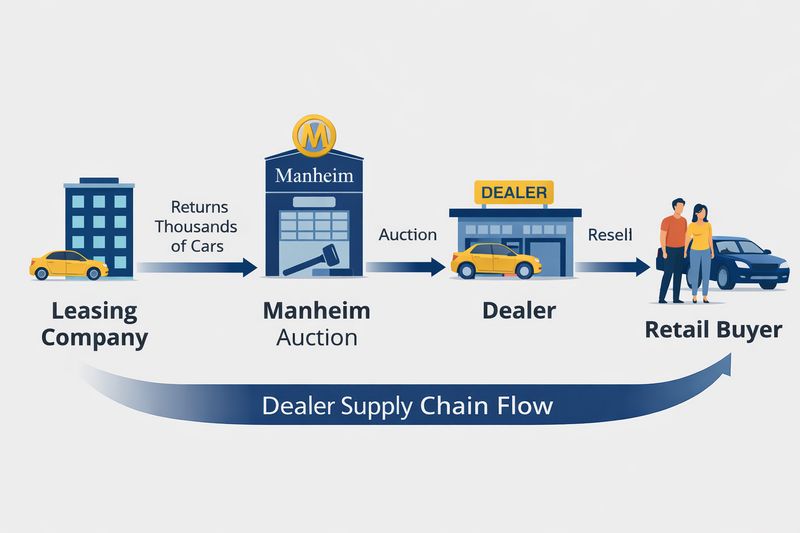
Here is how it usually works:
- A leasing company returns thousands of cars
- Those cars go to Manheim
- Dealers buy them at auction
- Dealers recondition and resell them to the public
Manheim acts as the bridge between large sellers and retail dealers.
Without auctions like Manheim, used car pricing would be far less transparent and far more chaotic.
Why Only Licensed Dealers Can Buy
One of the biggest reasons people think Manheim is “shady” is because the public cannot buy directly.
This restriction is not a trick. It exists for legal and practical reasons:
- dealer licensing laws
- resale tax rules
- title processing regulations
- arbitration and disclosure standards
Manheim assumes buyers:
- understand auction rules
- can evaluate risk
- can handle titles and transport
Most private buyers are not prepared for that environment. Limiting access actually reduces disputes and protects the system.
Is Manheim Safe and Trustworthy?
Manheim is safe in the sense that:
- auctions follow strict rules
- announcements and disclosures are mandatory
- arbitration systems exist for eligible vehicles
However, safe does not mean risk-free.
Manheim does not promise that every car is perfect.
Buyers are expected to:
- read condition reports
- listen to announcements
- understand “as-is” rules
Professional buyers accept this risk because lower prices come with responsibility.
Auction Risks and Common Misconceptions
“Manheim sells bad cars”
Not true. Manheim sells everything — good, average, and rough. Condition is disclosed, not hidden.
“Only insiders get good deals”
Also not true. Prices are driven by competition, not favoritism.
“If it’s dealer-only, it must be shady”
In reality, it is dealer-only because:
- laws require it
- complexity requires it
- volume requires it
Most people drive cars that once passed through Manheim, even if they never knew it.
Is Manheim a Scam?
No. Manheim is not a scam.
It is a professional wholesale marketplace built for experienced buyers.
The confusion comes from people expecting:
- retail protections
- test drives
- return policies
Manheim is not retail.
It is the source before retail.
What Manheim Does — Services, Inventory Sources & Dealer Tools
Manheim is not just a place where cars are auctioned.
It is a full-service wholesale system built to move vehicles from sellers to dealers as efficiently as possible.
For budget-focused buyers, this explains why dealers can source cars quickly and sometimes sell them cheaper than private sellers.
Wholesale Dealer Auctions (In-Lane + Simulcast)
At its core, Manheim runs wholesale auto auctions.
There are two main formats:
- In-lane auctions at physical Manheim locations
- Simulcast auctions, where dealers bid online in real time while cars run in the lane
A dealer can stand in the auction lane or sit at a desk and bid on the same car. Prices are live, transparent, and driven by demand.
Manheim also operates online-only marketplaces where vehicles are available outside scheduled auction days.
Where Manheim Cars Come From
Manheim does not own most of the cars it sells.
It acts as a marketplace for large and small sellers.
Common inventory sources include:
- leasing companies returning off-lease vehicles
- rental car companies rotating fleets
- banks and lenders selling repossessions
- dealerships wholesaling excess inventory
- commercial and government fleets
Because of this mix, Manheim inventory ranges from nearly new cars to higher-mileage work vehicles.
Reconditioning Services
Many vehicles arrive at Manheim needing light work before sale.
Manheim offers reconditioning services, such as:
- basic mechanical repairs
- brake and tire replacement
- fluid services
- cosmetic touch-ups
Sellers choose whether to recondition cars before auction to improve sale prices. Buyers benefit because cars are often more retail-ready.
Inspection & Grading
Before a car goes to auction, Manheim can perform professional inspections.
These inspections create condition reports that include:
- exterior and interior condition
- mechanical notes
- visible damage
- Manheim grading scores
This system allows buyers to evaluate cars remotely instead of guessing.
For dealers working on tight margins, accurate inspections help avoid costly mistakes.
Title Processing
Title handling is one of the biggest headaches in the used car business.
Manheim helps simplify it.
Manheim manages:
- title verification
- title transfer
- title status updates
This reduces delays and legal issues for dealers. While title delays can still happen, the process is more structured than private-party deals.
Floorplan Financing (NextGear Capital)
Manheim buyers often use floorplan financing to purchase inventory.
Through NextGear Capital, dealers can:
- buy cars without paying full cash upfront
- finance inventory while it sits on the lot
- manage cash flow more effectively
This is one reason dealers can keep prices competitive even when budgets are tight.
Transportation Solutions
After a vehicle is sold, it needs to move.
Manheim offers transportation options through trusted partners, including:
- dealer-to-lot shipping
- auction-to-dealer transport
- regional and long-distance delivery
This saves dealers time and helps vehicles reach retail lots faster.
Recon & Imaging Services
Presentation matters, even at auction.
Manheim provides:
- professional vehicle photography
- 360-degree imaging
- damage highlighting
- recon tracking
These tools help buyers see what they are bidding on, especially when purchasing online.
Digital Tools (Manheim.com, Manheim Express, LotVision)
Manheim invests heavily in technology.
Key digital tools include:
- Manheim.com — search inventory, bid, track purchases
- Manheim Express — mobile-first buying and selling
- LotVision — real-time tracking of vehicle location, status, and recon progress
For dealers, these tools reduce guesswork.
For budget buyers, they help explain how dealers can source, price, and move cars so efficiently.
How Manheim Auctions Work — Full Process Explained
Manheim auctions can look confusing from the outside. Cars move fast, prices jump quickly, and decisions are made in seconds.
But the process itself is structured and predictable once you understand the steps.
This section explains how Manheim auctions actually work, both in the lane and online.
Pre-Sale Listing and Vehicle Setup
Before a car ever reaches the auction lane, it is listed and prepared.
This includes:
- vehicle check-in
- condition report creation
- photos and imaging
- title status review
- assignment to a sale day and lane
Buyers can review inventory days in advance. This allows dealers to shortlist vehicles, check pricing, and plan bids instead of reacting blindly on sale day.
Simulcast Online Bidding
Simulcast lets buyers bid online in real time while the car is running in a physical auction lane.
Here is how it works:
- the car appears in the lane
- the auctioneer calls bids
- online bidders see the action live
- bids from the lane and online compete equally
A dealer can win a car without being physically present. This is critical for buyers managing tight schedules or multiple markets.
Simulcast is one of the main reasons Manheim can handle such large volumes efficiently.
In-Lane Live Bidding
Traditional in-lane bidding still exists and is heavily used.
Buyers stand in the lane and:
- see the car in person
- hear announcements directly
- read sale lights immediately
In-lane buyers often prefer this format when inspecting higher-risk vehicles or when buying in large quantities.
Both in-lane and Simulcast buyers compete on the same vehicle at the same time.
Timed Bidding and OVE Marketplace
Not all Manheim sales happen live.
Manheim also operates timed auctions and the OVE (Online Vehicle Exchange) marketplace.
OVE allows:
- 24/7 browsing
- fixed-price listings
- counteroffers
- delayed decision-making
This format is useful for buyers who want more time to analyze numbers or avoid the pressure of live bidding.
Run Numbers, Lanes, and Announcements
Each vehicle is assigned:
- a run number (order of sale)
- a lane (physical or virtual location)
Auction announcements are critical. They may disclose:
- mechanical issues
- title problems
- mileage discrepancies
- structural or frame concerns
Missing an announcement can mean missing important risk information.
Sale Lights Explained (Green, Yellow, Red)
Manheim uses sale lights to signal buyer protection levels.
Green Light
The vehicle qualifies for arbitration if major issues are found after purchase. This offers the highest level of protection.
Yellow Light
Limited arbitration. Certain issues may not qualify for disputes.
Red Light
The vehicle is sold as-is. No arbitration for mechanical issues.
Budget buyers often think red light means “bad car.”
In reality, it means higher risk, lower protection, and usually a lower price.
DealShield Guarantees (Optional Protection)
DealShield is optional buyer protection that sellers can add.
It may cover:
- engine or transmission issues
- major mechanical failures
- certain structural problems
DealShield increases buyer confidence but also affects pricing. Cars with stronger protection usually sell for more.
How Bidding Actually Works in Practice
Bidding moves fast.
Dealers must decide:
- their maximum price
- acceptable risk level
- resale potential
There is no time to hesitate. This is why professional buyers prepare in advance.
For budget-conscious buyers, this explains why:
- mistakes are costly
- experience matters
- low prices always involve trade-offs
Want to Buy from Manheim Auctions?
BidNDrive helps private and international buyers register, place bids, and purchase vehicles from Manheim even without a dealer license. Our team guides you through registration, bidding, and shipping.
- ✅ No dealer license required
- ✅ Access to thousands of vehicles
- ✅ Transparent pricing & support
- ✅ Domestic + export shipping
Who Can Buy at Manheim — Dealer License Requirements
One of the most common questions people ask is simple:
“Can anyone buy from Manheim?”
The answer is clear: no.
Manheim is a strictly dealer-only auction.
This rule is not optional, and it is not unique to Manheim. It is a legal and structural requirement of the wholesale auto market.
Manheim Is Strictly Dealer-Only
To bid or buy at Manheim, you must operate as a licensed automotive business.
Manheim sells vehicles intended for resale, not personal use. Because of that, buyers must meet state and federal requirements related to:
- taxation
- title transfer
- consumer protection laws
Private individuals do not meet these requirements, which is why public access is blocked.
Accepted Dealer License Types
Manheim accepts several types of valid licenses, depending on the state.
Common accepted license types include:
- used car dealer license
- new car dealer license
- wholesale dealer license
- auto broker license (in certain states)
The license must be:
- active
- issued by a U.S. state
- tied to a legitimate business entity
Expired or provisional licenses are usually rejected.
Resale Certificate and EIN Requirements
In addition to a dealer license, buyers must provide:
- a resale certificate (or sales tax permit)
- a valid EIN (Employer Identification Number)
These documents confirm that:
- vehicles are purchased for resale
- sales tax will be handled properly
- the buyer operates as a business
Without these, Manheim will not approve an account.
Title and Broker Access Rules (State-Specific)
Title laws vary by state, and Manheim follows those rules closely.
In some states:
- only licensed dealers can receive titles
- brokers have limited or no title access
- wholesalers face additional restrictions
Because of this, Manheim may:
- limit bidding access
- restrict certain vehicle types
- require additional documentation
What is allowed in one state may be prohibited in another.
Why the Public Cannot Participate
Many budget buyers feel frustrated by this restriction.
They think: “If I could buy direct, I’d save thousands.”
The reality is more complicated.
Manheim assumes buyers:
- understand auction risk
- know how to inspect vehicles
- can handle arbitration rules
- can process titles and transport
Most private buyers are not prepared for that environment. Allowing public access would dramatically increase disputes, legal issues, and failed transactions.
For that reason, Manheim stays wholesale-only.
What This Means for Budget Buyers
Even though you cannot buy directly, Manheim still matters to you.
Most dealer inventory:
- started at Manheim
- was priced using Manheim data
- was sourced through Manheim lanes
Understanding dealer-only access helps explain:
- why prices differ between sellers
- why some cars never reach public listings
- how dealers structure their costs
How to Register for Manheim — Required Documents, Approval & Setup
Registering for Manheim is not instant, and it is not casual.
Manheim treats every buyer as a licensed business, not an individual shopper.
If documents are missing or incorrect, approval will be delayed or denied.
Dealer License and Resale Permit
The foundation of Manheim access is a valid dealer license.
You must submit:
- an active dealer license issued by your state
- a resale certificate or sales tax permit
The license must match:
- your business name
- your business address
- your state registration
If any detail does not match, Manheim will flag the application.
EIN and Business Verification
Manheim requires an Employer Identification Number (EIN).
This confirms that:
- you operate as a business entity
- purchases are made for resale
- tax reporting is handled properly
Sole proprietors without an EIN are usually not approved.
Personal Identification
Manheim verifies the identity of the person responsible for the account.
You will need:
- government-issued photo ID
- proof that you are authorized to act for the business
This step helps prevent fraud and unauthorized access.
Bank Information for ACH Payments
Manheim does not operate like a retail checkout.
Buyers must provide:
- U.S. bank account information
- ACH authorization
This allows Manheim to:
- collect buyer fees
- process vehicle payments
- handle refunds or adjustments
Cash, cards, and wire-only setups are not standard.
Floorplan Setup (Optional)
Many dealers choose to set up floorplan financing during registration.
This is optional, but common.
Through partners like NextGear Capital, dealers can:
- buy cars without paying full cash upfront
- finance inventory while it sits on the lot
- manage cash flow more effectively
Floorplan approval is separate from Manheim approval and may take additional time.
Manheim Account Activation Steps
Once documents are submitted, Manheim performs a review.
Typical steps include:
- Online application submission
- Document verification
- Business compliance review
- Payment method approval
- Account activation
Approval usually takes several business days, not hours.
After activation, the buyer can:
- access Manheim.com
- register for sales
- bid in-lane or via Simulcast
Why the Process Is Strict
Some buyers expect a quick sign-up and get frustrated.
Manheim’s strict process exists because:
- large amounts of money move daily
- titles must be handled legally
- sellers expect professional buyers
This protects the entire marketplace.
What This Means for Budget Buyers
For individuals, direct registration is not possible.
That is why many budget-conscious buyers work through:
- licensed dealers
- brokers
- export companies
Manheim Fees Explained — Buyer Fees, Seller Fees & Additional Charges
Manheim prices are not just about the winning bid.
Fees are a major part of the final cost, and this is where many budget-focused buyers get surprised.
Dealers who stay profitable understand every fee in advance. Those who don’t often overpay without realizing it.
Why Manheim Fees Exist
Manheim is not a free marketplace.
It provides inspections, auctions, paperwork, arbitration systems, technology, and logistics.
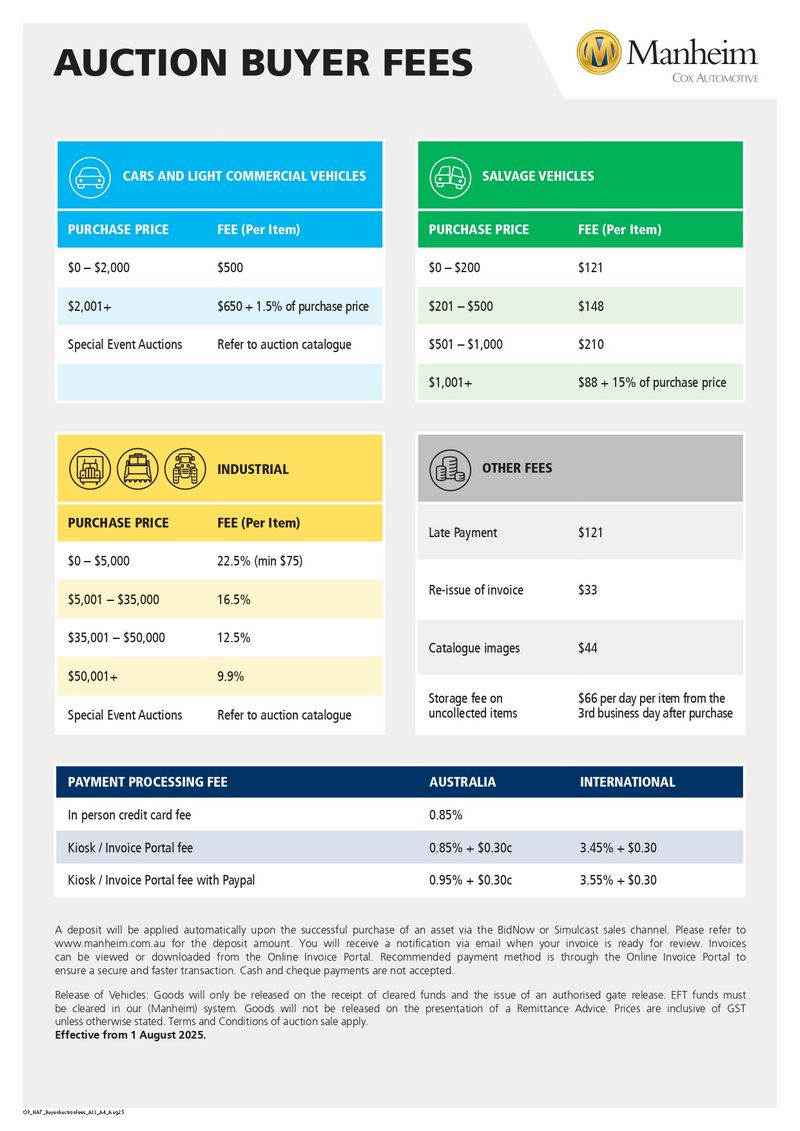
Fees cover:
- operating auction lanes
- digital platforms
- title handling
- buyer protection systems
The key is not avoiding fees — it’s factoring them into your max bid.
Simulcast Fee (Online Bidding)
If a buyer wins a vehicle via Simulcast, an additional online bidding fee applies.
- Fee amount varies by auction location
- Usually ranges from $50 to $100+ per vehicle
This fee does not apply to in-lane buyers.
Seller Commission
Sellers also pay Manheim fees.
Seller fees may include:
- seller commission
- run fee
- listing and processing charges
These fees encourage sellers to price vehicles realistically, but they also influence reserve prices.
Run Fee
The run fee is charged to sellers for placing a vehicle into a scheduled auction lane.
It covers:
- auction placement
- lane operations
- administrative handling
Buyers do not pay run fees directly, but they affect how sellers price cars.
Post-Sale Inspection (PSI) Fee
Buyers may request a post-sale inspection after winning a vehicle.
This inspection helps verify:
- undisclosed damage
- mechanical issues
- condition inconsistencies
PSI fees are optional but commonly used for higher-risk vehicles.
Reconditioning & Imaging Fees
If a vehicle receives:
- mechanical repairs
- cosmetic work
- professional photos or 360° imaging
those services are billed separately.
These costs are usually paid by the seller, but in some cases they can be passed on to the buyer.
Gate Pass & Load-Out Fees
Once a vehicle is paid for, it must leave the auction lot.
Buyers may pay:
- gate pass fees
- load-out fees
These cover vehicle release and handling.
Storage Fees
Manheim allows a limited free storage window after sale.
After that:
- daily storage fees apply
- fees increase the longer the car sits
This is why dealers move cars quickly.
Title Processing Fees
Manheim charges fees for:
- title handling
- title transfer
- document processing
These fees help ensure titles are handled legally and tracked properly.
Arbitration Fees (If Applicable)
If a buyer files an arbitration case, additional fees may apply depending on:
- issue type
- outcome
- protection level
Not all vehicles qualify for arbitration.
What Fees Mean for Budget Buyers
Low hammer price does not always mean low total cost.
A car that sells for:
- $6,000
may end up costing: - $6,700–$7,000 after fees
Smart dealers calculate:
max bid + all fees = real cost
Calculate Your Total Cost on Each Lot Page
Use the built-in calculator available on every vehicle listing to see the full estimated cost — including auction fees, transportation, and export charges — before placing your bid.
- ✅ Transparent service pricing
- ✅ Help estimating total landed and sea cost
- ✅ Free auction history reports
- ✅ Bidding support available
How to Bid at Manheim — In-Lane, Simulcast, OVE & Manheim Express
Bidding at Manheim is fast, competitive, and unforgiving.
There is no time to rethink numbers once the auction starts.
Dealers who win consistently prepare before the sale and understand how each bidding platform works.
In-Lane Bidding (Physical Auctions)
In-lane bidding happens at Manheim auction locations.
Buyers:
- stand in the auction lane
- watch the car drive through
- hear announcements in real time
- signal bids to the auctioneer
This format gives the most direct control. Buyers can read the room, watch competing bidders, and adjust strategy instantly.
In-lane bidding is often preferred for:
- higher-risk vehicles
- expensive units
- cars with recent announcements
Simulcast Real-Time Online Bidding
Simulcast allows buyers to bid online while the car runs in the physical lane.
The experience is live:
- the auctioneer is streamed
- bids update instantly
- online and in-lane bids compete equally
Simulcast is ideal for buyers who:
- manage multiple auctions
- operate in different states
- want speed without travel
There is usually a small Simulcast fee, but the convenience often outweighs the cost.
OVE.com (24/7 Marketplace)
OVE (Online Vehicle Exchange) is Manheim’s always-open marketplace.
Unlike live auctions:
- there is no auctioneer
- bidding is not rushed
- buyers can submit offers and counteroffers
OVE works well for:
- fixed-price purchases
- vehicles with clear condition reports
- buyers who prefer negotiation over competition
This slower pace helps reduce emotional bidding mistakes.
Manheim Express (Mobile-First Buying & Selling)
Manheim Express is designed for speed and mobility.
It allows dealers to:
- buy and sell directly from a phone
- post vehicles quickly
- negotiate digitally
For sellers, it reduces listing friction.
For buyers, it provides access to inventory without full auction pressure.
Proxy and Max Bidding
Manheim allows buyers to set proxy bids or maximum bids in advance.
This means:
- you define the highest price you are willing to pay
- the system bids automatically on your behalf
Proxy bidding helps:
- avoid emotional overbidding
- stay disciplined
- manage multiple vehicles at once
It is especially useful for budget-focused buyers.
How “IF Sale” Negotiations Work
Some vehicles are marked as “IF Sale.”
This means:
- the seller has a reserve
- the final price needs seller approval
After the auction:
- the seller may accept
- reject
- or counter the offer
IF Sales are common on higher-value or cleaner vehicles. Patience and realistic pricing improve acceptance chances.
How to Avoid Bid Rejections
Bid rejections usually happen when:
- offers are far below market
- sellers have firm reserves
- buyer history shows non-completion
To reduce rejections:
- stay close to MMR values
- complete purchases quickly
- avoid excessive lowballing
Sellers prefer buyers who close deals smoothly.
How to Win More Cars at Manheim
Winning consistently is not about bidding the highest.
It is about bidding smart.
Successful buyers:
- know their max price before bidding
- factor in all fees
- avoid emotional bidding wars
- choose the right platform for each vehicle
- accept that not every auction will be a win
For budget buyers, discipline is the real advantage.
How to Buy Vehicles at Manheim — Step-by-Step Buyer Workflow
Buying a vehicle at Manheim follows a clear sequence.
The process is professional, structured, and designed for speed.
Skipping steps or rushing decisions is how buyers lose money — especially when budgets are tight.
Register and Verify the Dealership
Before anything else, the dealership must be:
- fully registered
- verified by Manheim
- approved for bidding
This includes dealer license validation, tax documents, and payment setup.
Without full approval, bidding is not allowed.
Search Inventory
Once approved, buyers can access inventory through:
- Manheim.com
- Simulcast listings
- OVE marketplace
Buyers filter by:
- make and model
- year and mileage
- location
- title status
This is where shortlists are created before auction day.
Review Condition Reports and Announcements
Every vehicle should be reviewed carefully.
Buyers examine:
- condition report grades
- damage photos
- mechanical notes
- title status
They also track auction announcements, which may disclose issues not shown in photos.
Ignoring this step is one of the most expensive mistakes new buyers make.
Place Bids
Bidding can happen:
- in-lane
- via Simulcast
- through OVE
- or Manheim Express
Buyers must know:
- their maximum price
- total cost including fees
- acceptable risk level
Once bidding starts, hesitation usually means losing.
Win the Vehicle
When a bid is accepted:
- the vehicle is marked as sold
- the buyer becomes financially responsible
If the sale is an IF Sale, final approval depends on the seller.
Once confirmed, the deal moves forward.
Post-Sale Inspections (PSI)
Buyers may request a post-sale inspection.
This inspection verifies:
- major mechanical issues
- undisclosed damage
- condition discrepancies
PSI helps protect buyers, especially on higher-risk vehicles.
It must be requested within strict time limits.
Payment
After purchase, buyers must:
- pay the vehicle cost
- cover buyer fees
- settle any additional charges
Payments are usually handled via:
- ACH
- floorplan financing
Late payments can result in penalties or account suspension.
Pickup or Transport
Once paid, the vehicle must leave the auction lot.
Buyers choose:
- self-pickup
- carrier pickup
- Manheim-arranged transport
There is a limited free storage period. After that, storage fees apply.
Receive the Title
The final step is title delivery.
Manheim processes:
- title transfer
- document verification
- title shipment
Title timelines vary based on:
- state rules
- seller speed
- title type
Until the title is received, resale is limited.
Why Following the Workflow Matters
Manheim is efficient but unforgiving.
Buyers who:
- follow the process
- meet deadlines
- plan costs
avoid most problems.
Manheim Condition Reports, Grading & Announcements
At Manheim, condition reports and announcements matter more than the photos.
This is where risk is explained — or ignored.
Buyers who understand Manheim’s grading system avoid surprises.
Those who don’t often buy problems they never planned for.
What a Manheim Condition Report Includes
A condition report (CR) is a standardized inspection summary created before auction.
It typically covers:
- exterior and interior condition
- mechanical observations
- tire and wheel condition
- visible damage and repairs
- warning indicators
Condition reports allow buyers to evaluate cars without seeing them in person.
Manheim CR Grade Scale (0.0–5.0)
Manheim uses a 0.0 to 5.0 grading scale.
- 4.0–5.0: Very clean, near retail-ready
- 3.0–3.9: Average wear, typical used condition
- 2.0–2.9: Noticeable issues, cosmetic or mechanical
- 1.0–1.9: Poor condition, heavy wear or problems
- 0.0–0.9: Severe damage or non-running
Grades are guides, not guarantees.
A 3.5 car can still have issues if buyers don’t read the details.
Structural Damage Disclosures
Structural or frame damage is a major risk factor.
If identified, Manheim discloses:
- frame damage
- structural repairs
- unibody issues
These disclosures affect:
- resale value
- financing options
- buyer protection eligibility
Structural announcements should never be ignored, especially for budget resale.
“As-Is” vs “Guaranteed” Vehicles
Not all vehicles come with the same protection.
As-Is Vehicles
- no mechanical arbitration
- buyer accepts full risk
- usually lower price
Guaranteed Vehicles
- eligible for arbitration
- higher buyer confidence
- often higher final bids
Lower price always means higher risk.
There is no free discount.
Green, Yellow, and Red Sale Lights
Sale lights communicate buyer protection levels.
- Green Light: arbitration allowed for major issues
- Yellow Light: limited arbitration
- Red Light: no arbitration, sold as-is
Many experienced buyers target red-light cars, but only when pricing reflects the risk.
Flood, Frame, and Odometer Announcements
Some issues must be announced clearly.
Common announcements include:
- flood damage
- frame or structural damage
- odometer discrepancies
- title branding
Announcements override written reports.
Missing one can turn a “deal” into a loss.
LotVision and Digital Condition Tracking
LotVision allows buyers to track:
- vehicle location
- inspection status
- recon progress
- release readiness
This helps buyers manage inventory remotely and avoid delays.
What to Check Before Bidding
Smart buyers always review:
- CR grade and details
- damage photos
- title status
- sale light color
- announcements history
Budget buyers often focus only on price.
Professionals focus on risk per dollar.
Why This System Exists
Manheim does not hide problems.
It discloses them.
The system assumes buyers:
- read reports
- listen to announcements
- understand trade-offs
Manheim MMR (Manheim Market Report) — Pricing Guide Explained
MMR is one of the most important tools in the wholesale car business.
If you want to understand why dealers pay what they pay, MMR is the reason.
It is not a guess.
It is a data-driven snapshot of real wholesale prices.
What Is MMR?
MMR (Manheim Market Report) is a pricing guide that shows:
- what similar vehicles have actually sold for
- in recent Manheim transactions
- in the wholesale market
Unlike retail price guides, MMR reflects dealer-to-dealer prices, not advertised asking prices.
How MMR Calculates Wholesale Value
MMR is built from:
- recent Manheim auction sales
- verified transaction data
- vehicle attributes such as year, mileage, trim, and region
The system analyzes patterns, removes outliers, and calculates a market-based value range.
This is why MMR changes frequently — sometimes weekly or even daily.
Market-Adjusted Pricing
MMR is not a national flat price.
It adjusts for:
- geographic region
- local supply and demand
- seasonal trends
A pickup truck may show higher MMR in Texas than in the Northeast.
A compact car may price higher during fuel spikes.
This makes MMR more accurate than static guides.
VIN-Specific Valuations
MMR works at the VIN level, not just model averages.
This means pricing reflects:
- actual mileage
- equipment and trim
- drivetrain
- market timing
Two identical-looking cars can have very different MMR values.
This level of detail helps dealers avoid paying “average price” for an above-average risk.
When MMR Is Accurate
MMR is most accurate when:
- vehicles are common
- condition is average
- recent sales volume is high
Late-model sedans, SUVs, and popular trims usually have very reliable MMR values.
When MMR Is Less Reliable
MMR can be less accurate when:
- vehicles are rare
- condition is extreme (very rough or very clean)
- the market shifts suddenly
Examples include:
- specialty cars
- heavily modified vehicles
- sudden demand spikes
MMR is a guide, not a guarantee.
How Dealers Use MMR in Practice
Dealers rarely treat MMR as a target.
They treat it as a reference ceiling.
Typical strategy:
- bid below MMR on average cars
- pay closer to MMR for clean units
- stay well below MMR on higher-risk vehicles
MMR helps buyers decide when to stop bidding.
How Budget Buyers Can Use MMR to Avoid Overpaying
Budget-focused buyers often chase “cheap” prices.
MMR helps define what cheap actually means.
Smart use of MMR includes:
- comparing bid price to MMR before bidding
- factoring in all fees
- adjusting for condition and risk
If your total cost is close to or above MMR, the deal is usually gone.
Why MMR Matters So Much
MMR keeps the wholesale market honest.
It prevents:
- emotional bidding
- extreme overpricing
- unrealistic seller expectations
Titles & Paperwork — Timeline, Title Delays & Buyer Expectations
Titles are the least exciting part of buying at Manheim — and one of the most important.
A vehicle without a title is not ready for resale, no matter how cheap it was.
Understanding how Manheim handles paperwork helps buyers avoid cash flow problems and frustration.
How the Manheim Title Process Works
Manheim does not create titles.
It collects, verifies, and transfers them from sellers to buyers.
After a sale:
- The seller submits the title to Manheim
- Manheim verifies the document
- The title is processed and released to the buyer
Manheim tracks title status digitally, so buyers can monitor progress.
Standard Title Delivery Timeline
For most clean-title vehicles, delivery takes:
- 7 to 14 business days after sale
This timeline assumes:
- the seller already has the title
- no errors exist
- state processing is normal
Delays usually start when one of these conditions is missing.
Electronic Titles (eTitles)
Some states support electronic titles.
In those states:
- titles can be transferred digitally
- processing is often faster
- mailing delays are eliminated
Not all sellers or states support eTitles, so timelines vary.
Title Absent Vehicles
Some vehicles sell as title absent.
This means:
- the seller does not yet have the title
- the buyer accepts a delay
Typical title-absent timelines range from:
- 15 to 45 days, depending on the seller and state
Title-absent vehicles often sell cheaper, but they tie up capital longer.
Salvage Titles and Branded Titles
Manheim also sells vehicles with:
- salvage titles
- rebuilt titles
- flood or other branded titles
These titles are disclosed before bidding.
Buyers must understand:
- resale restrictions
- export rules
- state-specific branding laws
Salvage does not mean illegal, but it does mean limited flexibility.
Arbitration Rules for Title Issues
If a title problem occurs, arbitration rules apply.
Arbitration may be allowed when:
- the title does not match disclosures
- branding was not announced
- ownership issues arise
Arbitration is time-limited. Buyers must act quickly once an issue is discovered.
Common Reasons for Title Delays
Title delays usually happen because:
- sellers submit titles late
- lien releases are missing
- state processing is slow
- paperwork contains errors
Manheim can manage the process, but it cannot control third-party delays.
What Buyers Should Expect Realistically
Budget buyers often expect:
- instant titles
- zero paperwork issues
That is unrealistic in wholesale auctions.
Smart buyers plan for:
- occasional delays
- capital tied up for weeks
- inventory sequencing
Buying cheaper often means waiting longer.
Why Title Knowledge Matters
Titles control:
- resale timing
- cash flow
- legal compliance
Manheim provides structure and tracking, but patience is part of the cost.
Manheim Transportation & Delivery — Options, Process & Timeframes
Buying a car at Manheim is only half the job.
The vehicle still needs to leave the auction lot — on time and without extra fees.
Transportation planning matters, especially for buyers working with tight margins.
Does Manheim Deliver Vehicles?
Manheim itself does not operate trucks, but it coordinates delivery through trusted partners.
The main transportation partner is Ready Logistics, which connects buyers with licensed carriers and manages scheduling.
Buyers can choose:
- Manheim-arranged transport
- their own carrier
- self-pickup
Each option has different costs and timelines.
Manheim’s Ready Logistics (Transport Partner)
Ready Logistics simplifies transport by:
- providing carrier quotes
- coordinating pickup
- tracking vehicle movement
It is often used by:
- out-of-state buyers
- multi-location dealers
- exporters
Pricing depends on distance, vehicle size, and carrier availability.
Self-Pickup vs Carrier Pickup
Self-Pickup
Buyers or their drivers:
- arrive at the auction
- present required documents
- drive the vehicle off the lot
This is the cheapest option but only works if:
- the car is drivable
- insurance is active
- the buyer is nearby
Carrier Pickup
Most buyers use carriers.
Carrier pickup:
- works for non-running vehicles
- avoids travel
- scales for multiple units
This option costs more but saves time.
Gate Pass Rules
Before any vehicle leaves Manheim, a gate pass is required.
Gate passes are issued only after:
- full payment is received
- required waiting periods pass
- title status is cleared for release
Without a gate pass, no vehicle leaves the lot — even if transport is scheduled.
Storage Windows and Fees
Manheim allows a limited free storage period after purchase.
After that:
- daily storage fees apply
- fees increase over time
Storage charges can quickly erase profit, which is why dealers move cars fast.
Typical Transport Timeframes
Transport timing depends on:
- distance
- carrier availability
- season and weather
Typical estimates:
- local pickup: 1–3 days
- regional transport: 3–7 days
- long-distance shipping: 7–14 days
Delays happen during peak seasons.
Export Shipping (Via Brokers)
Manheim does not export vehicles directly.
Export buyers usually work with:
- licensed exporters
- freight forwarders
- customs brokers
Vehicles are transported from Manheim to:
- consolidation yards
- ports
- export warehouses
Export adds time but opens access to global markets.
Why Transport Planning Matters
Budget buyers often focus only on purchase price.
Transportation is where hidden costs appear.
Smart buyers:
- arrange transport early
- avoid storage fees
- choose the right pickup method
Selling Vehicles Through Manheim — Consignment, Fees & Strategy
Manheim is not only for buying.
It is one of the most effective places to sell vehicles at wholesale, especially when speed and volume matter.
Dealers, banks, leasing companies, and fleets use Manheim to turn vehicles into cash quickly.
How Selling on Manheim Works
Selling through Manheim is a consignment process.
The seller:
- delivers or ships the vehicle to a Manheim location
- provides title or title status
- chooses sale type and date
Manheim:
- inspects the vehicle
- lists it for auction
- runs the sale
- collects payment from the buyer
After the sale, Manheim deducts fees and sends proceeds to the seller.
Pre-Sale Reconditioning and Imaging
Sellers can improve results by preparing vehicles before auction.
Common pre-sale services include:
- light mechanical repairs
- cosmetic touch-ups
- professional photos
- 360° imaging
Clean, well-presented cars attract more bidders and higher prices.
Skipping recon saves money upfront but often reduces final sale price.
Reserve vs No-Reserve Sales
Sellers must decide whether to set a reserve price.
Reserve Sales
- seller sets a minimum acceptable price
- protects against selling too low
- may result in no sale
No-Reserve Sales
- vehicle sells to the highest bidder
- attracts more bidders
- often sells faster
Many high-volume sellers prefer no-reserve because it guarantees movement.
How Seller Fees Are Calculated
Seller fees vary by:
- auction location
- sale type
- services used
Common seller charges include:
- seller commission
- run fee
- listing and processing fees
- recon and imaging costs
Fees are usually deducted from the sale proceeds.
Tips for Maximizing Sale Price
Sellers who perform well at Manheim focus on details.
Best practices include:
- choosing the right sale day
- setting realistic reserves
- investing in basic recon
- providing clean titles
- using accurate disclosures
Overpricing or hiding issues almost always backfires.
Selling Online via Manheim Express
Manheim Express allows sellers to:
- list vehicles digitally
- sell without sending cars to physical auctions
- negotiate directly with buyers
This is ideal for:
- small dealers
- quick turn inventory
- mobile-first operations
Manheim Express reduces friction and speeds up the sale process.
Why Sellers Choose Manheim
Manheim offers:
- access to thousands of qualified buyers
- transparent pricing
- fast liquidation
- nationwide reach
For sellers, Manheim is not about squeezing every dollar.
It is about certainty, speed, and scale.
Manheim Locations, Auction Schedule & Specialty Sales
Manheim’s scale is one of its biggest advantages.
With a nationwide network and predictable schedules, buyers and sellers can plan inventory flow instead of reacting last minute.
Manheim Locations Across North America
Manheim operates 100+ auction locations across:
- the United States
- Canada
- select international markets
Most major metro areas have at least one Manheim facility. This reduces transport distance and helps control costs.
Large locations often handle:
- thousands of vehicles per week
- multiple lanes running at the same time
Weekly Auction Schedules
Manheim auctions run on fixed weekly calendars.
Each location publishes:
- sale days
- lane assignments
- seller types
- specialty events
Buyers can review schedules in advance and plan bidding strategies days or weeks ahead.
This consistency is critical for dealers managing cash flow and inventory turnover.
Specialty Sales and Dedicated Lanes
Not all Manheim auctions are general sales.
Manheim operates specialty lanes focused on specific vehicle types.
Exotic and Luxury Vehicle Lanes
Some locations host lanes for:
- high-end luxury vehicles
- exotics
- premium performance models
These sales attract specialized buyers and usually feature stricter condition standards.
Heavy Trucks and Commercial Equipment
Manheim also sells:
- heavy-duty trucks
- commercial vehicles
- work vans
These lanes serve:
- contractors
- fleet operators
- exporters
Pricing and bidding dynamics differ from passenger vehicles.
Powersports and Specialty Units
Certain locations run auctions for:
- motorcycles
- ATVs
- recreational vehicles
These lanes operate on separate schedules and attract niche buyers.
Commercial Fleet Sales
Large fleet operators use Manheim to rotate inventory.
Fleet sales often include:
- rental returns
- service vehicles
- corporate fleets
These vehicles may have higher mileage but consistent maintenance records.
Bank and Lease Company Dedicated Lanes
Banks and leasing companies often have dedicated auction lanes.
These lanes feature:
- repossessions
- off-lease vehicles
- end-of-term inventory
Buyers know exactly what type of vehicles to expect, which improves pricing accuracy.
Why Auction Structure Matters
For budget-focused buyers, structure reduces risk.
Knowing:
- where the cars come from
- when they run
- who is selling
makes it easier to spot value and avoid bidding blindly.
Arbitration & Buyer Protection — Green, Yellow & Red Light Rules
Arbitration is Manheim’s system for resolving disputes after a sale.
It exists to protect buyers — but only within clearly defined limits.
Many first-time buyers misunderstand arbitration and assume it works like a return policy. It does not.
How Manheim Arbitration Works
Arbitration allows buyers to dispute certain problems only if:
- the issue qualifies under Manheim rules
- the vehicle has the right sale light
- the claim is filed within the allowed time
If any condition is missing, arbitration is denied.
Green Light Vehicles — Full Arbitration
Green light offers the strongest buyer protection.
Buyers may dispute:
- major mechanical failures
- undisclosed engine or transmission issues
- certain structural problems
- some safety-related defects
Green-light cars usually sell for higher prices because risk is lower.
Yellow Light Vehicles — Limited Arbitration
Yellow light means limited protection.
Buyers may dispute:
- specific announced categories only
- certain title or disclosure issues
Mechanical arbitration is often restricted.
Yellow-light vehicles sit between safety and savings.
Red Light Vehicles — No Arbitration
Red light vehicles are sold as-is.
This means:
- no mechanical arbitration
- no condition disputes
- buyer accepts all risk
Red-light cars are cheaper for a reason.
Experienced buyers use them carefully and price risk aggressively.
Mechanical Arbitration
Mechanical arbitration covers major failures such as:
- engine damage
- transmission failure
- severe drivability issues
It does not cover:
- normal wear
- maintenance items
- cosmetic problems
Claims must be supported by documentation and inspections.
Structural Arbitration
Structural arbitration applies when:
- frame or structural damage was not disclosed
- unibody damage affects safety or value
If properly disclosed, structural issues are not arbitrable.
Odometer Issues
Odometer problems are taken seriously.
Arbitration may apply if:
- mileage was misrepresented
- odometer status was not announced
Clear announcements eliminate arbitration rights.
Title Problems
Title arbitration may be allowed when:
- title branding was not disclosed
- ownership is invalid
- liens were not properly cleared
Title disputes must be filed quickly.
When Arbitration Is NOT Allowed
Arbitration is denied when:
- issues were announced
- the vehicle was red light
- the buyer missed the deadline
- the problem falls under normal wear
Arbitration is not insurance against bad judgment.
DealShield — Optional Buy-Back Protection
DealShield is optional protection offered by sellers.
It may cover:
- engine or transmission failures
- certain mechanical issues
DealShield increases buyer confidence but also increases sale price.
What Buyer Protection Really Means
Manheim does not guarantee perfect cars.
It guarantees clear rules.
Protection depends on:
- sale light
- disclosures
- buyer diligence
Start Buying from Manheim Today
Join thousands of buyers using BidNDrive to purchase vehicles from Manheim auctions with professional support, transparent service pricing, and worldwide shipping.
- ✅ Licensed U.S. auto broker since 2009
- ✅ No dealer license required
- ✅ Low service fees
- ✅ Domestic transport + export worldwide
Further Reading:
What is a Public Auctions? A Beginner's Guide to Buying Cars
Can Anyone Go to Car Auctions? Your Guide to Accessing Great Deals
Why Do Used Cars Go to Auction? Process & Benefits Explained
What to Do After Buying a Car from Auction?
Frequently Asked Questions
- Do you need a dealer license to buy from Manheim?
- Does Manheim allow public buyers?
- Can I buy one car for personal use?
- Can I use a broker to buy from Manheim?
- How do you get a bidder badge?
- Can you test-drive cars at Manheim?
- Can you inspect cars in person?
- Are Manheim cars clean title?
- Does Manheim sell salvage cars?
- What does “IF Sale” mean?
- Why do sellers reject bids?
- How fast does bidding move?
- Can I cancel a purchase?
- What is the Manheim buyer fee?
- Are fees negotiable?
- Do online bidders pay extra?
- What is a green light vehicle?
- What is a red light vehicle?
- What is a yellow light vehicle?
- Can you return a car?
- How long does it take to get the title?
- What does “title absent” mean?
- Can I sell a car before the title arrives?
- Does Manheim offer financing?
- Does Manheim deliver vehicles?
- How long can cars stay at Manheim?
- Can I export cars bought at Manheim?
- Are inspections guaranteed?
- Is MMR a retail price guide?
- Can MMR be wrong?
- Why are prices sometimes higher than MMR?
- Are all auctions live?
- Can I bid from my phone?
- What happens if I don’t pay on time?
- Is Manheim safe?
- Is Manheim worth it?