



Selling a rebuilt title car can feel tricky, but it’s completely possible to get a fair price if you know the right steps. This guide explains how to sell legally, price your car, and build buyer trust, helping budget-conscious sellers maximize returns while avoiding common pitfalls. Whether you’re selling privately, at an auction, or to a dealership, these tips make the process faster and easier.
What Is a Rebuilt Title
A rebuilt title is a designation given to a vehicle that was previously declared a total loss — often due to an accident, flood, or other significant damage — but has since been repaired and inspected to meet safety standards. Cars with rebuilt titles can be safe and reliable, but their value is generally lower than similar vehicles with clean titles. For budget-conscious buyers and sellers, understanding rebuilt titles is essential when navigating online auctions or private sales.
Difference Between Salvage and Rebuilt Titles
A salvage title is issued when an insurance company deems a car a total loss. These vehicles are not roadworthy until repaired and inspected. A rebuilt title, on the other hand, is granted after a salvage car has been repaired and passes state inspections confirming it’s safe to drive.
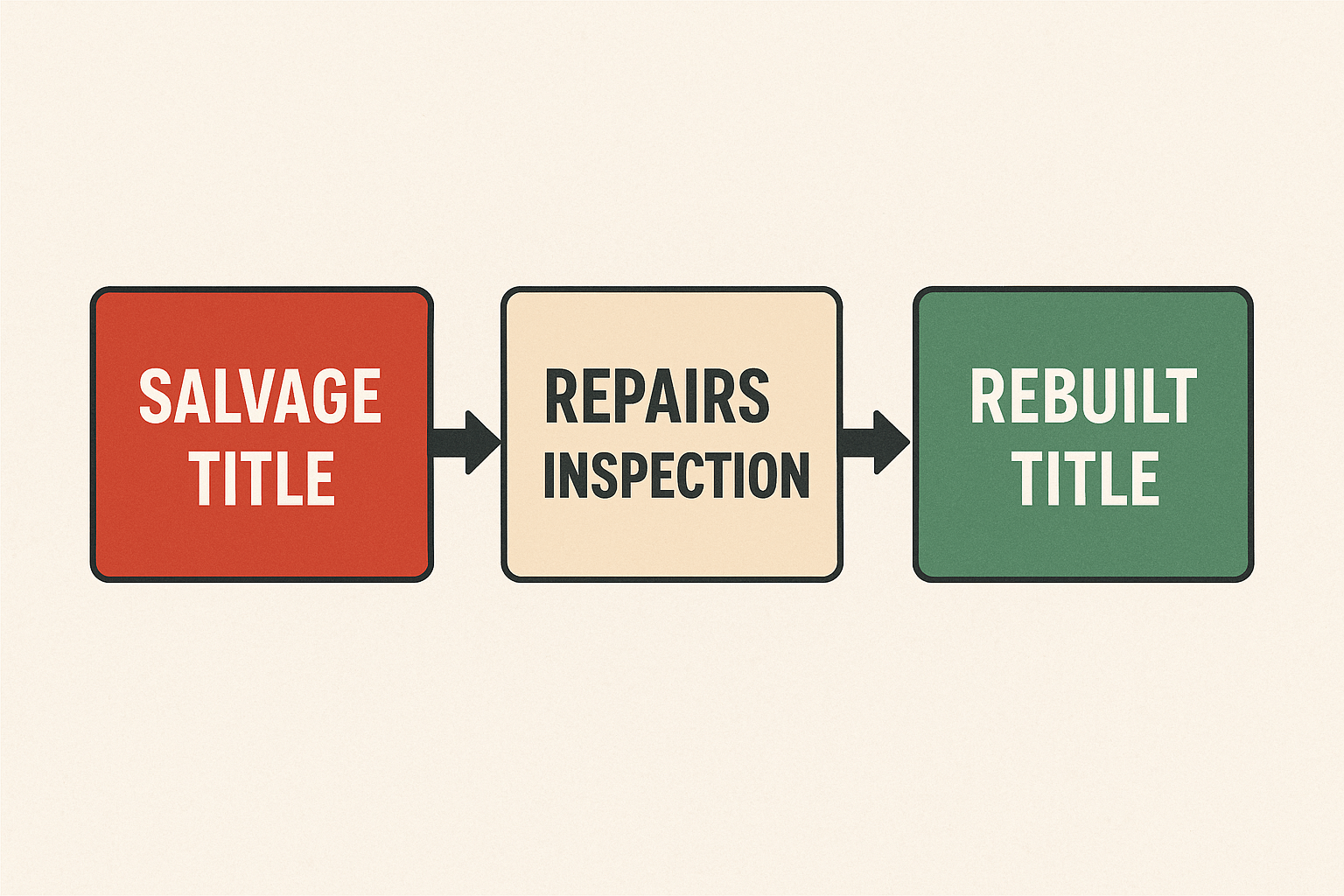
For example, if you buy a car from Copart with a salvage title, it cannot be legally driven until it’s rebuilt and inspected. Once it passes inspection, the title changes to rebuilt, signaling that the car is road-legal again — though buyers will still often pay less than for a clean-title vehicle.
How a Car Gets a Rebuilt Title
The process to get a rebuilt title usually involves several steps:
- Purchase of a salvage vehicle: Many cars start at insurance auctions after being written off.
- Repairs: The vehicle must be restored to meet safety and operational standards, including structural repairs, engine work, and electronics.
- State inspection: After repairs, a certified inspection ensures the car is safe to drive and meets all regulatory requirements.
- Title update: Once it passes inspection, the state issues a rebuilt title, replacing the previous salvage designation.
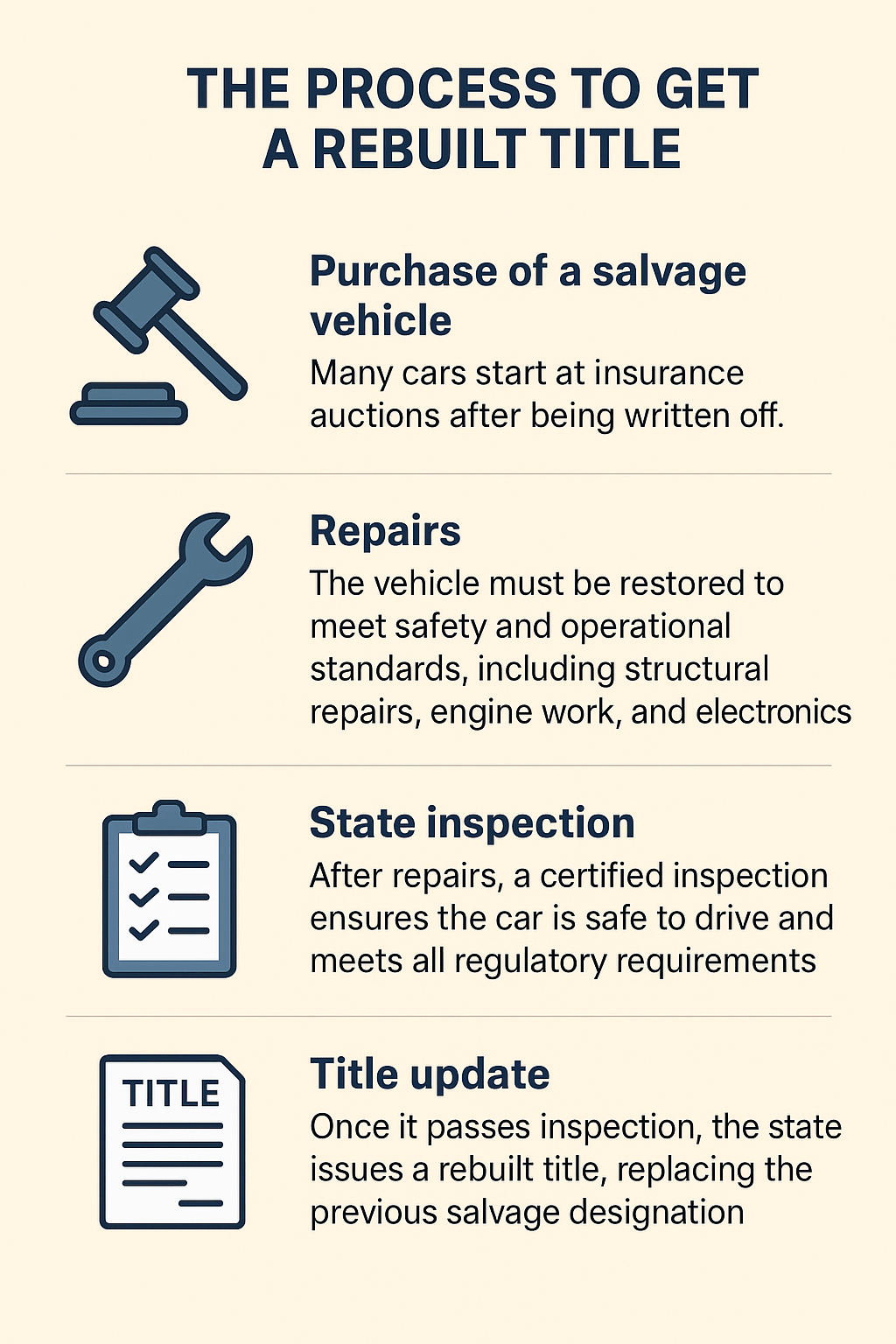
This process reassures buyers that, despite its history, the car is roadworthy and has met safety standards.
Why Cars Receive a Rebuilt Title After Repairs
Cars receive a rebuilt title because insurers, dealerships, or owners want to return a previously totaled vehicle to the road safely. It also allows sellers to recoup some value from a car that would otherwise be scrapped.
For example, a budget-conscious buyer might purchase a Dodge Durango with a rebuilt title for half the cost of a clean-title model. While the car has a history of damage, proper repairs and inspection mean it’s safe and functional — making it an attractive option for someone looking to save money without sacrificing reliability.
Can You Sell a Rebuilt Title Car
Yes, you can sell a rebuilt title car, but it comes with rules and considerations that buyers and sellers need to understand. While these vehicles are road-legal, their history affects pricing, buyer perception, and paperwork. For budget-conscious sellers, selling a rebuilt title car can still be profitable if approached correctly.
Is It Legal to Sell a Rebuilt Title Car?
Selling a rebuilt title car is completely legal in the United States. The key requirement is full disclosure: you must inform potential buyers that the vehicle has a rebuilt title. Failure to do so can lead to legal issues, including liability if the buyer later discovers the car’s history.
For example, if you purchased a rebuilt Honda Accord from an online auction and want to sell it privately, clearly stating that it has a rebuilt title protects you and ensures transparency. Buyers can then make informed decisions, and you avoid disputes or legal trouble.
State Regulations You Should Know
Each state has its own rules regarding the sale of rebuilt title vehicles. Some important points include:
- Title branding: The rebuilt title must appear on the vehicle’s official title documents.
- Disclosure requirements: States often require written notice to buyers about the vehicle’s history.
- Safety inspections: Some states may require proof that repairs were done correctly before resale.
For example, in California, the rebuilt title must be disclosed on all sale documents, and the car may need a special inspection before registration. In Texas, the title must clearly indicate “Rebuilt” to avoid confusion. Understanding your state’s regulations ensures a smooth and legal sale.
Common Myths About Selling Rebuilt Title Cars
There are several misconceptions that can make sellers hesitant:
- Myth 1: Nobody will buy a rebuilt car. In reality, many buyers are looking for affordable options, especially at online auctions or for project cars. A well-maintained rebuilt vehicle can attract plenty of interest.
- Myth 2: You can’t get a fair price. While rebuilt cars usually sell for less than clean-title vehicles, pricing fairly based on market value and condition can still yield a reasonable profit.
- Myth 3: Insurance won’t cover the car. Most insurance companies will insure rebuilt cars, though coverage types and premiums may differ.
How to Sell a Car With a Rebuilt Title
Selling a rebuilt title car requires extra care to ensure a smooth, legal, and profitable transaction. Buyers will want proof of repairs, transparency about the car’s history, and reassurance that the vehicle is safe and roadworthy. Following a clear process helps budget-conscious sellers attract buyers quickly while maximizing value.
Gather and Prepare the Required Paperwork
The first step is collecting all necessary documents. This includes:
- The rebuilt title itself, showing the vehicle’s current status.
- Repair invoices and receipts, proving that damage was fixed properly.
- Maintenance records, demonstrating ongoing care and reliability.
- State-required forms for disclosure of the rebuilt history.
Having these documents ready builds trust with buyers and speeds up the sale. For example, if you bought a rebuilt Ford F-150 at an auction, providing receipts for all structural and mechanical repairs reassures potential buyers that the truck is safe and well-maintained.
Get a Vehicle Inspection and Proof of Repairs
Even though the car has a rebuilt title, having a recent inspection report can boost buyer confidence. Independent inspections or certifications show that the vehicle is roadworthy and repairs were done correctly.
For example, a rebuilt Honda Civic with an inspection report noting no structural or mechanical issues can sell faster and often for a higher price than one without verification. Buyers want tangible proof, and inspection reports deliver that.
Be Honest About the Car’s History
Transparency is crucial. Clearly state in the listing and in discussions that the car has a rebuilt title. Avoid downplaying the vehicle’s history — honesty prevents disputes and protects you legally.
For instance, saying “This 2018 Toyota Corolla has a rebuilt title after a minor front-end accident. All repairs were professionally completed and inspected” is better than leaving the rebuilt title out of the conversation. Buyers appreciate honesty and are more likely to trust you.
Take High-Quality Photos and Create a Clear Listing
Visuals matter. Take clear, well-lit photos of the exterior, interior, engine, and any areas that were repaired. A detailed description should include:
- Year, make, and model
- Mileage
- Rebuilt title status and repair history
- Features and upgrades
For example, a rebuilt Dodge Durango listing with high-quality photos and a detailed breakdown of repairs is more likely to attract serious buyers than a listing with blurry photos and vague descriptions.
Offer a Test Drive and Transparency to Buyers
Allowing potential buyers to inspect and test drive the car builds trust and can lead to quicker sales. Be prepared to answer questions about repairs, parts replaced, and maintenance.
For budget-conscious buyers, a test drive and open discussion about the rebuilt title often make the difference between hesitation and purchase. Demonstrating transparency reassures buyers that they’re making a safe and informed decision.
How to Price a Rebuilt Title Car
Pricing a rebuilt title car can be tricky, but understanding how its history affects value is key to attracting buyers while still getting a fair return. Budget-conscious sellers need to balance competitive pricing with transparency about the vehicle’s past. Proper pricing also helps the car sell faster, especially at online auctions or in private sales.
How Rebuilt Titles Affect Vehicle Value
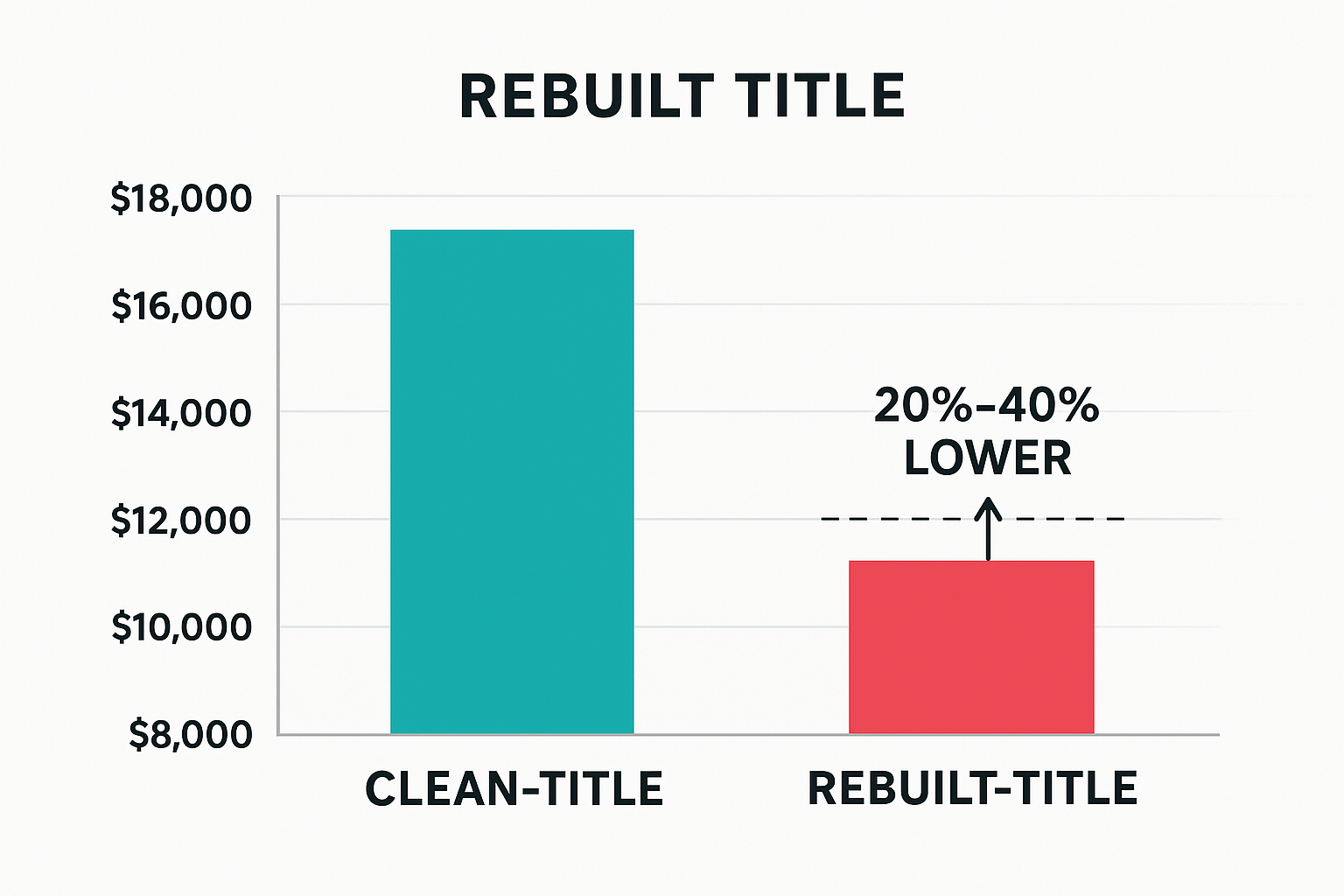
A rebuilt title typically reduces a car’s value by 20% to 40% compared to a similar clean-title vehicle. Buyers factor in potential repair concerns, resale difficulty, and perceived risk. However, the reduction isn’t fixed — well-repaired vehicles with thorough documentation can command higher prices than poorly documented cars.
For example, a 2019 Honda Civic with a rebuilt title may sell for $12,000 instead of $18,000 for a clean-title model, but detailed repair receipts and a recent inspection can justify a higher asking price within that range.
Factors That Influence the Price (Make, Model, Age, Damage Type)
Several factors determine how much your rebuilt title car is worth:
- Make and model: Popular, reliable vehicles like Honda Civics, Toyota Camrys, or Jeep Wranglers hold value better.
- Vehicle age and mileage: Newer cars or those with lower mileage typically sell for more, even with a rebuilt title.
- Type and extent of damage: Cars repaired from minor fender benders sell for more than those with structural or flood damage.
- Condition after repairs: Quality of repair work, cosmetic appearance, and mechanical soundness all impact price.
For instance, a rebuilt Jeep Gladiator with mostly cosmetic damage and excellent repairs may fetch closer to its market value than a rebuilt Ford Escape with major frame damage.
Using Online Tools to Estimate Fair Market Value
Several online resources can help determine a fair asking price:
- Kelley Blue Book (KBB): Adjust for salvage or rebuilt titles when entering the vehicle details.
- Edmunds: Provides market pricing and trade-in estimates.
- Auction sites like Copart or IAAI: Check completed sales of similar rebuilt vehicles to see real-world pricing trends.
Using multiple sources helps set a realistic price that attracts buyers while avoiding underselling your car.
Tips for Negotiating With Buyers
When negotiating, keep these tips in mind:
- Be transparent: Explain the repairs, inspections, and rebuild process. Documentation builds trust.
- Start slightly higher: Leave room for negotiation without overpricing.
- Highlight positives: Emphasize low mileage, recent maintenance, or upgrades that increase value.
- Understand buyer concerns: Be ready to answer questions about safety, parts availability, and resale potential.
For example, if a buyer hesitates on a rebuilt Honda Accord, pointing out recent brake replacement, new tires, and a clean inspection report can justify your price and close the sale faster.
Best Places to Sell a Rebuilt Title Car
Selling a rebuilt title car requires choosing the right platform to reach the right buyers. Each option has advantages depending on how quickly you want to sell, the price you hope to get, and the effort you’re willing to put in. Budget-conscious sellers can benefit from knowing where to list their vehicle to maximize returns while minimizing stress.
Online Car Auctions (Copart, IAAI, etc.)
Online auctions are ideal for selling rebuilt title vehicles, especially for sellers looking for fast sales and nationwide exposure. Platforms like Copart and IAAI specialize in salvage and rebuilt cars, attracting buyers who understand and expect the title history.
Advantages:
- Quick sale process with large buyer pools.
- Competitive bidding can drive up the final price.
- Nationwide reach, connecting sellers to buyers beyond their local area.
For example, a rebuilt 2018 Ford F-150 listed on Copart can attract bids from buyers looking for affordable trucks to repair, resell, or use for parts, often selling faster than through private sales.
Local Private Sales
Selling privately allows you to interact directly with buyers in your area. Platforms like Craigslist, Facebook Marketplace, and local classifieds can help you reach individuals looking for budget-friendly vehicles.
Advantages:
- You control the listing and negotiations.
- No auction fees, keeping more money in your pocket.
- Potential for a faster sale if priced correctly.
For example, listing a rebuilt Honda Civic locally may attract a buyer looking for a reliable, inexpensive car to commute to work, saving both parties on shipping or auction fees.
Dealerships and Trade-Ins — Are They Worth It?
Some dealerships accept rebuilt title vehicles as trade-ins, but they usually offer lower prices than private buyers or auctions. The convenience of a quick sale can appeal to those who want to avoid the hassle of advertising and negotiating.
Advantages:
- Fast and convenient.
- Less effort managing paperwork and buyers.
Disadvantages:
- Offers are typically lower than fair market value.
- Not all dealerships accept rebuilt title cars.
For example, a rebuilt Jeep Gladiator may be accepted at a dealership, but you might receive 20–30% less than if sold through an online auction.
Export Options for Rebuilt Vehicles
Some buyers overseas are willing to purchase rebuilt title cars, particularly in countries with less strict import restrictions. Exporting can expand your market and sometimes fetch higher prices than local sales.
Advantages:
- Access to buyers willing to pay more for certain models.
- Useful for rare or in-demand vehicles.
Disadvantages:
- Export regulations and shipping costs can complicate the process.
- Not all rebuilt cars qualify for export depending on local laws.
For example, a rebuilt Toyota Corolla or Nissan Altima might be exported to markets in Latin America or Asia, where demand for affordable used U.S. vehicles is high.
Can You Trade In a Rebuilt Title Car
Yes, you can trade in a rebuilt title car, but the process and expectations differ from trading in a clean-title vehicle. Dealerships are cautious because rebuilt cars have a lower resale value and may require extra disclosure or inspection. Understanding how dealers evaluate these vehicles helps sellers make smarter decisions and choose whether a trade-in or private sale is the better option.
How Dealers Evaluate Rebuilt Title Cars
When a dealer evaluates a rebuilt title car, they consider several factors:
- Extent of prior damage: Cars with minor cosmetic repairs are valued higher than those with structural damage.
- Quality of repairs: Well-documented repairs using OEM parts can improve trade-in value.
- Vehicle demand: Popular makes and models with strong resale potential are more attractive.
- Mileage and condition: Lower mileage and well-maintained cars still fetch better offers.
For example, a rebuilt Jeep Wrangler with minor collision repairs and full documentation may receive a higher trade-in offer than a rebuilt Ford Escape with major frame damage. Dealers aim to balance potential resale profit with risk.
Pros and Cons of Trading In vs. Private Sale
Trading In:
- Pros: Fast and convenient, reduces paperwork, allows immediate credit toward a new car purchase.
- Cons: Offers are typically lower than private sales, as dealers need to account for resale risk.
Private Sale:
- Pros: Potentially higher sale price, more control over negotiations.
- Cons: Requires more effort, including marketing, communication, and arranging inspections or test drives.
For budget-conscious sellers, a trade-in might be appealing if convenience matters more than maximizing the sale price. On the other hand, a private sale can yield better financial returns, especially if the car is in good condition and well-documented.
What to Expect From Dealership Offers
Dealership offers for rebuilt title vehicles are generally 20–40% lower than clean-title equivalents. Offers may also vary depending on the dealership’s experience with rebuilt cars, local market demand, and vehicle type.
For example, trading in a rebuilt 2019 Honda Accord at a dealership may yield $8,000, whereas a private sale could reach $10,500 if buyers are informed and confident in the repairs. Understanding this range helps set realistic expectations and prevents disappointment during the trade-in process.
Alternative Ways to Profit From a Rebuilt Title Car
Sometimes selling a rebuilt title car as a complete vehicle isn’t the most profitable option. There are alternative ways to make money, especially for budget-conscious sellers looking to maximize returns. Options like selling parts, working with salvage yards, or exporting internationally can often yield more than a traditional sale.
Selling the Car for Parts
One of the most profitable options for a rebuilt title car is dismantling it and selling the parts individually. Many buyers are looking for affordable replacement parts for common vehicles, especially engines, transmissions, body panels, and electronics.
For example, a rebuilt Toyota Camry may have perfectly functioning doors, headlights, or a drivetrain that can be sold separately for hundreds of dollars. While this approach takes more effort and time, it often results in higher total earnings than selling the car as a whole.
Selling to Salvage Yards or Rebuilders
Salvage yards and professional rebuilders are always on the lookout for rebuilt title vehicles. They purchase cars to repair, flip, or dismantle for parts. This option is faster than selling parts individually and requires less hands-on work.
For instance, a rebuilt Honda Accord could be sold to a local salvage yard at a fair price, allowing the seller to quickly turn the car into cash without dealing with multiple buyers or complex listings. While the price may be lower than a private sale, it’s convenient and quick.
Exporting the Car for International Buyers
Some rebuilt title cars are in high demand overseas, where regulations on rebuilt vehicles are more lenient. Exporting can open up a larger market and sometimes yield higher prices than selling locally.
For example, a rebuilt Ford F-150 or Toyota Corolla might be shipped to Latin America or Asia, where U.S.-made vehicles are sought after for reliability and affordability. Sellers can often receive better returns than local trade-ins or auctions, though they need to factor in shipping costs and export regulations.
How to Build Trust With Buyers
Selling a rebuilt title car requires extra effort to build buyer confidence. Many potential buyers are wary of vehicles with a history of damage, so providing clear evidence of repairs and transparency can make the difference between a quick sale and a stalled listing. For budget-conscious sellers, trust-building strategies help justify price and attract serious buyers.
Provide Repair Records and Inspection Reports
The first step is showing detailed documentation. Repair receipts, invoices, and inspection reports prove that the vehicle was repaired correctly and is roadworthy. These documents demonstrate accountability and reassure buyers that the car is safe and reliable.
For example, a rebuilt 2018 Honda Civic with a full record of replaced parts, structural repairs, and a passed state inspection gives buyers confidence and can allow the seller to ask for a higher price than a vehicle without documentation.
Show Before-and-After Photos of Repairs
Visual evidence is another powerful tool. Take clear photos before and after repairs, including damage areas, replaced parts, and overall vehicle condition. This transparency highlights the quality of work and builds trust with buyers who want to see exactly what was fixed.
For instance, showing photos of a rebuilt Jeep Wrangler’s fender, bumper, and engine bay before and after professional repairs can make a buyer more comfortable with a rebuilt title purchase.
Offer a Third-Party Inspection for Transparency
Allowing a third-party inspection by a certified mechanic or inspection service can significantly boost buyer confidence. An independent report verifies that repairs are safe, functional, and correctly completed, reducing perceived risk.
For example, a rebuilt Ford F-150 inspected by a local mechanic before sale provides proof that the vehicle is roadworthy. Buyers often feel more secure knowing a professional has certified the repairs, which can speed up the sale and potentially increase the offer.
Legal and Paperwork Requirements
Selling a rebuilt title car isn’t just about finding a buyer — it also involves legal responsibilities and proper documentation. Understanding these requirements helps sellers stay compliant, avoid disputes, and ensure a smooth transaction. For budget-conscious sellers, being prepared with the right paperwork can prevent costly mistakes or delays.
Title Transfer and Bill of Sale
The rebuilt title must be accurately transferred to the new owner. This typically involves completing a title transfer form and providing a bill of sale that clearly states the vehicle’s rebuilt status. Both documents serve as legal proof of ownership change and disclose the car’s history.
For example, when selling a rebuilt Toyota Corolla, the bill of sale should include:
- Vehicle identification number (VIN)
- Sale price
- “Rebuilt title” disclosure
- Signatures of both buyer and seller
Proper documentation protects you from future liability and ensures the buyer is fully informed.
State-by-State Disclosure Laws
Each state has specific rules for disclosing rebuilt title vehicles. Sellers must follow these regulations to avoid legal trouble:
- Some states require written notice to the buyer about the rebuilt status.
- Others mandate title branding and additional inspection documents.
- Failure to comply can result in fines or legal liability if the buyer claims they were misled.
For instance, California requires rebuilt title disclosure on the title itself and in the sale agreement, while Texas mandates inspection documentation before the vehicle can be registered. Checking your state’s DMV guidelines ensures compliance.
Insurance Considerations for Rebuilt Title Cars
Insurance policies for rebuilt vehicles differ from clean-title cars. Many companies will insure rebuilt title cars, but coverage options and premiums may vary:
- Full coverage: Some insurers offer full coverage, though premiums might be higher.
- Liability-only: Often the default, especially if the car’s value is significantly lower than market average.
- Documentation: Insurance companies usually require repair receipts and inspection reports before offering coverage.
For example, a rebuilt Honda Accord with complete repair records can qualify for comprehensive coverage, while a car without documentation may only get basic liability insurance. Understanding insurance requirements helps sellers answer buyer questions and facilitate a smooth transaction.
Tips to Make the Sale Easier and Faster
Selling a rebuilt title car can be challenging, but using the right strategies makes the process smoother and helps attract serious buyers quickly. Budget-conscious sellers benefit from approaches that build trust, highlight value, and reduce delays. Small efforts in marketing and communication often lead to faster sales at fair prices.
Write an Honest Yet Attractive Listing Description
Your listing should be transparent about the rebuilt title while emphasizing the car’s positives. Include essential details like year, make, model, mileage, and any notable features. Clearly state the rebuilt title status and summarize the repairs done.
For example: “2019 Honda Civic – rebuilt title after minor front-end damage. All repairs professionally completed, inspection passed, low mileage, excellent condition.” This honesty builds buyer trust while still highlighting value.
Highlight Quality Repairs and Upgrades
Showcasing recent repairs or upgrades can make your car stand out. Mention replaced parts, structural fixes, new tires, upgraded audio systems, or cosmetic improvements. Documentation and photos back up these claims.
For instance, if a rebuilt Toyota Camry has a new battery, brakes, and freshly painted panels, including this information in your listing reassures buyers that the car is well-maintained and worth the asking price.
Respond Quickly to Buyer Inquiries
Timely communication is crucial. Responding promptly to calls, messages, or emails keeps interested buyers engaged and increases the likelihood of closing the sale. Be ready to answer questions about the rebuilt history, inspections, and repairs.
For example, if a potential buyer asks about the quality of repairs on a rebuilt Jeep Wrangler, providing detailed answers and offering inspection reports or test drives can quickly move them toward making an offer.
Final Thoughts
Selling a rebuilt title car can be a smart move for budget-conscious sellers, but it comes with unique challenges and considerations. Understanding the pros, cons, and strategic timing helps maximize returns while avoiding potential pitfalls. Being prepared with knowledge and documentation ensures a smoother, more profitable sale.
Pros and Cons of Selling a Rebuilt Title Car
Pros:
- Ability to recoup part of your investment after significant repairs.
- High demand among buyers seeking affordable vehicles.
- Flexibility to sell through auctions, private sales, or salvage yards.
Cons:
- Lower resale value compared to clean-title cars.
- Some buyers may be hesitant or wary of past damage.
- Additional effort required for disclosure, documentation, and trust-building.
For example, a rebuilt Honda Civic can attract buyers quickly if repairs are documented and the car is priced fairly, but a rebuilt SUV with structural damage may take longer to sell and require more effort to justify its value.
When It Makes Sense to Sell — and When to Keep It
Selling makes sense if:
- You want to free up cash for another vehicle.
- The car has high repair costs or limited resale potential.
- You are confident in pricing and can provide full documentation.
Keeping the car may be better if:
- It meets your daily needs reliably.
- Repair history and inspection reports are strong, and resale value is reasonable.
- You want to avoid the hassle of selling and prefer continued use.
For instance, keeping a rebuilt Jeep Gladiator that runs well and meets your family or work needs might be more practical than selling it for slightly more than the repair costs.
Key Takeaways for Budget-Conscious Sellers
- Be honest and transparent about the rebuilt title.
- Gather all repair records, inspection reports, and relevant documentation.
- Price the vehicle fairly using market research and online valuation tools.
- Choose the right selling avenue—auctions, private sales, dealerships, or exports.
- Build trust with buyers through photos, documentation, and inspections.
Are you interested in buying a vehicle from Online Auto Auctions?
With this being said – you can still export vehicles and save up a few thousand dollars with Bidndrive. We have an inventory of over 150k plus vehicles with titles you can export for you to choose from. Once you have placed your bid and won the auction a Bill of Sale document is then emailed to you as proof of purchase – after full payments have been made.
To gain access and get started on your purchase, sign up for free.
Further Reading:
From Salvage to Rebuilt: Complete Guide to Restoring a Salvage Title Car
What Does a Rebuilt Title Mean?
Rebuilt Title vs. Clean Title: What You Need to Know
All About Salvage Title Inspection: What You Need to Know
Frequently Asked Questions
- Is it legal to sell a car with a rebuilt title?
- How much can I sell a rebuilt title car for?
- Where can I sell a rebuilt title car?
- Do I need paperwork to sell a rebuilt title car?
- Can I trade in a rebuilt title car at a dealership?
- How can I make my rebuilt title car more attractive to buyers?