


Good vehicle merchandising can make the difference between inventory that sells fast and cars that sit on the lot for months. This guide explains how dealerships use photos, pricing, videos, SEO, social media, and online listings to attract buyers and increase profit. You’ll also learn how budget-conscious shoppers evaluate listings and why transparency matters more than ever in modern auto sales.
What Is Vehicle Merchandising?
Vehicle merchandising is one of the most important parts of modern car sales. Buyers no longer visit multiple dealerships before making decisions. Most people now compare vehicles online first, often from their phones. Because of this, the way a vehicle is presented can directly affect how fast it sells and how much profit the seller makes.
Good merchandising helps vehicles stand out in crowded online marketplaces and gives buyers more confidence before contacting the seller.
Definition of Vehicle Merchandising
Vehicle merchandising is the process of presenting vehicles in a way that attracts buyers and increases the chances of a sale.
This includes:
- Vehicle photos
- Video walkarounds
- Pricing presentation
- Vehicle descriptions
- Feature highlights
- Online listings
- Social media promotion
For example, two similar Toyota Camrys may be listed online at nearly the same price, but the one with better photos, cleaner presentation, and a more detailed description will usually receive more clicks and leads.
Vehicle merchandising is not only about making cars look attractive. It is also about helping buyers understand:
- Vehicle condition
- Features
- Value
- Ownership benefits
- Financing or warranty options
Strong merchandising creates trust and improves buyer confidence before they even contact the seller.
Why Vehicle Merchandising Matters for Dealerships
Dealerships compete heavily online in 2026. Buyers can compare dozens of similar vehicles within minutes.
Without strong merchandising, even good vehicles may sit on the lot too long.
Poor presentation often leads to:
- Fewer clicks
- Lower buyer interest
- Reduced lead volume
- Longer selling times
For dealerships, this directly affects profitability.
Vehicles sitting too long create costs such as:
- Floorplan financing expenses
- Insurance costs
- Depreciation
- Lot space usage
For example, a dealer with strong merchandising may sell a used Honda CR-V in 10 days, while another dealer with weak photos and incomplete descriptions may struggle to sell a similar SUV for over a month.
Better merchandising helps dealerships move inventory faster and improve profit margins.
Vehicle Merchandising vs Traditional Car Sales
Traditional car sales relied heavily on in-person dealership visits.
Buyers usually visited lots physically to:
- Inspect vehicles
- Speak with salespeople
- Compare options
Today, most of the shopping process happens online first.
Buyers often decide:
- Which dealership to contact
- Which vehicles to test drive
- Which listings to ignore
before ever visiting a physical location.
Vehicle merchandising focuses heavily on digital presentation rather than only in-person selling skills.
For example, a buyer searching for a fuel-efficient commuter car may compare:
- Photos
- Mileage
- Vehicle history reports
- Financing offers
- Reviews
across several dealers online before sending a single message.
This means dealerships must now “sell the vehicle” digitally before speaking with the customer directly.
How Merchandising Affects Buyer Decisions
Vehicle merchandising strongly influences buyer psychology.
Good presentation creates trust and reduces uncertainty.
Buyers feel more comfortable contacting sellers when listings include:
- Clear photos
- Honest descriptions
- Service history
- Accurate pricing
- Professional presentation
For example, a listing showing clean interior photos, close-up tire images, and detailed maintenance information often feels safer to buyers than listings with only a few blurry pictures.
Buyers with limited budgets especially want reassurance that the vehicle is worth their money.
Merchandising also affects emotional reactions.
Vehicles that look clean, organized, and professionally presented often appear more valuable and desirable, even before buyers compare technical details.
Why Good Merchandising Helps Cars Sell Faster
Strong merchandising helps vehicles sell faster because buyers receive the information they need immediately.
Good listings answer common buyer questions before the customer even asks.
For example:
- Does the vehicle have a backup camera?
- Are service records available?
- Is financing offered?
- Has the vehicle passed emissions?
- Does it have accident history?
When listings provide clear answers, buyers move through the decision process faster.
Vehicles with professional merchandising usually generate:
- More clicks
- More messages
- More calls
- More test drive appointments
This reduces “days on market,” which is extremely important for dealerships managing large inventory.
Research Auction Vehicles Before You Place a Bid
Online vehicle auctions move fast, and strong research helps buyers avoid expensive mistakes. BidNDrive gives buyers access to vehicle history reports, auction photos, and pricing insights to help evaluate inventory more confidently before bidding.
- ✅ Free access to major U.S. auto auctions
- ✅ Vehicle history reports and VIN research tools
- ✅ Sold price data for smarter bidding decisions
- ✅ Support for first-time auction buyers
At BidNDrive, many buyers search auction inventory online first, meaning presentation quality often influences which vehicles receive the most bidding attention.
The Role of Merchandising in Online Auto Sales
Online vehicle sales depend heavily on merchandising because buyers cannot physically inspect every vehicle immediately.
Photos, videos, and descriptions become the digital replacement for the dealership experience.
Modern online merchandising often includes:
- 360-degree vehicle photos
- Walkaround videos
- VIN history reports
- Mobile-friendly listings
- Social media promotion
- Marketplace advertising
For example, a Facebook Marketplace listing with high-quality daylight photos and a short video walkaround will usually perform much better than a listing with poor images and almost no information.
Why Vehicle Merchandising Is Important in 2026
Vehicle merchandising has become more important than ever because the automotive market is now heavily digital. Buyers compare inventory online within seconds, often without visiting a dealership first. In 2026, dealerships must compete not only on price but also on presentation, transparency, and online visibility.
Strong merchandising helps dealers attract attention, build trust, and sell inventory faster in an increasingly competitive market.
Rising Competition in the Used Car Market
The used car market has become extremely competitive in recent years.
Buyers can now compare:
- Local dealerships
- Facebook Marketplace listings
- Online auction vehicles
- Nationwide inventory platforms
all from their phones.
For example, a buyer searching for a used Honda Accord may compare 20 similar listings within a few minutes.
Because buyers have so many options, weak vehicle presentation can quickly push a listing to the bottom of the search results.
Dealerships now compete not only with nearby sellers but also with:
- National dealership chains
- Independent dealers
- Online-only retailers
- Auction platforms
This growing competition makes vehicle merchandising a critical part of modern car sales.
Changing Buyer Expectations
Modern buyers expect far more information than buyers did several years ago.
Today’s customers want to see:
- High-quality photos
- Vehicle videos
- Service history
- Pricing transparency
- Financing details
- VIN reports
- Feature breakdowns
before contacting the seller.
For example, many budget-conscious buyers feel uncomfortable messaging a dealership if the listing contains only a few photos and almost no vehicle information.
Buyers also expect faster responses and clearer communication.
Dealerships that fail to meet these expectations often lose leads to competitors with better online presentation and stronger transparency.
Mobile-First Car Shopping Trends
Most vehicle shopping now happens on mobile devices.
Buyers browse inventory while:
- At work
- On lunch breaks
- Watching social media
- Comparing prices from home
Because of this, listings must work well on smartphones.
Mobile-friendly merchandising includes:
- Fast-loading images
- Easy-to-read pricing
- Short but informative descriptions
- Vertical video content
- Clear call-to-action buttons
For example, buyers scrolling Facebook Marketplace may skip listings immediately if:
- Photos load slowly
- Text formatting looks messy
- Important information is missing
Mobile-first shopping has completely changed how dealerships present inventory online.
Why Online Presentation Matters More Than Ever
Online presentation now creates the first impression for most buyers.
In many cases, buyers decide within seconds whether they trust a listing.
Good online presentation includes:
- Bright daylight photos
- Accurate vehicle descriptions
- Professional formatting
- Honest condition details
- Organized feature lists
For example, a clean Toyota RAV4 listing with 30 high-quality photos and detailed maintenance information will usually outperform a similar listing with blurry pictures and minimal text.
Strong presentation also helps buyers feel more confident when purchasing vehicles remotely.
This is especially important for:
- Out-of-state buyers
- Auction buyers
- Export customers
- Budget-conscious shoppers
who may not inspect the vehicle immediately in person.
The Impact of Social Media on Vehicle Sales
Social media now plays a major role in vehicle merchandising.
Platforms such as:
- Facebook Marketplace
- TikTok
- YouTube Shorts
have become major traffic sources for dealerships.
Short-form video content especially influences buyer attention in 2026.
For example, a quick walkaround video showing:
- Cold startup
- Interior features
- Backup camera
- Engine sound
can generate far more engagement than static photos alone.
Social media also helps dealerships:
- Reach local buyers
- Build trust through comments and reviews
- Retarget interested shoppers with ads
- Promote new arrivals quickly
Many younger buyers now discover vehicles directly through social media before visiting dealership websites.
Why Dealerships Must Stand Out Online
Because so many dealerships use similar inventory sources, strong merchandising often becomes the main competitive advantage.
Two dealerships may sell nearly identical vehicles, but the dealership with:
- Better photos
- Cleaner descriptions
- Faster responses
- Better video content
usually attracts more buyers.
For example, a budget buyer searching for a reliable commuter car may contact the dealership that appears more transparent and professional online, even if another dealer offers a slightly lower price.
Standing out online now requires more than simply uploading inventory.
Successful dealerships focus on:
- Branding consistency
- Professional presentation
- Buyer trust
- Content quality
- Fast lead response
These factors strongly affect conversion rates and inventory turnover.
How Merchandising Increases Inventory Turnover
Inventory turnover is extremely important for dealerships because unsold vehicles create ongoing costs.
Cars sitting too long on the lot may lose value due to:
- Depreciation
- Market changes
- Seasonal demand shifts
- Increased financing expenses
Strong merchandising helps vehicles sell faster by generating more:
- Views
- Leads
- Test drive appointments
- Buyer confidence
For example, a dealership with strong photo quality and optimized descriptions may sell vehicles weeks faster than competitors using poor online presentation.
The Main Goals of Vehicle Merchandising
Vehicle merchandising is not only about making cars look attractive online. Its main purpose is to help dealerships sell inventory more efficiently while improving profitability and buyer trust.
In 2026, successful dealerships use merchandising strategies to attract attention, generate leads, and reduce the amount of time vehicles sit unsold.
Good merchandising helps buyers feel more confident, especially when shopping online or comparing multiple vehicles at once.
Selling Vehicles Faster
One of the biggest goals of vehicle merchandising is reducing how long vehicles stay in inventory.
Cars that sell faster help dealerships:
- Free up lot space
- Reduce holding costs
- Bring in fresh inventory
- Improve cash flow
For example, a properly merchandised Toyota Camry with professional photos, clear pricing, and a detailed description will usually sell faster than a similar vehicle with poor presentation.
Fast-selling inventory is especially important in the used car market because vehicles lose value over time through depreciation.
The longer a car sits unsold, the harder it often becomes to maintain strong profit margins.
Increasing Profit Margins
Good merchandising can increase profit margins by making vehicles appear more valuable and trustworthy.
Buyers are often willing to pay more when listings include:
- High-quality photos
- Clean presentation
- Service records
- Professional descriptions
- Video walkarounds
For example, a dealer selling a clean Honda CR-V may justify stronger pricing if the listing clearly highlights:
- New tires
- Recent maintenance
- Fuel economy
- Backup camera
- Warranty options
Strong merchandising helps buyers focus on overall value instead of only comparing prices.
This allows dealerships to protect profit margins without relying heavily on discounts.
Improving Online Visibility
Online visibility is critical because most buyers now begin their vehicle search online.
Good merchandising improves visibility through:
- Better listing quality
- Search engine optimization (SEO)
- Marketplace performance
- Social media engagement
Listings with strong photos and optimized descriptions often perform better on:
- Google Vehicle Listings
- Facebook Marketplace
- Dealership websites
- Auction platforms
For example, a listing using keywords such as:
- “Low mileage”
- “Fuel-efficient”
- “One owner”
- “Backup camera”
may appear more frequently in buyer searches.
Better visibility creates more opportunities for clicks, leads, and sales.
Building Buyer Trust
Trust is one of the most important factors in vehicle sales, especially online.
Many buyers worry about:
- Hidden problems
- Misleading pricing
- Poor repairs
- Vehicle history issues
Strong merchandising helps reduce these concerns by providing transparency.
For example, listings that include:
- Vehicle history reports
- Clear damage disclosures
- Multiple detailed photos
- Honest descriptions
often create stronger buyer confidence.
Budget-conscious buyers especially want reassurance before spending money on a used vehicle.
Professional presentation signals that the dealership takes inventory quality seriously.
Reducing Time on Lot
Every day a vehicle sits on the lot costs money.
Dealerships continue paying for:
- Financing expenses
- Insurance
- Advertising
- Storage space
- Inventory depreciation
Good merchandising helps reduce these holding costs by improving buyer engagement and speeding up sales.
For example, dealerships that quickly upload professional listings after acquiring inventory usually outperform dealers who delay listing updates or use poor-quality photos.
Reducing time on lot improves overall dealership efficiency and inventory turnover.
Generating More Leads
Vehicle merchandising directly affects lead generation.
Listings with stronger presentation usually receive more:
- Calls
- Messages
- Website inquiries
- Financing applications
- Test drive requests
For example, a Facebook Marketplace listing with 30 clean photos and a short video walkaround will usually attract far more buyer interest than a listing with only three blurry images.
Lead generation is especially important for dealerships selling budget-friendly inventory because buyers often compare many vehicles before making decisions.
The more leads a listing generates, the higher the chances of closing a sale quickly.
Improving Conversion Rates
Generating leads is important, but converting leads into actual sales matters even more.
Good merchandising improves conversion rates because buyers already feel informed and confident before contacting the dealership.
For example, buyers are more likely to schedule appointments when listings clearly explain:
- Vehicle condition
- Financing options
- Warranty availability
- Service history
- Ownership costs
Strong merchandising helps eliminate uncertainty and reduces buyer hesitation.
This creates smoother communication and increases the chances of completing the sale.
Increasing Repeat Customers
Dealerships benefit greatly from repeat customers and referrals.
Buyers who have positive experiences are more likely to:
- Return later
- Recommend the dealership
- Leave positive reviews
- Share listings with friends and family
Good merchandising helps create these positive experiences because buyers feel the dealership was transparent and professional from the beginning.
For example, a buyer who receives exactly what was shown online is more likely to trust the dealership in the future.
Types of Vehicle Merchandising
Vehicle merchandising now includes much more than simply parking cars on a dealership lot. In 2026, dealerships use multiple merchandising strategies across websites, marketplaces, social media platforms, and online auctions to attract buyers and increase sales.
Different merchandising methods help dealerships reach different types of customers depending on how and where people shop for vehicles.
Understanding these merchandising types helps explain why some dealerships sell inventory faster and generate more buyer interest than others.
In-Person Vehicle Merchandising
In-person vehicle merchandising focuses on how vehicles are presented physically at the dealership.
This includes:
- Clean vehicle displays
- Organized inventory layout
- Proper lighting
- Promotional signs
- Windshield feature stickers
- Test drive preparation
For example, a clean SUV parked near the dealership entrance with polished paint and clear pricing information immediately creates a stronger first impression than a dirty vehicle hidden in the back of the lot.
In-person merchandising still matters because many buyers eventually visit the dealership before completing the purchase.
Professional lot presentation helps build trust and improves the customer experience.
Online Vehicle Merchandising
Online vehicle merchandising focuses on digital inventory presentation.
This has become one of the most important areas of modern automotive sales because most buyers begin shopping online.
Online merchandising includes:
- Vehicle photos
- Descriptions
- Pricing presentation
- VIN reports
- Feature lists
- Mobile-friendly listings
For example, a listing with 30 high-quality daylight photos and a detailed maintenance description will usually outperform listings with poor images and missing information.
Good online merchandising helps vehicles attract more:
- Clicks
- Calls
- Messages
- Financing applications
Online presentation often determines whether buyers contact the dealership at all.
Digital Retail Merchandising
Digital retail merchandising focuses on creating a complete online shopping experience.
Instead of simply viewing inventory, buyers can also:
- Calculate payments
- Apply for financing
- Value trade-ins
- Reserve vehicles online
- Complete paperwork digitally
For example, a buyer searching for a budget-friendly Honda Civic may prefer a dealership website that allows them to estimate monthly payments immediately without waiting for a salesperson.
Digital retail tools improve convenience and reduce friction during the buying process.
This is especially important for younger buyers who expect fast online transactions similar to other e-commerce platforms.
Social Media Vehicle Merchandising
Social media merchandising promotes vehicles directly through platforms such as:
- Facebook Marketplace
- TikTok
- YouTube Shorts
Dealerships use social media to:
- Showcase inventory
- Post walkaround videos
- Announce new arrivals
- Build brand trust
- Generate leads
For example, a short TikTok video showing a sporty Hyundai Elantra N acceleration clip may attract younger buyers far more effectively than a traditional static listing.
Facebook Marketplace remains especially important for budget-conscious buyers searching for affordable used vehicles locally.
Social media merchandising allows dealerships to reach buyers where they already spend time daily.
Video-Based Merchandising
Video merchandising has become one of the fastest-growing vehicle marketing strategies in 2026.
Videos help buyers better understand:
- Vehicle condition
- Engine sound
- Interior quality
- Driving feel
- Feature functionality
Common vehicle videos include:
- Walkaround videos
- Test drive footage
- Cold startup clips
- Interior demonstrations
- Feature tutorials
For example, a quick video showing backup camera operation, touchscreen controls, and seat condition often builds more buyer confidence than photos alone.
Video merchandising also increases engagement on:
- Social media
- Dealership websites
- Marketplace listings
Many buyers now expect video content before scheduling appointments.
Marketplace Merchandising
Marketplace merchandising focuses on platforms where buyers compare inventory quickly.
Popular marketplace examples include:
- Facebook Marketplace
- Craigslist
- AutoTrader
- Cars.com
These platforms require strong presentation because buyers often scroll through hundreds of listings rapidly.
Successful marketplace merchandising usually includes:
- Bright thumbnail photos
- Clear pricing
- Short attention-grabbing titles
- Quick feature highlights
For example, a listing title such as:
“2019 Toyota Corolla LE • Backup Camera • 38 MPG”
often performs better than generic titles with minimal information.
Marketplace merchandising is especially important for budget buyers because many search primarily by price and monthly payment affordability.
Auction Vehicle Merchandising
Auction merchandising focuses on presenting vehicles honestly and clearly to online bidders.
This is especially important because many auction buyers cannot inspect vehicles in person before bidding.
Auction merchandising often includes:
- Detailed damage photos
- VIN history reports
- Condition announcements
- Auction-grade descriptions
- Walkaround images
For example, a salvage SUV with clear close-up damage photos and honest condition notes usually creates more buyer confidence than vague or incomplete auction listings.
At BidNDrive, many buyers analyze auction inventory remotely, making accurate vehicle merchandising extremely important for informed bidding decisions.
Transparency is critical in auction merchandising because hidden problems can quickly damage buyer trust.
Omnichannel Vehicle Merchandising
Omnichannel merchandising combines all sales channels into one connected customer experience.
This means dealerships maintain consistent vehicle information across:
- Dealership websites
- Social media
- Online marketplaces
- Auction platforms
- Mobile apps
For example, buyers may:
- See a vehicle on Instagram
- Visit the dealership website
- Compare pricing on Facebook Marketplace
- Schedule a test drive online
All information must remain accurate and consistent throughout the process.
Fundamentals of In-Person Vehicle Merchandising
Even though most buyers now begin shopping online, in-person vehicle merchandising still plays a major role in dealership success. Once buyers arrive at the lot, the physical presentation of vehicles strongly affects their confidence and buying decisions.
A clean, organized, and professional dealership environment helps vehicles feel more valuable and trustworthy. Buyers often judge the quality of the dealership based on how the inventory looks in person.
Strong in-person merchandising helps improve customer experience, increase test drives, and sell vehicles faster.
Clean and Organized Vehicle Displays
Cleanliness is one of the most important parts of in-person vehicle merchandising.
Buyers immediately notice:
- Dirty paint
- Dusty interiors
- Stained seats
- Unwashed wheels
- Cluttered lot layouts
For example, a used Honda Accord that is freshly washed, vacuumed, and polished will usually feel much more valuable to buyers than the same car covered in dust and fingerprints.
Organized vehicle displays also make shopping easier.
Dealerships often group inventory by:
- Vehicle type
- Price range
- Brand
- SUV vs sedan
- Budget-friendly inventory
This helps buyers quickly find vehicles matching their needs.
A clean and organized lot creates a more professional atmosphere and builds stronger buyer trust.
Proper Lighting and Lot Appearance
Lighting strongly affects how vehicles look in person.
Poor lighting can make even clean vehicles appear unattractive or neglected.
Good dealership lighting helps highlight:
- Paint condition
- Vehicle lines
- Wheel appearance
- Interior details
For example, bright evening lighting can make inventory stand out from the street and attract additional traffic after normal work hours.
Lot appearance also matters.
Buyers notice:
- Cracked pavement
- Trash
- Faded signs
- Poor landscaping
- Disorganized parking
A clean dealership environment creates the impression that the dealership also takes care of its vehicles properly.
Professional lot appearance helps increase buyer confidence before conversations even begin.
Strategic Vehicle Placement
Strategic placement helps dealerships guide buyer attention toward specific vehicles.
High-demand or high-profit inventory is often placed:
- Near entrances
- Along main roads
- At the front of the lot
- Near showroom areas
For example, dealerships may place:
- Fuel-efficient commuter cars near budget banners
- Luxury SUVs in premium display areas
- Trucks near outdoor lifestyle displays
Vehicle placement can also help promote:
- New arrivals
- Seasonal inventory
- Special financing offers
- Clearance vehicles
Strategic merchandising helps buyers notice important inventory faster and improves lead generation for specific vehicle categories.
Highlighting Key Features on Windshield Stickers
Windshield stickers provide buyers with quick information while walking the lot.
These stickers often highlight:
- Price
- Mileage
- Fuel economy
- One-owner status
- Backup camera
- Navigation system
- Warranty availability
For example, a windshield sticker saying:
“38 MPG • One Owner • Clean CARFAX”
immediately communicates important value points to budget-conscious buyers.
Many customers compare multiple vehicles quickly while walking the dealership lot.
Clear windshield information helps vehicles stand out and reduces buyer confusion.
Simple feature highlighting can significantly improve buyer engagement during in-person shopping.
Seasonal and Promotional Displays
Seasonal merchandising helps dealerships match inventory presentation with current buyer demand.
Examples include:
- AWD SUVs promoted during winter
- Convertibles highlighted during summer
- Fuel-efficient hybrids during high gas prices
- Trucks promoted during construction seasons
Promotional displays may also advertise:
- Tax season specials
- Holiday sales
- Financing offers
- Low down payment programs
For example, a dealership may create a “Back-to-School Fuel Saver” section featuring affordable commuter vehicles such as Toyota Corolla and Honda Civic models.
Seasonal merchandising helps inventory feel more relevant to buyers’ current needs.
Test Drive Experience Optimization
The test drive is one of the most important moments in the buying process.
Good dealerships prepare vehicles carefully before every test drive.
This includes:
- Clean interiors
- Full fuel tanks
- Proper tire pressure
- Functioning climate controls
- Charged batteries
For example, a buyer test-driving a dirty vehicle with low fuel and warning lights may immediately lose confidence in the dealership.
A smooth test drive experience helps buyers focus on:
- Comfort
- Driving quality
- Features
- Vehicle value
instead of distractions caused by poor preparation.
Some dealerships also create planned test drive routes that highlight:
- Highway driving
- City traffic
- Smooth ride quality
- Acceleration performance
Professional test drive preparation improves customer satisfaction and increases closing rates.
Creating a Professional First Impression
First impressions strongly affect buyer psychology.
Within seconds of arriving, customers begin judging:
- Inventory quality
- Dealership professionalism
- Vehicle care standards
- Trustworthiness
For example, a dealership with:
- Organized parking
- Friendly signage
- Clean inventory
- Professional staff appearance
immediately feels more reliable than a poorly maintained lot.
This is especially important for budget-conscious buyers who often worry about hidden problems or dishonest sales tactics.
Professional presentation helps reduce buyer stress and builds confidence early in the shopping process.
Fundamentals of Online Vehicle Merchandising
Online vehicle merchandising has become one of the most important parts of modern automotive sales. Most buyers now compare inventory online before visiting a dealership or contacting a seller. Because of this, the quality of a vehicle listing can directly affect how quickly a car sells and how much interest it generates.
Strong online merchandising helps dealerships build trust, improve visibility, and attract more serious buyers. In many cases, the online listing creates the buyer’s first impression of both the vehicle and the dealership.
High-Quality Vehicle Photography
Photos are usually the first thing buyers notice in a vehicle listing.
High-quality photography helps vehicles appear:
- Cleaner
- More valuable
- Better maintained
- More trustworthy
Good vehicle photos should include:
- Front and rear angles
- Side views
- Interior photos
- Dashboard images
- Wheels and tires
- Engine bay
- Trunk space
For example, a clean Toyota RAV4 photographed outdoors in daylight will usually attract much more attention than the same SUV photographed poorly in a dark parking lot.
Buyers often skip listings immediately if:
- Photos are blurry
- Vehicles are dirty
- Important angles are missing
- Lighting is poor
Strong photography increases clicks, buyer engagement, and lead generation.
Writing Effective Vehicle Descriptions
Vehicle descriptions help buyers understand why a specific vehicle is worth considering.
Good descriptions should be:
- Clear
- Honest
- Easy to read
- Informative
Instead of using generic phrases, effective descriptions highlight real buyer benefits.
For example, instead of simply writing:
“Great SUV”
a stronger description may explain:
- Excellent fuel economy
- Third-row seating
- Recent maintenance
- Backup camera
- Low ownership costs
Budget-conscious buyers especially want useful details that help justify the purchase.
Descriptions should also explain:
- Vehicle condition
- Ownership history
- Service records
- Financing availability
- Warranty options if available
Well-written descriptions build confidence and reduce buyer hesitation.
VIN Decoding and Accurate Specifications
Accurate vehicle specifications are critical in online merchandising.
Modern inventory systems often use VIN decoding to automatically display:
- Engine size
- Trim level
- Transmission type
- Drivetrain
- Factory-installed features
For example, buyers searching for:
- AWD vehicles
- Hybrid models
- Heated seats
- Apple CarPlay
expect listing information to be correct.
Incorrect specifications create frustration and damage buyer trust.
Accurate VIN decoding also helps dealerships avoid confusion involving:
- Wrong trim levels
- Missing features
- Incorrect mileage
- Engine mismatches
Professional listings should always display verified and accurate vehicle details.
Pricing Transparency
Pricing transparency is extremely important in 2026 because buyers compare prices quickly across multiple platforms.
Listings should clearly show:
- Vehicle price
- Financing options
- Down payment information
- Optional fees if applicable
Hidden pricing tactics often reduce buyer trust and increase lead abandonment.
For example, many budget-conscious buyers avoid listings that say:
“Call for price”
because they assume pricing may be misleading or unavailable.
Transparent pricing helps buyers feel more comfortable contacting the dealership.
It also improves online performance because clear pricing increases engagement on:
- Google Vehicle Listings
- Facebook Marketplace
- Dealership websites
Highlighting Vehicle Features Buyers Care About
Buyers usually focus on features that improve daily ownership experience.
Strong merchandising highlights the features buyers care about most, such as:
- Fuel economy
- Backup cameras
- Heated seats
- Third-row seating
- Blind spot monitoring
- Bluetooth connectivity
- Apple CarPlay and Android Auto
For example, budget buyers often care more about:
- Reliability
- MPG
- Maintenance costs
than luxury branding alone.
Listings should prioritize features that match the target audience instead of simply listing every available option.
Clear feature highlighting helps buyers compare vehicles faster and improves conversion rates.
Using Vehicle History Reports
Vehicle history reports are powerful trust-building tools in online merchandising.
Reports may include:
- Accident history
- Ownership records
- Title status
- Service history
- Mileage verification
- Auction history
For example, a listing showing a clean history report and documented maintenance often feels safer to buyers than a listing with no vehicle history information.
Budget-conscious buyers especially value transparency because they want to avoid expensive surprises after purchase.
At BidNDrive, many buyers review auction history and VIN reports carefully before bidding on online inventory.
Vehicle history reports help reduce uncertainty and improve buyer confidence.
Check Auction History Before Buying a Used Vehicle
Many buyers focus only on photos and pricing, but vehicle history can reveal important details about previous damage, ownership records, and auction activity. BidNDrive helps buyers review available reports before making bidding decisions.
- ✅ Auction history and previous sale records
- ✅ VIN-based vehicle research tools
- ✅ Damage and title history transparency
- ✅ Better risk evaluation for budget buyers
Mobile-Friendly Listings
Most buyers now shop for vehicles on smartphones.
Because of this, listings must be optimized for mobile viewing.
Mobile-friendly listings should include:
- Fast-loading photos
- Short readable paragraphs
- Clear pricing visibility
- Easy contact buttons
- Simple formatting
For example, buyers scrolling Facebook Marketplace may ignore listings that:
- Load slowly
- Use long unreadable text blocks
- Hide important information
Mobile optimization improves buyer engagement and increases lead conversion.
Dealerships that ignore mobile presentation risk losing large amounts of traffic and sales opportunities.
Fast Website Loading Speed
Website speed directly affects online vehicle sales.
Slow-loading pages frustrate buyers and increase bounce rates.
For example, if a vehicle listing takes too long to load, buyers may leave the site and continue shopping elsewhere within seconds.
Fast-loading websites improve:
- User experience
- Search engine rankings
- Mobile performance
- Lead generation
Speed optimization includes:
- Compressed photos
- Mobile optimization
- Fast hosting
- Clean website design
In competitive automotive markets, even small loading delays can reduce buyer engagement significantly.
How to Create High-Converting Vehicle Listings
A vehicle listing is often the first thing buyers see before deciding whether to contact a dealership. In competitive online marketplaces, strong listings can dramatically increase clicks, leads, and sales.
High-converting listings do more than simply display vehicle information. They help buyers feel confident, answer common questions quickly, and make the vehicle stand out from similar inventory.
For budget-conscious buyers especially, a clear and honest listing can strongly influence purchasing decisions.
Writing Attention-Grabbing Titles
The title is one of the most important parts of any vehicle listing because it determines whether buyers click or keep scrolling.
Good titles quickly communicate the vehicle’s most valuable selling points.
Strong titles often include:
- Year, make, and model
- Popular features
- Fuel economy
- Low mileage
- Trim level
- Clean history information
For example:
“2020 Honda Civic EX • Backup Camera • 38 MPG • Clean CARFAX”
is much more effective than:
“Nice Honda Civic For Sale”
Attention-grabbing titles help listings stand out on:
- Facebook Marketplace
- Google Vehicle Listings
- Auction platforms
- Dealership websites
Buyers often decide within seconds whether a listing feels worth opening.
Using Keywords Buyers Search For
Vehicle listings perform better when they include keywords real buyers actually search online.
Common high-performing keywords include:
- Low mileage
- One owner
- Fuel efficient
- Third-row seating
- AWD
- Backup camera
- Apple CarPlay
- Financing available
For example, many budget buyers search specifically for:
- “Reliable commuter car”
- “Good MPG SUV”
- “Cheap hybrid”
- “Affordable truck”
Using these phrases naturally inside listings improves search visibility and helps buyers find the vehicle faster.
At BidNDrive, buyers often search auction inventory using specific vehicle features and budget-related terms before placing bids.
Keyword optimization is now a major part of successful automotive merchandising.
How to Structure Vehicle Descriptions
Good vehicle descriptions should be easy to read and organized logically.
Large blocks of text often discourage buyers from reading important details.
Effective descriptions usually follow this structure:
- Quick vehicle summary
- Key selling points
- Important features
- Maintenance or service information
- Financing or warranty details
- Call-to-action
For example, a strong opening may explain:
“This fuel-efficient Toyota Corolla is perfect for daily commuting and comes with excellent maintenance history.”
Buyers should quickly understand:
- What the vehicle offers
- Why it stands out
- Whether it fits their needs and budget
Clear structure improves readability and keeps buyers engaged longer.
Highlighting Benefits Instead of Just Features
Many dealerships simply list vehicle features without explaining why they matter.
High-converting listings focus on benefits instead of technical details alone.
For example:
Instead of:
- “Lane departure warning”
A stronger description explains:
- “Helps improve safety during long highway drives”
Instead of:
- “Hybrid drivetrain”
The listing may explain:
- “Saves money on fuel during daily commuting”
Budget-conscious buyers especially respond well to benefits connected to:
- Lower ownership costs
- Reliability
- Fuel savings
- Family practicality
- Lower maintenance expenses
Benefit-focused descriptions help buyers imagine how the vehicle fits their daily life.
Including Service and Maintenance Information
Maintenance information helps build buyer confidence.
Listings should mention recent service work such as:
- Oil changes
- Brake replacement
- New tires
- Battery replacement
- Timing belt service
- Transmission maintenance
For example:
“New brakes and tires installed recently”
immediately reassures buyers concerned about upcoming repair expenses.
Budget buyers often worry about hidden maintenance costs after purchase.
Providing service details helps reduce these concerns and improves trust.
Vehicles with documented maintenance history usually generate stronger buyer interest and sell faster.
Mentioning Warranty Options
Warranty information can strongly improve conversion rates, especially for used vehicles.
Many buyers feel more comfortable purchasing older inventory when warranty coverage is available.
Listings should clearly explain:
- Powertrain warranty availability
- Extended warranty options
- Limited dealership warranty coverage
For example:
“Extended warranty options available for added peace of mind”
may help hesitant buyers feel more secure about purchasing a higher-mileage vehicle.
Budget-conscious buyers especially appreciate warranty protection because unexpected repairs can create financial stress.
Warranty mentions help listings appear safer and more trustworthy.
Adding Financing Information
Financing details help buyers determine affordability quickly.
Many shoppers search inventory based on monthly payment expectations rather than full purchase price alone.
Listings may include:
- Financing availability
- Low down payment options
- Estimated monthly payments
- Credit flexibility
For example:
“Financing available with low down payment options”
often increases lead volume because buyers immediately know the dealership works with financing customers.
This is especially important for:
- First-time buyers
- Budget-conscious shoppers
- Buyers rebuilding credit
Clear financing information reduces uncertainty and encourages more inquiries.
Using Calls-to-Action That Generate Leads
Strong calls-to-action encourage buyers to contact the dealership immediately.
Without clear calls-to-action, many buyers simply continue browsing.
Effective calls-to-action may include:
- Call today
- Schedule a test drive
- Message for financing details
- Reserve this vehicle online
- Ask about shipping options
For example:
“Message us today before this fuel-efficient SUV sells” creates urgency and encourages faster buyer response.
Vehicle Photography Best Practices
Vehicle photography is one of the most important parts of modern automotive merchandising. Buyers often decide whether to open a listing based almost entirely on the photos. In online marketplaces, strong photography can dramatically increase clicks, buyer trust, and lead generation.
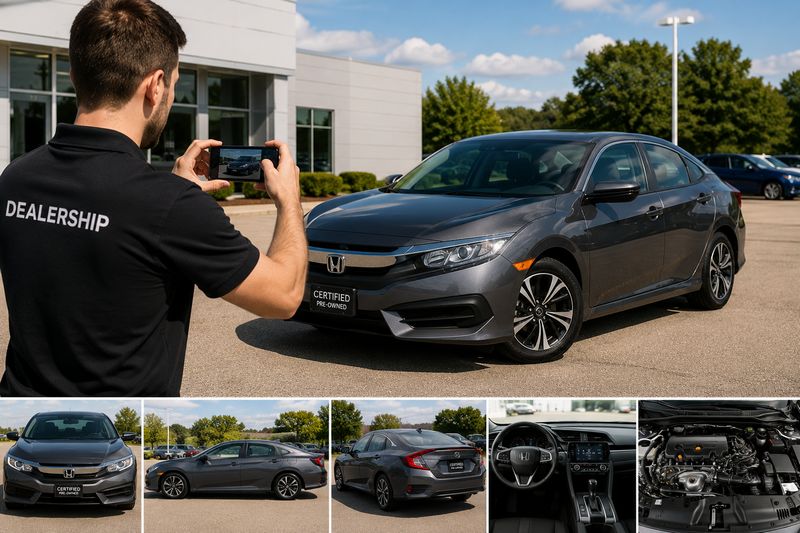
Good photos help vehicles appear cleaner, more valuable, and better maintained. Poor photography, on the other hand, can make even a good vehicle look unattractive or suspicious.
For budget-conscious buyers especially, photos provide reassurance before contacting the seller or placing a bid.
Why Photos Are the Most Important Part of Merchandising
Photos create the first impression in online vehicle sales.
Before buyers read descriptions or compare pricing, they usually look at images first.
Strong photos help buyers quickly evaluate:
- Vehicle condition
- Paint quality
- Interior cleanliness
- Wheel condition
- Damage visibility
- Feature availability
For example, a clean Toyota Camry photographed professionally in daylight will usually attract more attention than the same car photographed poorly in a crowded parking lot.
Good photography increases:
- Listing clicks
- Time spent viewing inventory
- Lead generation
- Buyer confidence
Many buyers immediately skip listings with poor or incomplete photos because they assume the dealership may be hiding problems.
Exterior Photo Angles Every Listing Needs
Complete exterior coverage helps buyers fully understand vehicle condition.
Strong listings usually include:
- Front angle
- Rear angle
- Driver-side profile
- Passenger-side profile
- Front straight-on shot
- Rear straight-on shot
- Wheel close-ups
- Roof if possible
For example, a buyer shopping for a used SUV may specifically inspect wheel condition, tire wear, and body panel alignment before contacting the seller.
Exterior photos should clearly show:
- Paint condition
- Dents or scratches
- Lighting systems
- Chrome trim
- Body panel gaps
Missing angles often create buyer suspicion.
Professional listings typically include at least 20–40 clear photos depending on vehicle type.
Interior Photo Checklist
Interior photos are extremely important because buyers spend most of their ownership experience inside the vehicle.
Strong interior photo coverage usually includes:
- Front seats
- Rear seats
- Dashboard
- Steering wheel
- Infotainment system
- Climate controls
- Odometer display
- Headliner
- Cargo space
- Door panels
For example, budget-conscious buyers often pay close attention to:
- Seat wear
- Dashboard condition
- Stains or odors
- Cracked trim
- Technology features
Interior photos should clearly show vehicle cleanliness and overall care.
Buyers also want to confirm the vehicle includes features mentioned in the listing description.
Engine Bay and Trunk Photos
Engine bay and trunk photos help increase transparency and buyer trust.
Engine bay photos may reveal:
- Fluid leaks
- Corrosion
- Missing components
- Accident repairs
- General maintenance condition
For example, a clean engine compartment often creates the impression of better ownership care.
Trunk photos are also important because buyers want to evaluate:
- Cargo space
- Spare tire presence
- Water damage signs
- Interior trim condition
For SUVs and hatchbacks especially, cargo space is a major selling point.
Complete photo coverage reduces buyer uncertainty and improves listing credibility.
Daylight vs Indoor Photography
Lighting dramatically affects photo quality.
Natural daylight photography usually produces the best results because it shows:
- Paint color accurately
- Body lines clearly
- Interior details naturally
Cloudy or lightly overcast conditions are often ideal because they reduce harsh reflections and shadows.
Indoor photography can work well in professional studios but may create problems if lighting is poor.
For example, dark indoor photos often make interiors look dirty or hide important details unintentionally.
Buyers generally trust bright natural-light photography more because it feels less manipulated.
Good lighting improves overall listing quality and buyer engagement significantly.
Smartphone Photography vs Professional Cameras
Modern smartphones can produce excellent vehicle photos when used correctly.
Many dealerships successfully use smartphones because they offer:
- Fast workflow
- High image quality
- Easy social media integration
- Lower equipment cost
However, professional cameras still provide advantages in:
- Low-light performance
- Lens flexibility
- Image sharpness
- Depth and detail
For example, high-end dealership inventory or luxury vehicles often benefit from professional photography equipment.
That said, photo quality matters more than camera price alone.
A well-shot smartphone photo in good lighting usually performs better than poorly executed professional-camera photography.
Clean composition and proper lighting are far more important than expensive equipment.
Common Photography Mistakes Dealers Make
Many dealerships lose potential buyers because of simple photography mistakes.
Common problems include:
- Dirty vehicles
- Blurry images
- Crooked angles
- Poor lighting
- Reflections hiding details
- Cluttered backgrounds
- Too few photos
For example, vehicles photographed next to trash bins, repair shops, or crowded inventory rows often appear less professional.
Another major mistake is failing to show imperfections honestly.
Buyers may become frustrated when damage appears during inspection but was hidden in listing photos.
Incomplete photo coverage also reduces trust.
Modern buyers expect detailed visual transparency before contacting sellers.
Editing Photos Without Misleading Buyers
Photo editing can improve listing quality when used responsibly.
Basic editing may include:
- Brightness correction
- Color balancing
- Background cleanup
- Straightening images
- Light sharpening
However, editing should never hide actual vehicle condition.
Misleading editing includes:
- Removing dents digitally
- Hiding scratches
- Changing paint appearance
- Concealing rust or damage
For example, overedited photos may initially attract buyers but later damage dealership reputation once buyers inspect the vehicle in person.
Vehicle Video Merchandising
Video has become one of the most powerful tools in modern vehicle merchandising. Buyers now expect more than photos and basic descriptions. Videos help shoppers feel closer to the vehicle before visiting the dealership or placing an online bid.
In 2026, video content plays a major role in social media marketing, online listings, and digital vehicle sales. Good vehicle videos build trust, increase engagement, and help listings stand out in crowded marketplaces.
For budget-conscious buyers especially, videos provide additional reassurance about vehicle condition and features before making financial decisions.
Why Video Increases Buyer Engagement
Video content keeps buyers engaged longer than static photos alone.
Videos allow buyers to:
- Hear the engine
- See the vehicle in motion
- View interior functionality
- Evaluate overall condition
- Experience the vehicle more realistically
For example, a short walkaround video of a Toyota RAV4 showing:
- Cold startup
- Interior features
- Backup camera
- Exterior condition
usually creates more buyer confidence than photos alone.
Videos also perform strongly on:
- Facebook Marketplace
- Instagram Reels
- TikTok
- YouTube Shorts
- Dealership websites
Listings with video content often generate:
- More clicks
- Longer viewing time
- More inquiries
- Better lead conversion
because buyers feel more informed before contacting the seller.
Walkaround Video Strategies
Walkaround videos are one of the most effective forms of vehicle merchandising.
These videos usually show:
- Exterior condition
- Wheel condition
- Paint quality
- Interior features
- Engine startup
- Trunk space
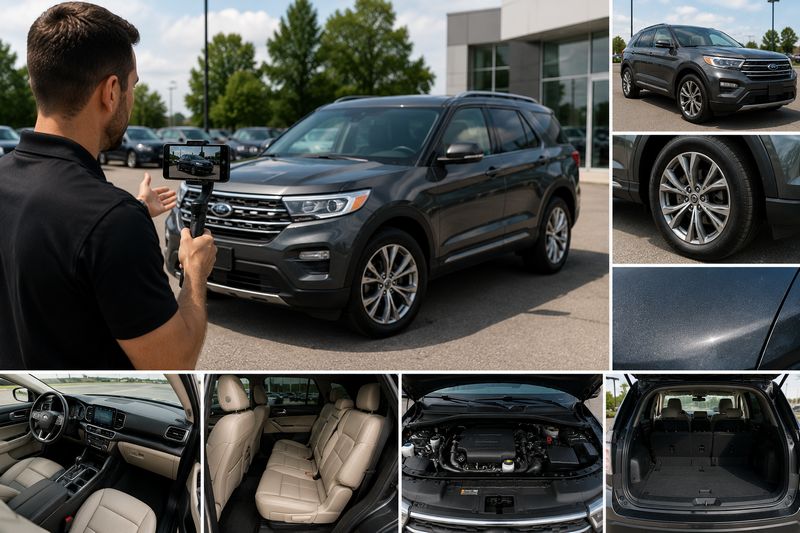
Good walkaround videos should move slowly and steadily around the vehicle.
For example, dealerships often begin with:
- Front corner angle
- Full side profile
- Rear angle
- Interior demonstration
Buyers appreciate videos that honestly show:
- Small scratches
- Dents
- Wear areas
- Cosmetic imperfections
because transparency builds trust.
Professional walkaround videos help remote buyers feel more comfortable purchasing vehicles online or through auctions.
Interior Demonstration Videos
Interior videos help buyers understand comfort, technology, and usability.
These videos may demonstrate:
- Touchscreen operation
- Climate controls
- Seat condition
- Sunroof functionality
- Backup cameras
- Apple CarPlay or Android Auto
For example, a budget buyer comparing commuter cars may pay close attention to:
- Cabin cleanliness
- Infotainment quality
- Interior wear
- Passenger space
Interior demonstration videos also help highlight features that photos alone cannot fully explain.
This is especially important for:
- Luxury vehicles
- Family SUVs
- Hybrid and EV technology
Detailed interior videos improve buyer confidence and increase perceived vehicle value.
Test Drive Videos
Test drive videos allow buyers to experience how the vehicle behaves on the road.
These videos may show:
- Acceleration
- Highway driving
- Suspension comfort
- Steering feel
- Engine sound
- Brake performance
For example, a sporty Hyundai Elantra N test drive video may highlight turbo acceleration and exhaust sound to attract enthusiast buyers.
Meanwhile, a Honda CR-V Hybrid test drive may focus more on:
- Smooth ride quality
- Fuel efficiency
- Cabin quietness
Test drive footage helps buyers visualize ownership experience more realistically than static content.
This can improve emotional connection and increase sales opportunities.
Short-Form Video for TikTok, Instagram, and Facebook
Short-form video has become extremely important in automotive marketing.
Platforms such as:
- TikTok
- Instagram Reels
- Facebook Reels
- YouTube Shorts
favor quick, engaging content.
Short vehicle videos often focus on:
- Cold starts
- Exhaust sound
- Quick walkarounds
- Feature highlights
- Before-and-after reconditioning clips
For example, a 20-second video showing:
- LED headlights
- Large touchscreen
- Heated seats
- Panoramic roof
may quickly attract attention from scrolling buyers.
Short-form video works especially well for:
- Younger audiences
- Mobile shoppers
- Social media engagement
Many dealerships now receive leads directly from short video content rather than traditional advertising alone.
YouTube Vehicle Merchandising
YouTube remains one of the strongest platforms for long-form vehicle content.
Dealerships use YouTube for:
- Full walkarounds
- Vehicle reviews
- Test drives
- Auction inventory explanations
- Educational buying guides
For example, a detailed video review of a Lexus RX Hybrid may explain:
- MPG expectations
- Reliability
- Interior quality
- Ownership costs
Long-form YouTube videos help buyers research vehicles more deeply before making decisions.
This is especially important for:
- Higher-value inventory
- Auction vehicles
- Out-of-state buyers
- Export customers
YouTube content also improves dealership visibility through Google search results.
Live Video Vehicle Presentations
Live video presentations allow dealerships to interact with buyers in real time.
Live vehicle demonstrations may happen through:
- Facebook Live
- Instagram Live
- Video calls
- Marketplace chats
For example, a remote buyer may request a live video inspection showing:
- Engine startup
- Body condition
- Interior wear
- Dashboard warning lights
Live video helps build transparency and trust because buyers see the vehicle without heavy editing or scripted presentation.
This is especially useful for auction inventory or long-distance sales where buyers cannot inspect vehicles in person immediately.
Common Vehicle Video Mistakes
Poor video quality can damage buyer trust and reduce engagement.
Common mistakes include:
- Shaky camera movement
- Poor lighting
- Dirty vehicles
- Loud background noise
- Videos filmed vertically for YouTube
- Videos filmed horizontally for TikTok
- Incomplete vehicle coverage
For example, buyers often lose interest quickly if videos:
- Move too fast
- Lack clear audio
- Fail to show important details
- Feel overly promotional or misleading
Another major mistake is hiding imperfections intentionally.
Modern buyers value transparency more than perfect-looking presentation.
Advanced Online Vehicle Merchandising Strategies
Online vehicle merchandising continues evolving rapidly in 2026. Dealerships now use artificial intelligence, automation tools, predictive analytics, and interactive technology to improve inventory presentation and generate more sales.
Advanced merchandising strategies help dealerships:
- Improve online visibility
- Increase buyer engagement
- Reduce time on lot
- Personalize the shopping experience
- Increase conversion rates
For budget-conscious buyers, these technologies can also improve transparency and help shoppers find vehicles that better match their needs and financial limits.
AI-Generated Vehicle Descriptions
Artificial intelligence is now widely used to create vehicle descriptions automatically.
AI tools can generate descriptions using:
- VIN data
- Vehicle features
- Mileage
- Condition information
- Market trends
For example, an AI system may automatically create a detailed listing for a Toyota Corolla that highlights:
- Fuel economy
- Reliability
- Commuter-friendly ownership costs
- Safety features
This helps dealerships save time while maintaining consistent listing quality across large inventory volumes.
AI-generated descriptions also improve SEO performance because they naturally include buyer-focused keywords.
However, dealerships still need to review AI content carefully to ensure:
- Accuracy
- Natural wording
- Honest vehicle representation
Poorly reviewed AI descriptions may contain incorrect or repetitive information that damages buyer trust.
Personalized Inventory Recommendations
Modern dealership websites now use recommendation systems similar to major e-commerce platforms.
These systems analyze buyer behavior such as:
- Search history
- Vehicle views
- Price range preferences
- SUV vs sedan interest
- Fuel economy priorities
For example, a buyer repeatedly viewing hybrid SUVs may start receiving recommendations for:
- Toyota RAV4 Hybrid
- Honda CR-V Hybrid
- Lexus NX Hybrid
Personalized recommendations improve user experience because buyers discover inventory more relevant to their needs quickly.
This is especially useful for budget-conscious shoppers searching for affordable and fuel-efficient vehicles.
Predictive Merchandising Technology
Predictive merchandising tools use data analysis to help dealerships understand which vehicles are most likely to sell quickly.
These systems analyze factors such as:
- Market demand
- Seasonal trends
- Buyer search behavior
- Pricing performance
- Inventory aging
For example, predictive systems may recommend promoting AWD SUVs more aggressively before winter demand increases.
Dealerships can also identify:
- Slow-moving inventory
- High-converting vehicle categories
- Best-performing listing formats
Predictive technology helps dealerships make smarter inventory and marketing decisions before problems appear.
Dynamic Pricing Tools
Dynamic pricing systems automatically adjust vehicle pricing based on real-time market conditions.
These tools monitor:
- Competitor pricing
- Market demand
- Inventory age
- Search activity
- Vehicle popularity
For example, if local demand for Toyota Tacoma trucks increases suddenly, pricing tools may recommend raising prices slightly to improve profitability.
Meanwhile, older inventory sitting too long may receive automatic pricing adjustments to improve sales speed.
Dynamic pricing helps dealerships stay competitive while reducing manual pricing work.
Budget-conscious buyers also benefit because pricing often becomes more aligned with real market conditions.
Automated Listing Distribution
Modern dealerships often advertise the same vehicle across many platforms simultaneously.
Automated listing systems distribute inventory automatically to:
- Dealership websites
- Facebook Marketplace
- AutoTrader
- Cars.com
- Google Vehicle Listings
- Auction platforms
For example, when a new Honda Civic enters inventory, automated systems may instantly publish the listing across multiple channels within minutes.
This improves visibility and helps dealerships reach more buyers faster.
Automation also reduces errors caused by manually updating inventory on multiple platforms separately.
Retargeting Ads for Vehicle Shoppers
Retargeting ads help dealerships reconnect with buyers who viewed vehicles but did not contact the seller immediately.
For example, a buyer viewing a used Lexus RX online may later see advertisements for that same SUV while browsing:
- YouTube
- Other websites
Retargeting keeps vehicles visible to interested buyers after they leave the dealership website.
This strategy works especially well because many buyers compare multiple vehicles before making decisions.
Retargeting ads often increase:
- Lead generation
- Website return visits
- Conversion rates
by reminding buyers about vehicles they already considered previously.
Interactive Vehicle Listings
Interactive listings provide buyers with more engaging shopping experiences.
Modern interactive features may include:
- Clickable photo galleries
- 360-degree viewing tools
- Payment calculators
- Feature comparison tools
- Damage highlight systems
- Interactive financing options
For example, buyers may rotate a vehicle virtually or zoom into wheel condition directly from the listing page.
Interactive listings keep buyers engaged longer and help answer questions without requiring dealership contact immediately.
This improves convenience and increases buyer confidence.
Virtual Showrooms and 360-Degree Tours
Virtual showroom technology allows buyers to explore vehicles remotely from their phones or computers.
360-degree tours help buyers inspect:
- Interior seating
- Dashboard layout
- Cargo space
- Exterior condition
without visiting the dealership physically.
For example, out-of-state buyers considering an auction vehicle may feel more comfortable bidding after viewing a full 360-degree tour.
Virtual merchandising has become especially important for:
- Remote vehicle sales
- Online auctions
- Export customers
- Busy buyers
Vehicle Merchandising for Auto Auctions
Vehicle merchandising is extremely important in online auto auctions because buyers often make decisions remotely without inspecting the vehicle in person. In many cases, photos, descriptions, and condition reports become the buyer’s only source of information before bidding.
Strong auction merchandising helps buyers understand vehicle condition more clearly, reduces uncertainty, and increases bidding activity. Poor merchandising, on the other hand, can reduce buyer trust and lower final sale prices.
For budget-conscious buyers especially, transparent auction presentation helps avoid expensive mistakes.
Why Auction Listings Need Strong Merchandising
Auction buyers rely heavily on listing quality because they may never see the vehicle physically before purchasing it.
Strong auction merchandising helps answer important buyer questions such as:
- How severe is the damage?
- Does the vehicle run and drive?
- Is the interior clean?
- Are airbags deployed?
- What repairs may be needed?
For example, a salvage Toyota Camry with detailed photos and a complete condition report usually attracts more bidding interest than a similar vehicle with poor presentation.
Good merchandising helps auctions:
- Increase buyer confidence
- Generate more bids
- Improve final sale prices
- Reduce disputes after purchase
In competitive online auction environments, presentation quality directly affects buyer activity.
How Auction Photos Influence Buyer Interest
Photos are one of the most important parts of auction listings.
Buyers carefully analyze photos for signs of:
- Collision damage
- Flood exposure
- Rust
- Airbag deployment
- Suspension problems
- Interior wear
For example, clear daylight photos showing all damaged areas honestly help buyers estimate repair costs more accurately.
Strong auction photo coverage usually includes:
- Exterior angles
- Interior photos
- Dashboard and odometer
- Engine bay
- Trunk area
- Close-up damage shots
Buyers often avoid listings with:
- Blurry photos
- Missing angles
- Poor lighting
- Limited damage visibility
because they assume important problems may be hidden intentionally.
Good photos increase transparency and improve buyer confidence before bidding.
Writing Honest Auction Descriptions
Honest descriptions are critical in auction merchandising.
Buyers appreciate clear explanations about:
- Vehicle condition
- Known problems
- Mechanical status
- Missing parts
- Previous damage
For example, instead of vague wording such as:
“Minor cosmetic issues”
a stronger auction description may explain:
“Front bumper damage and driver-side fender dent visible in photos.”
Clear descriptions help buyers make realistic decisions before bidding.
This is especially important for:
- Salvage vehicles
- Flood-damaged cars
- High-mileage inventory
- Rebuilt title vehicles
Honest descriptions also reduce post-sale disputes and improve long-term buyer trust.
Highlighting Damage Correctly
Damage transparency is one of the most important parts of auction merchandising.
Experienced buyers want accurate information about:
- Structural damage
- Airbag deployment
- Suspension damage
- Flood exposure
- Fire damage
- Cosmetic issues
For example, clearly identifying frame damage may prevent unrealistic buyer expectations later.
Many budget-conscious buyers are willing to purchase damaged vehicles if repair costs remain manageable.
However, hidden damage often destroys buyer confidence and can create serious financial losses after purchase.
Strong auction merchandising highlights damage honestly rather than attempting to minimize or hide it.
This helps buyers estimate:
- Repair budgets
- Parts availability
- Labor requirements
- Overall project feasibility
more accurately.
Using Vehicle Condition Reports
Condition reports provide additional information beyond photos alone.
Auction condition reports may include:
- Engine status
- Transmission operation
- Airbag status
- Tire condition
- Warning lights
- Structural damage notes
- Run and drive verification
For example, a condition report may state:
- “Engine starts”
- “Run and drive”
- “Stationary”
- “Enhanced vehicle”
These details help buyers better understand the vehicle’s current operating condition.
Condition reports are especially valuable for remote buyers who cannot inspect vehicles personally before auction day.
Buyers often combine:
- Condition reports
- VIN history reports
- Auction photos
to evaluate overall risk before bidding.
How BidNDrive Helps Buyers Analyze Auction Listings
At BidNDrive, many buyers purchase vehicles through online auto auctions without seeing them in person first.
Because of this, auction listing analysis becomes extremely important.
BidNDrive helps buyers review:
- Vehicle history reports
- Auction photos
- Previous sale records
- VIN data
- Condition information
to better understand potential risks before placing bids.
This is especially helpful for:
- First-time auction buyers
- Budget-conscious shoppers
- International buyers
- Salvage vehicle buyers
Buyers can use available information to estimate:
- Repair costs
- Ownership expenses
- Vehicle value after repairs
before committing financially.
Careful listing analysis helps reduce mistakes and improves buyer confidence during online bidding.
Why Transparency Increases Buyer Confidence
Transparency is one of the biggest factors affecting buyer trust in online auto auctions.
Buyers are far more comfortable bidding when listings include:
- Detailed photos
- Honest damage descriptions
- VIN history reports
- Accurate condition information
- Service records if available
For example, a vehicle showing visible cosmetic damage honestly may still attract strong bidding because buyers appreciate clear disclosure.
Modern buyers understand that used and salvage vehicles may have imperfections. What matters most is accurate presentation.
Pricing Strategies in Vehicle Merchandising
Pricing is one of the most important parts of vehicle merchandising because buyers compare prices instantly across multiple websites and marketplaces. Even strong photos and professional descriptions cannot fully compensate for unrealistic pricing.
In 2026, successful dealerships use pricing strategies that balance profitability, market demand, inventory age, and buyer psychology. Smart pricing helps vehicles attract more attention, generate more leads, and sell faster.
For budget-conscious buyers especially, pricing transparency strongly affects trust and purchase decisions.
Why Pricing Matters More Than Discounts
Many dealerships focus heavily on discounts, but buyers often care more about whether the vehicle feels fairly priced from the beginning.
A realistic price creates stronger buyer confidence than an inflated price followed by a large discount.
For example, a used Honda Accord priced close to current market value may generate more leads immediately than a heavily overpriced vehicle advertised with a “special discount.”
Modern buyers can easily compare pricing online through:
- Google Vehicle Listings
- Facebook Marketplace
- AutoTrader
- Auction platforms
Because pricing comparisons happen instantly, unrealistic pricing often pushes buyers away before they even open the listing.
Strong pricing strategies focus on:
- Transparency
- Competitive positioning
- Market demand
- Overall value perception
rather than relying only on promotional discounts.
Market-Based Pricing
Market-based pricing uses real-time data to determine competitive vehicle values.
Dealerships analyze factors such as:
- Similar local inventory
- Mileage
- Vehicle condition
- Trim level
- Market demand
- Seasonal trends
For example, a low-mileage Toyota Tacoma may command significantly higher pricing than similar midsize trucks because demand remains extremely strong.
Market-based pricing helps dealerships avoid two major problems:
- Overpricing inventory
- Undervaluing profitable vehicles
Modern pricing tools often monitor local and national inventory automatically to help dealerships stay competitive.
For budget-conscious buyers, fair market pricing creates greater trust and reduces frustration during shopping.
Competitive Pricing Strategies
Competitive pricing means positioning inventory strategically against similar listings.
Dealerships may choose to price vehicles:
- Slightly below market to increase lead volume
- At market value to maintain profitability
- Slightly above market if the vehicle has exceptional condition or features
For example, a one-owner Lexus RX with full service records and new tires may justify stronger pricing than average market inventory.
Competitive pricing also depends on:
- Inventory availability
- Local buyer demand
- Fuel prices
- Interest rates
- Vehicle popularity
Successful dealerships constantly monitor competitor inventory to remain attractive in search results and online marketplaces.
Psychological Pricing Tactics
Psychological pricing influences how buyers perceive vehicle affordability.
One common strategy involves pricing vehicles slightly below major price thresholds.
For example:
- $19,900 instead of $20,000
- $14,995 instead of $15,000
This makes vehicles appear more affordable during online searches.
Other psychological pricing strategies include emphasizing:
- Monthly payments
- Fuel savings
- Ownership value
- Low maintenance costs
For example, a dealership may promote a Toyota Corolla Hybrid as:
“Save money with 50+ MPG fuel economy”
instead of focusing only on purchase price.
Budget buyers often respond strongly to pricing tied to long-term ownership affordability.
How to Price High-Demand Vehicles
High-demand vehicles require careful pricing strategies because buyers are often willing to pay premium prices.
Examples include:
- Toyota Tacoma
- Honda CR-V Hybrid
- Lexus RX Hybrid
- Toyota RAV4 Hybrid
These vehicles often sell quickly due to:
- Reliability reputation
- Fuel efficiency
- Strong resale value
Dealerships may price these vehicles slightly above average market value if:
- Mileage is low
- Condition is excellent
- Service history is available
However, pricing still must remain realistic.
Even highly desirable inventory can sit too long if pricing becomes excessive compared to competing listings.
Strong merchandising helps justify pricing by clearly showing:
- Vehicle condition
- Maintenance quality
- Ownership benefits
- Feature availability
Adjusting Prices Based on Inventory Age
Inventory age strongly affects pricing strategy.
Vehicles sitting too long on the lot create ongoing expenses such as:
- Financing costs
- Insurance expenses
- Depreciation
- Reduced lot space
Dealerships often reduce pricing gradually as inventory ages.
For example:
- Fresh inventory may receive stronger pricing
- 30-day-old inventory may receive small adjustments
- 60+ day inventory may require more aggressive pricing
Modern dealerships track “days on market” carefully because fast turnover improves profitability.
Pricing adjustments help older inventory regain visibility and attract fresh buyer interest online.
At BidNDrive, many buyers compare auction inventory pricing carefully before bidding, making competitive pricing analysis extremely important.
Why Overpriced Cars Stay on the Lot Longer
Overpriced vehicles usually receive:
- Fewer clicks
- Fewer inquiries
- Lower buyer engagement
- Reduced visibility in search filters
Modern buyers quickly compare prices across dozens of listings.
For example, an overpriced Hyundai Elantra may sit unsold for months if buyers can find similar vehicles nearby at more realistic pricing.
Overpriced inventory also creates additional problems:
- More depreciation
- Increased financing costs
- Reduced profitability over time
Eventually, dealerships may need larger price reductions than if the vehicle had been priced correctly initially.
Many buyers also associate unrealistic pricing with poor dealership transparency.
Vehicle Merchandising for Budget Buyers
Budget-conscious buyers make up a large part of the used vehicle market. These shoppers usually focus on affordability, reliability, fuel economy, and long-term ownership costs rather than luxury branding or expensive features.
Because of this, vehicle merchandising for budget buyers must focus on value and transparency. Dealerships that clearly explain ownership benefits and realistic costs often build stronger trust and sell vehicles faster.
In 2026, successful dealerships understand that many buyers are trying to balance limited budgets with rising transportation and living expenses.
Highlighting Affordability and Value
Budget buyers want to know whether a vehicle provides strong value for the money.
Good merchandising highlights factors such as:
- Affordable pricing
- Reliability reputation
- Low maintenance costs
- Fuel savings
- Recent service work
For example, a dealership may present a Toyota Corolla as:
- Affordable daily transportation
- Cheap to maintain
- Fuel efficient
- Reliable for long-term ownership
instead of simply listing technical features.
Value-focused merchandising also helps buyers compare ownership benefits against more expensive alternatives.
For example, a used Honda Civic with strong MPG and low repair costs may offer better long-term value than a cheaper luxury sedan with expensive maintenance needs.
Budget-conscious buyers often care more about financial practicality than appearance alone.
Promoting Fuel Efficiency
Fuel economy remains one of the biggest priorities for budget buyers.
High gas prices and daily commuting costs strongly affect vehicle shopping decisions.
Listings that clearly highlight fuel efficiency often generate more attention, especially for:
- Hybrids
- Compact sedans
- Commuter vehicles
- Small SUVs
For example, dealerships may promote:
- “38 MPG highway”
- “Hybrid fuel savings”
- “Low daily fuel costs”
directly in listing titles and descriptions.
Vehicles such as:
- Toyota Prius
- Toyota Corolla Hybrid
- Honda Civic
- Hyundai Elantra
often attract strong buyer interest because they help reduce monthly transportation expenses.
Fuel-efficient vehicles also usually sell faster in urban and commuter-heavy markets.
Showing Estimated Ownership Costs
Budget buyers often think beyond the purchase price alone.
They want to understand:
- Insurance costs
- Fuel expenses
- Maintenance expectations
- Repair risks
- Monthly payments
Good merchandising may include estimated ownership information such as:
- Average MPG
- Low-cost maintenance reputation
- Affordable insurance categories
- Long-term reliability
For example, a dealership may explain that a Toyota Camry generally costs less to maintain than many luxury sedans over time.
This helps buyers make more realistic financial decisions before purchasing.
Transparency about ownership costs also builds trust and reduces buyer hesitation.
Best Vehicle Types for Budget-Conscious Customers
Certain vehicles consistently appeal to budget-focused shoppers because they combine affordability with strong long-term value.
Popular budget-friendly vehicle categories include:
- Compact sedans
- Fuel-efficient hybrids
- Small SUVs
- Reliable commuter cars
Examples often include:
- Toyota Corolla
- Honda Civic
- Toyota Camry
- Hyundai Elantra
- Honda CR-V
- Toyota RAV4
These vehicles are popular because they usually offer:
- Strong fuel economy
- Lower repair costs
- Good resale value
- Reliable daily transportation
Budget buyers often prioritize dependability over luxury features or high-performance engines.
Dealerships that focus merchandising around practical ownership benefits usually perform well with this audience.
Why Reliable Cars Sell Faster
Reliability is one of the strongest selling points for budget buyers.
Vehicles known for dependable ownership usually generate:
- More clicks
- Faster sales
- Higher resale value
- Stronger buyer confidence
For example, Toyota and Honda models often sell quickly because buyers trust their long-term durability.
Many budget-conscious shoppers specifically search for vehicles with reputations for:
- Low repair frequency
- Cheap parts availability
- Long engine life
- Good fuel economy
Reliable vehicles also reduce buyer anxiety about unexpected expenses after purchase.
This is especially important for families, students, first-time buyers, and commuters working within limited financial flexibility.
How Dealers Can Build Trust With Budget Buyers
Trust is extremely important when selling to budget-conscious customers.
These buyers are often more cautious because unexpected repairs or hidden problems may create serious financial stress.
Dealerships build trust by providing:
- Honest vehicle descriptions
- Transparent pricing
- Vehicle history reports
- Service records
- Clear financing information
- Accurate damage disclosure
For example, buyers often appreciate listings that clearly explain:
- Cosmetic imperfections
- Previous repairs
- Maintenance history
- Warranty options
rather than hiding potential issues.
Merchandising Trade-Ins and Auction Vehicles
Trade-ins and auction vehicles create major opportunities for dealerships to build profitable inventory at lower acquisition costs. However, these vehicles often require proper preparation and smart merchandising before they can sell successfully.
In 2026, dealerships that handle trade-ins and auction inventory efficiently can improve inventory turnover, attract budget-conscious buyers, and increase profit margins.
Good merchandising helps these vehicles appear more trustworthy, better maintained, and more valuable to potential customers.
Turning Trade-Ins Into Profitable Inventory
Trade-ins are one of the most important inventory sources for many dealerships.
When customers purchase newer vehicles, dealerships often acquire older vehicles below retail market value through trade-ins.
These vehicles can become highly profitable inventory when properly prepared and merchandised.
For example, a dealership may receive a well-maintained Honda Civic trade-in with:
- Good service history
- Clean interior
- Moderate mileage
- Minor cosmetic wear
After cleaning and basic preparation, the vehicle may become an attractive affordable option for budget-conscious buyers.
Trade-ins often appeal strongly to:
- First-time buyers
- Students
- Families
- Daily commuters
because they usually offer lower pricing than newer inventory.
Proper merchandising helps dealerships maximize the resale value of trade-in vehicles.
Reconditioning Strategies That Increase Value
Reconditioning is one of the most important steps before listing used inventory.
Good reconditioning helps vehicles appear cleaner, newer, and better maintained.
Common reconditioning improvements include:
- Full detailing
- Paint correction
- Tire replacement
- Brake service
- Interior cleaning
- Oil changes
- Headlight restoration
For example, restoring faded headlights and professionally cleaning stained seats may dramatically improve buyer perception at relatively low cost.
Buyers often judge overall vehicle care based on visible details.
Even simple improvements can increase:
- Buyer confidence
- Listing clicks
- Test drive requests
- Final selling price
Smart reconditioning focuses on high-visibility improvements that provide strong return on investment.
When to Sell Wholesale vs Retail
Not every trade-in or auction vehicle should be sold retail.
Dealerships must decide whether inventory makes more sense for:
- Retail sale
- Wholesale auction
- Export
- Parts or rebuild projects
Vehicles with major issues may perform better at wholesale auctions, especially if they have:
- Severe damage
- High mileage
- Poor cosmetic condition
- Expensive mechanical problems
For example, a heavily damaged luxury SUV requiring major repairs may create stronger returns through wholesale auction channels rather than retail dealership sales.
Meanwhile, clean commuter vehicles with good reliability history often perform very well in retail inventory.
Successful dealerships carefully evaluate:
- Repair costs
- Market demand
- Expected retail profit
- Inventory turnover speed
before deciding how to merchandise each vehicle.
How Minor Repairs Improve Selling Speed
Small repairs can significantly improve how quickly vehicles sell.
Buyers often avoid vehicles with visible minor problems because they assume larger hidden issues may exist.
Minor improvements may include:
- Fixing warning lights
- Replacing worn floor mats
- Repairing scratches
- Fixing broken trim
- Replacing cracked mirrors
- Repairing small dents
For example, replacing a damaged bumper trim piece may cost very little but dramatically improve listing appearance.
Minor repairs also improve:
- Photo quality
- Buyer trust
- Test drive experience
- Perceived value
Budget-conscious buyers especially appreciate vehicles that appear ready for daily use without immediate repairs.
Best Low-Cost Improvements Before Listing
Some of the highest-return merchandising improvements are also inexpensive.
Popular low-cost upgrades include:
- Professional detailing
- Tire shine
- Paint polishing
- Headlight restoration
- Odor removal
- Touch-up paint
- Interior deep cleaning
For example, a clean interior with fresh-smelling upholstery often creates a much stronger impression than buyers expect from older inventory.
Other inexpensive improvements include:
- New windshield wipers
- Fresh oil changes
- Battery replacement
- Simple trim repairs
These details help vehicles feel better maintained and more trustworthy.
Small visual improvements often influence buyer psychology more than expensive mechanical work buyers cannot easily see.
How Auction Vehicles Can Be Merchandised Effectively
Auction vehicles require especially strong merchandising because buyers often cannot inspect them in person before purchasing.
Effective auction merchandising focuses on transparency and detailed presentation.
This includes:
- High-quality photos
- VIN reports
- Condition disclosures
- Service information if available
- Accurate damage descriptions
For example, a salvage Toyota RAV4 with detailed damage photos and clear repair estimates may attract strong bidding from buyers comfortable with repairable vehicles.
Google Vehicle Listings and SEO for Dealerships
Search engine visibility has become one of the most important parts of vehicle merchandising. In 2026, most buyers begin their shopping journey through Google searches, online marketplaces, or mobile apps. If dealership inventory does not appear in search results, many potential buyers may never see the vehicles at all.
Strong SEO and properly optimized Google Vehicle Listings help dealerships increase visibility, generate more leads, and improve inventory turnover.
For budget-conscious buyers especially, Google often becomes the first place they compare vehicle pricing, features, and availability.
Why Google Vehicle Listings Matter
Google Vehicle Listings allow dealership inventory to appear directly inside Google search results.
When buyers search phrases such as:
- “Used Toyota Camry near me”
- “Affordable SUV for sale”
- “Honda Civic low mileage”
Google may display vehicle listings with:
- Photos
- Pricing
- Mileage
- Dealership information
- Vehicle details
This creates major visibility opportunities for dealerships.
For example, a properly optimized Toyota RAV4 listing may appear directly in Google search before buyers even visit marketplace websites.
Google Vehicle Listings help dealerships:
- Reach more buyers organically
- Reduce advertising dependence
- Increase website traffic
- Improve lead generation
Visibility on Google is especially important because buyers often compare inventory quickly before making contact decisions.
SEO Basics for Vehicle Listings
SEO, or search engine optimization, helps vehicle listings appear higher in search results.
Basic automotive SEO includes optimizing:
- Vehicle titles
- Descriptions
- Keywords
- Page structure
- Images
- Metadata
For example, a listing title such as:
“2021 Honda CR-V EX AWD • Backup Camera • Low Mileage”
usually performs better in search than:
“Used Honda CR-V”
because it contains specific buyer search terms.
Good SEO also helps listings appear in searches related to:
- Fuel efficiency
- Family SUVs
- Affordable commuter cars
- Hybrid vehicles
- AWD vehicles
Effective SEO improves visibility for both dealership websites and inventory pages.
Optimizing Vehicle Detail Pages
Vehicle Detail Pages (VDPs) are individual pages showing specific inventory units.
Strong VDP optimization improves both SEO rankings and conversion rates.
Good VDPs usually include:
- Detailed vehicle descriptions
- Multiple photos
- Video walkarounds
- Pricing transparency
- VIN details
- Financing information
- Vehicle history reports
For example, buyers often stay longer on pages containing:
- High-quality images
- Clear feature explanations
- Maintenance information
- Payment estimates
Longer engagement may improve both search performance and lead generation.
Fast-loading VDPs are especially important because many buyers browse inventory on smartphones.
Using Local SEO for Dealership Visibility
Local SEO helps dealerships appear in nearby searches.
Many buyers search for vehicles using local intent phrases such as:
- “Used cars near me”
- “SUV dealership in Atlanta”
- “Affordable trucks nearby”
Local SEO strategies include optimizing:
- Google Business Profiles
- Location pages
- Customer reviews
- Local keywords
- Map visibility
For example, a dealership targeting budget buyers in Georgia may optimize listings around phrases such as:
- “Affordable used cars in Atlanta”
- “Cheap commuter cars near Loganville”
Strong local SEO helps dealerships compete more effectively within regional markets.
Why Fresh Inventory Helps Rankings
Search engines favor active and regularly updated inventory.
Fresh listings often perform better because Google recognizes:
- Inventory updates
- New vehicle arrivals
- Recently modified pages
- Current pricing changes
For example, dealerships regularly uploading fresh inventory usually maintain stronger search visibility than websites with outdated or inactive listings.
Fresh inventory also improves buyer engagement because shoppers prefer current availability.
Dealerships often benefit from:
- Daily inventory updates
- New photo uploads
- Updated pricing
- Fresh descriptions
Keeping inventory active and updated signals relevance to both search engines and buyers.
Schema Markup for Automotive Websites
Schema markup helps search engines understand dealership inventory better.
Automotive schema may include information such as:
- Vehicle make and model
- Price
- Mileage
- VIN
- Condition
- Dealer location
This structured data helps Google display enhanced search results.
For example, properly implemented schema may allow search listings to show:
- Vehicle photos
- Price ranges
- Availability
- Ratings
directly inside Google results.
Schema markup improves:
- Search visibility
- Click-through rates
- Inventory indexing accuracy
Modern dealership websites increasingly rely on structured data to remain competitive in search results.
Common Automotive SEO Mistakes
Many dealerships lose visibility because of avoidable SEO mistakes.
Common automotive SEO problems include:
- Duplicate vehicle descriptions
- Missing metadata
- Slow website speed
- Poor mobile optimization
- Broken inventory pages
- Low-quality photos
- Incomplete vehicle information
For example, dealerships using generic copied descriptions across all inventory often struggle to rank well in search engines.
Another major mistake is deleting sold inventory pages immediately instead of properly redirecting them.
Poor mobile experience is also extremely damaging because most vehicle shoppers now browse on smartphones.
Social Media Vehicle Merchandising
Social media has become one of the most powerful tools in modern vehicle merchandising. In 2026, many buyers discover vehicles through social platforms before ever visiting dealership websites. Social media helps dealerships reach buyers faster, build trust, and promote inventory more visually than traditional advertising.
For budget-conscious buyers especially, platforms such as Facebook Marketplace and TikTok often become major sources for finding affordable used vehicles.
Strong social media merchandising combines:
- High-quality photos
- Short-form videos
- Fast communication
- Buyer engagement
- Consistent branding
to increase leads and improve inventory turnover.
Facebook Marketplace Strategies
Facebook Marketplace remains one of the most important vehicle-selling platforms for dealerships and private sellers.
Many buyers search Marketplace daily for:
- Affordable commuter cars
- Cheap SUVs
- Trucks
- Family vehicles
- Budget-friendly financing options
Successful Marketplace listings usually include:
- Bright daylight photos
- Clear pricing
- Mileage information
- Short feature highlights
- Strong first photo thumbnails
For example, a listing title such as:
“2018 Honda Civic EX • Backup Camera • Financing Available”
often performs better than generic titles with minimal details.
Dealerships also improve performance by:
- Responding quickly to messages
- Updating listings regularly
- Using short walkaround videos
- Posting fresh inventory frequently
Fast communication is extremely important because many buyers message multiple sellers simultaneously.
Instagram Vehicle Promotion
Instagram focuses heavily on visual presentation and branding.
Dealerships use Instagram to showcase:
- High-quality vehicle photography
- Reels and short videos
- New inventory arrivals
- Customer deliveries
- Behind-the-scenes dealership content
For example, a clean Lexus RX photographed professionally with cinematic lighting may generate strong engagement through Instagram Reels.
Instagram works especially well for:
- Luxury vehicles
- Sports cars
- Lifted trucks
- Stylish SUVs
Strong Instagram merchandising helps dealerships build recognizable brand identity and attract younger buyers.
Story features and Reels also allow dealerships to promote inventory quickly without requiring expensive advertising campaigns.
TikTok Car Content Trends
TikTok has become one of the fastest-growing automotive marketing platforms.
Short-form vehicle content performs especially well because users scroll quickly and respond strongly to visual entertainment.
Popular TikTok vehicle content includes:
- Cold starts
- Exhaust sounds
- Walkaround clips
- Before-and-after reconditioning
- “Budget car” recommendations
- Fast feature demonstrations
For example, a quick video showing:
- Panoramic roof
- Ambient lighting
- Large touchscreen
- Turbo acceleration
may generate thousands of views within hours.
TikTok also works well for educational content such as:
- “Best first cars under $10,000”
- “Reliable SUVs for families”
- “Common auction buying mistakes”
This type of content helps dealerships build trust while promoting inventory indirectly.
YouTube Shorts for Dealerships
YouTube Shorts have become a powerful tool for vehicle merchandising because they combine short-form engagement with Google search visibility.
Dealerships use Shorts to showcase:
- New arrivals
- Quick walkarounds
- Interior features
- Engine startups
- Test drive clips
For example, a 30-second Toyota Tacoma video highlighting:
- Off-road tires
- Backup camera
- Low mileage
- Clean interior
can generate strong buyer engagement.
YouTube Shorts also help dealerships reach buyers researching vehicles through Google and YouTube simultaneously.
Short video content is especially important because modern buyers often prefer fast visual information instead of long text descriptions.
Paid Social Ads for Vehicle Inventory
Paid social advertising allows dealerships to target specific buyer groups more precisely.
Dealerships can advertise inventory based on:
- Location
- Budget level
- Vehicle interests
- Shopping behavior
- Previous website visits
For example, dealerships may show hybrid vehicle ads specifically to buyers interested in fuel economy and commuting.
Retargeting ads are especially effective.
If buyers visit a vehicle listing but leave without contacting the dealership, social ads can continue showing that vehicle later on:
- YouTube
This keeps inventory visible and increases the chances of generating leads later.
Paid social ads help dealerships compete more effectively in crowded online markets.
How Dealers Use Messenger and Chatbots
Messenger and chatbot systems help dealerships respond to buyers quickly.
Fast communication is critical because many buyers contact several dealerships at once.
Chatbots can answer common questions automatically such as:
- Is the vehicle available?
- What is the price?
- Is financing available?
- Can I schedule a test drive?
- Do you offer delivery?
For example, a buyer messaging about a used Honda CR-V may instantly receive:
- Vehicle details
- Financing links
- Inventory page links
- Test drive scheduling options
Automated messaging helps dealerships maintain fast response times even outside business hours.
This improves customer experience and increases lead conversion opportunities.
Building Trust Through Social Proof
Social proof strongly influences vehicle buying decisions.
Buyers trust dealerships more when they see:
- Positive customer reviews
- Delivery photos
- Video testimonials
- Real customer interactions
- Public engagement on social media
For example, a dealership regularly posting happy customer delivery videos often appears more trustworthy than dealerships with little visible customer activity.
Social proof is especially important for:
- Budget-conscious buyers
- First-time buyers
- Online auction customers
- Out-of-state buyers
because these customers may feel nervous about purchasing vehicles remotely.
Omnichannel Vehicle Merchandising
Modern vehicle buyers no longer shop using only one platform. In 2026, customers move constantly between dealership websites, Google searches, Facebook Marketplace, Instagram, YouTube, and online auto auctions before making decisions.
Because of this, dealerships must create a connected shopping experience across all platforms. This approach is called omnichannel vehicle merchandising.
Strong omnichannel merchandising helps dealerships maintain consistent branding, improve buyer trust, and increase conversion rates while making the shopping process smoother for customers.
Connecting Website, Marketplace, and Social Media Listings
Most buyers now discover vehicles through multiple channels before contacting a dealership.
For example, a buyer may:
- See a vehicle on Facebook Marketplace
- Visit the dealership website
- Watch an Instagram Reel
- Search Google reviews
- Return later through a retargeting ad
Omnichannel merchandising connects all these platforms into one consistent experience.
Dealerships often synchronize inventory across:
- Website listings
- Google Vehicle Listings
- Facebook Marketplace
- TikTok
- Auction platforms
This helps buyers see consistent information no matter where they discover the vehicle.
Connected inventory systems also reduce problems caused by outdated listings or inconsistent pricing.
Consistent Pricing Across Platforms
Pricing consistency is extremely important for buyer trust.
Modern buyers compare pricing quickly across different websites and apps.
For example, buyers may lose confidence if they see:
- One price on Facebook Marketplace
- Another price on the dealership website
- Different financing details elsewhere
Consistent pricing helps dealerships appear more transparent and professional.
It also reduces confusion during communication with buyers.
Some dealerships intentionally use slightly different pricing strategies for marketplaces versus website inventory, but major inconsistencies often damage credibility.
Budget-conscious buyers especially pay close attention to pricing transparency because they carefully compare affordability across many listings.
Unified Customer Experience
A unified customer experience means buyers receive the same quality of information and service across every platform.
This includes consistency in:
- Vehicle descriptions
- Photos and videos
- Branding
- Pricing
- Communication style
- Customer support
For example, a buyer contacting a dealership through Instagram should receive a similar experience to someone visiting the dealership website directly.
Unified experiences help dealerships appear more organized and trustworthy.
Modern buyers expect smooth communication regardless of whether they contact the dealership through:
- Website forms
- Messenger
- Social media comments
- Phone calls
- Marketplace chats
Consistency helps increase buyer confidence and improve lead conversion rates.
Mobile and Desktop Shopping Integration
Most buyers now switch between mobile devices and desktop computers during the shopping process.
For example, a customer may:
- Browse inventory on a smartphone during work breaks
- Compare financing options later on a laptop
- Schedule a test drive from a tablet at home
Because of this, dealership merchandising must function smoothly across all device types.
Strong mobile and desktop integration includes:
- Fast-loading pages
- Responsive website design
- Easy photo viewing
- Mobile-friendly forms
- Simple navigation
Listings should remain easy to read and visually appealing on smaller screens.
Mobile optimization is especially important because many younger buyers now complete most of their vehicle research directly from smartphones.
Combining Online and In-Person Sales Processes
Modern vehicle shopping often combines digital research with physical dealership visits.
For example, buyers may:
- Research vehicles online
- Apply for financing digitally
- Schedule appointments online
- Visit the dealership only for inspection and delivery
Strong omnichannel merchandising supports this hybrid shopping behavior.
Dealerships increasingly allow buyers to:
- Reserve vehicles online
- Calculate payments digitally
- Complete paperwork remotely
- Request delivery options
This creates a smoother buying experience and reduces friction during the sales process.
For budget-conscious buyers, online preparation also helps reduce pressure and allows more time to compare ownership costs carefully.
Why Omnichannel Merchandising Is Becoming Standard
Omnichannel merchandising is becoming standard because buyer behavior has changed permanently.
Customers now expect dealerships to provide:
- Consistent online information
- Fast communication
- Flexible shopping options
- Seamless platform integration
Dealerships using disconnected systems often struggle with:
- Outdated listings
- Missed leads
- Inconsistent pricing
- Poor customer experience
Meanwhile, dealerships using connected merchandising strategies usually improve:
- Buyer trust
- Lead generation
- Inventory turnover
- Customer satisfaction
Vehicle Merchandising Trends to Watch in 2026
Vehicle merchandising continues evolving rapidly as technology changes how buyers shop for cars online. In 2026, dealerships are using more automation, artificial intelligence, predictive analytics, and personalized content than ever before.
Modern buyers expect faster information, more transparency, and smoother digital experiences across websites, marketplaces, and social media platforms.
Dealerships that adapt to these trends often improve:
- Inventory turnover
- Buyer engagement
- Lead conversion
- Online visibility
- Customer trust
Understanding upcoming merchandising trends helps dealerships stay competitive in an increasingly digital automotive market.
AI-Powered Inventory Merchandising
Artificial intelligence is becoming one of the biggest changes in automotive merchandising.
AI systems now help dealerships:
- Generate vehicle descriptions
- Optimize pricing
- Recommend inventory
- Analyze buyer behavior
- Improve ad targeting
For example, AI tools may automatically create SEO-friendly descriptions for a Toyota Corolla by highlighting:
- Fuel efficiency
- Reliability
- Low ownership costs
- Commuter-friendly value
AI also helps dealerships identify which vehicles are most likely to sell quickly based on:
- Market demand
- Search activity
- Buyer engagement patterns
This allows dealerships to manage inventory more efficiently and improve marketing performance.
Predictive Merchandising Replacing Static Listings
Traditional static vehicle listings are gradually being replaced by predictive merchandising systems.
Predictive technology uses real-time data to adjust:
- Vehicle visibility
- Pricing strategies
- Promotions
- Recommendations
- Advertising priorities
For example, if demand for hybrid SUVs rises sharply due to fuel prices, predictive systems may automatically prioritize Toyota RAV4 Hybrid inventory in search results and advertising campaigns.
Predictive merchandising helps dealerships react faster to changing market conditions instead of relying on manual inventory management.
This technology also improves the customer experience because buyers see more relevant inventory recommendations.
Battery Health Transparency for Used EVs
As used EV inventory grows, battery transparency is becoming extremely important.
Buyers now expect information such as:
- Battery health percentage
- Charging performance
- Estimated driving range
- Previous battery repairs
- Charging history
For example, buyers considering a used Tesla Model Y may compare battery degradation levels before purchasing.
Battery transparency helps buyers better estimate:
- Long-term ownership value
- Future replacement risks
- Real-world usability
This is especially important because battery replacement costs can significantly affect used EV ownership expenses.
Dealerships providing detailed battery information often build stronger buyer confidence in EV inventory.
Personalized Shopping Experiences
Modern buyers increasingly expect personalized online experiences.
Dealership websites now analyze customer behavior to recommend vehicles based on:
- Search history
- Budget range
- Fuel economy preferences
- SUV or truck interest
- Monthly payment expectations
For example, buyers searching repeatedly for affordable commuter cars may begin seeing recommendations for:
- Toyota Corolla
- Honda Civic
- Hyundai Elantra Hybrid
Personalization improves buyer engagement because shoppers discover more relevant inventory faster.
Budget-conscious buyers especially benefit from personalized recommendations that match affordability goals.
Short-Form Video Becoming Dominant
Short-form video continues becoming one of the most powerful automotive merchandising tools.
Platforms such as:
- TikTok
- Instagram Reels
- YouTube Shorts
- Facebook Reels
now strongly influence buyer behavior.
Dealerships increasingly create short videos showing:
- Cold starts
- Interior features
- Walkarounds
- Exhaust sounds
- Before-and-after detailing
For example, a quick 20-second Lexus RX Hybrid video may attract more engagement than a long written listing alone.
Short-form video works especially well because modern buyers consume information quickly while scrolling on mobile devices.
Dealerships using strong video merchandising often generate:
- More views
- Higher engagement
- Better lead conversion
than dealerships relying only on photos and text.
Voice Search for Vehicle Listings
Voice search is becoming more common as buyers use smartphones and smart assistants to search for inventory.
Buyers now search using conversational phrases such as:
- “Affordable SUVs near me”
- “Best used hybrid under $20,000”
- “Low mileage Toyota Camry nearby”
This changes how dealerships optimize listings and SEO content.
Listings now benefit from more natural language optimization rather than only traditional keyword targeting.
Voice search also increases the importance of:
- Local SEO
- Mobile-friendly websites
- Fast-loading pages
- Clear structured data
Dealerships adapting to voice-search behavior may improve visibility in future search environments.
Increased Use of Automation Tools
Automation tools are becoming standard in modern dealerships.
Automation helps manage:
- Inventory distribution
- Social media posting
- Lead follow-up
- Pricing updates
- Advertising campaigns
- Customer communication
For example, dealerships may automatically publish new inventory simultaneously to:
- Their website
- Facebook Marketplace
- Google Vehicle Listings
Automation improves efficiency while reducing manual workload.
Chatbots and automated Messenger systems also help dealerships respond to buyers faster, especially outside business hours.
This improves customer experience and increases lead response speed.
Data-Driven Inventory Decisions
Modern dealerships increasingly rely on data rather than intuition when making inventory decisions.
Data-driven merchandising analyzes:
- Vehicle demand trends
- Market pricing
- Search behavior
- Lead conversion rates
- Days on market
- Buyer demographics
For example, dealerships may discover through analytics that fuel-efficient hybrids generate faster sales and stronger engagement than larger sedans in their local market.
This allows dealerships to:
- Purchase smarter inventory
- Price vehicles more accurately
- Improve advertising performance
- Reduce aging inventory
Vehicle Merchandising for EVs and Hybrids
Electric vehicles and hybrids are becoming a larger part of the used car market in 2026. Buyers are increasingly interested in lower fuel costs, environmental benefits, and modern technology features. However, EV and hybrid shoppers usually require more information than traditional gas vehicle buyers.
Because of this, merchandising EVs and hybrids requires greater transparency, education, and detailed vehicle data. Dealerships that clearly explain battery condition, charging information, and ownership costs often build stronger buyer confidence and generate more leads.
For budget-conscious buyers especially, understanding long-term EV ownership costs is extremely important before making a purchase decision.
Why EV Buyers Need More Information
EV buyers typically ask more technical questions than traditional used car buyers.
They often want details about:
- Battery condition
- Charging speed
- Driving range
- Warranty coverage
- Charging compatibility
- Long-term battery durability
For example, a buyer considering a used Tesla Model 3 may want to know:
- Remaining battery health
- Real-world driving range
- Supercharging capability
- Previous battery repairs
Unlike traditional gasoline vehicles, EV ownership experience depends heavily on battery performance and charging infrastructure.
Because many buyers are still new to EV technology, dealerships must provide clear explanations using simple language.
Educational merchandising helps reduce uncertainty and improves buyer confidence.
Displaying Battery Health Reports
Battery health reports are becoming one of the most important parts of EV merchandising.
Battery condition directly affects:
- Driving range
- Charging efficiency
- Vehicle value
- Long-term ownership costs
For example, a used EV with 92% battery health usually appears more attractive than a similar vehicle with significant battery degradation.
Battery reports may include:
- Battery capacity percentage
- Estimated remaining range
- Charging history
- Battery replacement history
- Diagnostic test results
Displaying battery information transparently helps buyers better understand real-world vehicle condition.
This is especially important for older EVs where battery degradation may become a major concern.
Dealerships offering battery health documentation often build significantly stronger buyer trust.
Charging Information Buyers Want
Charging details are extremely important for EV shoppers.
Many buyers want to understand:
- Charging speed
- Charging connector type
- Home charging compatibility
- Public charging access
- Fast-charging capability
For example, buyers often ask whether the vehicle supports:
- Level 2 charging
- DC fast charging
- Tesla Supercharging access
Dealership listings may also explain estimated charging times such as:
- Overnight home charging
- Public fast charging duration
- Highway charging convenience
Clear charging information helps buyers determine whether EV ownership fits their lifestyle and commuting needs.
This is especially important for first-time EV buyers who may feel uncertain about charging infrastructure.
EV Tax Credit Information
Tax incentives continue influencing EV purchasing decisions in 2026.
Many buyers actively search for information about:
- Federal EV tax credits
- State incentives
- Used EV rebates
- Commercial incentives
For example, buyers considering a used Chevrolet Bolt EV or Tesla Model Y may ask whether the vehicle qualifies for available tax programs.
Dealership merchandising can help by explaining:
- Potential eligibility requirements
- Income limitations
- Vehicle age restrictions
- Purchase price limits
However, dealerships should avoid making guaranteed tax promises because regulations may change.
Providing general guidance helps buyers understand possible financial benefits connected to EV ownership.
For budget-conscious shoppers, available tax credits may significantly improve overall affordability.
Hybrid Fuel Economy Marketing
Hybrid vehicles remain extremely attractive to budget-conscious buyers because they combine:
- Fuel savings
- Lower emissions
- Familiar gasoline backup systems
Hybrid merchandising often focuses heavily on MPG benefits.
For example, dealerships may highlight:
- “50 MPG city driving”
- “Excellent commuter fuel savings”
- “Lower gas station expenses”
Vehicles such as:
- Toyota Prius
- Toyota Camry Hybrid
- Honda Accord Hybrid
- Ford Escape Hybrid
often appeal strongly to buyers focused on reducing monthly transportation costs.
Hybrid merchandising also works well because many buyers feel more comfortable transitioning gradually into electrified vehicles rather than moving directly to fully electric ownership.
Common EV Buyer Concerns
Many EV shoppers still have concerns that dealerships must address clearly.
Common concerns include:
- Battery replacement costs
- Charging station availability
- Winter driving range
- Long-distance travel limitations
- Repair costs
- Insurance pricing
For example, buyers living in colder climates may worry about range reduction during winter months.
Others may question whether apartment living makes charging difficult.
Strong merchandising helps reduce buyer anxiety by providing realistic and transparent information instead of exaggerated marketing claims.
Dealerships that honestly explain both advantages and limitations often build stronger long-term trust with EV buyers.
Measuring the ROI of Vehicle Merchandising
Vehicle merchandising is not only about making inventory look attractive. Dealerships also need to measure whether their merchandising efforts actually improve sales performance and profitability.
In 2026, modern dealerships use data and analytics to evaluate how photos, videos, pricing strategies, SEO, and listing quality affect results. Measuring ROI, or return on investment, helps dealerships understand which merchandising strategies generate the strongest financial returns.
For budget-focused dealerships especially, improving merchandising efficiency can significantly increase inventory turnover and reduce marketing waste.
Days on Market Tracking
Days on market measures how long vehicles remain in inventory before selling.
This is one of the most important merchandising performance indicators because aging inventory creates additional costs such as:
- Depreciation
- Floorplan interest
- Insurance expenses
- Reduced lot space
For example, a dealership may compare:
- Vehicles with professional photography
- Vehicles with poor listing presentation
to see which group sells faster.
If properly merchandised vehicles consistently sell within 20 days while weaker listings take 50 days, the dealership can clearly measure merchandising impact.
Lower days on market usually indicate:
- Better pricing strategy
- Stronger listing quality
- Higher buyer engagement
- Better inventory positioning
Fast inventory turnover is critical for dealership profitability.
Lead Conversion Rates
Lead conversion rate measures how effectively listings turn shoppers into actual buyers or serious inquiries.
A dealership may track:
- Website form submissions
- Phone calls
- Messenger conversations
- Financing applications
- Test drive appointments
For example, a listing with:
- Strong photos
- Video walkthrough
- Transparent pricing
- Clear service history
may generate significantly more leads than a poorly merchandised listing.
Conversion tracking helps dealerships identify which merchandising elements improve buyer confidence most effectively.
Higher conversion rates often indicate that inventory presentation successfully answers buyer questions and reduces hesitation.
Inventory Turnover Metrics
Inventory turnover measures how quickly dealerships sell and replace inventory over time.
High turnover rates usually indicate:
- Strong demand
- Competitive pricing
- Effective merchandising
- Good inventory selection
For example, dealerships focusing on affordable fuel-efficient vehicles may experience faster turnover during periods of high gas prices.
Merchandising directly affects turnover because better-presented vehicles attract more visibility and stronger buyer engagement.
Dealerships often analyze turnover by:
- Vehicle category
- Price range
- Brand
- Fuel type
- Marketplace source
This helps identify which inventory types respond best to specific merchandising strategies.
Gross Profit Per Vehicle
Gross profit per vehicle measures how much profit dealerships generate after acquisition and preparation costs.
Strong merchandising may improve gross profit by helping vehicles:
- Sell faster
- Command higher pricing
- Attract stronger buyer interest
For example, a professionally merchandised Lexus RX with detailed photos, service history, and video content may justify higher pricing compared to similar poorly presented inventory.
However, dealerships must balance:
- Reconditioning expenses
- Marketing costs
- Photography costs
- Advertising spending
against actual profit increases.
ROI analysis helps dealerships determine whether additional merchandising investment creates worthwhile financial returns.
Cost Per Lead Analysis
Cost per lead measures how much dealerships spend to generate buyer inquiries.
This includes expenses related to:
- Advertising campaigns
- Social media promotions
- SEO efforts
- Photography
- Video production
- Marketplace fees
For example, a dealership may compare:
- Facebook ad performance
- Google Vehicle Listings
- Organic SEO traffic
- Marketplace advertising
to determine which channels generate the lowest-cost leads.
Good merchandising often lowers cost per lead because stronger listings improve organic engagement and conversion rates naturally.
Budget-conscious dealerships especially benefit from reducing advertising waste through better listing quality.
Engagement Metrics for Listings
Engagement metrics help dealerships understand how buyers interact with inventory online.
Common engagement metrics include:
- Click-through rates
- Time spent on listings
- Photo gallery views
- Video watch time
- Scroll depth
- Social media shares
For example, a listing receiving high photo interaction but low lead conversion may indicate pricing concerns rather than merchandising problems.
Meanwhile, low engagement often suggests:
- Weak photos
- Poor titles
- Uncompetitive pricing
- Limited information
Modern analytics tools help dealerships identify exactly where buyers lose interest during the shopping process.
This allows dealerships to improve merchandising strategies more efficiently.
How Video and Photos Affect ROI
Photos and videos often produce some of the strongest merchandising ROI improvements.
High-quality visual content can increase:
- Listing clicks
- Buyer trust
- Time spent viewing inventory
- Social media engagement
- Lead generation
For example, vehicles with walkaround videos frequently outperform listings using photos alone because buyers feel more confident about condition and features.
Professional photography may also help dealerships:
- Reduce days on market
- Increase final sale prices
- Improve online visibility
Common Vehicle Merchandising Mistakes
Vehicle merchandising can strongly influence how quickly inventory sells and how much profit dealerships generate. However, even small mistakes can reduce buyer trust, lower engagement, and increase inventory aging.
In 2026, buyers compare vehicles across many websites and social platforms within minutes. Poor merchandising often causes shoppers to leave listings quickly and continue searching elsewhere.
Understanding common merchandising mistakes helps dealerships improve presentation quality, attract more serious buyers, and increase conversion rates.
Poor-Quality Photos
Poor photography is one of the biggest mistakes in vehicle merchandising.
Buyers immediately notice problems such as:
- Blurry images
- Poor lighting
- Dirty vehicles
- Crooked angles
- Incomplete photo coverage
For example, a clean Honda Accord may receive little attention if the photos are dark, blurry, or taken in a crowded parking lot.
Many buyers skip listings instantly when photos appear unprofessional because they assume:
- The dealership lacks transparency
- The vehicle may have hidden issues
- The seller does not care about presentation
Modern buyers expect clear, detailed photos showing:
- Exterior condition
- Interior quality
- Wheels and tires
- Dashboard
- Cargo space
- Engine bay
Strong photography is critical for building online trust and increasing listing engagement.
Incomplete Vehicle Descriptions
Incomplete descriptions create uncertainty and reduce buyer confidence.
Many dealerships make the mistake of providing only minimal information such as:
- Basic trim level
- Mileage
- Generic phrases
Buyers want detailed information about:
- Vehicle condition
- Service history
- Features
- Accident history
- Warranty availability
- Fuel economy
For example, budget-conscious buyers often specifically search for:
- Reliable commuter cars
- Low ownership costs
- Fuel-efficient vehicles
Incomplete listings fail to answer important buyer questions and may cause shoppers to leave the page without contacting the dealership.
Detailed descriptions help buyers feel more informed and comfortable before making inquiries.
Misleading Pricing
Misleading pricing damages dealership credibility quickly.
Common pricing problems include:
- Hidden fees
- Unrealistic advertised prices
- Undisclosed financing conditions
- “Call for price” listings
- Inconsistent pricing across platforms
For example, buyers often become frustrated when a vehicle advertised at one price suddenly includes unexpected dealership fees later.
Modern shoppers compare prices rapidly across:
- Google Vehicle Listings
- Facebook Marketplace
- Dealership websites
- Auction platforms
If pricing feels misleading, buyers usually continue shopping elsewhere immediately.
Transparent pricing helps dealerships build trust and improve lead quality.
Ignoring Mobile Users
Most buyers now browse inventory primarily on smartphones.
Dealerships that ignore mobile optimization lose significant traffic and engagement.
Common mobile problems include:
- Slow loading pages
- Tiny text
- Difficult navigation
- Broken layouts
- Hard-to-use forms
For example, buyers scrolling Facebook Marketplace may leave a dealership website within seconds if inventory pages load slowly or display poorly on mobile devices.
Mobile-friendly listings should provide:
- Fast-loading photos
- Easy contact buttons
- Simple navigation
- Clear pricing visibility
- Readable formatting
Mobile optimization is no longer optional in modern automotive merchandising.
Failing to Respond to Leads Quickly
Slow lead response is one of the most expensive mistakes dealerships make.
Many buyers contact multiple dealerships at the same time.
If one dealership responds immediately while another waits hours or days, buyers often move forward with the faster seller.
For example, a buyer asking about financing availability for a Toyota RAV4 may quickly lose interest if no reply arrives promptly.
Fast communication helps dealerships:
- Increase appointment scheduling
- Improve conversion rates
- Build stronger customer trust
Modern dealerships increasingly use:
- Messenger automation
- Chatbots
- CRM systems
- Instant lead alerts
to improve response speed.
Quick communication is especially important for social media and marketplace leads.
Using Generic Vehicle Copy
Generic listing copy makes inventory blend together online.
Many dealerships use repetitive phrases such as:
- “Runs great”
- “Must see”
- “Won’t last long”
without explaining actual vehicle benefits.
Modern buyers want specific information connected to real ownership value.
For example, instead of saying:
“Great SUV”
a stronger listing may explain:
- Excellent fuel economy
- Third-row seating
- Low maintenance costs
- Recent brake service
Budget-conscious buyers especially respond better to detailed value-based descriptions.
Unique descriptions also improve SEO and help listings rank better in search results.
Inconsistent Branding Across Platforms
Inconsistent branding creates confusion and weakens dealership professionalism.
Many dealerships use:
- Different logos
- Different pricing
- Different messaging
- Different contact information
across websites, marketplaces, and social media.
For example, buyers may become suspicious if a dealership appears professional on its website but poorly organized on Facebook Marketplace.
Consistent branding helps dealerships appear:
- More trustworthy
- More organized
- More established
Strong branding consistency includes:
- Similar visual style
- Matching contact information
- Consistent pricing
- Unified communication tone
Best Vehicle Merchandising Tools and Software
Modern vehicle merchandising depends heavily on technology. In 2026, dealerships use specialized software and automation tools to manage inventory, improve listing quality, generate leads, and analyze performance.
The right tools help dealerships:
- Save time
- Improve consistency
- Increase online visibility
- Generate more leads
- Sell inventory faster
For budget-focused dealerships especially, efficient software can reduce operational costs while improving customer experience and inventory turnover.
Inventory Management Platforms
Inventory management platforms help dealerships organize and control vehicle inventory across multiple channels.
These systems often handle:
- Vehicle uploads
- VIN decoding
- Pricing management
- Inventory tracking
- Listing synchronization
- Vehicle status updates
For example, when a dealership acquires a new Toyota Camry, inventory software may automatically populate:
- Trim details
- Engine information
- Features
- Mileage
- Photos
Modern inventory systems also help dealerships distribute listings to:
- Dealership websites
- Google Vehicle Listings
- Facebook Marketplace
- Automotive marketplaces
This reduces manual work and helps maintain consistent inventory information.
Strong inventory management systems improve merchandising efficiency and reduce listing errors.
Automotive CRM Systems
CRM, or customer relationship management software, helps dealerships track buyer communication and sales activity.
Automotive CRM systems help manage:
- Leads
- Phone calls
- Test drive appointments
- Financing applications
- Follow-up reminders
- Messenger conversations
For example, if a buyer asks about a Honda CR-V online but does not purchase immediately, the CRM system may remind staff to follow up later.
Fast lead management is extremely important because many buyers contact several dealerships at once.
CRM systems help dealerships improve:
- Lead response speed
- Customer organization
- Follow-up consistency
- Conversion rates
Modern CRM tools often integrate directly with websites, social media, and inventory systems.
AI Description Generators
Artificial intelligence tools are increasingly used to create vehicle descriptions automatically.
AI systems generate listing content using:
- VIN data
- Vehicle features
- Market keywords
- Pricing information
- Buyer behavior trends
For example, AI software may automatically create a description emphasizing:
- Fuel efficiency
- Family practicality
- Reliability
- Budget-friendly ownership
for a Toyota Corolla listing.
AI-generated content helps dealerships save time while improving listing consistency across large inventories.
However, dealerships still need human review to ensure:
- Accuracy
- Natural language quality
- Honest representation
Poorly reviewed AI content may appear repetitive or contain incorrect information.
Vehicle Pricing Tools
Pricing software helps dealerships stay competitive in rapidly changing used car markets.
These tools analyze:
- Market demand
- Competitor pricing
- Local inventory
- Vehicle popularity
- Inventory age
For example, pricing systems may recommend lowering the price of aging inventory while increasing pricing slightly on high-demand hybrid SUVs.
Modern pricing tools help dealerships avoid:
- Overpricing inventory
- Undervaluing popular vehicles
- Slow inventory turnover
Accurate pricing is especially important because buyers compare prices instantly across multiple websites.
Pricing software helps dealerships respond quickly to changing market conditions.
Photo and Video Editing Tools
Visual content is one of the most important parts of vehicle merchandising.
Photo and video editing tools help dealerships improve:
- Lighting
- Image clarity
- Color correction
- Background cleanup
- Video stabilization
For example, simple editing may help vehicle photos appear cleaner and more professional without misleading buyers.
Video editing tools also help create:
- Walkaround videos
- Social media clips
- Reels and Shorts
- Inventory highlights
Modern buyers respond strongly to visual presentation, especially on mobile devices and social media platforms.
However, editing should never hide actual vehicle condition or damage.
Transparent presentation remains critical for buyer trust.
Marketplace Listing Automation Tools
Listing automation software helps dealerships distribute inventory quickly across multiple platforms.
These systems automatically publish and update inventory on:
- Facebook Marketplace
- Google Vehicle Listings
- AutoTrader
- Cars.com
- Dealership websites
For example, when pricing changes occur, automation systems may update all connected platforms immediately.
This reduces:
- Manual work
- Listing inconsistencies
- Pricing errors
- Outdated inventory problems
Automation tools also improve merchandising speed by helping dealerships publish inventory faster after vehicles arrive.
In competitive automotive markets, speed often affects lead generation significantly.
Analytics and Reporting Platforms
Analytics tools help dealerships measure merchandising performance and understand buyer behavior.
These systems track metrics such as:
- Listing views
- Lead conversion rates
- Inventory aging
- Website traffic
- Ad performance
- Engagement levels
For example, dealerships may discover that:
- Vehicles with video receive more leads
- Hybrid inventory generates longer page visits
- Certain marketplaces outperform others
Analytics help dealerships make better decisions about:
- Advertising spending
- Inventory acquisition
- Pricing strategies
- Listing improvements
Data-driven merchandising helps reduce wasted marketing expenses while improving profitability.
How Small Dealerships Can Compete With Large Dealers
Large dealership groups often have bigger advertising budgets, larger inventory, and stronger brand recognition. However, small dealerships still have many opportunities to compete successfully in modern automotive markets.
In 2026, smaller dealers can attract loyal buyers by focusing on personalized service, transparency, niche inventory, and strong online merchandising.
Many buyers actually prefer smaller dealerships because they often provide faster communication, more flexibility, and a more personal buying experience.
For budget-conscious buyers especially, trust and honesty may matter more than dealership size.
Focusing on Niche Inventory
Small dealerships often perform better when they specialize in specific types of vehicles instead of trying to compete with large dealers on inventory volume alone.
Niche inventory examples may include:
- Fuel-efficient commuter cars
- Affordable family SUVs
- Trucks under specific price ranges
- Luxury vehicles
- Hybrid inventory
- Salvage and rebuilt vehicles
For example, a dealership specializing in affordable Toyota and Honda commuter cars may attract repeat buyers looking specifically for reliable low-cost transportation.
Niche inventory helps dealerships:
- Build expertise
- Improve reputation
- Target marketing more effectively
- Stand out online
Specialization also helps smaller dealerships compete without needing hundreds of vehicles in stock.
Building Strong Local Reputation
Local reputation is one of the biggest advantages small dealerships can develop.
Many buyers trust recommendations from:
- Friends
- Family
- Local reviews
- Social media feedback
- Community reputation
For example, a small dealership known for honest pricing and reliable vehicles may outperform larger competitors locally despite smaller advertising budgets.
Dealerships build reputation by:
- Providing transparent information
- Responding professionally to reviews
- Supporting local communities
- Delivering strong customer service
Positive Google reviews and Facebook recommendations strongly influence modern vehicle shoppers.
Strong local reputation helps generate repeat customers and referral business over time.
Creating Better Customer Service
Smaller dealerships often compete successfully by offering more personal customer service.
Large dealerships may treat buyers like numbers, while smaller dealers can create stronger one-on-one relationships.
Good customer service includes:
- Fast communication
- Honest explanations
- Flexible appointments
- Personalized recommendations
- Follow-up support
For example, budget-conscious buyers often appreciate dealerships willing to explain:
- Ownership costs
- Vehicle history reports
- Financing options
- Repair expectations
without aggressive sales pressure.
Many customers remember how they were treated more than the actual purchase process itself.
Strong customer service helps small dealerships build trust and long-term loyalty.
Using Social Media Efficiently
Social media allows small dealerships to compete with larger businesses without enormous marketing budgets.
Platforms such as:
- Facebook Marketplace
- TikTok
- YouTube Shorts
allow dealerships to reach local buyers directly.
For example, a short TikTok video showing a clean affordable Honda Civic with financing options may generate strong local interest quickly.
Small dealerships often succeed on social media because buyers respond well to:
- Authentic content
- Real inventory videos
- Behind-the-scenes posts
- Personal communication
Consistent social media activity helps dealerships remain visible even with limited advertising budgets.
Strong social engagement also helps build community trust.
Merchandising Affordable Vehicles Effectively
Small dealerships often focus heavily on budget-friendly inventory.
Because of this, merchandising must emphasize:
- Value
- Reliability
- Fuel economy
- Ownership affordability
- Service history
For example, a dealership selling a Toyota Corolla may highlight:
- Excellent MPG
- Low maintenance costs
- Recent service work
- Affordable financing options
instead of focusing only on appearance or luxury features.
Budget-conscious buyers usually care more about practical ownership benefits than expensive options.
Good merchandising helps affordable vehicles feel trustworthy and well-maintained rather than simply “cheap.”
Why Speed and Transparency Matter
Speed and transparency are major competitive advantages for smaller dealerships.
Modern buyers expect:
- Fast responses
- Clear pricing
- Honest vehicle descriptions
- Transparent communication
For example, buyers messaging multiple dealerships online often choose the seller responding first with accurate information.
Transparency is especially important because many buyers worry about:
- Hidden fees
- Vehicle condition issues
- Financing surprises
- Misleading advertising
Small dealerships can compete effectively by being:
- More responsive
- More flexible
- More honest
than larger competitors.
How BidNDrive Helps Buyers and Dealers
Buying vehicles through online auto auctions can create major savings opportunities, but the process may also feel complicated for many buyers and dealerships. Vehicle history research, auction rules, transportation, and inventory selection all require careful attention.
BidNDrive helps buyers and dealers access auction inventory more easily while providing support throughout the purchasing and shipping process.
For budget-conscious buyers especially, professional assistance can help reduce risks and improve overall buying decisions.
Access to Auction Inventory
BidNDrive provides access to large online auction inventories across the United States.
Buyers can browse vehicles from major auction platforms including:
- Insurance auctions
- Dealer auctions
- Salvage auctions
- Public vehicle auctions
Inventory may include:
- Used cars
- SUVs
- Trucks
- Motorcycles
- Hybrids
- Luxury vehicles
- Salvage vehicles
For example, budget buyers searching for affordable commuter vehicles may find lower pricing at auction compared to traditional dealership retail markets.
Auction inventory also gives buyers access to a wider selection of vehicles from different states and market conditions.
This helps buyers compare:
- Pricing
- Mileage
- Vehicle condition
- Trim levels
- Damage categories
more effectively.
Vehicle History Report Assistance
Vehicle history research is extremely important when buying auction vehicles.
BidNDrive helps buyers review available information such as:
- Accident history
- Ownership records
- Title status
- Auction history
- Previous sale records
- Mileage verification
For example, buyers considering a salvage vehicle may review:
- Previous auction photos
- Damage history
- Insurance total loss records
- Repair-related information
before placing bids.
Budget-conscious buyers especially benefit from researching vehicles carefully because unexpected repairs can quickly increase ownership costs.
Vehicle history assistance helps buyers make more informed and realistic purchasing decisions.
Export and Shipping Services
Transportation and export logistics are major parts of the auction buying process, especially for international customers.
BidNDrive helps coordinate vehicle shipping from the United States to buyers worldwide.
Services may include:
- Domestic transportation
- Port delivery
- Container shipping
- Export documentation
- International delivery coordination
For example, international buyers purchasing auction vehicles remotely often need assistance moving vehicles from auction yards to shipping ports safely and efficiently.
Shipping coordination helps reduce logistical stress and simplifies the purchasing process for both individual buyers and dealerships.
Help Finding Budget-Friendly Vehicles
Many buyers use auctions specifically to save money.
BidNDrive helps buyers search for vehicles matching their:
- Budget
- Vehicle type
- Fuel economy needs
- Repair expectations
- Ownership goals
For example, buyers searching for affordable daily transportation may focus on:
- Toyota Corolla
- Honda Civic
- Hyundai Elantra
- Nissan Sentra
while buyers comfortable with repairs may explore salvage inventory for additional savings opportunities.
Budget-focused vehicle selection helps buyers avoid overspending while still finding practical transportation options.
This is especially important for:
- First-time buyers
- Students
- Families
- Small business owners
working within limited budgets.
Worldwide Delivery Support
Many auction buyers live outside the United States and purchase vehicles remotely.
BidNDrive supports worldwide delivery logistics for international customers purchasing U.S. auction vehicles.
This may include assistance with:
- Export preparation
- Port handling
- Shipping coordination
- International documentation
- Delivery tracking
For example, buyers in Europe, Africa, the Middle East, or South America may purchase vehicles online and arrange complete export support through one coordinated process.
Worldwide shipping assistance helps simplify international vehicle purchasing and reduces confusion for buyers unfamiliar with U.S. auction systems.
Assistance With Vehicle Selection
Choosing the right auction vehicle can be difficult, especially for inexperienced buyers.
BidNDrive helps buyers evaluate inventory by reviewing factors such as:
- Vehicle history
- Damage severity
- Repair feasibility
- Title status
- Ownership costs
- Market value
For example, a buyer considering two similar SUVs may need help understanding:
- Which title type is safer
- Which vehicle has lower repair risk
- Which option provides better long-term value
This guidance is especially valuable for buyers purchasing vehicles remotely without physical inspection opportunities.
Final Thoughts on Vehicle Merchandising
Vehicle merchandising has become one of the most important parts of modern automotive sales. In 2026, buyers often decide which vehicles deserve attention long before visiting a dealership physically. Photos, videos, descriptions, pricing, and online presentation now strongly influence purchasing behavior.
Dealerships that invest in strong merchandising usually improve:
- Buyer trust
- Lead generation
- Inventory turnover
- Online visibility
- Overall profitability
For budget-conscious buyers especially, transparent and informative merchandising helps reduce uncertainty and makes vehicle shopping easier.
Why Merchandising Is Essential for Modern Dealerships
Modern buyers have more choices than ever before.
Within minutes, shoppers can compare:
- Prices
- Photos
- Features
- Vehicle history
- Dealership reviews
across multiple platforms.
Because of this, merchandising is no longer optional.
Strong merchandising helps dealerships:
- Stand out online
- Create better first impressions
- Build buyer confidence
- Increase engagement
For example, dealerships with clean photos, clear descriptions, transparent pricing, and strong social media presence often attract more serious buyers than competitors using outdated listing practices.
Merchandising now directly affects whether inventory gets noticed at all in highly competitive online markets.
How Better Listings Increase Sales and Profit
High-quality listings improve both sales speed and profitability.
Strong listings usually include:
- Professional photos
- Walkaround videos
- Accurate descriptions
- Service information
- Clear pricing
- Vehicle history details
For example, a properly merchandised Toyota Camry with full photo coverage and maintenance history often generates more buyer interest than similar poorly presented inventory.
Better listings increase:
- Click-through rates
- Lead conversion
- Buyer trust
- Final selling prices
Vehicles that look more trustworthy and professionally presented often sell faster and require fewer price reductions over time.
Good merchandising also reduces inventory aging, helping dealerships improve cash flow and inventory turnover.
Why Transparency Builds Buyer Trust
Transparency has become one of the biggest competitive advantages in automotive sales.
Modern buyers are highly cautious about:
- Hidden fees
- Vehicle condition
- Accident history
- Financing terms
- Misleading advertising
Dealerships that provide honest and detailed information often build much stronger customer relationships.
For example, buyers usually appreciate listings that clearly explain:
- Cosmetic imperfections
- Previous repairs
- Service history
- Auction history
- Title status
rather than attempting to hide problems.
Budget-conscious buyers especially value transparency because unexpected repair costs can create serious financial stress after purchase.
Trust-focused merchandising often leads to:
- More repeat customers
- Better online reviews
- Higher referral rates
over time.
The Growing Importance of Video and AI
Video and artificial intelligence are rapidly changing vehicle merchandising.
Short-form video now strongly influences buyer engagement across:
- TikTok
- Instagram Reels
- YouTube Shorts
- Facebook Reels
For example, buyers often respond more strongly to short walkaround videos than traditional static listings alone.
At the same time, AI tools now help dealerships:
- Generate descriptions
- Optimize pricing
- Analyze buyer behavior
- Recommend inventory
- Improve advertising performance
These technologies help dealerships save time while improving online visibility and customer experience.
However, successful merchandising still depends on honesty and accurate vehicle representation.
Technology works best when combined with transparent communication and strong customer service.
How Dealers Can Stay Competitive in 2026
Dealership competition continues increasing as buyers shop across more digital platforms.
To remain competitive in 2026, dealerships must focus on:
- Mobile-friendly inventory
- Fast lead response
- Strong visual presentation
- Social media engagement
- Transparent pricing
- Data-driven merchandising
For example, dealerships that quickly adapt to:
- AI-powered tools
- Video marketing
- Omnichannel merchandising
- SEO optimization
often gain advantages over competitors using outdated sales methods.
Smaller dealerships can also compete successfully by emphasizing:
- Personal customer service
- Honest communication
- Niche inventory specialization
- Strong local reputation
At BidNDrive, many buyers research vehicle history, pricing, auction information, and inventory details online before making purchasing decisions, showing how important digital merchandising has become in modern automotive markets.
As automotive shopping continues evolving, dealerships that prioritize transparency, technology, customer experience, and strong online presentation will likely remain the most competitive and successful in the years ahead.
Find Affordable Vehicles Through BidNDrive
BidNDrive helps buyers access thousands of vehicles from major U.S. auto auctions. Whether you are searching for a reliable commuter car, repairable SUV, or export inventory, our platform helps simplify the auction buying process from research to delivery.
- ✅ Access to Copart, IAAI, and dealer auction inventory
- ✅ Free vehicle history reports with active deposit
- ✅ Worldwide shipping and export support available
- ✅ Sold price data and bidding assistance tools
Further Reading:
Facebook Ads for Car Dealerships: Complete Guide to Getting More Buyers
Automotive Ecommerce: Complete Guide to Selling Cars and Parts Online
5 DIY Tips to Boost Your Car’s Curb Appeal & Resale Value
What You Need to Buy a Vehicle at Online Auctions
Frequently Asked Questions
- What is the $3000 rule for cars?
- What is automotive merchandising?
- What car color is most popular?
- What cars will be discontinued in 2026?