



Buying a used car can feel stressful, especially if you’re on a tight budget. You want a reliable vehicle, a fair price, and no surprises after you sign the papers. That’s exactly the problem CarMax tries to solve.
CarMax is one of the most well-known used-car retailers in the United States. It promises simple pricing, inspected vehicles, and a no-pressure buying experience. But is it really the right option if you’re trying to save money? Let’s start with the basics.
What CarMax Is
CarMax is a nationwide used-car retailer that sells pre-owned vehicles through large physical stores and a powerful online platform. Instead of small independent lots, CarMax operates massive dealerships with thousands of cars available across the country.
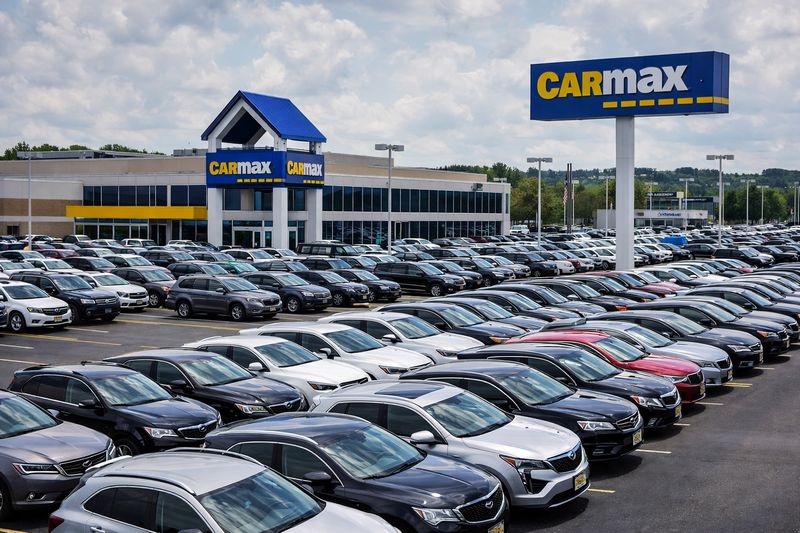
You can browse cars online, transfer a vehicle to your local store, apply for financing, and even get a home delivery in some areas. CarMax also buys cars directly from consumers, even if you don’t buy one from them.
In short, CarMax acts as:
- A used-car dealership
- A car buyer and appraisal service
- A financing marketplace
- A warranty provider
All under one brand.
How CarMax Became the Largest Used-Car Retailer in the U.S.
CarMax started in the 1990s with one main idea: used-car buying shouldn’t feel like a battle. Traditional dealerships were known for aggressive sales tactics, confusing pricing, and long negotiations. Many buyers hated that process.
CarMax removed negotiation entirely and focused on scale. By selling high volumes of cars across many states, they could rely on market data instead of haggling. Over time, this model worked.
Today, CarMax operates hundreds of locations nationwide and sells hundreds of thousands of vehicles each year. Their size allows them to:
- Source cars from all over the U.S.
- Move vehicles between states based on demand
- Use pricing data from millions of sales
That scale is a big reason people trust the brand.
Why Customers Choose CarMax
People usually don’t choose CarMax because it’s the cheapest option. They choose it because it feels safer and simpler.
No-Haggle Pricing
The price you see is the price you pay. There’s no back-and-forth, no “let me talk to my manager,” and no pressure to make a quick decision.
For many budget buyers, this is a relief. If you’ve ever felt uncomfortable negotiating or worried you’re overpaying because you don’t know the “real” price, CarMax removes that stress.
Inspections and Reconditioning
Every car sold by CarMax goes through a detailed inspection and reconditioning process. Vehicles with major issues like flood damage or salvage titles are usually filtered out.
This matters if you can’t afford unexpected repair bills. Paying a little more upfront can feel safer than buying a cheaper car that turns into a money pit.
Warranties and Return Policy
CarMax includes a limited warranty and offers an extended protection plan called MaxCare. You also get a return window, which is rare in used-car sales.
For buyers living paycheck to paycheck, that return option can be a big safety net if something doesn’t feel right after purchase.
Who CarMax Is Best For
CarMax is not for everyone. It works best for specific types of buyers and sellers.
CarMax is a good fit if you:
- Want a simple, low-stress buying process
- Are nervous about hidden problems or bad titles
- Prefer clear pricing over negotiating
- Need financing options in one place
- Want to sell a car quickly without listing it privately
It’s especially popular with people who say things like:
“I just want a reliable car and I don’t want to get ripped off.”
However, if your main goal is to get the absolute lowest price possible, CarMax may not be the best option. Private sellers, dealer auctions, or salvage auctions often offer cheaper cars—but with more risk.
Is CarMax Legit? How Trustworthy, Safe & Reliable It Really Is
When people search online for “Is CarMax legit?” they’re usually worried about one thing: getting scammed or overpaying. That concern is normal, especially if you’re spending most of your savings on a car. Let’s break down how trustworthy CarMax really is and where the doubts come from.
CarMax History and Scale
CarMax is not a small or unknown dealer. It’s a publicly traded company that has been operating for decades and sells hundreds of thousands of vehicles every year across the U.S.
Because of its size, CarMax cannot afford shady practices. One major scandal could cost them billions in lost trust and stock value. That’s why their processes are standardized, documented, and closely regulated.
If you’ve ever thought, “This place is too big to disappear with my money,” that’s basically the point. CarMax’s scale adds a layer of safety that small used-car lots often don’t have.
How CarMax Prices Vehicles
CarMax pricing often raises questions. Many buyers notice that prices are higher than private listings or small dealers and wonder if that means they’re being ripped off.
CarMax does not price cars based on negotiation. Instead, prices are set using:
- National and local market data
- Vehicle condition and mileage
- Supply and demand by region
- Reconditioning and inspection costs
You’re not paying just for the car. You’re also paying for inspections, warranties, return options, and a predictable process. That doesn’t mean it’s cheap—but it does mean the pricing is real and transparent.
Customer Satisfaction and Reputation
CarMax has millions of completed transactions, which naturally leads to mixed reviews. Some customers love the simplicity. Others complain about pricing or financing rates.
What matters is the pattern. Most negative reviews focus on:
- Higher prices compared to private sellers
- No room to negotiate
- Financing rates that aren’t the lowest
Very few complaints claim that CarMax is a scam or unsafe. That’s an important difference. Dissatisfaction with price is not the same as fraud.
What CarMax Guarantees
CarMax stands out because it actually puts guarantees in writing.
7-Day Return Policy
You can return a car within seven days if you change your mind. This is rare in used-car sales and gives buyers time to test the car in real life, not just on a short test drive.
For someone on a tight budget, this matters. If something feels off, you’re not stuck.
90-Day Limited Warranty
Most CarMax vehicles come with a limited warranty covering major components for 90 days. This helps protect buyers from immediate repair costs after purchase.
It’s not full coverage, but it’s more protection than most used-car dealers offer.
Common Misconceptions About CarMax
One common myth is that CarMax sells “perfect” cars. They don’t. These are used vehicles, and wear is normal.
Another misconception is that higher price means higher profit. In reality, a big part of CarMax pricing goes into reconditioning, logistics, warranties, and overhead.
Some buyers also assume CarMax hides problems. In practice, most issues come down to expectations. If you expect a bargain-basement price with zero risk, CarMax will feel expensive. If you want safety and clarity, it makes more sense.
So, Is CarMax Safe and Reliable?
CarMax is legit, safe, and reliable. It’s not a scam, and it’s not designed to trick buyers. It’s designed for people who value simplicity and protection over chasing the lowest possible price.
What CarMax Actually Does — Services, Business Model & How It Differs From Other Dealers
Many people think CarMax is just a big used-car lot. In reality, it works more like a full ecosystem built around buying, selling, and financing used vehicles. Understanding what CarMax actually does helps explain why prices are higher—and why some buyers still choose it.
Nationwide Used-Car Retail
CarMax sells used cars through hundreds of large stores across the U.S. and a single nationwide online inventory. Instead of being limited to what’s parked on a local lot, buyers can access vehicles from other states.
This is useful if you’re looking for a common, reliable car—like a Toyota Camry or Honda Civic—at a specific budget. If it’s not available nearby, CarMax can transfer it from another location.
Unlike traditional dealers, CarMax:
- Uses one fixed price
- Doesn’t rely on commissions to push specific cars
- Focuses on volume rather than negotiation
That’s a major difference from small dealerships that depend on aggressive sales tactics to survive.
CarMax Appraisal & Buying Center
CarMax also buys cars directly from the public. You can get an online offer, bring the car in for inspection, and sell it without buying anything in return.
This service attracts people who say:
“I just want to sell my car fast and be done with it.”
The offer is based on current market data, condition, mileage, and demand. Sometimes it’s higher than expected. Other times it’s lower than a private sale—but it’s quick, legal, and guaranteed for a short period.
For budget-conscious sellers who can’t wait weeks for a buyer, this convenience has real value.
CarMax Financing
CarMax doesn’t act as a bank. Instead, it works with its own financing arm and multiple partner lenders. This allows buyers to see loan options in one place.
You can check financing with a soft credit pull, which doesn’t hurt your score. That’s helpful if you’re unsure where you stand or worried about past credit issues.
CarMax financing is designed for approval and simplicity, not always the lowest rate. People with excellent credit may do better at a credit union, but buyers with average or challenged credit often appreciate having options immediately.
CarMax Service Centers
Each CarMax location includes a service department that handles inspections, repairs, and reconditioning before cars are listed for sale.
This is a big part of their business model. Cars are not sold “as-is” like many auction vehicles. Instead, CarMax invests in basic repairs, safety checks, and cosmetic fixes.
For someone without mechanical knowledge or extra cash for repairs, this reduces risk compared to cheaper, uninspected cars.
CarMax Wholesale Auctions (Dealer-Only)
CarMax also runs wholesale auctions, but these are not open to the public. These auctions are for licensed dealers only and usually include:
- Older vehicles
- High-mileage cars
- Trade-ins that don’t meet retail standards
These cars are sold as-is, often with limited or no guarantees. This is where CarMax moves inventory that doesn’t fit its retail model.
Many budget buyers never see this side of CarMax, but it explains how the company manages risk and quality at the retail level.
CarMax MaxCare Extended Service Plans
MaxCare is CarMax’s extended service plan offered at the time of purchase. It’s optional and works more like an extended warranty.
MaxCare can cover:
- Major mechanical components
- Electronics and systems
- Repairs at CarMax or approved shops
For buyers who can’t afford surprise repairs, MaxCare offers peace of mind—at a cost. Whether it’s worth it depends on the car, mileage, and your financial situation.
How CarMax Differs From Other Dealers
CarMax is not trying to be the cheapest. Its business model is built around predictability and scale.
Compared to traditional dealers, CarMax offers:
- No negotiation
- Clear appraisals
- Written guarantees
- Nationwide inventory
Want to Buy from CarMax Auctions?
BidNDrive helps private and international buyers register, place bids, and purchase vehicles from CarMax even without a dealer license. Our team guides you through registration, bidding, and shipping.
- ✅ No dealer license required
- ✅ Access to thousands of vehicles
- ✅ Transparent pricing & support
- ✅ Domestic + export shipping
How CarMax Works — No-Haggle Pricing, Appraisals & Online Buying
CarMax is built around one simple idea: remove negotiation and uncertainty from used-car buying. For people who hate bargaining or worry they’ll say the wrong thing and overpay, this system feels much easier. Here’s how it actually works behind the scenes.
No-Haggle Policy Explained
At CarMax, the price listed on the car is the final price. There is no negotiating, no price matching, and no “special deal if you buy today.”
This policy exists to create consistency. Two customers looking at the same car on the same day will see the same price. That’s reassuring for buyers who don’t want to feel played or pressured.
If you’ve ever thought:
“I don’t know how much I’m supposed to negotiate,”
CarMax’s system is designed for you.
The downside is obvious: if you enjoy negotiating or are hunting for a deep discount, CarMax won’t bend.
How Vehicles Are Sourced
CarMax gets its vehicles from several main sources:
- Customer trade-ins
- Cars bought directly from individuals
- Dealer auctions
- Fleet and rental companies
Not every car they buy ends up on the retail lot. Vehicles that don’t meet CarMax standards are usually sent to wholesale auctions instead.
This filtering process helps maintain a consistent level of quality for retail buyers.
How Reconditioning Works
Before a car is listed for sale, CarMax sends it through a reconditioning process. This includes mechanical checks, safety inspections, and basic cosmetic repairs.
The goal is not to make the car “like new,” but to make it dependable and road-ready. Worn brake pads, unsafe tires, or obvious mechanical issues are typically addressed.
For budget buyers, this reduces the risk of immediate repair bills after purchase. You’re paying more upfront, but you’re also reducing the chance of surprise expenses.
How Pricing Is Set
CarMax uses large-scale market data to set prices. This includes:
- Recent sales of similar vehicles
- Local and national demand
- Vehicle mileage and condition
- Reconditioning and logistics costs
Prices are adjusted regularly based on market changes. If demand drops, prices may fall. If certain models become popular, prices rise.
This is why two similar cars at CarMax may be priced differently. Small differences in mileage, trim, or location can affect value.
Why CarMax Won’t Negotiate
CarMax doesn’t negotiate because negotiation slows down the process and creates inconsistency. Negotiation also favors experienced buyers and disadvantages people who don’t know how to push back.
By refusing to negotiate, CarMax:
- Speeds up transactions
- Reduces sales pressure
- Creates a predictable buying experience
From a business standpoint, it also protects margins and simplifies training for staff.
From a buyer’s standpoint, it’s a trade-off. You give up the chance to get a bargain in exchange for clarity and peace of mind.
How Online Buying Fits In
CarMax’s online platform mirrors the in-store process. You can browse inventory, get financing estimates, request transfers, and even schedule delivery without stepping into a dealership.
For people balancing work, family, and limited time, this online-first approach makes buying a car far less exhausting.
Buying a Car at CarMax — Step-by-Step Guide
If you’ve never bought a car from CarMax before, the process is more structured and predictable than a traditional dealership. This is especially helpful if you’re on a budget and want to avoid surprises or pressure. Here’s how buying a car at CarMax works from start to finish.
Search Inventory Online
The first step happens online. CarMax lists its entire nationwide inventory on its website, including photos, prices, mileage, and basic history information.
You can filter by:
- Price range
- Monthly payment estimate
- Mileage
- Body style and features
This is useful if you’re trying to stay within a strict budget. Instead of falling in love with a car you can’t afford, you can start with realistic numbers.
Hold or Transfer a Vehicle to Your Local CarMax
If the car you want is not at your local store, CarMax offers vehicle transfers.
Free vs Paid Transfers
Some transfers are free, usually within a short distance. Longer-distance transfers often come with a fee. The fee depends on how far the car needs to travel and is shown upfront.
Paid transfers are non-refundable, even if you decide not to buy the car. That’s an important detail for budget buyers.
You can also place a temporary hold on certain vehicles to give yourself time to decide.
Test Drive and In-Person Inspection
Once the car arrives at your local CarMax, you can schedule a test drive. CarMax allows longer test drives than many dealers, so you can actually see how the car feels in normal driving conditions.
You’re also allowed to have the car inspected by an independent mechanic during the return window. For buyers worried about hidden problems, this extra step provides peace of mind.
Review Financing Options
Before finalizing the purchase, you’ll review financing options.
CarMax will show offers from:
- CarMax Auto Finance
- Partner banks
- Sometimes external lenders
You can also bring your own financing from a bank or credit union. In many cases, credit unions offer lower interest rates, especially if your credit is strong.
If your credit is average or less-than-perfect, CarMax financing can be easier to qualify for, though the rate may be higher.
Final Paperwork
Once financing and terms are agreed upon, CarMax handles the paperwork. This includes:
- Purchase agreement
- Title transfer
- Registration and plates (in most states)
Compared to private sales, this saves time and reduces the risk of paperwork mistakes that can cost money later.
Optional MaxCare Warranty
At checkout, you’ll be offered the MaxCare extended service plan. This is optional.
For older or higher-mileage cars, some buyers choose MaxCare to avoid large repair bills. Others skip it to keep monthly payments lower.
The right choice depends on your budget, risk tolerance, and how long you plan to keep the car.
Delivery or Pickup Options
Home Delivery Availability
In some ZIP codes, CarMax offers home delivery. This can be convenient if you can’t easily visit a store. Delivery availability and fees depend on location.
In-Store Pickup
Many buyers still choose in-store pickup. This allows a final walk-through of the vehicle and a chance to ask last-minute questions.
How Title and Registration Are Handled
CarMax usually handles title and registration for you, especially for in-state purchases. For out-of-state buyers, the process may take longer, but CarMax guides you through each step.
For budget-conscious buyers, this reduces stress and avoids extra trips to the DMV.
CarMax Financing — Rates, Requirements & Approval Process
For many buyers, financing is the most stressful part of buying a car. If your credit isn’t perfect or your savings are limited, one rejection can end the whole plan. CarMax tries to make financing simpler by offering multiple options in one place—but that convenience comes with trade-offs.
How CarMax Financing Works
CarMax itself is not a bank. It offers financing through two main channels:
- CarMax Auto Finance, its in-house financing arm
- Partner lenders, including national and regional banks
When you apply, CarMax checks which lenders are willing to approve you and presents the available offers. This happens before you commit to buying a specific car, which helps you understand your budget upfront.
Soft Credit Pulls and Prequalification
CarMax allows you to check financing with a soft credit pull. This means:
- Your credit score is not affected
- You can see estimated rates and terms
- You avoid unnecessary hard inquiries
For buyers worried about damaging their credit while “just looking,” this is a big advantage.
A hard credit pull usually happens later, only when you decide to move forward with a purchase.
How APR Is Determined
Your interest rate is based on several factors:
- Credit score and history
- Income and employment stability
- Loan amount and down payment
- Vehicle age and mileage
- Loan term length
Higher-risk loans mean higher APRs. That’s why older cars or longer loan terms often come with higher interest rates.
If you’re on a tight budget, even a small increase in APR can raise your monthly payment more than expected.
CarMax Auto Finance vs Partner Banks
CarMax Auto Finance often approves buyers that traditional banks decline. This makes it popular with people who have:
- Limited credit history
- Past late payments
- Lower credit scores
Partner banks usually offer better rates, but their approval standards are stricter.
CarMax’s system automatically matches you with lenders based on your profile, which saves time—but it doesn’t guarantee the lowest possible rate.
When External Lenders Give Better Rates
If you have good or excellent credit, a credit union or local bank often offers lower APRs than CarMax.
Many budget-conscious buyers:
- Get preapproved at a credit union
- Compare that offer with CarMax financing
- Choose the lower monthly payment
CarMax allows outside financing, so you’re not locked into their loans.
Financing With Bad Credit
CarMax is often seen as a “second chance” lender. Approval is possible even with bad credit, but it usually comes with:
- Higher interest rates
- Larger required down payments
- Shorter loan terms
For some buyers, this is still worth it. Reliable transportation can be more important than perfect loan terms, especially if the car helps you get to work consistently.
The key is to be realistic. Just because you’re approved doesn’t mean you should stretch your budget to the limit.
Is CarMax Financing Good?
CarMax financing is good for access and convenience, not always for price. It works best if:
- You need quick approval
- Your credit is average or below
- You want everything handled in one place
CarMax MaxCare Warranty — What It Covers & Whether It’s Worth It
When you’re buying a used car, the biggest fear is simple: an expensive repair right after purchase. That’s exactly why CarMax offers MaxCare, its extended service plan. But is it actually worth the extra cost, especially if you’re on a budget?
What MaxCare Is
MaxCare is an optional extended service plan offered by CarMax at the time of purchase. It’s not insurance and not a lifetime warranty. It covers certain repairs after the standard limited warranty expires.
MaxCare is designed to reduce surprise repair bills, not eliminate maintenance costs completely.
Powertrain Coverage
MaxCare typically covers major powertrain components, including:
- Engine
- Transmission
- Drivetrain components
These are the most expensive parts to fix. For buyers worried about catastrophic failures, this is the biggest reason to consider MaxCare.
If your car is older or has higher mileage, powertrain coverage alone can justify the plan.
Electronics and Vehicle Systems
Modern cars rely heavily on electronics. MaxCare often covers:
- Electrical systems
- Sensors and modules
- Infotainment components
- Climate control systems
These repairs can be costly, even on mid-range vehicles. A single electronics issue can easily cost more than a year of warranty payments.
Deductible Options
MaxCare allows you to choose different deductible levels. Higher deductibles mean lower upfront cost, while lower deductibles increase the plan price but reduce out-of-pocket expenses when repairs happen.
For budget buyers, this choice matters. If you can handle a larger one-time repair cost, a higher deductible may make sense.
Transferability
MaxCare is transferable if you sell the car before the coverage ends. This can increase resale value or make the car easier to sell later.
Some buyers also receive a prorated refund if they cancel early. This adds flexibility if your situation changes.
Real-World Pros of MaxCare
MaxCare is most valuable for people who:
- Buy older or higher-mileage cars
- Rely on one vehicle for work or family
- Don’t have emergency savings for repairs
Many buyers say MaxCare “paid for itself” after just one major repair.
Real-World Cons of MaxCare
The biggest downside is cost. MaxCare increases the total price of the car and often raises monthly payments.
It also does not cover:
- Regular maintenance
- Wear items like brake pads and tires
- Every possible issue
If you’re buying a newer, low-mileage car and plan to sell it soon, MaxCare may not be worth it.
Is MaxCare Worth It?
MaxCare is worth considering if a major repair would seriously hurt your finances. If you’d rather pay a little more each month than risk a large unexpected bill, MaxCare offers peace of mind.
If your budget is already stretched thin and the car is newer and reliable, skipping MaxCare and saving the money may be the smarter move.
CarMax Inspections & Condition Standards — How Quality Is Verified
For many budget-conscious buyers, the biggest worry isn’t the price—it’s buying a car that looks fine but hides serious problems. CarMax focuses heavily on inspections and condition standards to reduce that risk. Here’s how they verify quality before a car ever reaches the sales lot.
125+ Point Inspection Explained
Every retail vehicle sold by CarMax goes through a multi-point inspection that covers over 125 individual checks. This inspection looks at the car’s major systems, safety components, and overall condition.
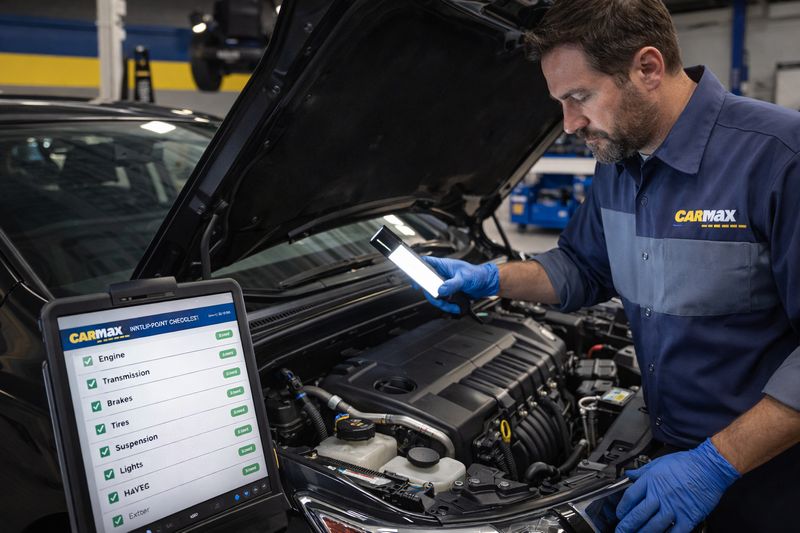
The inspection typically includes:
- Engine performance and leaks
- Transmission operation
- Brakes, steering, and suspension
- Tires, wheels, and alignment
- Lights, mirrors, and safety features
The goal is not perfection, but functionality and safety. Normal wear is acceptable, but major mechanical issues are addressed or the car is removed from retail sale.
Reconditioning Process
After inspection, CarMax reconditions vehicles to meet its retail standards. This may include:
- Replacing worn brake pads or tires
- Fixing obvious mechanical problems
- Addressing warning lights or error codes
- Basic cosmetic improvements
This process costs money, which is one reason CarMax vehicles often cost more than similar cars sold privately or at auctions. However, for buyers without mechanical knowledge or extra cash for repairs, this step reduces financial risk.
Title and Vehicle History Review
CarMax reviews vehicle history reports, typically through Carfax, before offering a car for retail sale.
This review checks for:
- Accident history
- Title issues
- Odometer discrepancies
- Ownership records
While no history report is perfect, this screening helps catch red flags that many private sellers may not disclose.
What Issues CarMax Avoids
CarMax applies strict standards about what it will sell at retail. Vehicles with certain high-risk issues are usually excluded, including:
- Salvage or rebuilt titles
- Flood damage
- Severe frame or structural damage
Cars that fail to meet these standards are typically sent to CarMax’s wholesale auctions instead of being sold to consumers.
For buyers who cannot afford a mistake, this filtering is important. It significantly lowers the chance of buying a vehicle with hidden, long-term problems.
What This Means for Budget Buyers
CarMax inspections don’t guarantee a perfect car, but they reduce risk compared to many other used-car options. You’re paying for:
- Professional inspection
- Reconditioning work
- History screening
Selling a Car to CarMax — Offers, Pricing & What to Expect
If you’re selling a car because you need cash fast or don’t want the hassle of private listings, CarMax is one of the easiest options. You won’t get top dollar in every case, but you’ll get speed, clarity, and a guaranteed offer. Here’s how the process works and what affects the price.
Online Instant Offer
The process usually starts online. You enter basic details about your car, such as:
- VIN
- Mileage
- Condition overview
- Accident history (if known)
CarMax then gives you an instant estimated offer. This offer is based on current market data and similar recent sales.
For many sellers, this step answers a key question:
“Is my car even worth selling right now?”
In-Person Appraisal
After receiving an online offer, you bring the car to a CarMax location for an in-person appraisal. A CarMax associate inspects the vehicle to confirm its condition matches the information you provided.
The inspection is usually quick and focused on value, not reconditioning. If the car’s condition is consistent, the online offer often stays the same.
Condition Evaluation
CarMax looks at the car from a resale perspective. They check:
- Mechanical condition
- Cosmetic wear
- Tires and brakes
- Warning lights
- Signs of accidents or poor repairs
Minor issues may lower the offer slightly. Major issues can reduce it more—or move the car to wholesale pricing.
What Determines Your Car’s Value
CarMax pricing is driven by data, not negotiation. The main factors include:
- Current market demand
- Mileage
- Overall condition
- Vehicle history and title status
- How easy the car is to resell
A clean, popular model may get a strong offer. An older car with high mileage may still get an offer, but usually at a lower price.
Offer Validity Period
Once the appraisal is complete, the offer is typically valid for seven days. During that time, you can think it over without pressure.
If market conditions change or the car’s condition changes, the offer may be updated after it expires.
Payment Timeline
If you accept the offer, payment is fast. In most cases:
- You receive a bank draft or check
- Payment is issued the same day or within a few days
CarMax also handles lien payoff if you still owe money on the car, which simplifies the process.
CarMax vs Carvana vs CarGurus Instant Offer
CarMax, Carvana, and CarGurus all offer quick, no-hassle selling—but prices can vary.
CarMax often:
- Offers competitive prices on common, in-demand cars
- Pays less for cars with heavy wear or older models
Carvana may offer more for newer vehicles but can be stricter on condition. CarGurus Instant Offer depends heavily on local dealer demand.
Smart sellers often compare all three before deciding.
Why CarMax Sometimes Offers More or Less
If CarMax already has strong demand for your model, the offer may be surprisingly high. If the car doesn’t fit their retail standards, the offer may reflect wholesale value instead.
That doesn’t mean the offer is unfair—it means CarMax prices based on how easily they can resell the car.
Is CarMax Good for Selling?
CarMax is a good choice if:
- You want a fast, guaranteed sale
- You don’t want to meet private buyers
- You want clear paperwork and legal handling
CarMax Trade-In — How It Works & Whether It’s Worth Doing
Trading in a car can save time, but it can also cost you money if you don’t understand how the numbers work. CarMax takes a slightly different approach to trade-ins compared to traditional dealers, which makes the process more transparent—but not always more profitable.
How the CarMax Trade-In Process Works
At CarMax, a trade-in is treated the same as a regular vehicle sale. Your car is appraised using the same process whether or not you plan to buy another vehicle.
You can:
- Get an online estimate
- Bring the car in for an in-person appraisal
- Receive a written offer valid for a limited time
That offer can then be applied as a trade-in toward another CarMax vehicle or taken as a standalone sale.
Same Offer Whether You Buy or Not
One important difference with CarMax is that the trade-in offer does not change based on your purchase.
Traditional dealers often inflate the trade-in value but raise the price of the car you’re buying. CarMax separates the two transactions.
This makes it easier to understand what you’re really getting and avoids the “shell game” that confuses many buyers.
Using Trade-In Value to Reduce Sales Tax
In many states, trading in a car can reduce the amount of sales tax you owe on your next vehicle. Instead of paying tax on the full purchase price, you pay tax on the difference after the trade-in value is applied.
For example:
- Car price: $18,000
- Trade-in value: $5,000
- Taxable amount: $13,000
For budget buyers, this tax savings can make a trade-in more attractive than selling privately.
Trading at CarMax vs Selling Private
Selling privately usually brings a higher price, but it also takes time and effort. You’ll need to:
- Create listings
- Answer messages
- Meet strangers
- Handle paperwork
CarMax offers less hassle but may pay less than a private buyer—especially for older or high-mileage vehicles.
The question becomes:
“Is the extra money worth the extra stress and time?”
When a Trade-In Makes Sense
A CarMax trade-in makes sense if:
- You want everything handled in one visit
- You need a quick and clean transaction
- You value tax savings over top dollar
- Your car is common and easy to resell
If your car is in high demand or you have time to wait, selling privately may earn more. But if convenience, speed, and simplicity matter, CarMax’s trade-in process is straightforward and predictable.
CarMax Fees — Are There Hidden Costs?
One of the biggest fears for budget buyers is getting hit with surprise fees at the end of the deal. CarMax promotes transparency, but that doesn’t mean buying a car there is fee-free. The key difference is that most costs are disclosed upfront.
Documentation Fees by State
CarMax charges documentation fees, but the amount depends on state law. Some states cap doc fees, while others allow higher charges.
These fees cover paperwork, title processing, and compliance tasks. CarMax does not inflate doc fees to negotiate later—they are fixed and shown before you sign.
If you’re comparing prices across states, this fee difference can affect the final cost.
Vehicle Transfer Fees
If you want a car transferred from another CarMax location, there may be a transfer fee.
- Short-distance transfers are often free
- Long-distance transfers usually cost more
- Transfer fees are shown before you agree
Important detail: transfer fees are typically non-refundable, even if you decide not to buy the car.
For tight budgets, it’s smart to limit transfers unless you’re confident the car fits your needs.
Home Delivery Fees
CarMax offers home delivery in certain areas. Availability and cost depend on ZIP code and distance.
Some deliveries are free, while others include a fee. The cost is disclosed upfront, so you can decide whether convenience is worth the extra money.
MaxCare Cost Range
MaxCare is optional but adds to the total cost. Prices vary widely based on:
- Vehicle age
- Mileage
- Coverage length
- Deductible choice
For some cars, MaxCare may add a few hundred dollars. For others, it can cost several thousand. This affects both the purchase price and monthly payment.
Taxes and Registration
Taxes and registration fees are required by law and vary by state and county. CarMax usually includes these costs in your final breakdown and handles the paperwork for you.
This makes budgeting easier and reduces trips to the DMV.
Are There Hidden Fees?
CarMax does not rely on surprise add-ons or last-minute charges. What you see in the final breakdown is typically what you pay.
That said, the total cost can still be higher than expected if you don’t account for:
- Transfer fees
- Optional warranties
- Taxes and registration
Calculate Your Total Cost on Each Lot Page
Use the built-in calculator available on every vehicle listing to see the full estimated cost — including auction fees, transportation, and export charges — before placing your bid.
- ✅ Transparent service pricing
- ✅ Help estimating total landed and sea cost
- ✅ Free auction history reports
- ✅ Bidding support available
CarMax Return & Refund Policy
One reason many budget-conscious buyers feel safer at CarMax is the ability to return a car after purchase. Unlike most used-car dealers, CarMax gives you time to live with the car and make sure it truly fits your needs.
7-Day Return Guarantee
CarMax offers a 7-day return policy on most vehicle purchases. During this period, you can return the car for any reason.
This matters if:
- The car doesn’t feel right in daily driving
- Your family realizes it’s too small
- Fuel costs are higher than expected
You’re not required to prove a defect. If you’re not comfortable, you can walk away.
30-Day Limited Warranty (Some Regions 90 Days)
In addition to the return window, CarMax includes a limited warranty that covers certain repairs shortly after purchase.
In many regions, this warranty lasts 30 days. In others, it extends to 90 days. Coverage typically includes major systems and components.
This provides extra protection if an issue appears soon after the return window ends.
Mileage Limits and Conditions
The return policy comes with mileage limits. If you exceed the allowed mileage during the return period, the car may no longer qualify for return.
This prevents abuse of the policy and encourages normal, reasonable use.
Before buying, it’s important to confirm:
- Mileage limits
- Return condition requirements
Knowing these details helps avoid disappointment later.
How Refunds Are Issued
If you return the car within the allowed period:
- Down payments are refunded
- Trade-in value is returned or reapplied
- Loan agreements are canceled
Refund timing depends on how you paid and whether financing was involved. In most cases, refunds are processed quickly, but full resolution can take several business days.
What This Means for Budget Buyers
For buyers who can’t afford a bad decision, this policy adds real security. You’re not locked in the moment you drive off the lot.
While the policy doesn’t remove all risk, it reduces the chance of being stuck with a car that doesn’t work for your life or your budget.
CarMax Auctions — Dealer-Only Wholesale Sales Explained
Many budget buyers hear about “CarMax auctions” and assume they can buy cheap cars directly from them. This leads to confusion and disappointment. The reality is very different.
Closed Auctions for Licensed Dealers Only
CarMax auctions are not open to the public. Only licensed auto dealers are allowed to participate.
These auctions exist so CarMax can move vehicles that don’t fit its retail standards. This includes cars that are still usable but don’t meet CarMax’s criteria for retail sale.
If you don’t have a dealer license, you cannot bid, register, or attend as a buyer.
What Cars Are Sold at CarMax Auctions
The inventory at CarMax auctions usually includes:
- Trade-ins that didn’t meet retail standards
- Older vehicles
- High-mileage cars
- Vehicles sold as-is, with no warranty
These cars are often cheaper, but they come with more risk. Many need repairs, and buyers are expected to know what they’re doing.
This is one reason CarMax retail prices are higher—the risky cars are filtered out before reaching consumers.
How Bidding Works
Bidding at CarMax auctions works like most wholesale auto auctions:
- Dealers inspect vehicles before bidding
- Cars are sold quickly, often in seconds
- No test drives or return policies
Once a bid is accepted, the sale is final.
This fast, high-risk environment is not designed for casual or first-time buyers.
Auction Fees
Dealers who buy at CarMax auctions pay auction and buyer fees. These fees vary based on the sale price and location.
Fees are another reason wholesale prices may not be as low as they appear at first glance.
Why the Public Cannot Participate
CarMax limits auctions to dealers because:
- Cars are sold as-is
- There are no consumer protections
- Buyers are expected to handle repairs and paperwork
Allowing public buyers would increase complaints and legal risk.
For budget buyers without mechanical knowledge, this restriction is actually a form of protection.
What This Means for Budget Buyers
If you’re looking for the cheapest possible car and are willing to take risks, dealer auctions can be appealing—but they’re not accessible without a license.
CarMax’s retail side exists precisely because most people want safety, warranties, and legal protection, even if it costs more.
CarMax Delivery, Shipping & Pickup — How Transportation Works
CarMax is built around a nationwide inventory, which means transportation plays a big role in how the process works. Whether you’re transferring a car from another state or having it delivered to your home, it’s important to understand the rules, timelines, and limits.
Transfer Between CarMax Stores
If the car you want is located at another CarMax store, you can request a transfer to your local location.
Transfers fall into two categories:
- Free transfers, usually for short distances
- Paid transfers, typically for longer distances
The transfer cost and estimated delivery time are shown before you confirm. Once paid, transfer fees are usually non-refundable.
Transfer times can range from a few days to a couple of weeks, depending on distance and logistics.
Delivery Availability by ZIP Code
CarMax offers home delivery in many areas, but not everywhere. Availability depends on:
- Your ZIP code
- Distance from a CarMax location
- Local regulations
In some areas, home delivery is free. In others, there may be an added fee. CarMax shows delivery options during checkout so you can decide if the convenience fits your budget.
Scheduling and Pickup Rules
If you choose in-store pickup, CarMax schedules a delivery or pickup appointment once the car arrives and paperwork is ready.
Appointments are structured and usually efficient. You won’t spend hours negotiating or waiting in a sales office.
For home delivery, CarMax schedules a delivery window and confirms details in advance. Someone must be present to receive the vehicle and sign documents.
How Long Delivery Usually Takes
Delivery timelines vary:
- Local store inventory: often same day or next day
- Store transfers: several days to a few weeks
- Home delivery: depends on location and scheduling
CarMax provides estimated timelines, but delays can happen due to transport or paperwork.
How CarMax Handles Out-of-State Purchases
Buying a car from another state is common at CarMax. The company handles:
- Title transfer
- Registration paperwork
- Temporary plates (when required)
Out-of-state purchases may take longer to complete due to state-specific regulations, but CarMax guides buyers through each step.
What This Means for Budget Buyers
Transportation adds time and sometimes cost. If you’re on a tight budget, it’s important to factor in:
- Transfer fees
- Potential delivery costs
- Waiting time
CarMax’s system isn’t the fastest in every case, but it’s predictable and organized.
Is CarMax Worth It? Pros & Cons for Buyers & Sellers
Whether CarMax is “worth it” depends on what you value more: price or predictability. For some people, CarMax feels expensive. For others, it feels safe. Let’s look at both sides honestly.
Pros of Using CarMax
Transparent Pricing
CarMax shows one price, upfront. There are no hidden discounts, fake markups, or last-minute negotiations.
For buyers who don’t want to guess or argue over numbers, this clarity removes a lot of stress—especially if you’re watching every dollar.
High Vehicle Standards
CarMax filters out cars with major risks like salvage titles, flood damage, or severe structural issues.
You may pay more, but you’re far less likely to buy a vehicle that turns into a financial disaster a few months later.
No-Pressure Buying Process
There’s no commission-driven sales push. You won’t hear lines like “this deal is only good today.”
This is ideal for cautious buyers who need time to think and don’t want to feel rushed into a bad decision.
Strong Warranty Options
The included limited warranty and optional MaxCare plan add a safety net. For budget buyers without emergency repair funds, this protection can be more valuable than a lower price.
Cons of Using CarMax
Higher-Than-Average Prices
CarMax vehicles usually cost more than similar cars sold privately or at auctions.
You’re paying for inspections, reconditioning, warranties, and convenience. If your only goal is the cheapest possible car, CarMax may feel overpriced.
No Negotiation
CarMax does not negotiate—at all. If you’re experienced at bargaining or enjoy hunting for deals, this can feel limiting.
There’s no way to lower the price, even slightly.
Limited Inventory for Rare Models
CarMax focuses on mainstream, easy-to-resell vehicles. If you’re looking for a rare trim, performance model, or specialty car, inventory may be limited.
Is CarMax Worth It for Buyers?
CarMax is worth it if you:
- Want a low-stress experience
- Prefer safety over risk
- Need clear pricing and paperwork
- Can’t afford surprise repairs
It may not be worth it if:
- You’re chasing the lowest price
- You’re comfortable with auctions or private sellers
- You enjoy negotiating
Is CarMax Worth It for Sellers?
For sellers, CarMax is worth it if speed and simplicity matter more than squeezing out every last dollar.
If you need cash fast or don’t want to deal with private buyers, CarMax offers a clean and predictable exit.
Start Buying from CarMax Today
Join thousands of buyers using BidNDrive to purchase vehicles from CarMax auctions with professional support, transparent service pricing, and worldwide shipping.
- ✅ Licensed U.S. auto broker since 2009
- ✅ No dealer license required
- ✅ Low service fees
- ✅ Domestic transport + export worldwide
Further Reading:
Essential Guide to Buying Used Cars Online: Tips & Tricks
Understanding CarFax: How Often Is It Updated?
What Does a Clean Title Mean and Why Does It Matters When Buying a Car?
Can You Lease a Used Car? Affordable Options Explained
Frequently Asked Questions
- Yes, CarMax can buy leased cars in many cases. The leasing company must allow third-party buyouts, and CarMax will contact them to confirm the payoff amount. Some leases restrict this, so approval is not guaranteed.
- No. CarMax has a strict no-haggle policy. The listed price is the final price for everyone.
- Yes. MaxCare can usually be canceled. If you cancel early, you may receive a prorated refund, depending on how much coverage time has passed.
- No. CarMax does not price match other dealerships, private sellers, or online listings.
- No. CarMax sells used vehicles only. Even low-mileage cars are still considered used.
- Yes. CarMax regularly handles out-of-state purchases and manages title and registration paperwork. The process may take longer due to state regulations.
- A down payment is not always required, but it depends on your credit, income, and the lender approving your loan.
- Prequalification uses a soft credit pull, which does not affect your credit score. A hard pull usually happens only if you move forward with financing.
- Yes. You can use financing from a bank or credit union instead of CarMax financing.
- Yes. CarMax accepts trade-ins and gives the same offer whether or not you buy a car from them.
- Yes. Selling to CarMax is a separate transaction. There is no obligation to purchase another vehicle.
- Most offers are valid for 7 days, as long as the car’s condition does not change.
- Yes. CarMax can pay off the lien directly and handle the paperwork if you still owe money on the vehicle.
- No. CarMax vehicles are inspected but are not manufacturer-certified pre-owned unless specifically stated.
- Yes. Most cars come with a limited warranty. Coverage length varies by region.
- Yes. You can have the car inspected by your own mechanic during the return period.
- No. CarMax typically does not sell salvage, rebuilt, or flood-damaged vehicles at retail.
- Transfers can take anywhere from a few days to a couple of weeks, depending on distance.
- No. Transfer fees are usually non-refundable.
- Yes. You can test drive a car without committing to a purchase.
- Home delivery is available in many ZIP codes, but not all. Availability and fees vary.
- Yes. CarMax offers a 7-day return policy, subject to mileage limits.
- Your trade-in value is usually returned or reapplied, depending on how the transaction was structured.
- Only if you apply for financing. Cash buyers do not need a credit check.
- Yes, but inventory is limited since manuals are less common.
- Often, yes. CarMax prices reflect inspections, reconditioning, and warranties.
- In many cases, yes. Availability depends on location and state regulations.
- Yes. CarMax typically handles title, registration, and plates.
- You can return the car within the return window, even after signing.
- No. CarMax auctions are dealer-only.
- Yes. You must provide proof of insurance before taking delivery.
- No. Prices are the same for all buyers.
- Yes. Approval is possible, but interest rates are usually higher.
- No. Approval depends on lender criteria.
- For most buyers, yes. Inspections, warranties, and return options reduce risk.
- Yes. Vehicle history reports are typically available for review.
- CarMax may buy them, but offers are usually low and based on wholesale value.