



If you’re looking for a cheaper way to buy a motorcycle, ATV, or other powersports vehicle, you’ve probably heard about auctions.NPA — National Powersport Auctions is a dealer-only wholesale auction that sells motorcycles, ATVs, UTVs, personal watercraft, and other recreational vehicles. It’s where dealerships move trade-ins, repossessions, and surplus inventory. And it’s where smart buyers with limited budgets often find better deals than on the retail market.

Below is a simple explanation of what NPA is, what it sells, who uses it, and how it compares to other major auctions.
What Is NPA?
NPA (National Powersport Auctions) is a U.S.-based wholesale auction company that specializes in powersports vehicles. It has been operating since 1990 and runs weekly auctions across multiple locations in the United States.
Unlike public marketplaces or classified sites, NPA is not open to individual retail buyers. Only licensed dealers, exporters, and approved businesses can buy or sell there. This keeps the environment professional and prices closer to true wholesale value.
What Types of Vehicles Does NPA Sell?
NPA does not sell regular passenger cars. Its inventory is 100% focused on powersports and recreational vehicles, including:
- Motorcycles (cruisers, sport bikes, touring, dirt bikes)
- ATVs (quads for work or recreation)
- UTVs / side-by-sides (Polaris RZR, Can-Am, etc.)
- PWCs (Jet Skis, WaveRunners)
- Boats (mainly dealer trade-ins and repos)
- Scooters and mopeds
- E-bikes and electric powersports vehicles
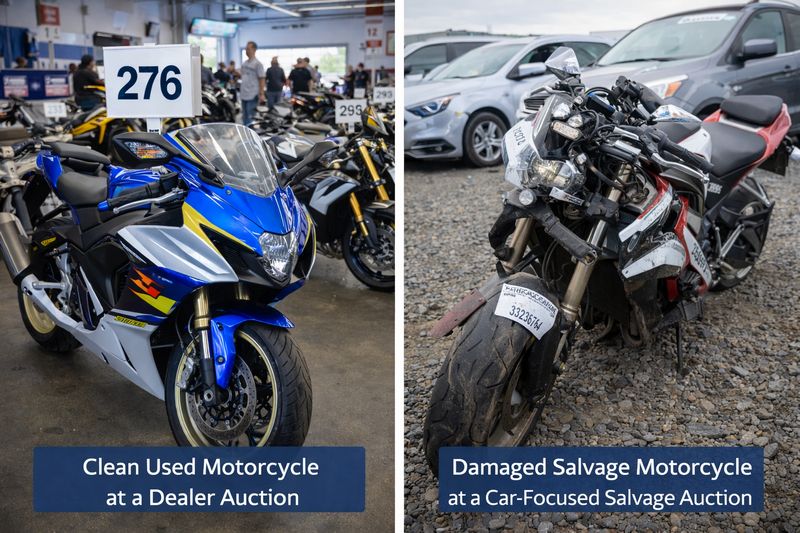
Most units come from dealership trade-ins, manufacturer finance repossessions, rental fleets, and dealer overstock. That means many vehicles are running, repairable, or retail-ready — not just wrecked or totaled units.
For buyers on a budget, this matters. You’re not only looking at junk or heavy damage. Many bikes just need light cosmetic work or basic service.
Why Dealers Rely on NPA
Dealers use NPA because it solves real business problems.
When a motorcycle dealership takes a trade-in they don’t want to keep — maybe it’s the wrong brand, too old, or too slow to sell — NPA is where they send it. Instead of sitting on inventory, they convert it into cash quickly.
Manufacturers and finance companies also rely on NPA to sell repossessed powersports vehicles in a controlled, professional environment.
For buyers, this creates opportunity. You’re bidding on vehicles that dealers are motivated to move, not overpriced retail listings with emotional sellers.
In simple terms:
- Dealers use NPA to liquidate inventory fast
- Buyers use NPA to buy below retail market prices
Is NPA Legit? How Safe, Trusted & Established the Auction Really Is
When people hear “dealer-only auction,” the first questions are always the same: Is NPA legit? Is it safe? Is this some kind of closed scam for insiders?
These doubts are normal, especially if you’re trying to save money and don’t want to risk it on an unknown platform.
The short answer is simple: yes, NPA is real, legitimate, and well-established. Below is why.
NPA’s History and Nationwide Presence
National Powersport Auctions was founded in 1990. That alone tells you a lot. Scam platforms don’t survive for decades.
Over the years, NPA has built a nationwide auction network with physical auction sites across the United States and weekly sales that attract thousands of licensed dealers. It operates both in-lane and online through its simulcast system, combining traditional auctions with modern digital access.
NPA is not a startup, not a side project, and not a marketplace run from a website template. It is a long-standing wholesale auction company with real locations, staff, inspectors, and infrastructure.
Reputation with Dealers and Manufacturers
NPA’s core customers are franchised motorcycle dealerships, independent powersports dealers, and finance companies. These are businesses that rely on consistency and transparency.
Dealers keep coming back to NPA because:
- Vehicles are represented in a standardized way
- Condition reports follow a clear inspection process
- Payments and titles are handled professionally
- Disputes follow defined arbitration rules
If NPA were unreliable or shady, major dealers would simply stop using it. Instead, NPA remains a primary liquidation channel for the powersports industry.
Partnerships with Major OEMs
One of the strongest signs that NPA is trustworthy is its long-term partnerships with major manufacturers and OEM finance arms, including brands like:
- Harley-Davidson
- Polaris
- Yamaha
- Honda
- Kawasaki
- BRP (Can-Am, Sea-Doo)
These companies do not send repossessions or dealer inventory to random platforms. They work only with auctions that meet strict legal, financial, and operational standards.
OEM partnerships mean NPA follows compliance rules, secure payment systems, and proper title handling — things scams simply cannot offer.
Why NPA Is B2B-Only (and Why That’s a Good Sign)
Many people assume that if an auction is not open to the public, it must be hiding something. In reality, the opposite is true.
NPA is B2B-only because:
- Most vehicles are sold with wholesale terms
- Pricing assumes professional buyers
- Title transfers are handled dealer-to-dealer
- Many sellers require licensed buyers for compliance reasons
This model protects sellers and keeps pricing realistic. It also reduces chaos, fake bids, and inexperienced buyers who don’t understand auction rules.
For individuals without a license, this doesn’t mean NPA is inaccessible. It simply means you need to work through a licensed partner, exporter, or broker — which is common in the auction world.
Common Misconceptions About NPA
“NPA is a scam because the public can’t buy.”
False. Many of the most reputable auctions in the U.S. are dealer-only.
“Only junk or broken bikes are sold at NPA.”
Not true. While some units need work, many are clean trade-ins, repossessions, or lightly used vehicles.
“NPA hides problems in inspections.”
Inspections are not guarantees, but they follow a structured checklist and are backed by arbitration rules when material issues are misrepresented.
“If it’s wholesale, it must be unsafe.”
Wholesale simply means no retail protection or test drives, not that the platform itself is unsafe.
Bottom Line on NPA’s Legitimacy
NPA is not a risky experiment or an unknown website. It is a trusted wholesale auction with over 30 years of industry presence, deep dealer relationships, and strong manufacturer backing.
What NPA Does — Services, Inventory Sources, Buyer & Seller Tools
At its core, NPA exists for one simple reason: to move powersports vehicles efficiently at wholesale prices. It connects sellers who need to liquidate inventory with professional buyers looking for value.
If you’re trying to understand what NPA actually does day to day, it helps to break it down into three parts: where the vehicles come from, how they’re sold, and what tools NPA provides to reduce risk.
Wholesale Powersports Auctions
NPA operates weekly wholesale auctions dedicated entirely to powersports. These auctions happen at physical locations and online at the same time through NPA’s simulcast system.
Every auction follows a structured process:
- Vehicles are inspected and cataloged
- Units are assigned run numbers and lanes
- Buyers bid live in-lane or online
- Vehicles sell to the highest bidder or go “If Sale”
There are no retail markups, no negotiations after the fact, and no emotional pricing. Everything is driven by market demand and dealer-level pricing.
Trade-Ins from Dealerships
One of the largest inventory sources at NPA is dealer trade-ins.
Example:
A motorcycle dealership takes in a 7-year-old sport bike as a trade. It runs fine, but it’s not their brand and would sit on the showroom too long. Instead of retailing it, the dealer sends it to NPA.
For buyers, this means access to:
- Running motorcycles
- Light cosmetic damage
- Normal wear, not total losses
- Vehicles that dealers simply don’t want to retail
This is often where budget-conscious buyers find the best value.
Manufacturer Financial Services Repossessions
NPA also works closely with manufacturer-backed finance companies. When a customer stops making payments, the unit gets repossessed and needs to be sold quickly.
These repossessions are usually:
- Late-model vehicles
- Mechanically intact
- Sold strictly “as-is”
- Priced to move, not to maximize retail profit
Repos don’t automatically mean “bad condition.” Many were taken back due to financial issues, not abuse or accidents.
Fleet and Rental Liquidations
Another important inventory source is fleet and rental companies.
These vehicles typically:
- Have higher hours or mileage
- Were maintained on a schedule
- Show normal wear from use
- Are priced accordingly
For buyers who don’t need a showroom-perfect unit, fleet vehicles can be a practical way to save money.
Dealer-to-Dealer Marketplace
NPA is not just an auction house. It’s also a dealer-to-dealer marketplace.
Dealers use NPA to:
- Move slow-selling inventory
- Balance seasonal demand
- Buy outside their local market
- Source specific models or brands
This constant flow keeps inventory fresh and pricing competitive. It also means buyers are bidding against professionals, not casual shoppers — which keeps prices grounded in real wholesale value.
NPA Value Guide and Pricing Tools
To help buyers and sellers make smarter decisions, NPA provides the NPA Value Guide.
This tool shows:
- Historical wholesale sale prices
- Recent market trends by model and year
- Regional demand patterns
- Real auction results, not retail asking prices
For buyers on a budget, this prevents overbidding. You can see what similar units actually sold for, not what someone is asking online.
Condition Reports and Inspections
Every vehicle at NPA comes with a Condition Report prepared by trained inspectors.
These reports typically include:
- Running condition notes
- Engine and electrical checks
- Frame inspection results
- Cosmetic damage details
- Tire and brake condition
- Important announcements or disclosures
Condition Reports don’t guarantee perfection, but they provide far more transparency than most private sales.
Transportation and Storage Services
After purchase, NPA helps manage the logistics.
Buyers can:
- Arrange pickup through approved carriers
- Use NPA’s transportation partners
- Store vehicles short-term at auction facilities
There are clear storage windows and deadlines, which encourages fast movement and keeps costs predictable.
For exporters or out-of-state buyers, this structure simplifies the process and avoids surprise fees.
How All of This Helps Budget-Conscious Buyers
NPA’s system exists to remove guesswork. Vehicles come from known sources, pricing is transparent, and tools are built for professionals — not impulse buyers.
How NPA Auctions Work — Full Process Explained
At first glance, an NPA auction may look complicated. In reality, the process is structured and repeatable. Once you understand the flow, bidding becomes predictable and much less stressful — especially if you’re working with a limited budget and can’t afford mistakes.
Below is a step-by-step explanation of how NPA auctions work, both in-lane and online.
Weekly Live Auctions Across the U.S.
NPA runs weekly live auctions from multiple physical locations across the country. Each location has its own schedule, lanes, and inventory list.
Vehicles are sold one by one, in a fixed order. There are no surprise listings added last minute. Buyers know exactly:
- Which units are coming up
- In what order they will run
- At which location and lane
This structure allows buyers to plan bids in advance instead of reacting emotionally in the moment.
Simulcast Online Bidding (NPA Simulcast)
If you can’t attend in person, NPA offers Simulcast bidding, which lets approved buyers participate online in real time.
With NPA Simulcast, you can:
- Watch the live auction stream
- See current bids instantly
- Place bids from your computer or laptop
- Compete with in-lane bidders equally
Online bidders are not “second priority.” A bid placed online carries the same weight as a bid shouted in the lane.
This is especially useful for buyers who live far from auction locations or are buying for export.
How Vehicles Are Inspected and Cataloged
Before any vehicle reaches the auction block, it goes through a standardized inspection process.
Inspectors:
- Verify basic running condition
- Check frame and structural components
- Note visible cosmetic damage
- Record tire and brake wear
- Add important disclosures and announcements
All this information is uploaded into NPA’s catalog ahead of time. Buyers can review listings days before the auction, compare similar units, and set realistic bidding limits.
This preparation is critical for budget buyers. You should never bid without reviewing the Condition Report first.
How Auction Timing Works
Each vehicle is assigned a Run Number, which determines the exact order it will be sold in. Vehicles run fast — often 30 to 60 seconds per unit.
When your unit is about to run:
- The auctioneer announces key disclosures
- Bidding opens immediately
- Prices rise in set increments
- The highest bid wins or the unit goes “If Sale”
There is no pause to think or negotiate mid-bid. If you hesitate, the vehicle is gone.
This is why experienced buyers always decide their maximum bid in advance.
Key Auction Terminology You Must Know
Understanding NPA terminology helps you avoid costly misunderstandings.
Run Number
The order in which the vehicle appears in the auction. Lower numbers run earlier.
Lane
The physical or virtual auction lane where the vehicle is sold. Large auctions may have multiple lanes running simultaneously.
Sold Status
If the seller accepts the highest bid, the vehicle is sold immediately and invoiced.
If Sale
This means the highest bid did not meet the seller’s reserve. The bid may be accepted, countered, or rejected after the auction.
Green Light vs Red Light
- Green Light: Limited arbitration rights apply if a major issue was misrepresented.
- Red Light: Vehicle is sold strictly “as-is,” with no arbitration.
Announcements
Verbal or written disclosures made before bidding, such as “not running,” “frame damage,” or “mileage exempt.” Announcements override the Condition Report.
In-Lane vs Online: Which Is Better?
In-lane bidding lets you feel the room and read other buyers, but it requires travel and time. Online bidding offers convenience and access to nationwide inventory without leaving your office.
For most budget-conscious buyers, online simulcast is the practical choice. It allows careful planning, price comparison, and disciplined bidding — all without pressure from the crowd.
Why Understanding the Process Saves You Money
NPA auctions reward preparation, not impulse. Buyers who study reports, understand terms, and stick to a max bid consistently pay less than those who “chase” units.
Want to Buy from NPA Auctions?
BidNDrive helps private and international buyers register, place bids, and purchase vehicles from NPA even without a dealer license. Our team guides you through registration, bidding, and shipping.
- ✅ No dealer license required
- ✅ Access to thousands of vehicles
- ✅ Transparent pricing & support
- ✅ Domestic + export shipping
Who Can Buy at NPA — Dealer Licensing Requirements
One of the first things people ask is simple: can anyone buy from NPA?
The answer is no — and that’s intentional.
NPA is a dealer-only wholesale auction. It is not open to the general public. This rule shapes everything about how NPA works, from pricing to paperwork.
NPA Is Wholesale Only (No Public Buyers)
NPA does not allow private individuals to register or bid directly. You cannot create an account as a personal buyer, even if you have cash ready.
This isn’t about excluding people. It’s about how wholesale auctions operate:
- Vehicles are sold under dealer-to-dealer terms
- Titles are transferred between licensed businesses
- No retail protections or return policies apply
- Sellers expect professional buyers who understand risk
For budget-conscious buyers, this may sound like a dead end. In reality, it just means you need to buy through a licensed dealer, broker, or exporter instead of bidding yourself.
Do You Need a Dealer License to Buy from NPA?
Yes. To bid directly at NPA, you must have an active dealer license that meets NPA’s requirements.
Accepted license types typically include:
- Motorcycle dealer licenses
- Powersports dealer licenses
- Auto dealer licenses (in many cases)
- Export dealer licenses
- Wholesale dealer licenses
The license must be:
- Issued by a U.S. state
- Active and valid
- Registered to a business entity, not an individual
Temporary, expired, or personal-use licenses are not accepted.
Documents Required for NPA Access
To get approved, NPA requires documentation that proves your business is legitimate and compliant.
Commonly required documents include:
- Dealer license (front and back)
- Business registration documents
- EIN (Employer Identification Number)
- Sales tax certificate or resale permit
- Valid government-issued ID
- Bank account information for payments
These documents are standard in the wholesale auction world. They help prevent fraud, unpaid invoices, and title issues.
How to Register as a Dealer at NPA
Registration is a structured process, not an instant signup.
The basic steps are:
- Submit an application through NPA
- Upload required documents
- Provide business and contact details
- Complete bank and payment verification
- Wait for approval
Once approved, you receive access to auctions, simulcast bidding, and NPA’s dealer tools.
Approval timelines vary, but it usually takes several business days, not minutes.
How NPA Verification Works
NPA manually verifies each applicant. This is one of the reasons the platform remains trusted by manufacturers and major dealers.
Verification includes:
- Confirming license validity with the issuing state
- Matching business names across documents
- Verifying tax and resale credentials
- Reviewing banking details for payment security
If something doesn’t match, approval is delayed or denied. This protects sellers and keeps the marketplace clean.
What If You Don’t Have a Dealer License?
Many budget buyers assume this is the end of the road. It isn’t.
If you don’t have a dealer license, you can still access NPA inventory by working with:
- A licensed exporter
- A dealer-broker
- A buying service that bids on your behalf
This is common for international buyers and individuals who want wholesale pricing without running a dealership.
Why These Restrictions Actually Help Buyers
Because NPA is dealer-only, you’re not bidding against emotional retail buyers or fake accounts. Prices reflect real market demand, not hype.
How to Register at NPA — Approval, Documents & Fees
Registering at NPA is not complicated, but it is strict. This is a wholesale, dealer-only auction, so NPA verifies every account carefully before granting access.
If you’re prepared with the right documents, the process is straightforward and predictable.
Dealer License Requirement
The first and most important requirement is a valid dealer license.
NPA requires dealers to have an annual membership to purchase vehicles. The membership costs $99 a year and will give dealers access to additional tools and services including a more detailed Value Guide, Inventory Valuation tool and the ability to access purchased vehicle photos for your own marketing.
If you are already a registered dealer, your membership will be activated on your registration date with NPA.
Sales Tax Certificate or Resale Permit
NPA also requires proof that your business is allowed to buy vehicles for resale, not personal use.
This usually means submitting:
- A state sales tax certificate, or
- A resale permit
This document confirms that you can purchase inventory without paying retail sales tax at the auction.
EIN and Business Documents
To verify that you are operating as a legitimate business, NPA asks for basic company documentation.
This typically includes:
- EIN (Employer Identification Number)
- Articles of incorporation or LLC formation documents
- Business address and contact information
These records must match your dealer license exactly. Even small inconsistencies can slow down approval.
Bank Account Verification
NPA does not allow anonymous or unverified payments. Every buyer must complete bank account verification.
This step is used to:
- Confirm your business banking details
- Set up ACH or wire payment methods
- Reduce payment defaults and fraud
The bank account must belong to the same business listed on your dealer license and registration documents.
Setting Buying Limits
Once your account is approved, NPA assigns a buying limit.
This limit determines:
- The maximum total value you can purchase
- How many units you can buy at once
- Whether deposits or guarantees are required
New accounts usually start with conservative limits. Over time, as you build payment history, limits can be increased.
This system protects sellers and helps new buyers avoid overextending their budget.
Are There Membership Fees?
NPA may charge:
- A registration or membership fee
- Buyer fees per vehicle purchased
Exact fees depend on account type and activity level. There is no free public browsing or casual bidding access.
For serious buyers, these costs are small compared to the savings gained by buying at wholesale prices.
How Long Does Approval Take?
Approval is not instant. In most cases:
- Document review takes a few business days
- Incomplete applications take longer
- Issues with licenses or banking cause delays
Preparing documents in advance is the easiest way to speed things up.
What If You Can’t Register Yourself?
If you don’t have a dealer license or don’t want to manage registration, you can still access NPA inventory by working through a licensed buyer or exporter.
This option is common for budget-focused buyers who want wholesale pricing without running a dealership.
Why NPA’s Registration Process Matters
NPA’s strict approval process is part of what makes the platform safe and stable. Every buyer is verified, every payment is tracked, and every transaction follows wholesale rules.
NPA Fees Explained — Buyer Fee, Seller Fee, Transportation, Storage
Understanding fees is critical at any auction. Many first-time buyers focus only on the winning bid and forget about the total landed cost. At NPA, fees are transparent, but you need to know where they apply and how they add up.
Below is a clear breakdown of the main NPA fees — explained in plain language, without surprises.
Buyer Fees (Buyer Premium)
Every buyer at NPA pays a buyer premium on top of the winning bid. This is standard for wholesale auctions and covers auction operations, inspections, and platform access.
The buyer fee is usually tiered based on the sale price of the vehicle.
|
Sale Price Range |
Typical Buyer Fee* |
|
Up to $1,000 |
$150 – $200 |
|
$1,001 – $5,000 |
$200 – $350 |
|
$5,001 – $10,000 |
$350 – $600 |
|
$10,000+ |
$600+ |
*Exact fees vary by location and account type. Always check the current NPA fee schedule before bidding.
Budget tip:
A bike that looks cheap at $3,000 can easily become $3,300–$3,500 after fees. Always calculate your max bid with fees included.
Seller Fees and Condition Report Costs
Sellers at NPA pay fees as well. These don’t affect buyers directly, but they influence reserve prices and “If Sale” decisions.
Common seller-side fees include:
- Seller commission (based on sale price)
- Condition Report (CR) fee
- Optional marketing or photo upgrades
The Condition Report fee covers inspection, documentation, and disclosures. This is why NPA listings usually have more detail than private sales.
Re-Listing Fees
If a vehicle does not sell and is run again, re-listing fees may apply.
This encourages realistic pricing and prevents endless no-sale listings. Sellers are motivated to price units to move, which benefits buyers looking for deals.
Arbitration Fees
Arbitration is not free.
If a buyer files a claim for material misrepresentation and arbitration is opened, arbitration fees may apply depending on the outcome.
Key points to understand:
- Green Light units have limited arbitration rights
- Red Light units are sold strictly “as-is”
- Announcements override Condition Reports
- Cosmetic issues are not grounds for arbitration
Arbitration protects buyers from major undisclosed issues, not from buyer’s remorse.
Transportation Costs
NPA does not include shipping in the purchase price. Transportation is handled separately.
Transport costs depend on:
- Distance from auction location
- Vehicle type (motorcycle, ATV, UTV, PWC)
- Route demand
- Carrier availability
Pricing is usually:
- Per-mile, or
- Zone-based (flat rates by region)
For motorcycles, transport is often affordable. Larger UTVs and side-by-sides cost more due to size and weight.
Storage Deadlines and Penalties
After purchase, buyers are given a free storage window to arrange pickup.
Typical rules:
- Limited free storage period
- Daily storage fees after the deadline
- Penalties increase the longer a unit sits
Storage fees add up fast. Delays can turn a good deal into an expensive mistake.
Smart move:
Schedule transport immediately after payment to avoid unnecessary charges.
Why Fees Matter for Budget Buyers
NPA fees are not hidden, but they are easy to underestimate if you’re new.
Successful buyers:
- Factor all fees into their max bid
- Avoid emotional bidding
- Plan transport in advance
- Move vehicles quickly
When you account for fees correctly, NPA still offers true wholesale pricing — often far below retail listings and dealer lots.
The key is simple:
Know the numbers before you bid.
Calculate Your Total Cost on Each Lot Page
Use the built-in calculator available on every vehicle listing to see the full estimated cost — including auction fees, transportation, and export charges — before placing your bid.
- ✅ Transparent service pricing
- ✅ Help estimating total landed and sea cost
- ✅ Free auction history reports
- ✅ Bidding support available
NPA Payment Methods
National Powerport Auctions (NPA) is streamlining the purchasing process for you. NPA will adopt cashless purchase transactions only beginning May 1, 2024. Going cashless makes the checkout process faster, lessens human error, and reduces the risk of theft.
NPA offers a variety of payment methods to pay for purchasing vehicles and vessels. Your payment options will depend on what type of buyer you are and where you are located.
Forms of Payment for Vehicle or Vessel Purchases NPA WILL accept after May 1st
Wire Transfer
- ACH
- Flooring
- Cashier’s Check
- eCheck
- Business Check
Payments that are not acceptable for vehicle or vessel auction purchases
NPA will not accept the following forms of payment:
- Cash
- Credit Cards
- Money Orders
$600 Cash Limit for Non-Vehicle Auction Purchase
NPA will accept CASH for non-vehicle auction purchases up to a limit of $600. The types of transactions for which cash and credit cards are accepted are transportation fees, storage fees, membership fees, and supplies like straps.
For specific details on payment options, contact NPA Accounting at 888.292.5339 ext. 923302 and [email protected].
How to Bid at NPA — Online, In-Lane, Pre-Bidding & Simulcast
Bidding at NPA is fast, structured, and unforgiving of mistakes. The good news is that once you understand the options and rules, you can bid confidently — without overpaying or getting caught up in the moment.
This section explains how bidding works at NPA, both online and in-lane, and how disciplined buyers protect their budget.
Pre-Bidding Rules
NPA allows pre-bidding before the live auction begins. This lets you place an early bid on a vehicle you’re interested in.
Important things to know about pre-bidding:
- Pre-bids do not automatically win the vehicle
- They establish a starting price when the unit runs live
- Other buyers can still outbid you during the auction
- Sellers may see pre-bid interest but are not required to accept it
Pre-bidding is useful if you cannot attend the live auction, but it does not replace live bidding. Serious buyers still monitor the auction when their unit runs.
Live In-Lane Bidding
In-lane bidding happens at NPA’s physical auction locations.
Here’s how it works:
- Buyers sit or stand in the auction lane
- The auctioneer calls out bids
- Bids are accepted verbally or with hand signals
- The highest bid at the hammer wins, subject to seller approval
In-lane bidding is fast and competitive. Some buyers like reading the room. Others find it pushes them to bid emotionally.
If you’re on a tight budget, in-lane bidding requires discipline. The pace leaves no time to rethink your limits.
Online Bidding with NPA Simulcast
Most buyers today use NPA Simulcast, which allows live online bidding from anywhere.
The simulcast interface shows:
- Live video or audio feed from the auction lane
- Current high bid
- Bid increments
- Vehicle details and announcements
- Timer indicating when the unit is about to sell
You bid by clicking, not shouting. Online bids are instant and fully equal to in-lane bids.
For budget-conscious buyers, simulcast bidding offers two big advantages:
- Less pressure from the crowd
- Easier control over your bidding decisions
Proxy Bidding
NPA also supports proxy bidding, where you set a maximum bid in advance.
How proxy bidding works:
- You enter your highest acceptable price
- The system bids for you automatically
- Bids increase only as needed to stay competitive
- The system never exceeds your max
Proxy bidding is ideal if you can’t watch the auction live or want to avoid emotional bidding. It forces discipline and protects your budget.
Setting Your Maximum Bid (Critical Step)
This is the most important rule at NPA.
Before the auction:
- Review the Condition Report
- Check recent sale prices
- Add buyer fees, transport, and storage
- Decide your absolute maximum
Once bidding starts, do not change your max.
Many first-time buyers lose money by raising their limit “just one more time.” At wholesale auctions, that mistake erases all savings.
How “If Sale” Negotiations Work
Sometimes a vehicle doesn’t meet the seller’s reserve. In that case, it goes “If Sale.”
This means:
- Your bid is the highest, but not yet accepted
- The seller can accept, counter, or reject
- Negotiation happens after the auction, not live
You may receive:
- An acceptance at your bid
- A counteroffer above your bid
- A rejection
You are not obligated to accept a counteroffer. Smart buyers treat “If Sale” like a second chance — not a reason to overpay.
Choosing the Right Bidding Method
There is no single “best” way to bid. It depends on your experience and discipline.
- In-lane bidding: Fast, competitive, high pressure
- Simulcast online bidding: Flexible, controlled, practical
- Proxy bidding: Best for strict budgets and limited time
For most buyers trying to save money, online simulcast with a pre-set max bid is the safest approach.
Why Bidding Strategy Matters
At NPA, the system rewards preparation, not luck. Buyers who understand the tools and stick to their limits consistently win better deals than those who chase units emotionally.
The goal is simple:
Buy at wholesale, not retail — and never bid blind.
How to Buy from NPA — Step-by-Step Buyer’s Workflow
Buying from NPA follows a clear, repeatable workflow. Once you understand the steps, the process becomes predictable — even if it’s your first time.
Below is the full buyer’s journey, from registration to receiving your vehicle and paperwork.
Register as a Dealer
To buy directly at NPA, you must first be approved as a dealer.
This includes:
- Submitting a valid dealer license
- Providing business and tax documents
- Completing bank verification
- Receiving buying limits
Without approval, you cannot bid or purchase. If you don’t have a dealer license, you must work through a licensed buyer or exporter.
Review Condition Reports
Before bidding on anything, review the Condition Report carefully.
Pay close attention to:
- Running condition notes
- Announcements and disclosures
- Frame or structural issues
- Mileage or hour statements
- Red Light vs Green Light status
This step protects your budget. Never assume a vehicle is “fine” just because it looks good in photos.
Inspect in Person (Optional)
If the vehicle is located near you, NPA allows in-person inspections before auction day.
This is optional, not required. Many buyers rely solely on reports and photos, especially when buying remotely or for export.
In-person inspection can help if:
- The unit is expensive
- You plan to retail it
- Cosmetic condition matters
For low-cost or export units, many buyers skip this step.
Participate in the Auction
On auction day, participate either:
- In-lane at the auction site, or
- Online through NPA Simulcast
When your vehicle’s run number comes up:
- Listen for announcements
- Watch bidding carefully
- Stick to your pre-set maximum bid
There is no pause or negotiation during live bidding.
Win the Vehicle
If your bid is accepted, the vehicle is marked Sold.
If it goes If Sale, you may receive a response from the seller later.
Once the sale is confirmed, the vehicle is legally yours, subject to payment.
At this point, backing out is not an option.
Pay the Invoice
NPA issues an invoice shortly after the sale.
Payment rules are strict:
- Payment is due within a short window
- Accepted methods include ACH or wire transfer
- Late payments may result in penalties or account suspension
Plan funds in advance. Wholesale auctions do not wait for financing approvals.
Arrange Transportation or Pickup
After payment, you must arrange transport or pickup.
Options include:
- Using your own carrier
- Hiring an approved transporter
- Coordinating export pickup if shipping overseas
Act quickly. Free storage is limited, and daily storage fees apply after the deadline.
Receive Title and Paperwork
Once the vehicle is paid for, NPA processes title and ownership documents.
Timeline depends on:
- Seller type
- State regulations
- Vehicle category (motorcycle, ATV, PWC)
Titles are sent after payment clears. Buyers should track paperwork and follow up if delays occur.
What You Need to Buy Successfully
To buy at NPA smoothly, you need:
- Dealer access or a licensed partner
- Funds ready before bidding
- Clear bidding limits
- Transport arranged quickly
Why This Workflow Works
NPA’s step-by-step process removes uncertainty. Everyone follows the same rules, and every transaction is documented.
For buyers focused on saving money and avoiding retail markups, this structure creates one thing that matters most: control.
NPA Condition Reports — Inspection Checklist & How to Read Them
For buyers trying to save money, the Condition Report is the most important document at NPA. It tells you what the vehicle is, what it isn’t, and what risks you’re taking before you bid.
NPA does not sell vehicles blindly. Each unit is inspected and documented in a standardized way. But knowing how to read the report is just as important as having one.
What an NPA Condition Report Is (and Isn’t)
An NPA Condition Report is a snapshot of the vehicle’s condition at the time of inspection. It is not a warranty, not a guarantee, and not a promise of perfection.
It exists to:
- Disclose known issues
- Standardize inspections
- Protect both buyers and sellers
- Set expectations before bidding
If you ignore the report, you’re guessing. If you understand it, you’re making an informed wholesale decision.
Engine Compression and Mechanical Checks
Inspectors perform basic engine and mechanical checks appropriate for powersports vehicles.
This may include:
- Engine compression test results (when applicable)
- Starting behavior
- Idle quality
- Obvious mechanical noise or leaks
If the report notes weak compression or mechanical issues, assume repairs will be needed. Budget buyers should price that risk into their maximum bid.
Electrical System Check
The electrical inspection covers basic functionality, not a full diagnostic.
Typical checks include:
- Battery condition
- Starter operation
- Lights and indicators
- Display or gauge cluster power
Electrical issues are common on repossessions or units that sat unused. Even small notes here matter, especially if parts are brand-specific and expensive.
Frame and Structural Inspection
Frame condition is one of the most critical sections of the report.
Inspectors check for:
- Visible frame damage
- Weld cracks
- Signs of bending or impact
- Alignment concerns
If frame damage is announced, it overrides everything else. Frame issues can limit resale, export eligibility, or registration in some markets.
Cosmetic Damage Report
Cosmetic damage is documented visually and in writing.
This includes:
- Scratches and scuffs
- Dents
- Cracked fairings or plastics
- Rust or corrosion
Cosmetic damage does not affect arbitration and is expected in wholesale auctions. For buyers who plan to ride, export, or part out a unit, this is often where the biggest savings come from.
Tire Depth and Brake Wear
Condition Reports usually include notes on:
- Tire tread depth
- Uneven tire wear
- Brake pad thickness
- Rotor condition (visual)
Worn tires and brakes are normal on used units, but they add immediate cost. Always factor these into your budget.
Running Condition Notes
NPA uses clear running condition language to set expectations.
Common terms include:
- Starts and runs
- Starts but does not run properly
- Does not start
- Mechanical issues noted
These statements are critical. A bike that “does not start” should be assumed non-running until proven otherwise.
Announcement Categories and Disclosures
Announcements override everything written in the Condition Report. Always listen and read them carefully.
Common announcement categories include:
- As-is
- Mileage exempt
- Frame damage
- Not running
- Repo damage
- Flood damage
- Electrical issues
If an announcement is made, it becomes part of the sale terms — even if it wasn’t visible in the report earlier.
Green Light vs Red Light Status
Condition Reports also indicate whether a unit is:
- Green Light: Limited arbitration allowed for major undisclosed issues
- Red Light: Sold strictly as-is, no arbitration
Red Light does not mean “bad,” but it does mean all risk is on the buyer.
How Smart Buyers Use Condition Reports
Experienced buyers don’t look for perfect reports. They look for predictable risk.
They ask:
- What repairs are likely?
- Are issues cosmetic or structural?
- Does the price reflect the condition?
- Can I still make this work within my budget?
Titles & Paperwork — What Buyers Need to Know
Titles and paperwork are where many first-time buyers get confused — and sometimes frustrated. At NPA, the process is structured, but it follows wholesale rules, not retail expectations.
If you understand how titles work at NPA, you avoid delays, storage issues, and resale problems.
How Title Transfer Works at NPA
NPA facilitates dealer-to-dealer title transfer. The auction itself is not the owner of most vehicles; it acts as an intermediary between the seller and the buyer.
The typical flow looks like this:
- Seller provides title or ownership documents
- Buyer pays the invoice in full
- NPA processes the paperwork
- Title is released to the buyer or buyer’s agent
Titles are not handed over at the auction block. They are processed after payment clears.
Common Title Types You’ll See
NPA handles several types of titles and ownership documents, depending on the vehicle and source.
Most common include:
- Clean title – No major branding
- Repo title – Result of a financial repossession
- Salvage title – Less common at NPA, but possible
- Manufacturer’s Statement of Origin (MSO) – Often for newer units
- Bill of Sale – Used for certain off-road units
The title type is disclosed in the listing or announcements. Always check this before bidding.
Timeline for Receiving Titles
Title timelines vary. This is one of the biggest differences between wholesale and retail buying.
Typical timelines:
- Many titles arrive within 2–4 weeks
- Some repossessions take longer
- Titles involving lenders or manufacturers may be delayed
NPA cannot release a title until the seller provides it and all conditions are met. Payment alone does not guarantee immediate title delivery.
What to Do If a Title Is Delayed or Missing
Delays happen, especially with repossessions.
If a title is delayed:
- Monitor your account for updates
- Contact NPA support if timelines exceed expectations
- Avoid reselling or exporting until documents are received
Do not assume a missing title means a problem. In most cases, it is administrative — not fraudulent.
Differences by Vehicle Type
Title rules vary by vehicle category and state law. This is critical for buyers who plan to register or export units.
Motorcycles
Most street motorcycles require a title for registration and resale. Title rules are similar to cars but vary by state.
ATVs and UTVs
Many states do not issue titles for off-road vehicles. These may be sold with a bill of sale only.
PWCs (Jet Skis)
PWCs often require titles or registrations, depending on state and waterway regulations.
Boats
Boat titles and registrations vary widely by state and size.
Always verify local and destination requirements before bidding.
Why Wholesale Paperwork Is Different
NPA is not a retail dealer. It does not provide:
- Temporary tags
- Registration services
- DMV assistance
All paperwork is handled at the business level, not consumer level. This keeps costs lower but requires buyers to know the rules.
Key Takeaway for Buyers
At NPA, paperwork is predictable — but not instant. If you need a vehicle tomorrow, wholesale auctions are not the right channel.
NPA Transportation & Delivery — Shipping Options & Timeframes
Winning a vehicle at NPA is only half the job. The next step is getting it moved. Transportation rules are clear, but timing matters — especially if you’re trying to avoid storage fees or ship for export.
Here’s how NPA transportation and delivery work in real life.
Does NPA Deliver Vehicles?
NPA itself does not operate a fleet of trucks, but it works with approved transportation partners who regularly service its auction locations.
Buyers can:
- Use NPA-recommended transport providers
- Arrange their own licensed carrier
- Schedule pickup through an exporter or logistics partner
There is no requirement to use a specific transporter, as long as pickup rules are followed.
NPA Transport Partners
NPA-approved transport partners are familiar with:
- Auction locations and access rules
- Loading procedures for motorcycles and powersports units
- Required pickup documentation
- Storage deadlines
Using a familiar carrier often reduces delays and avoids miscommunication, especially for first-time buyers.
Dock-to-Dock Delivery Explained
For buyers who cannot pick up in person, dock-to-dock delivery is common.
This means:
- The vehicle is picked up from the NPA auction facility
- It is delivered to a business address, warehouse, or export dock
- No residential delivery is involved
Dock-to-dock shipping is efficient and predictable, making it ideal for dealers and exporters.
How to Schedule Pickup
After payment clears, buyers can schedule pickup.
The usual process:
- Receive paid invoice confirmation
- Book transport with a carrier
- Provide release information to NPA
- Carrier picks up during allowed hours
Pickups must be scheduled within the free storage window. Late scheduling leads to storage fees.
Storage Windows and Deadlines
NPA provides a limited free storage period after the sale.
Key points:
- Free storage applies only for a short time
- Storage fees apply daily after the deadline
- Fees increase the longer the vehicle remains onsite
NPA is not a long-term storage facility. Vehicles are expected to move quickly.
Average Delivery Timelines
Delivery time depends on distance, vehicle type, and carrier availability.
Typical timelines:
- Local or regional delivery: 3–7 days
- Cross-country shipping: 7–14 days
- Export-related moves: varies based on port and schedule
Larger units like UTVs and side-by-sides may take longer due to limited carrier availability.
Common Transportation Mistakes to Avoid
Many budget buyers lose money after the auction, not during it.
Common mistakes include:
- Waiting too long to book transport
- Underestimating shipping costs
- Missing storage deadlines
- Using carriers unfamiliar with auction rules
Planning transport before bidding is one of the easiest ways to protect your savings.
Why Transportation Planning Matters
NPA’s transportation system is designed for professionals. When buyers act quickly and follow the process, shipping is smooth and predictable.
Selling Through NPA — How Dealers Consign Motorcycles & Powersports
NPA is not only a buying platform. For many dealers, it is also the fastest way to turn unwanted inventory into cash. If a motorcycle or powersports unit doesn’t fit your retail strategy, consigning it through NPA can be more efficient than keeping it on the floor.
Here’s how selling through NPA works and what dealers should expect.
How the Consignment Process Works
NPA does not usually buy vehicles outright. Instead, it operates on a consignment model.
The process is straightforward:
- Dealer submits a unit for sale
- NPA inspects and lists the vehicle
- The unit runs at auction
- Buyer pays NPA
- NPA remits proceeds to the seller, minus fees
This allows dealers to access nationwide demand without managing individual buyer negotiations.
Scheduling Inspection and Drop-Off
Before a vehicle can be sold, it must be inspected by NPA.
Dealers can:
- Drop off vehicles at an NPA location, or
- Schedule inspection at an approved facility
During inspection, NPA prepares:
- Condition Report
- Photos
- Required disclosures and announcements
Accurate inspection protects sellers from post-sale disputes and speeds up the sale process.
Seller Commissions and Fees
Sellers pay fees for using NPA’s platform.
Typical seller costs include:
- Seller commission (based on sale price)
- Condition Report fee
- Optional marketing or photo upgrades
- Re-listing fees if the unit does not sell
Exact rates vary by location and volume, but fees are transparent and disclosed in advance.
Reserve vs No-Reserve Sales
Sellers can choose how much control they want over pricing.
Reserve auctions:
- Seller sets a minimum acceptable price
- Units may go “If Sale” if the reserve is not met
- More control, but higher chance of no sale
No-reserve auctions:
- Vehicle sells to the highest bidder
- Faster turnover
- Often stronger bidder engagement
Dealers focused on cash flow often prefer no-reserve sales.
Marketing Photos and Condition Report Quality
NPA’s listings include professional photos and standardized Condition Reports.
Sellers can improve results by:
- Providing clean, presentable units
- Allowing thorough inspections
- Choosing enhanced photo options when available
Clear presentation reduces buyer hesitation and increases bidding activity.
What Sells Best at NPA
Some vehicles consistently perform better than others.
Strong sellers include:
- Late-model motorcycles
- Popular brands (Harley-Davidson, Yamaha, Honda, Polaris)
- Clean trade-ins
- Repossessions with minimal damage
- Units priced realistically for wholesale
Vehicles with clear disclosures and no surprises attract stronger bids than “mystery” units.
Does NPA Buy from Dealers Directly?
In most cases, no. NPA is a marketplace, not a wholesaler that buys inventory for its own account.
Its value comes from:
- Access to nationwide buyers
- Transparent auction pricing
- Fast liquidation
- Reduced retail overhead
Why Dealers Use NPA to Sell
For dealers, time is money. A unit sitting on the floor ties up capital.
NPA provides:
- Predictable selling timelines
- Wholesale market pricing
- Minimal administrative burden
- Nationwide exposure
NPA Locations, Schedule & How Auctions Are Organized
NPA is not a single warehouse or a once-a-month event. It operates as a nationwide auction network, with multiple physical locations and a structured weekly schedule. This setup keeps inventory flowing and gives buyers regular access to fresh units.
Understanding where and when auctions happen helps buyers plan bids and logistics more efficiently.
NPA Auction Locations Across the U.S.
NPA operates auction sites in key regions across the United States. Major locations include:
- San Diego, CA
- Cincinnati, OH
- Denver, CO
- Dallas, TX
- Lakeland, FL
- Madison, WI
In addition to these, NPA runs auctions from other regional facilities, allowing it to serve dealers nationwide.
Each location draws inventory from nearby dealerships, lenders, and fleets, which means selection can vary by region. For example, warm-weather states often see more motorcycles year-round, while utility vehicles may be more common in rural areas.
How Many Auction Sites Does NPA Have?
NPA maintains multiple permanent auction locations, not temporary pop-ups. These sites are equipped for:
- Vehicle inspections
- Secure storage
- Live in-lane auctions
- Transporter access
This physical presence is a key reason manufacturers and large dealers trust NPA with high-volume inventory.
When NPA Auctions Happen
NPA auctions run weekly, not occasionally.
Each location follows a published schedule with:
- Specific auction days
- Set start times
- Defined lanes and run orders
Because auctions happen every week, buyers don’t need to rush into bad deals. If you miss one unit, another opportunity usually comes soon.
How Auctions Are Organized by Location
Each auction location operates independently but follows the same overall structure.
Typical organization includes:
- Multiple lanes per auction day
- Pre-listed inventory with run numbers
- Live in-lane bidding
- Simultaneous online simulcast bidding
Vehicles are grouped logically, often by type or seller, which helps buyers track what they want without confusion.
Why Location Still Matters (Even for Online Buyers)
Even if you bid online, location matters for:
- Transportation cost
- Delivery time
- Storage deadlines
- Export routing
A bike in Dallas may be cheaper to ship to certain ports than one in Denver or Madison. Smart buyers factor location into their bidding strategy.
Planning Your Buying Around the Schedule
Experienced buyers don’t just look at one auction. They:
- Monitor multiple locations
- Compare inventory week to week
- Plan transport routes in advance
- Bid where total cost makes the most sense
This planning is especially important for budget-conscious buyers who want to save on shipping, not just purchase price.
Why NPA’s Structure Benefits Buyers
NPA’s multi-location, weekly auction system creates consistent supply and real market pricing. No single seller controls inventory, and no buyer has to rush.
NPA Tools & Dealer Resources — Value Guide, Market Reports, Analytics
One of the biggest advantages of buying or selling through NPA is access to real wholesale data. Unlike public marketplaces filled with asking prices, NPA’s tools are based on actual auction results.
For buyers trying to stay within budget — and dealers trying to price inventory correctly — these tools remove guesswork.
NPA Value Guide Explained
The NPA Value Guide is NPA’s core pricing tool. It shows historical and current wholesale values based on real sales inside the NPA system.
The Value Guide includes:
- Recent sale prices by year, make, and model
- Regional pricing differences
- Seasonal demand patterns
- Trend direction (rising, stable, declining)
This is not opinion-based pricing. It reflects what dealers are actually paying.
NPA Value Guide vs Kelley Blue Book (KBB)
Many buyers are familiar with Kelley Blue Book, but KBB serves a different purpose.
Key differences:
- KBB focuses on retail and consumer pricing
- NPA Value Guide reflects wholesale auction transactions
- KBB uses estimates and algorithms
- NPA uses real, closed auction sales
A motorcycle listed at $8,500 on KBB might consistently sell for $6,000–$6,500 at NPA. That gap is where wholesale buyers save money.
For budget-focused buyers, relying only on KBB can lead to overbidding.
Real-Time Wholesale Pricing Data
NPA tools update constantly as auctions close.
Buyers can see:
- What similar units sold for last week
- How pricing changes by location
- Which models are cooling or heating up
This real-time visibility helps buyers decide:
- Whether to bid now or wait
- Where to set maximum bids
- Which locations offer better value
Market Reports and Industry Trends
NPA also publishes Market Reports that summarize trends across the powersports industry.
These reports cover:
- Motorcycle demand by segment
- ATV and UTV market movement
- Seasonal shifts in pricing
- Impact of new model releases on used values
Understanding trends helps buyers avoid paying peak prices and target better timing.
Using Analytics to Price Trade-Ins
Dealers rely heavily on NPA analytics when taking trade-ins.
Instead of guessing, they can:
- Check recent auction values
- Adjust offers based on real demand
- Avoid overpaying for slow-moving units
This same logic benefits buyers. When you understand how dealers think, you bid smarter.
Why These Tools Matter for Budget Buyers
Wholesale auctions move fast. Without data, buyers either hesitate or overpay.
NPA’s tools allow you to:
- Bid with confidence
- Avoid emotional decisions
- Stay within budget
- Focus on value, not hype
Common Issues, Arbitration & Buyer Protection at NPA
Wholesale auctions are not retail stores. Buyer protection at NPA exists, but it is limited and clearly defined. Understanding these limits is critical, especially if you’re trying to save money and cannot afford unexpected repairs.
NPA’s arbitration system is designed to correct major misrepresentation, not to protect buyers from normal wear or bad assumptions.
Green Light vs Red Light Explained
Every vehicle at NPA is sold under either Green Light or Red Light terms.
Green Light means:
- Limited arbitration rights apply
- Major undisclosed issues may be challenged
- Claims must be filed within a short time window
Red Light means:
- Vehicle is sold strictly as-is
- No arbitration is allowed
- All risk transfers to the buyer at sale
Red Light does not mean the vehicle is junk. It simply means the seller is offering no post-sale protection.
What Counts as Material Misrepresentation
Arbitration only applies to material misrepresentation — issues that significantly affect the value or usability of the vehicle and were not disclosed.
Examples may include:
- Undisclosed frame damage
- Incorrect running condition
- Major mechanical failure not announced
- Serious electrical issues not disclosed
Minor cosmetic flaws, normal wear, or maintenance needs do not qualify.
Frame Damage Claims
Frame damage is one of the most serious issues in powersports.
If frame damage:
- Was present
- Was not announced
- Was not visible or disclosed in the Condition Report
Then a Green Light unit may qualify for arbitration.
However, if frame damage was announced, even verbally, arbitration is denied. Announcements override all written reports.
Odometer and Mileage Discrepancies
Mileage accuracy matters, but it is handled strictly.
Arbitration may apply if:
- Mileage was stated as accurate
- Later proven to be incorrect
If a unit is marked “mileage exempt”, no claims are allowed. This is common on older vehicles or repossessions.
Always check mileage status before bidding.
Non-Running Vehicles and As-Is Sales
Vehicles announced as:
- Not running
- Mechanical issues
- As-is
- Red Light
Are not eligible for arbitration, even if repairs cost more than expected.
A non-running unit is assumed to need significant work. Buyers who bid anyway accept that risk fully.
Arbitration Process and Fees
Arbitration is not automatic.
The buyer must:
- File a claim within the allowed timeframe
- Pay any required arbitration fees
- Provide evidence supporting the claim
If the claim is approved, outcomes may include:
- Sale cancellation
- Price adjustment
- Resolution between buyer and seller
If denied, the buyer keeps the vehicle and absorbs the cost.
Buyer Protection Limitations You Must Accept
NPA does not protect against:
- Cosmetic damage
- Wear and tear
- Maintenance costs
- Buyer’s remorse
- Poor resale value
This is wholesale buying, not retail shopping.
How Smart Buyers Avoid Problems
Experienced buyers reduce risk by:
- Reading Condition Reports carefully
- Listening to all announcements
- Understanding light status
- Avoiding emotional bids
- Budgeting for repairs
When you know the rules, arbitration becomes a safety net — not something you rely on.
The safest strategy at NPA is simple:
Assume responsibility, plan for risk, and bid accordingly.
How to Contact NPA — Support, Sales Reps & Auction Departments
Even though NPA operates at a wholesale level, support is not anonymous or automated. Buyers and sellers work with real people who handle specific parts of the auction process.
Knowing who to contact — and when — saves time and prevents costly mistakes.
NPA Customer Service and Dealer Support
NPA provides dealer support for registered accounts. This is the main contact point for most questions.
Dealer support can help with:
- Account registration and approval status
- Login or access issues
- Fee questions and invoices
- Buying limits and account settings
- General auction procedures
Support is designed for active buyers and sellers, not public inquiries.
Sales Representatives and Account Managers
Approved dealers are typically assigned a sales representative or account manager.
Your rep can assist with:
- Explaining auction schedules
- Clarifying seller or buyer fees
- Helping with consignment setup
- Answering questions about inventory sources
- Resolving post-sale concerns
For frequent buyers and sellers, having a direct contact speeds up communication and reduces misunderstandings.
Auction Location and Department Contacts
Each NPA auction location has its own auction department.
These teams handle:
- Inspection scheduling
- Vehicle drop-off and pickup rules
- Storage deadlines
- Title and paperwork coordination
- Local auction day issues
If a question relates to a specific unit or location, contacting the local auction team is often faster than general support.
Best Practices When Contacting NPA
To get help quickly:
- Use your registered business name
- Provide stock or run numbers when available
- Reference invoice or lot numbers
- Be clear about the issue and timing
Wholesale auctions move fast. Clear communication gets faster results.
What NPA Support Does Not Do
It’s important to set expectations.
NPA support does not:
- Advise you on how much to bid
- Guarantee vehicle condition
- Speed up title delivery beyond seller timelines
- Negotiate prices on your behalf
Their role is procedural, not advisory.
Why Support Structure Matters
NPA’s contact system reflects how the platform operates: professional, structured, and role-based.
Start Buying from NPA Today
Join thousands of buyers using BidNDrive to purchase vehicles from NPA auctions with professional support, transparent service pricing, and worldwide shipping.
- ✅ Licensed U.S. auto broker since 2009
- ✅ No dealer license required
- ✅ Low service fees
- ✅ Domestic transport + export worldwide
Further Reading:
What Is Powersports? Guide for Budget-Friendly Riders
Why Are Cars Sold at Auctions?
How Dealer Auto Auctions Work: A Beginner’s Guide to Great Deals
Can Anyone Go to Car Auctions? Your Guide to Accessing Great Deals
Frequently Asked Questions
- Is NPA open to the public?
- Is NPA legit and safe to use?
- What does NPA sell?
- Where do NPA vehicles come from?
- Do vehicles at NPA run?
- Are NPA vehicles salvage or totaled?
- Do I need a dealer license to buy?
- How much are NPA buyer fees?
- Can I finance a vehicle bought at NPA?
- How long does it take to receive the title?
- Does NPA handle shipping?
- What is “If Sale” at NPA?
- What is the difference between Green Light and Red Light?
- Can I return a vehicle if I change my mind?
- Does NPA buy vehicles directly from dealers?
- Is NPA good for exporters?