



Car dealership accounting is the key to knowing your real profit—not just your sales. If you buy cars from auctions or run a small dealership, hidden costs can quickly eat your margins. This guide explains how to track every expense, calculate true vehicle cost, and avoid common mistakes, so you can make smarter decisions and grow your business with confidence.
Introduction to Car Dealership Accounting
Car dealership accounting is not just about tracking money in and out. It’s about understanding where your profit really comes from and where it disappears. For small dealers and auction buyers working on tight budgets, this is critical. One wrong calculation can turn a “good deal” into a loss. This section explains the basics and shows why proper accounting helps you stay profitable and avoid costly mistakes.

What Is Car Dealership Accounting?
Car dealership accounting is a system used to track all financial activities related to buying, holding, and selling vehicles. It includes recording purchase prices, auction fees, transportation costs, repairs, taxes, and final sales revenue.
Unlike a simple business, every car is its own “project” with its own profit or loss. For example, you might buy a car at auction for $4,000. Then add $800 in fees, $600 for transport, and $500 for repairs. Your real cost is already $5,900 — not $4,000. If you sell it for $6,200, your profit is only $300, not $2,200 as it might seem at first glance.
Good dealership accounting helps you see the true cost per vehicle and make smarter buying decisions.
Why Accounting Matters for Dealership Profitability
Many beginners think profit is simple: buy low, sell high. In reality, most losses come from hidden or poorly tracked expenses.
Here’s a common situation:
You win a car at auction for a great price. It looks like a bargain. But later you realize:
- Auction fees were higher than expected
- Shipping cost increased
- The car needed more repairs
- You forgot about taxes or registration costs
By the time you sell it, your margin is almost gone.
Proper accounting prevents this. It helps you:
- Track every dollar spent on each vehicle
- Understand which cars are actually profitable
- Avoid overpaying at auctions
- Plan your budget and cash flow
For budget-conscious buyers, this is the difference between growing your business and constantly struggling.
How Dealership Accounting Differs from Regular Accounting
Car dealership accounting is more complex than standard small business accounting. You’re not just selling one product — you’re managing inventory that constantly changes in value and cost.
Here are the key differences:
High Inventory Turnover
In a dealership or auction-based business, vehicles move quickly. You might buy and sell dozens of cars each month. Each unit must be tracked separately.
If you don’t update records daily, it becomes easy to lose track of:
- What you paid for each car
- What additional costs were added
- Whether the car is still in stock or already sold
For example, if you’re holding 20 vehicles and even 3 of them have incorrect cost data, your total profit calculation will be wrong.
Complex Revenue Streams
Dealership income doesn’t come from just selling cars. There are multiple sources:
- Vehicle sale price
- Dealer fees
- Financing (F&I income)
- Extended warranties
- Add-ons like service packages
If you don’t separate these streams, you won’t know what actually makes you money. You might think car sales are profitable, while in reality most profit comes from add-ons.
Financing and Compliance Requirements
Car dealerships often deal with financing, taxes, and legal paperwork. This adds another layer of complexity.
You may need to track:
- Sales tax based on state rules
- Title and registration fees
- Loan or floor plan interest
- Payment schedules from customers
For example, if a customer pays in installments, you can’t always count the full amount as immediate revenue. Without proper accounting, this can create confusion and cash flow problems.
See the Real Cost Before You Buy at Auction
Many deals look profitable until hidden costs appear. With BidNDrive, you can calculate the full vehicle cost upfront — including auction fees, transport, and export expenses.
- ✅ Transparent pricing before you bid
- ✅ Help estimating total landed cost
- ✅ Access to 200,000+ vehicles from auctions
- ✅ Support with every step of purchase
Why Car Dealership Accounting Is Important
Running a dealership or buying cars from auctions without proper accounting is like driving without a dashboard. You don’t see your speed, fuel level, or warning signals. Everything may seem fine—until something breaks. For budget-conscious buyers and small dealers, accounting is not just paperwork. It’s a tool that helps you stay in control, avoid losses, and build a stable business.
Financial Control and Profit Tracking
The biggest mistake many beginners make is thinking they know their profit without actually calculating it. They look at the purchase price and selling price—but ignore everything in between.
For example:
You buy a car for $3,800 and sell it for $5,500. It looks like a $1,700 profit. But after adding:
- Auction fees
- Transportation
- Repairs
- Listing and marketing costs
Your real profit might be only $400—or even less.
Proper accounting gives you full visibility. You can:
- Track the exact cost of each vehicle
- See real profit per deal
- Identify which cars or categories bring the most money
- Stop repeating unprofitable decisions
This level of control is what separates random buyers from consistent earners.
Compliance with Tax and Legal Regulations
Car dealerships deal with more regulations than many other businesses. Even small mistakes can lead to penalties, delays, or legal issues.
You need to correctly handle:
- Sales tax (which varies by state)
- Title and registration fees
- Proper documentation for each sale
- Reporting income to tax authorities
For example, if you don’t record sales tax properly, you might end up paying it out of your own pocket later. Or worse, face fines during an audit.
Good accounting ensures:
- All transactions are documented
- Taxes are calculated correctly
- You are prepared if authorities request records
This is especially important if you plan to grow or operate across different states.
Managing Cash Flow and Liquidity
Profit on paper doesn’t always mean you have cash in hand. This is one of the most common problems for auction buyers.
Example:
You have $15,000 invested in vehicles. On paper, you’re making good margins. But:
- Money is tied up in inventory
- Some cars haven’t sold yet
- You need cash for new auction opportunities
Without proper cash flow management, you can miss great deals simply because your money is stuck.
Accounting helps you:
- Know how much cash is available right now
- Plan future purchases
- Avoid overspending on inventory
- Maintain a safety buffer
For buyers working with limited budgets, this is critical. One bad cash flow decision can stop your business completely.
Supporting Business Growth and Scaling
If you want to grow—from buying 1–2 cars to 10–20 cars per month—you need structure. What works on a small scale breaks quickly when volume increases.
Without proper accounting:
- You lose track of deals
- Mistakes multiply
- Profit becomes unpredictable
With a solid system, you can:
- Analyze performance by vehicle type
- Set budgets for auctions and transport
- Forecast profits
- Make confident decisions about expanding inventory
For example, you may discover that:
- Sedans under $5,000 sell faster
- SUVs require higher repair costs
- Certain auctions have better margins
These insights only come from accurate financial data.
Core Components of Car Dealership Accounting
To understand where your money goes and how much you actually earn, you need to break dealership accounting into clear parts. These components help you track every dollar—from buying a car at auction to selling it with profit. If even one part is ignored, your numbers become inaccurate, and you risk losing money without realizing it.
Revenue Management
Revenue is not just the price you sell the car for. A dealership earns money from multiple sources, and each one must be tracked separately. This helps you see what really drives your profit.
Vehicle Sales Revenue
This is the main income source—the price the customer pays for the car.
But even here, things are not always simple. Discounts, negotiations, and trade-ins can affect the final number. For example, you list a car for $7,000 but sell it for $6,500 after negotiation. If you don’t record the real sale price correctly, your reports will be misleading.
Tracking actual sales revenue allows you to:
- Measure true profit per vehicle
- Understand pricing trends
- Avoid overestimating your earnings
Finance and Insurance (F&I) Income
Many dealerships earn additional money by offering financing or insurance-related products.
This may include:
- Loan interest or dealer participation
- Extended warranties
- GAP insurance
For example, you sell a car with a financing plan and earn an extra $400 from the deal. If you don’t separate this income, you might think the car itself was highly profitable, while in reality, most profit came from financing.
Separating F&I income helps you understand which services bring extra value.
Add-ons, Fees, and Warranties
Small extras can significantly increase total revenue.
These include:
- Dealer fees
- Documentation fees
- Service packages
- Extended warranties
For a budget buyer, even a $200–$500 add-on can make a difference. But if you don’t track these separately, you lose visibility into how much they contribute.
For example, you might discover that warranties bring steady additional profit with minimal effort—making them a smart upsell.
Expense Tracking
Expenses are where most hidden losses happen. Many dealers underestimate how much they actually spend per vehicle.
Proper tracking ensures you don’t miss small costs that add up quickly.
Operational Costs
These are the daily costs of running your business.
They may include:
- Rent or lot expenses
- Utilities
- Staff salaries
- Office supplies
Even if you are a small dealer working from home or a small lot, these costs still exist. Ignoring them leads to overestimating your profit.
Marketing and Advertising Expenses
To sell cars, you need visibility. This means spending money on marketing.
Common costs include:
- Online listings (Facebook Marketplace, auto platforms)
- Paid ads (Google, Facebook, TikTok)
- Website maintenance
For example, you spend $300 promoting a vehicle. If you don’t include this in your cost, your profit calculation is incomplete.
Tracking marketing expenses helps you:
- Measure return on investment (ROI)
- Focus on channels that actually bring buyers
- Cut ineffective spending
Transportation and Auction Fees
For auction buyers, this is one of the most important expense categories.
It includes:
- Auction fees (buyer’s premium, gate fees)
- Transportation or shipping costs
- Loading and handling charges
Example:
You win a car for $4,000, but:
- Auction fees = $700
- Transport = $600
Your real cost is already $5,300 before repairs.
Many beginners forget to include these costs and end up with little or no profit. Proper tracking prevents this mistake.
Inventory Accounting
Inventory is the heart of your dealership. Every car you buy is money tied up until it is sold. Managing it correctly is critical for both profitability and cash flow.
Vehicle Acquisition Costs
This is the total cost of getting the car ready for sale—not just the auction price.
It includes:
- Purchase price
- Auction fees
- Transportation
- Repairs and reconditioning
For example, a “cheap” $3,000 car may actually cost $4,800 after all expenses. If you don’t calculate the full acquisition cost, you risk pricing the car too low and losing money.
Inventory Valuation Methods
Inventory valuation determines how you calculate the value of your cars in stock.
Common approaches include:
- Specific cost method (tracking each car individually)
- Average cost method
For most small dealers and auction buyers, the specific cost method works best. Each car has its own unique cost, so you can clearly see profit per unit.
This method is simple and practical:
- You know exactly how much each car costs
- You avoid confusion when calculating profit
Aging Inventory and Depreciation
Cars lose value over time, especially if they sit unsold.
If a vehicle stays on your lot too long:
- Its market value may drop
- Storage or holding costs increase
- Your cash is locked and unavailable
Example:
You bought a car expecting to sell it in 2 weeks. But after 2 months, demand drops and you have to lower the price just to sell it.
Tracking inventory aging helps you:
- Identify slow-moving vehicles
- Adjust pricing early
- Avoid long-term losses
Cost of Goods Sold (COGS)
COGS is one of the most important numbers in dealership accounting. It shows how much each vehicle actually costs you before you sell it. If this number is wrong, your profit calculations will also be wrong. For auction buyers working with tight margins, even small mistakes here can erase profits.
Calculating True Vehicle Cost
The true cost of a vehicle is more than just the price you paid at auction. It includes every expense required to make the car ready for sale.
This usually includes:
- Purchase price
- Auction fees
- Transportation
- Repairs and reconditioning
- Inspection costs
Example:
You buy a car for $4,200. It seems like a great deal. But after adding:
- Auction fees: $750
- Transport: $650
- Repairs: $500
Your real cost becomes $6,100.
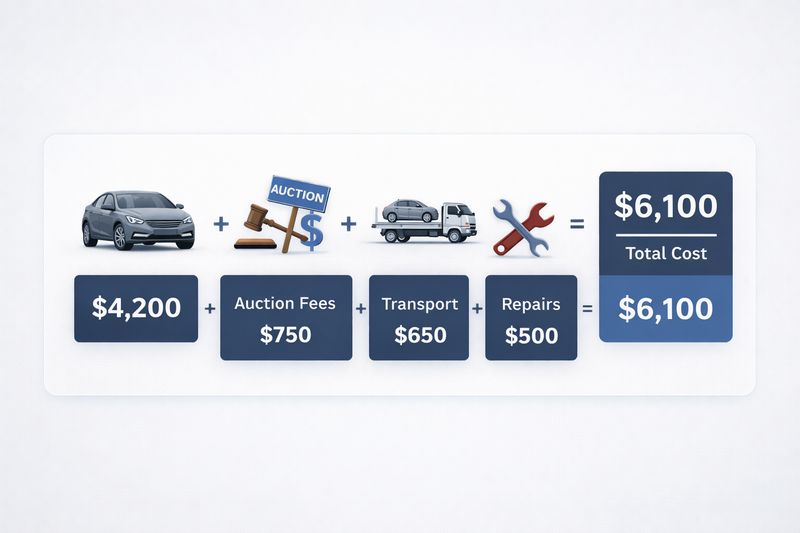
If you sell the car for $6,500, your actual profit is only $400—not $2,300 as it might seem at first glance.
Accurate COGS calculation helps you:
- Set the right selling price
- Avoid underpricing
- Understand real margins per vehicle
Including Auction and Transport Costs
Auction and transport costs are often underestimated, especially by beginners.
Common auction-related expenses:
- Buyer’s premium
- Gate fees
- Internet bidding fees
Transport costs may include:
- Shipping from auction to your location
- Local delivery fees
- Handling or storage charges
Example:
You win a car for $3,500. But:
- Auction fees: $600
- Transport: $700
Your cost is already $4,800 before any repairs.
If you ignore these numbers, you risk buying cars that look cheap but are actually expensive. Proper accounting ensures every cost is included in COGS before you decide your resale price.
Floor Plan Financing
Floor plan financing is a common way dealerships fund their inventory. It allows you to buy more cars without using all your own cash—but it comes with responsibilities and costs.
How Floor Plan Loans Work
A floor plan is a short-term loan used to purchase vehicles. Instead of paying full cash upfront, a lender finances the car, and you repay the loan after selling it.
Here’s a simple example:
- You buy a car for $5,000 using floor plan financing
- The lender pays the auction
- You list and sell the car
- After the sale, you repay the lender
This allows you to:
- Buy more inventory with less upfront cash
- Scale your business faster
However, the longer you hold the car, the more interest you pay.
Interest Tracking and Payoffs
Floor plan loans are not free. Interest starts accumulating from the day the vehicle is financed.
Example:
- Loan amount: $5,000
- Monthly interest: $100
If the car sells in 2 weeks, interest is low.
If it sits for 2 months, you may pay $200 or more in interest—reducing your profit.
Proper accounting helps you:
- Track interest per vehicle
- Understand the cost of holding inventory
- Prioritize selling financed vehicles quickly
If you ignore interest costs, you might think a deal is profitable when it’s actually not.
Accounts Receivable and Payable
Dealerships often deal with delayed payments—both incoming and outgoing. Managing these correctly is key to maintaining healthy cash flow.
Managing Customer Payments
Accounts receivable refers to money customers owe you.
This can happen when:
- A buyer pays in installments
- Financing is involved
- Payment is delayed for any reason
Example:
You sell a car for $7,000, but the customer pays $3,000 upfront and the rest later.
If you record the full amount as received immediately, your financial reports become inaccurate. You may think you have more cash than you actually do.
Proper tracking helps you:
- Know how much money is still owed
- Avoid cash shortages
- Follow up on unpaid balances
Dealer and Vendor Payments
Accounts payable refers to money you owe to others.
This may include:
- Transport companies
- Repair shops
- Auction platforms
- Service providers
Example:
You receive a $600 transport invoice but plan to pay it in 10 days. This must still be recorded as an expense.
Tracking payables helps you:
- Avoid missed payments
- Maintain good relationships with vendors
- Plan outgoing cash more effectively
Without proper tracking, unpaid bills can quickly pile up and create financial pressure.
Payroll and Commissions
If you have staff, payroll becomes another critical part of your accounting. This includes both fixed salaries and performance-based commissions.
Sales Commissions Structure
Salespeople are often paid commissions based on deals they close.
Common structures include:
- Flat fee per car sold
- Percentage of profit
- Tiered bonuses based on performance
Example:
A salesperson earns $300 per car. If they sell 10 cars, that’s $3,000 in commission.
If commissions are not tracked correctly:
- You may overpay or underpay staff
- Your profit calculations will be inaccurate
Proper accounting ensures commissions are tied to actual sales and recorded as expenses.
Staff Payroll Accounting
Payroll includes all payments to employees:
- Salaries
- Commissions
- Bonuses
It also includes taxes and deductions depending on your setup.
Even for a small operation, this must be organized. For example:
- You pay a mechanic $800 for repairs
- A salesperson earns $500 in commissions
These costs must be assigned correctly to your financial records.
Accurate payroll accounting helps you:
- Understand total labor costs
- Track profitability more precisely
- Stay compliant with tax requirements
Departmental Accounting
As your dealership grows, it becomes harder to understand where profit is really coming from. That’s where departmental accounting helps. Instead of looking at the business as one big number, you break it into parts—sales, service, and finance. This gives you a clearer picture of performance and helps you make better decisions.
Sales Department
This is the core of your business—buying and selling vehicles.
In accounting terms, the sales department tracks:
- Vehicle sales revenue
- Cost of each car (COGS)
- Gross profit per deal
Example:
You sell 8 cars in a month. On paper, it looks like a strong month. But when you break it down, you may find:
- 3 cars made good profit
- 2 barely broke even
- 3 actually lost money
Without departmental tracking, you would never see this level of detail.
This helps you:
- Identify profitable vehicle types
- Improve pricing strategies
- Avoid repeating bad purchases
Service and Parts Department
Even small dealers often spend money on repairs and reconditioning. Larger dealerships may also earn revenue from service and parts.
This department tracks:
- Repair costs per vehicle
- Parts purchases
- Service income (if you offer it)
Example:
You buy a car that needs minor work. Initially, you estimate $300 for repairs. But after inspection, costs rise to $900.
If you don’t track this properly, your profit calculation becomes inaccurate.
For some dealers, service can also become a profit center. But only if income and expenses are clearly recorded.
Finance Department
The finance department handles everything related to payments, loans, and additional financial products.
It includes:
- Customer financing deals
- Interest income
- Insurance and warranty sales
Example:
You sell a car with financing and earn an extra $500 through the deal. If you combine this with vehicle revenue, you lose clarity.
Separating finance activity helps you:
- See how much profit comes from financing
- Improve your sales strategy
- Understand customer payment behavior
Sales Tax and Regulatory Compliance
Dealerships must follow strict tax and legal rules. These vary by state, but ignoring them can lead to fines, delays, or even business shutdowns.
State and Local Tax Rules
Sales tax is not always straightforward. It depends on:
- The state where the vehicle is sold
- The buyer’s location
- Type of transaction
Example:
You sell a car for $6,000. If the sales tax is 7%, that’s $420 you must collect and report.
If you forget to track this separately, you might treat it as your income—and later have to pay it out of pocket.
Proper accounting ensures:
- Taxes are calculated correctly
- You collect the right amount from customers
- You are prepared for audits
Title and Registration Fees
Every vehicle sale involves documentation costs.
These include:
- Title transfer fees
- Registration fees
- License plate costs
Example:
You collect $300 from a customer for registration. This is not profit—it must be passed to the appropriate authority.
If recorded incorrectly, your revenue will appear higher than it actually is.
Accurate tracking helps you:
- Avoid reporting errors
- Keep records clean and organized
- Prevent legal issues
Warranty and Service Accounting
Warranties and service contracts can add extra income—but only if they are tracked correctly.
Warranty Revenue Tracking
When you sell an extended warranty, it generates additional revenue.
Example:
You sell a warranty for $400. This may seem like easy profit, but part of it may go to a third-party provider.
If you record the full amount as profit, your numbers will be misleading.
Proper tracking helps you:
- Separate your share of warranty income
- Understand real profit from add-ons
- Avoid overstating revenue
Service Contracts and Claims
If a customer uses a warranty or service contract, there may be costs involved.
Example:
A repair is covered under warranty, and you pay $250 to fix the issue.
This must be recorded as an expense linked to that contract.
Tracking claims helps you:
- Measure profitability of warranties
- Avoid unexpected losses
- Improve pricing of service contracts
Reconciliation
Reconciliation is the process of checking that your records match reality. It helps you catch mistakes early before they turn into bigger problems.
Bank Reconciliation
This involves comparing your internal records with your bank statements.
Example:
Your system shows $10,000 in balance, but the bank shows $9,200.
You need to find the difference. It could be:
- Missing transactions
- Duplicate entries
- Unrecorded fees
Regular reconciliation ensures your numbers are accurate and trustworthy.
Inventory Reconciliation
Inventory reconciliation means verifying that your records match the actual vehicles you have.
Example:
Your system shows 15 cars in stock, but physically you have 14.
This could mean:
- A car was sold but not recorded
- A data entry error occurred
Without this check, your financial reports will be incorrect.
Transaction Matching
Transaction matching ensures that every payment, expense, and income entry is correctly linked.
Example:
You receive a $6,500 payment for a vehicle. You must match it to:
- The correct sale
- The correct customer
- The correct vehicle
If transactions are not matched properly:
- Reports become confusing
- Errors go unnoticed
- Audits become difficult
Buy Vehicles with Full Cost Transparency
Understanding COGS is key to making money at auctions. BidNDrive helps you track real costs and avoid overpaying by giving you access to detailed vehicle data and logistics support.
- ✅ Clear breakdown of auction fees and transport
- ✅ Vehicle delivery from any US auction
- ✅ Export documentation and logistics support
- ✅ Low service fees starting from $295
Chart of Accounts for Car Dealerships
A chart of accounts is the foundation of your entire accounting system. It’s a structured list of all categories where you record income, expenses, assets, and liabilities. If your chart of accounts is messy or too general, your reports will be confusing. For budget-focused dealers and auction buyers, a clean structure helps you clearly see where money is made—and where it’s lost.
Structuring a Dealership Chart of Accounts
A good chart of accounts should be simple, logical, and easy to use on a daily basis. You don’t need hundreds of categories, but you do need the right ones.
Most dealership charts are divided into five main groups:
- Assets (what you own)
- Liabilities (what you owe)
- Equity (your investment in the business)
- Revenue (money coming in)
- Expenses (money going out)
For example:
- Inventory (cars in stock) goes under assets
- Loans or unpaid invoices go under liabilities
- Vehicle sales go under revenue
- Transport and repair costs go under expenses
A common mistake is mixing everything together. For example, recording transport costs under “general expenses” instead of separating them. This makes it harder to calculate true vehicle cost later.
A well-structured chart helps you:
- Track each deal accurately
- Generate clear financial reports
- Make faster decisions based on real data
Key Accounts Every Dealer Needs
Even a small dealership should have specific accounts tailored to the auto business. These are the core categories you should always include:
Assets:
- Vehicle Inventory
- Cash (Bank Accounts)
- Accounts Receivable (money customers owe you)
Liabilities:
- Accounts Payable (money you owe vendors)
- Floor Plan Financing (if used)
- Taxes Payable
Revenue:
- Vehicle Sales
- Finance & Insurance (F&I) Income
- Dealer Fees and Add-ons
Expenses:
- Vehicle Acquisition Costs (if not capitalized into inventory)
- Repairs and Reconditioning
- Transportation and Auction Fees
- Marketing and Advertising
- Payroll and Commissions
- Rent and Utilities
Example:
If you sell a car and record everything under “Sales,” you won’t know if profit came from the car itself or from add-ons like warranties. Breaking revenue into categories solves this problem.
These accounts give you a clear picture of your business performance and help avoid guesswork.
Customizing Accounts for Auction-Based Businesses
If you buy cars from auctions, your accounting needs to be more detailed than a typical dealership.
Auction-based businesses deal with unique costs that must be tracked separately:
- Auction fees (buyer’s premium, gate, internet fees)
- Transportation from auction to your location
- Storage or holding costs
- Export or shipping expenses (if applicable)
Example:
You win a car for $3,200. Then:
- Auction fees: $650
- Transport: $700
If all of this is recorded under one generic “cost” account, you lose visibility. But if you separate them, you can analyze:
- Which auctions have higher fees
- How transport costs affect your margins
- Whether certain locations are more profitable
You can also create accounts like:
- “Auction Fees – Copart/IAAI”
- “Transport Costs – Domestic”
- “Export & Shipping Costs”
This level of detail helps you:
- Calculate true landed cost per vehicle
- Compare deals more accurately
- Avoid hidden losses
Essential Documents for Dealership Bookkeeping
Accurate accounting starts with proper documentation. If you don’t keep the right records, even the best accounting system won’t help. Missing documents lead to wrong numbers, tax problems, and lost money. For small dealers and auction buyers, keeping documents organized is one of the easiest ways to stay in control and avoid costly mistakes.
Transaction Receipts and Purchase Invoices
Every financial transaction should have proof. This includes all receipts and invoices related to buying, repairing, and selling vehicles.
You should keep records for:
- Auction purchases
- Repair and service work
- Parts and materials
- Transportation services
- Any additional fees
Example:
You pay $600 for transport, but don’t save the invoice. Later, when calculating profit, you forget this cost. Your numbers show a higher profit than reality.
Receipts and invoices help you:
- Confirm actual costs
- Support your accounting records
- Provide proof in case of audits
A simple habit—saving every receipt—can prevent major financial confusion later.
Inventory Reports and Vehicle Records
Each vehicle should have its own record. Think of every car as a separate project with its own cost and profit.
Your vehicle records should include:
- Purchase price
- Auction details
- Fees and transport costs
- Repair history
- Final sale price
Example:
You bought two similar cars. One needed minimal repairs, the other required major work. Without separate records, you won’t know which one was more profitable.
Inventory reports help you:
- Track stock in real time
- Understand profit per vehicle
- Identify which cars perform best
This is especially important for auction buyers dealing with multiple vehicles at different stages.
Banking and Payment Records
Your bank account tells the real story of your business. Every payment in and out should match your accounting records.
This includes:
- Bank statements
- Wire transfers
- Credit card payments
- Cash deposits
Example:
You receive $6,000 from a buyer, but only record $5,500. Or you miss a $200 bank fee. Over time, these small errors add up.
Keeping accurate banking records helps you:
- Reconcile your accounts
- Detect missing or incorrect transactions
- Maintain accurate cash flow tracking
If your books don’t match your bank, something is wrong—and you need to find it quickly.
Tax Documents and Filings
Taxes are unavoidable, and dealerships must handle them carefully. Keeping all tax-related documents organized saves time and reduces risk.
Important documents include:
- Sales tax records
- Income reports
- Tax filings and returns
- Payment confirmations
Example:
If you don’t track collected sales tax properly, you might end up paying it from your own pocket during tax season.
Proper documentation helps you:
- File taxes accurately
- Avoid penalties and fines
- Be prepared for audits
Even small mistakes in tax records can lead to serious problems, so organization is key.
Title and Registration Documents
Every vehicle sale involves legal paperwork. Missing or incorrect documents can delay deals or cause legal issues.
You should keep:
- Vehicle titles
- Title transfer records
- Registration documents
- Proof of ownership
Example:
You sell a car but misplace the title documents. The buyer cannot register the vehicle, and the deal becomes a problem.
Tracking these documents ensures:
- Smooth transactions
- Compliance with legal requirements
- Faster processing for buyers
For auction buyers, where vehicles come from different states or conditions, keeping title records organized is especially important.
Common Accounting Methods for Dealerships
Choosing the right accounting method is critical for understanding your real financial position. Many small dealers start simple, but as soon as you deal with inventory, delayed payments, and multiple expenses per vehicle, the method you use begins to matter a lot. The wrong approach can make your business look profitable on paper while you’re actually losing money.
Accrual vs Cash Accounting
There are two main accounting methods: cash and accrual. The difference is simple—but the impact is huge.
Cash accounting records money only when it actually moves:
- Income is recorded when you receive payment
- Expenses are recorded when you pay them
Example:
You sell a car for $6,000, but the customer pays next week. With cash accounting, you record the income only when the money arrives.
Accrual accounting records transactions when they happen, not when cash moves:
- Income is recorded when the sale is made
- Expenses are recorded when they are incurred
Example:
You sell a car today for $6,000, even if payment comes later. The revenue is recorded immediately.
For a small side business, cash accounting may seem easier. But once you start managing multiple vehicles, it becomes less accurate.
Why Accrual Method Is Preferred
Most dealerships use accrual accounting because it gives a clearer and more realistic picture of the business.
Here’s why it works better:
- Matches income and expenses correctly
You can see the real profit of each vehicle by matching its sale with all related costs. - Improves decision-making
You know which deals are actually profitable, not just which ones brought cash. - Supports growth
As you scale, with more inventory and financing deals, accrual accounting keeps everything organized.
Example:
You buy a car in March for $4,500 but sell it in April for $6,000.
- With cash accounting, costs and revenue appear in different months
- With accrual accounting, they are linked to the same deal
This makes your reports much easier to understand.
For auction buyers especially, where costs happen at different times (purchase, transport, repairs), accrual accounting prevents confusion.
Revenue Recognition Timing
Revenue recognition means deciding when to record income. This is especially important in dealerships because not all payments happen instantly.
In most cases, revenue should be recognized when:
- The vehicle is sold
- Ownership is transferred to the buyer
- The deal is finalized
Example:
You sell a car for $7,000 with a payment plan:
- $3,000 paid today
- $4,000 paid over time
Even though you don’t receive all the money immediately, the full sale is recorded when the deal is completed (depending on your accounting method and structure).
However, you still need to track:
- What has been paid
- What is still owed (accounts receivable)
If revenue is recorded too early or too late, it can distort your financial reports.
Proper timing helps you:
- Avoid overstating income
- Keep financial statements accurate
- Understand real business performance
Car Dealership Accounting Checklist
Accounting is not a one-time task. It’s a routine. If you stay consistent, your numbers stay accurate. If you fall behind, errors quickly pile up and become hard to fix. For small dealers and auction buyers, a simple checklist helps keep everything under control without feeling overwhelmed.
Daily Tasks
Daily actions are small but critical. They keep your records up to date and prevent mistakes from building up.
Record Sales and Expenses
Every transaction should be recorded the same day it happens.
This includes:
- Vehicle sales
- Auction purchases
- Transport payments
- Repairs and small expenses
Example:
You pay $150 for minor repairs but forget to record it. Later, when calculating profit, this cost is missing. Multiply this by multiple cars, and your reports become unreliable.
Recording transactions daily helps you:
- Avoid missing expenses
- Keep accurate profit calculations
- Save time later (no need to catch up)
Update Inventory Records
Your inventory should always reflect reality.
Every time you:
- Buy a vehicle
- Move it to repair
- Sell it
You should update its status.
Example:
You sell a car but forget to mark it as sold. Your system still shows it in inventory, which creates confusion and incorrect reports.
Accurate inventory tracking helps you:
- Know what’s available for sale
- Avoid duplicate listings
- Track performance per vehicle
Monthly Tasks
Monthly tasks give you a bigger picture. They help you verify your numbers and adjust your strategy.
Reconcile Bank Accounts
Compare your internal records with your bank statements.
Check:
- All deposits
- All withdrawals
- Any fees or missing entries
Example:
Your records show $12,000, but the bank shows $11,400. You need to find the $600 difference.
Monthly reconciliation helps you:
- Catch errors early
- Prevent fraud or duplicate entries
- Keep your cash balance accurate
Review Financial Statements
At the end of each month, review your key reports:
- Profit and loss (P&L)
- Cash flow
- Expense breakdown
Ask simple questions:
- Did I actually make money this month?
- Which cars were most profitable?
- Where did I spend too much?
Example:
You may discover that transport costs increased and reduced your margins.
Regular review helps you:
- Make better buying decisions
- Adjust pricing
- Control unnecessary expenses
Track Inventory Aging
Not all cars sell quickly. Some sit longer than expected.
Track how long each vehicle has been in inventory:
- 0–30 days
- 30–60 days
- 60+ days
Example:
A car sitting for 60+ days may need a price adjustment or promotion.
Tracking aging helps you:
- Avoid value loss
- Free up cash
- Move slow inventory faster
Quarterly Tasks
Quarterly tasks focus on taxes and performance analysis. They help you stay compliant and improve your strategy.
Tax Estimates and Filings
Most businesses need to estimate and pay taxes throughout the year.
This includes:
- Income tax estimates
- Sales tax reporting
- Any state-specific requirements
Example:
If you don’t plan for taxes, you may face a large bill at the end of the year with no cash available.
Quarterly tax management helps you:
- Avoid penalties
- Spread tax payments over time
- Stay financially prepared
Performance Review by Department
Break down your results by department:
- Sales
- Service/repairs
- Finance (if applicable)
Example:
You may find:
- Sales are strong
- Repair costs are too high
- Financing adds extra profit
This helps you:
- Identify strengths and weaknesses
- Improve operations
- Focus on what works best
Annual Tasks
Annual tasks are about closing the year properly and preparing for the future.
Financial Statements Preparation
At the end of the year, you need complete and accurate financial statements.
These include:
- Profit and loss statement
- Balance sheet
- Cash flow statement
Example:
These reports show your total performance for the year—how much you earned, spent, and saved.
They are essential for:
- Understanding overall business health
- Planning next year’s strategy
- Working with lenders or investors
Tax Filing and Audit Preparation
Year-end tax filing is one of the most important steps.
You need to:
- Submit accurate tax returns
- Organize all supporting documents
- Be ready in case of an audit
Example:
If your records are incomplete, tax filing becomes stressful and risky.
Proper preparation helps you:
- File taxes on time
- Avoid penalties
- Handle audits with confidence
Software and Tools for Dealership Accounting
Managing dealership finances manually becomes difficult as soon as you handle multiple vehicles, expenses, and sales at the same time. Spreadsheets may work in the beginning, but they quickly become messy and error-prone. Using the right software helps you stay organized, save time, and avoid costly mistakes—especially if you are working with a limited budget and tight margins.
Accounting Software for Dealerships
Accounting software is the core tool for tracking your financial data. It helps you record transactions, generate reports, and monitor your business in real time.
Common features include:
- Income and expense tracking
- Profit and loss reports
- Inventory and cost tracking
- Bank reconciliation
Example:
Instead of manually calculating profit for each vehicle, software can automatically show:
- Total cost (purchase + fees + repairs)
- Sale price
- Net profit
For small dealers and auction buyers, this means:
- Less time spent on calculations
- Fewer mistakes
- Better visibility of financial performance
Even basic accounting tools can make a big difference compared to manual tracking.
Expense Management and Automation Tools
Expenses in a dealership can come from many sources—auctions, transport, repairs, ads. If you don’t organize them properly, it’s easy to lose track.
Expense management tools help you:
- Capture receipts digitally
- Categorize expenses automatically
- Track spending by vehicle or category
Example:
You upload a transport invoice, and the system automatically assigns it to “Transportation Costs” for a specific car.
This eliminates:
- Lost receipts
- Manual data entry errors
- Confusion when reviewing expenses
For budget-focused buyers, this means more accurate profit tracking and less wasted time.
CRM and Accounting Integration
A CRM (Customer Relationship Management system) helps you manage leads, customers, and sales. When connected with accounting software, it creates a powerful system.
Integration allows you to:
- Link customer data with sales transactions
- Automatically record deals in your accounting system
- Track payment status and balances
Example:
You close a deal in your CRM. Instead of entering it again in accounting, the system automatically records:
- Sale amount
- Customer details
- Payment status
This reduces:
- Double work
- Data entry errors
- Missing information
For growing dealerships, integration is key to keeping operations smooth and scalable.
Benefits of Automation in Bookkeeping
Automation is not just about saving time—it directly improves accuracy and decision-making.
Key benefits include:
- Reduced human error
Automated systems minimize mistakes caused by manual entry - Faster reporting
You can see your financial results instantly instead of waiting days - Better cost control
Expenses are tracked in real time, so you can react quickly - Scalability
As your business grows, automation handles increased volume without extra workload
Example:
Instead of spending hours calculating monthly profit, you can open your dashboard and see:
- Total revenue
- Total expenses
- Profit per vehicle
For auction buyers working with tight budgets, automation provides a clear advantage. It allows you to focus on finding good deals while the system handles the numbers in the background.
Best Practices in Car Dealership Accounting
Good accounting is not just about tools or reports—it’s about habits. The way you manage your records every day determines whether your numbers are reliable or misleading. For small dealers and auction buyers, following simple best practices can prevent losses, reduce stress, and help build a stable, profitable business.
Reconcile Accounts Frequently
Reconciliation means checking that your records match real transactions—especially your bank account.
Don’t wait until the end of the month. The more often you reconcile, the easier it is to catch mistakes.
Example:
You record a $5,000 payment, but the actual deposit was $4,500. If you catch this immediately, it’s easy to fix. If you wait weeks, it becomes harder to trace.
Frequent reconciliation helps you:
- Detect errors early
- Avoid missing or duplicate entries
- Keep your cash balance accurate
A simple habit—checking your accounts weekly—can save hours of troubleshooting later.
Maintain Accurate Inventory Records
Your inventory is your biggest asset. If your records are wrong, everything else becomes unreliable.
Each vehicle should have:
- Correct purchase cost
- All related expenses
- Updated status (available, in repair, sold)
Example:
You forget to add $700 in transport costs to a car. You price it based on incomplete data and end up selling it with little or no profit.
Accurate inventory tracking helps you:
- Calculate real profit per car
- Avoid pricing mistakes
- Understand which vehicles perform best
For auction buyers, this is especially important because every car has different costs.
Review Financial Reports Regularly
Reports are only useful if you actually review them.
At least once a month, check:
- Profit and loss statement
- Expense breakdown
- Cash flow
Ask practical questions:
- Which cars made the most profit?
- Where did I overspend?
- Are my margins improving or shrinking?
Example:
You may notice that repair costs are increasing across multiple vehicles. This could mean you need to change your buying strategy.
Regular reviews help you:
- Make informed decisions
- Adjust your strategy quickly
- Stay in control of your finances
Train Staff on Accounting Policies
If you have employees, your accounting is only as good as their input.
Everyone involved in transactions should understand:
- How to record expenses
- How to handle receipts
- What information must be tracked
Example:
A staff member pays for a repair but doesn’t submit the receipt. That cost disappears from your records, affecting your profit calculations.
Training ensures:
- Consistent data entry
- Fewer mistakes
- Better accountability
Even a short training session can significantly improve accuracy.
Implement Internal Controls
Internal controls are simple rules that protect your business from errors and fraud.
Examples include:
- Separating responsibilities (one person records, another reviews)
- Requiring approval for large expenses
- Keeping clear documentation for every transaction
Example:
If one person handles everything—payments, recording, and approvals—mistakes or misuse can go unnoticed.
Internal controls help you:
- Reduce risk of fraud
- Catch errors faster
- Maintain reliable financial data
Even basic controls can make a big difference in a small dealership.
Hire Skilled Bookkeepers or CPAs
At some point, doing everything yourself becomes inefficient or risky. A professional can help you avoid costly mistakes and improve your financial strategy.
A good bookkeeper or CPA can:
- Keep your records accurate
- Handle tax filings
- Provide financial advice
- Help you optimize profits
Example:
You may think your business is profitable, but a CPA might identify hidden costs or tax-saving opportunities you missed.
For budget-conscious dealers, hiring help may seem expensive—but mistakes and penalties often cost much more.
Key Roles in Dealership Accounting Team
Even in a small dealership, accounting is rarely a one-person job forever. As your business grows, different responsibilities need to be handled by the right people. Each role focuses on a specific part of the process—from tracking deals to managing taxes. Understanding these roles helps you organize your workflow and avoid costly mistakes.
Controller
The controller is responsible for the overall financial management of the dealership. This role oversees all accounting activities and ensures that everything is accurate and compliant.
Key responsibilities include:
- Reviewing financial statements
- Monitoring cash flow and profitability
- Ensuring accurate reporting
- Managing internal controls
Example:
If your numbers show a strong profit, the controller verifies whether it’s real—or if costs were missed.
In small operations, you may not have a full-time controller. But as you grow, having someone in this role (even part-time) helps you:
- Stay organized
- Make better financial decisions
- Avoid major accounting errors
Office Manager
The office manager handles the day-to-day administrative and financial tasks. This role keeps everything running smoothly.
Responsibilities often include:
- Recording transactions
- Managing invoices and payments
- Organizing documents
- Supporting accounting processes
Example:
You buy a car, pay for transport, and sell it within a week. The office manager ensures all these steps are properly recorded and documented.
For small dealers, this role is often combined with bookkeeping. A reliable office manager helps:
- Keep records up to date
- Reduce workload for the owner
- Prevent missing or incomplete data
Title Clerk
The title clerk handles all paperwork related to vehicle ownership and registration. This is a critical role because errors here can delay sales or create legal problems.
Responsibilities include:
- Processing title transfers
- Managing registration documents
- Verifying ownership records
- Ensuring compliance with state regulations
Example:
You sell a car but the title is not processed correctly. The buyer cannot register the vehicle, and the deal becomes a problem.
A good title clerk ensures:
- Smooth transactions
- Proper documentation
- Compliance with legal requirements
For auction buyers dealing with vehicles from different states, this role is especially important.
Payroll Clerk
The payroll clerk manages employee payments and related records.
Responsibilities include:
- Processing salaries and commissions
- Tracking bonuses
- Managing payroll records
- Ensuring proper deductions and reporting
Example:
A salesperson earns commission based on deals. If payments are calculated incorrectly, it can lead to disputes or overpayment.
Accurate payroll management helps you:
- Control labor costs
- Maintain employee trust
- Stay compliant with tax rules
Even in small teams, payroll must be handled carefully to avoid mistakes.
External CPA or Accountant
An external CPA (Certified Public Accountant) or accountant provides professional expertise, especially for taxes and financial planning.
Responsibilities include:
- Preparing and filing taxes
- Advising on financial strategy
- Reviewing financial statements
- Assisting with audits
Example:
You may think your business is doing well, but a CPA can identify:
- Hidden costs
- Tax-saving opportunities
- Risks you didn’t notice
For budget-conscious dealers, hiring a CPA may seem like an extra expense. But in reality, it often saves money by:
- Preventing costly errors
- Reducing tax liabilities
- Improving overall financial efficiency
Common Challenges in Car Dealership Accounting
Car dealership accounting is not just complex—it comes with ongoing challenges that can affect your profits if not handled properly. Many small dealers and auction buyers face the same problems: missing data, incorrect costs, and compliance risks. The key is to recognize these challenges early and manage them before they turn into serious financial issues.
Reconciling High Volume Transactions
Dealerships often handle a large number of transactions in a short time:
- Auction purchases
- Transport payments
- Repairs
- Customer payments
Even a small operation can have dozens of transactions per week.
Example:
You buy 5 cars from different auctions, pay for transport separately, and sell 3 of them within days. If even a few entries are missed or recorded incorrectly, your financial records quickly become unreliable.
The challenge is:
- Matching every transaction correctly
- Avoiding duplicates or missing entries
- Keeping records up to date
Without a clear system, reconciliation becomes time-consuming and stressful.
Inventory Discrepancies
Inventory errors are one of the most common issues in dealership accounting.
These can happen when:
- A car is sold but not removed from records
- Costs are incomplete or incorrect
- Vehicle status is not updated
Example:
Your system shows 12 cars in inventory, but physically you only have 11. Or a car shows a cost of $4,000 when the real cost is $5,200.
These discrepancies lead to:
- Incorrect profit calculations
- Confusion in reporting
- Poor decision-making
Accurate inventory tracking is critical, but it requires discipline and regular updates.
Managing Floor Plan Financing
Floor plan financing helps you grow, but it also adds complexity.
The main challenges include:
- Tracking loans per vehicle
- Monitoring interest costs
- Ensuring timely payoffs
Example:
You finance a car and hold it longer than expected. Interest keeps increasing, reducing your profit. If this is not tracked properly, you may think the deal is still profitable.
Another issue is timing:
- Missing payoff deadlines can lead to penalties
- Delayed payments affect relationships with lenders
Managing floor plan financing requires careful tracking and strong cash flow control.
Keeping Up with Regulatory Changes
Tax laws and regulations are not static. They change over time, and dealerships must stay updated.
This includes:
- Sales tax rules
- Title and registration requirements
- Reporting obligations
Example:
A change in local tax rules may affect how you calculate and report sales tax. If you continue using old rules, you risk underpaying or overpaying.
The challenge is:
- Staying informed
- Updating your processes
- Ensuring compliance across all transactions
For small dealers, this can be difficult without professional support.
Audit Preparedness and Compliance
Even if you are not audited regularly, you should always be prepared.
Common challenges include:
- Missing documents
- Incomplete records
- Inconsistent reporting
Example:
If an audit request comes and you cannot provide proof for expenses or sales, it can lead to penalties or adjustments.
Being audit-ready means:
- Keeping all documents organized
- Ensuring records match actual transactions
- Maintaining consistency in reporting
Without preparation, audits become stressful and risky.
Common Accounting Mistakes to Avoid
Even experienced dealers make accounting mistakes. The problem is not the mistake itself—but not noticing it in time. For small dealers and auction buyers working with tight margins, small errors can quickly turn into real losses. Understanding the most common mistakes helps you avoid them and protect your profit.
Improper Inventory Valuation
One of the biggest mistakes is recording only the purchase price of a vehicle and ignoring additional costs.
Example:
You buy a car for $3,800 and record it as your inventory cost. But you forget:
- $700 auction fees
- $600 transport
- $500 repairs
Your real cost is $5,600, not $3,800.
If you price the car based on incomplete data, you may sell it too cheap and lose money.
Proper inventory valuation must include:
- All acquisition costs
- All preparation expenses
Without this, your profit calculations are inaccurate from the start.
Late Floor Plan Payoffs
Floor plan financing can help you grow, but late payments can quickly eat your profits.
Example:
You finance a car for $5,000. You plan to sell it in 2 weeks, but it sits for 2 months. Interest keeps adding up every day.
If you delay payoff:
- Interest costs increase
- Profit decreases
- You may face penalties
Many dealers forget to track how long a car is financed. As a result, they underestimate the true cost of holding inventory.
The solution is simple:
- Track financing per vehicle
- Prioritize selling financed units quickly
Overstated or Misreported Revenue
It’s easy to think you’re making more money than you actually are.
Common mistakes include:
- Recording full sale price without deducting discounts
- Including taxes as revenue
- Mixing financing income with vehicle sales
Example:
You sell a car for $6,000 and collect $420 in sales tax. If you record $6,420 as revenue, your income is overstated.
Another example:
You give a $500 discount but still record the original price.
These mistakes lead to:
- Incorrect profit reports
- Poor business decisions
- Potential tax issues
Accurate revenue reporting must reflect the real amount earned—not inflated numbers.
Unrecorded Rebates and Discounts
Discounts and rebates are common in car sales, but they are often not tracked properly.
Example:
You agree to lower the price by $400 to close a deal, but forget to record it. Your system still shows the higher price.
This creates:
- False profit calculations
- Misleading reports
Every discount, rebate, or price adjustment must be recorded. Even small amounts add up over multiple deals.
Tracking them properly helps you:
- Understand real margins
- Evaluate negotiation impact
- Improve pricing strategy
Missed Warranty Income
Warranties and add-ons can generate extra profit—but only if they are recorded correctly.
Example:
You sell an extended warranty for $350 but don’t record it separately. It gets lost inside the total deal amount.
Or worse, you forget to record it at all.
This leads to:
- Underreported income
- Missed insights into profitable add-ons
Tracking warranty income separately helps you:
- Measure its contribution to profit
- Identify upsell opportunities
- Improve overall revenue strategy
Inaccurate Payroll and Commissions
Payroll mistakes can affect both your finances and your team.
Common issues include:
- Incorrect commission calculations
- Missing payments
- Double-counted expenses
Example:
A salesperson earns $300 per car, but due to poor tracking, they are paid for 9 cars instead of 8.
Or the opposite—you underpay them, which leads to disputes.
Accurate payroll tracking ensures:
- Correct expense reporting
- Fair compensation
- Strong team relationships
Even small payroll errors can create long-term problems if not corrected.
Lack of Department-Level Tracking
Many small dealers treat the business as one single unit. This makes it hard to understand what actually drives profit.
Example:
You make money overall, but:
- Car sales margins are low
- Most profit comes from add-ons or financing
Without separating departments, you can’t see this.
This leads to:
- Poor decision-making
- Missed opportunities
- Inefficient operations
Department-level tracking allows you to:
- Analyze each part of the business
- Focus on high-profit areas
- Fix underperforming segments
How to Keep Dealership Accounting Accurate
Accuracy in accounting is what separates a stable dealership from one that constantly struggles with cash flow and unexpected losses. It’s not about doing everything perfectly—it’s about building systems that reduce mistakes and make your numbers reliable. For auction buyers and small dealers, accuracy means knowing exactly how much you spend, earn, and keep.
Standardizing Processes and Workflows
Consistency is the foundation of accurate accounting. If every deal is recorded differently, errors are guaranteed.
You need clear, repeatable steps for:
- Recording purchases
- Adding expenses (fees, transport, repairs)
- Recording sales and payments
- Updating inventory status
Example:
If one car includes transport cost in its record and another does not, your profit comparison becomes meaningless.
Standardized workflows help you:
- Avoid missing data
- Ensure every vehicle is tracked the same way
- Make reports easier to understand
Even a simple checklist for each deal can dramatically improve accuracy.
Regular Audits and Internal Checks
Audits are not just for large businesses. Regular internal checks help you catch problems early.
You don’t need a formal audit process. Start with simple reviews:
- Compare inventory records with actual vehicles
- Check that all expenses are recorded
- Verify that sales match payments received
Example:
You review your records and find a car listed with no repair costs. After checking, you realize $400 in expenses was never recorded.
Regular checks help you:
- Identify missing or incorrect data
- Prevent small errors from becoming big problems
- Keep your reports trustworthy
Doing this monthly or even bi-weekly can save significant time later.
Using Technology for Accuracy
Manual tracking increases the risk of mistakes. The more transactions you handle, the harder it becomes to stay accurate without software.
Using accounting tools helps you:
- Automate data entry
- Link expenses to specific vehicles
- Generate real-time reports
- Reduce human error
Example:
Instead of manually calculating total cost, software automatically combines purchase price, fees, and repairs for each vehicle.
Technology also helps with:
- Bank synchronization
- Expense categorization
- Report generation
For small dealers, even basic tools can significantly improve accuracy and reduce workload.
Monitoring Key Performance Indicators (KPIs)
KPIs are simple numbers that show how your business is performing. Tracking them regularly helps you spot problems before they grow.
Important KPIs for dealerships include:
- Profit per vehicle
- Average acquisition cost
- Average days in inventory
- Total expenses per deal
Example:
If your average days in inventory increase from 20 to 45 days, it signals a problem. You may need to adjust pricing or buying strategy.
Monitoring KPIs helps you:
- Stay focused on profitability
- Identify trends early
- Make data-driven decisions
Without KPIs, you are guessing. With them, you are managing your business with clarity.
How to Choose a CPA for Car Dealership Accounting
Choosing the right CPA can have a direct impact on your profitability. A general accountant may handle basic bookkeeping, but dealership accounting—especially with auction purchases—has unique challenges. For budget-conscious dealers, the goal is not just to “file taxes,” but to work with someone who helps you save money, avoid mistakes, and grow your business.
Industry-Specific Knowledge
Not all CPAs understand how car dealerships operate. This is one of the most important factors to consider.
A CPA with dealership experience understands:
- Inventory-based accounting
- Cost of goods sold (COGS) per vehicle
- Auction fees and transport costs
- Floor plan financing
Example:
A general accountant might treat vehicle purchases as simple expenses. A dealership-focused CPA knows they must be tracked as inventory and tied to each sale.
This knowledge helps you:
- Avoid incorrect accounting methods
- Get accurate profit calculations
- Stay compliant with industry standards
Without this expertise, even small mistakes can lead to wrong financial reports.
Strategic Financial Insights
A good CPA does more than record numbers—they help you understand them.
They should be able to:
- Analyze your profit per vehicle
- Identify high-cost areas
- Suggest ways to improve margins
- Help plan future purchases
Example:
You may think all cars under $5,000 are profitable. A CPA can show that after repairs and transport, some of these deals actually bring lower margins than expected.
Strategic insight helps you:
- Make smarter buying decisions
- Improve pricing strategies
- Increase overall profitability
This is especially valuable for auction buyers where every deal is different.
Audit and Compliance Expertise
Dealerships must follow strict tax and legal requirements. A qualified CPA ensures you stay compliant and prepared.
They should be experienced in:
- Sales tax reporting
- Income tax filings
- Documentation requirements
- Audit preparation
Example:
If your records are incomplete and you face an audit, a CPA can help organize your data and represent your business.
This reduces:
- Risk of penalties
- Stress during audits
- Chances of costly mistakes
For small dealers, this kind of protection is critical.
Experience with Dealership Software
Modern dealerships rely on software for accounting, inventory, and CRM. Your CPA should be comfortable working with these systems.
They should be able to:
- Use accounting software efficiently
- Integrate financial data with sales systems
- Review reports generated by your tools
Example:
If your system tracks vehicle-level costs, your CPA should know how to analyze that data—not ask you to simplify everything into basic spreadsheets.
This ensures:
- Faster workflows
- More accurate reporting
- Better use of your existing tools
Benefits of Outsourcing Dealership Accounting
Handling accounting on your own can work in the beginning, but as your dealership grows, it becomes harder to keep everything accurate and up to date. Outsourcing accounting means working with professionals who manage your books while you focus on buying and selling cars. For budget-conscious dealers, this is often not an extra cost—but a way to save money and avoid expensive mistakes.
Cost Savings and Efficiency
At first, outsourcing may seem expensive. But when you compare it to hiring full-time staff or fixing costly errors, it often saves money.
Instead of paying for:
- Full-time salary
- Training
- Software setup
You pay only for the services you need.
Example:
You spend hours every week tracking expenses and calculating profit. That’s time you could use to find better deals at auctions or close more sales.
Outsourcing helps you:
- Reduce time spent on bookkeeping
- Avoid hiring additional staff
- Focus on revenue-generating activities
In many cases, better financial management leads to higher profits, which offsets the cost.
Access to Expert Knowledge
Outsourced accounting services often specialize in specific industries, including dealerships.
This means you get:
- Experience with inventory accounting
- Knowledge of auction-related costs
- Understanding of dealership tax rules
Example:
A professional accountant may quickly identify that you are underestimating transport costs or missing certain deductions.
This expertise helps you:
- Improve financial accuracy
- Avoid common mistakes
- Make smarter business decisions
Instead of learning everything through trial and error, you benefit from proven experience.
Reduced Risk of Errors and Penalties
Accounting mistakes can lead to:
- Incorrect financial reports
- Tax penalties
- Cash flow problems
Outsourcing reduces this risk because professionals:
- Follow structured processes
- Double-check data
- Stay updated on regulations
Example:
If you miscalculate sales tax or forget to report income correctly, it can result in fines. An experienced accountant helps prevent this.
This gives you:
- Peace of mind
- More reliable financial data
- Protection from costly errors
For small dealers, avoiding just one major mistake can cover the cost of outsourcing.
Scalability for Growing Dealerships
As your business grows, your accounting becomes more complex:
- More vehicles
- More transactions
- More expenses and revenue streams
Managing this alone becomes difficult.
Outsourcing allows you to scale without rebuilding your system.
Example:
You grow from selling 3 cars per month to 15. Instead of hiring and training new staff, your accounting provider adjusts to the increased workload.
This flexibility helps you:
- Expand without operational stress
- Maintain accurate records at any scale
- Focus on growth instead of administration
Car Dealership Accounting for Auction-Based Businesses (BidNDrive Perspective)
Buying cars from auctions is one of the best ways to save money—but only if you track your numbers correctly. Auction-based businesses have different risks compared to traditional dealerships. Costs are less predictable, and mistakes are easier to make. For budget-conscious buyers, proper accounting is what turns a “cheap car” into a profitable deal—or prevents a bad purchase.
Unique Accounting Needs for Auction Buyers
Auction buyers deal with multiple variable costs that must be tracked separately. Unlike fixed-price purchases, each deal can have different fees, transport costs, and risks.
Tracking Auction Fees and Bidding Costs
Auction fees are often underestimated. Many buyers focus only on the winning bid and forget about additional charges.
Common fees include:
- Buyer’s premium
- Internet bidding fees
- Gate or processing fees
Example:
You win a car for $3,500. It looks like a great deal. But after adding $700 in auction fees, your cost is already $4,200.
If you don’t track these fees separately:
- You may think certain auctions are cheaper than they actually are
- Your profit calculations become inaccurate
Proper tracking helps you:
- Compare different auctions
- Understand real purchase costs
- Make better bidding decisions
Managing Transportation and Export Expenses
Transport is one of the biggest hidden costs in auction deals.
This includes:
- Domestic shipping from auction to your location
- Port delivery (if exporting)
- Container or RoRo shipping
- Handling and loading fees
Example:
You buy a car for $4,000. Transport and shipping add another $1,200. If you ignore this, your pricing will be wrong from the start.
For export-focused buyers, costs can vary depending on:
- Distance
- Vehicle condition (running vs non-running)
- Shipping method
Tracking these expenses ensures:
- Accurate total cost per vehicle
- Better planning for international buyers
- Clear understanding of margins
Calculating Total Landed Cost per Vehicle
The most important number for auction buyers is the total landed cost. This is the real amount you invest in a vehicle before selling it.
Purchase Price + Fees + Shipping
Your total landed cost should include:
- Auction purchase price
- All auction fees
- Transportation costs
- Repairs and preparation
- Export or shipping costs (if applicable)
Example:
- Purchase price: $3,800
- Auction fees: $650
- Transport: $700
- Repairs: $500
Total landed cost = $5,650
Without this full calculation, you cannot price the car correctly.
Profit Margin Calculation
Once you know your total cost, you can calculate real profit.
Example:
You sell the car for $6,200.
Total cost: $5,650
Profit: $550
But if you missed even one cost—like $300 in repairs—your profit drops to $250.
Accurate margin calculation helps you:
- Set realistic expectations
- Avoid overpaying at auctions
- Focus on deals with true profit potential
For budget buyers, this step is critical. Small margins mean every dollar matters.
Risk Management in Financial Tracking
Auction purchases always involve risk. The goal is not to eliminate risk—but to control it through better data and tracking.
Using Vehicle History Reports
Vehicle history reports provide important information before you buy:
- Previous damage
- Mileage history
- Past auction sales
- Title status
Example:
You find a car that looks clean but has a history of severe damage. This may lead to higher repair costs than expected.
Using reports helps you:
- Estimate repair costs more accurately
- Avoid high-risk vehicles
- Make informed bidding decisions
From an accounting perspective, better information leads to better cost estimates.
Avoiding Hidden Costs
Hidden costs are the biggest threat to profitability in auction deals.
These may include:
- Unexpected repairs
- Storage fees
- Delays in transport
- Additional documentation costs
Example:
You plan for $400 in repairs, but actual costs reach $900. Without a buffer or proper tracking, your profit disappears.
To manage this risk:
- Always include a cost buffer in your calculations
- Track every expense in detail
- Review past deals to improve future estimates
The Role of Accounting in Dealership Growth
Growth in a dealership doesn’t happen by chance. It comes from making better decisions based on real numbers. Accounting gives you that clarity. Without it, scaling your business becomes risky—you may increase sales but lose control of profit and cash flow. For auction buyers and small dealers, accounting is what turns small, safe deals into a stable and growing operation.
Profitability Analysis by Vehicle and Channel
Not all cars—and not all sales channels—bring the same profit. Some deals look good on the surface but perform poorly once all costs are included.
With proper accounting, you can analyze:
- Profit per vehicle
- Profit by vehicle type (sedan, SUV, truck)
- Profit by source (auction, dealer purchase, private seller)
- Profit by sales channel (local sale, export, online platforms)
Example:
You may discover:
- Cars under $4,000 have low margins due to high repair costs
- SUVs bring higher profits but sell slower
- One auction consistently has higher fees
Without this analysis, you are guessing. With it, you can:
- Focus on the most profitable vehicles
- Choose better sourcing channels
- Avoid repeating low-margin deals
This is one of the fastest ways to improve profitability without increasing workload.
Budgeting and Forecasting
Budgeting means planning how much you can spend. Forecasting means estimating how much you expect to earn.
For a dealership, this includes:
- How much to invest in inventory
- Expected costs (transport, repairs, marketing)
- Expected sales and profit
Example:
You have $20,000 available. Without a plan, you might spend it all on 5 cars. But with budgeting, you may decide:
- Buy 4 cars instead
- Keep cash for repairs and unexpected costs
Forecasting helps you:
- Estimate monthly profit
- Plan for slow periods
- Avoid cash shortages
For auction buyers, this is especially important because deals and expenses are unpredictable.
Expanding Inventory with Financial Confidence
Growth often means buying more cars. But increasing inventory without financial control can create serious problems.
Example:
You double your inventory from 5 cars to 10. Sales increase—but so do:
- Transport costs
- Repair expenses
- Holding costs
If your accounting is weak, you may not notice that your profit per car is dropping.
With accurate accounting, you can:
- Understand how much you can safely invest
- Track performance as you scale
- Avoid overextending your budget
You gain confidence to grow because:
- You know your numbers
- You understand your risks
- You can adjust quickly if needed
Conclusion: Building a Strong Accounting System for Your Dealership
A strong accounting system is not just about keeping records—it’s about controlling your business. For dealership owners and auction buyers, especially those working with limited budgets, accounting determines whether you grow steadily or struggle with constant surprises. When your numbers are clear, your decisions become smarter, and your risks become manageable.
Key Takeaways
Throughout this guide, one idea repeats: every dollar matters.
Here are the most important points to remember:
- Always calculate the true cost per vehicle, including fees, transport, and repairs
- Track every expense and every source of revenue separately
- Keep your inventory records accurate and updated
- Monitor cash flow, not just profit on paper
- Use simple systems and tools to stay organized
Example:
A car that looks like a $2,000 profit can easily turn into $300—or even a loss—if you miss just a few costs. The difference is in your accounting.
Importance of Accuracy and Transparency
Accuracy is what makes your numbers useful. Transparency is what makes them trustworthy.
If your records are incomplete or unclear:
- You can’t see real profit
- You make decisions based on wrong data
- You increase the risk of losses
Example:
If you don’t record a $600 transport cost, your report shows higher profit—but your bank account tells a different story.
Transparent and accurate accounting helps you:
- Understand exactly where your money goes
- Identify weak points in your business
- Stay prepared for taxes and audits
It also makes it easier to work with partners, lenders, or accountants in the future.
How Better Accounting Leads to Higher Profits
Good accounting doesn’t just track profit—it helps you increase it.
When your system is accurate, you can:
- Buy smarter at auctions
- Price vehicles correctly
- Control unnecessary expenses
- Focus on high-margin deals
Example:
You may discover that certain cars always require expensive repairs. With this insight, you stop buying them and improve your average profit.
Over time, small improvements add up:
- Better deals
- Lower costs
- Faster inventory turnover
In simple terms, better accounting gives you control. And with control comes consistent, predictable profit.
A strong accounting system is not a luxury—it’s a necessity for anyone serious about building a successful dealership.
Turn Auction Deals into Real Profit with BidNDrive
Strong accounting helps you avoid losses — but the right buying platform helps you earn more. BidNDrive gives you access to the best deals and supports you from purchase to delivery.
- ✅ Thousands of vehicles sold worldwide
- ✅ Container & RoRo shipping options
- ✅ Photo reports before export
- ✅ Secure payments via official invoices
Further Reading:
Vehicle Acquisition: Complete Guide to Buying Cars Smart and Saving Money
How Much Do Cars Sell for at Auction?
Unobvious Factors Influencing Car Auction Prices: Save Money & Win Big!
Gap Insurance vs. Loan/Lease Payoff
Frequently Asked Questions
- What is accounting at a dealership?
- What accounting systems do dealerships use?
- What is the dealer method in accounting?