


Hot shot insurance is one of the biggest expenses for owner-operators, but choosing the right coverage can protect your business and save money in the long run. This guide explains the types of insurance you need, federal requirements, average costs, ways to lower premiums, and common mistakes to avoid so you can start or grow your hot shot trucking business with confidence.
What Is Hot Shot Trucking?
Definition of Hot Shot Trucking
Hot shot trucking is a type of freight transportation that focuses on delivering smaller, time-sensitive loads using pickup trucks instead of full-size semi-trucks. Rather than hauling large shipments in 53-foot trailers, hot shot drivers transport cargo that needs to reach its destination quickly.
The business is especially common in industries where delays are expensive. Construction companies may need replacement equipment the same day, oil and gas companies often require urgent parts, and farms may need machinery delivered during harvest season. Hot shot trucking fills the gap between local delivery services and traditional long-haul trucking.
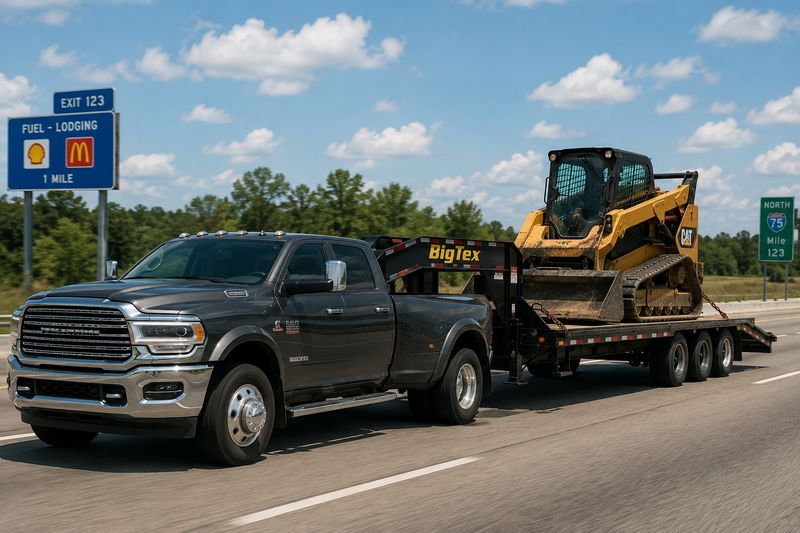
Most hot shot businesses are operated by owner-operators who own both the truck and trailer. They typically work independently or contract with freight brokers, load boards, or direct customers.
For someone looking to start a trucking business without investing hundreds of thousands of dollars in a commercial semi-truck, hot shot trucking often appears to be a more affordable entry point. For example, a driver may purchase a used heavy-duty pickup truck and a gooseneck trailer for significantly less than the cost of a new Class 8 tractor and trailer combination.
How Hot Shot Trucking Works
The hot shot business model is built around flexibility and fast response times. Instead of following fixed routes or carrying large shipments for major carriers, hot shot drivers accept individual loads based on availability and customer demand.
A typical job follows several steps:
- A shipper or freight broker posts an available load.
- The driver reviews the pickup and delivery locations, cargo weight, and payment.
- If the load is profitable, the driver accepts the shipment.
- The cargo is picked up, secured to the trailer, and transported directly to the customer.
- After delivery, the driver receives payment according to the agreed terms.
Unlike many large trucking companies, hot shot operators often complete one shipment at a time. This allows them to move quickly without waiting for additional freight to fill a trailer.
For example, a contractor in Texas may urgently need a skid steer delivered to a job site 300 miles away. Instead of waiting for a traditional freight carrier to include the equipment in a larger shipment, a hot shot driver can transport it directly and complete the delivery the same day.
Many drivers find loads through online freight marketplaces, while others develop long-term relationships with local businesses that regularly need expedited transportation.
Types of Hot Shot Loads
Hot shot trucking covers many different types of freight. The common factor is that the shipment is relatively small but needs to arrive quickly.
Common hot shot loads include:
- Construction equipment
- Industrial machinery
- Farm equipment
- Building materials
- Auto parts
- Heavy vehicle components
- Steel products
- Pipes and tubing
- Pallets of commercial goods
- Small generators
- Compressors
- Utility equipment
- Oilfield supplies
- Recreational vehicles
- Small tractors
Some loads require special handling because of their size, weight, or value. Drivers transporting expensive machinery may need additional cargo insurance, while oversized equipment could require permits depending on state regulations.
Load weights vary significantly. Non-CDL operators generally remain below the federal weight threshold, while CDL drivers can haul much heavier cargo using larger trailers.
Common Equipment Used by Hot Shot Drivers
Although pickup trucks are the foundation of hot shot trucking, the business requires much more than just a truck.
The most common vehicle is a heavy-duty one-ton pickup, often equipped with dual rear wheels for greater towing stability. Popular choices include models such as the Ford F-350, Ram 3500, and Chevrolet Silverado 3500 HD.
Drivers usually pair these trucks with trailers designed for commercial freight. Common trailer types include:
- Gooseneck trailers
- Flatbed trailers
- Equipment trailers
- Tilt deck trailers
- Low-profile trailers
- Enclosed cargo trailers for protected freight
In addition to the truck and trailer, operators invest in equipment that helps them transport cargo safely, including:
- Ratchet straps
- Chains
- Binders
- Tarps
- Edge protectors
- Toolboxes
- Winches
- Spare tires
- Safety cones
- Fire extinguishers
Many drivers also install GPS tracking systems, dash cameras, electronic logging devices (ELDs), and trailer brake controllers to improve safety and comply with federal regulations when required.
Having reliable equipment reduces downtime and can also help lower insurance risks by preventing accidents and cargo damage.
Hot Shot Trucking vs Traditional Trucking
Although both industries transport freight, hot shot trucking operates very differently from traditional commercial trucking.
Traditional trucking companies usually move large shipments using Class 8 semi-trucks with enclosed or refrigerated trailers. Their routes are often scheduled days or weeks in advance, and shipments may include freight from multiple customers.
Hot shot trucking focuses on speed and flexibility. Drivers typically transport one customer's load directly from pickup to delivery without making multiple stops.
Some key differences include:
|
Hot Shot Trucking |
Traditional Trucking |
|
Pickup truck and trailer |
Semi-truck and large trailer |
|
Smaller loads |
Full trailer loads |
|
Faster delivery |
Scheduled freight routes |
|
Often one shipment at a time |
Multiple shipments may share trailer space |
|
Lower startup cost |
Higher equipment investment |
|
Mostly owner-operators |
Large fleets and trucking companies |
This flexibility is one reason many new business owners choose hot shot trucking. However, drivers are responsible for managing dispatching, maintenance, fuel expenses, insurance, taxes, and customer relationships on their own.
Why Owner-Operators Choose Hot Shot Trucking
Many drivers are attracted to hot shot trucking because it offers an opportunity to become self-employed without the financial commitment required to purchase a commercial semi-truck.
Instead of working for a large carrier, owner-operators can choose their own loads, set their schedules, and decide where they want to operate.
For someone starting with limited savings, the lower startup costs can make a significant difference. A driver may already own a heavy-duty pickup truck and only need to purchase a commercial trailer and obtain the necessary operating authority and insurance before entering the market.
Hot shot trucking also provides flexibility. Some drivers work full time, while others haul freight only a few days each week to supplement another source of income.
The potential to earn more by operating independently is another major advantage. Drivers who carefully manage fuel costs, maintenance expenses, insurance premiums, and load selection can build a profitable business over time.
What Is Hot Shot Insurance?
Hot shot trucking may look simpler than traditional trucking, but it is still a commercial transportation business. When a driver hauls cargo for money, personal auto insurance is not enough. Hot shot insurance helps protect the driver, the truck, the trailer, the cargo, and other people on the road if something goes wrong.
Why Hot Shot Drivers Need Insurance
Hot shot drivers need insurance because they operate vehicles for business purposes. A pickup truck used to haul paid loads is no longer just a personal vehicle. It becomes part of a commercial operation, and that changes the risk.
For example, imagine a new owner-operator buys a used dually truck to start hauling small equipment. The truck may be affordable, and the driver may try to keep startup costs low. But if that driver causes an accident while transporting a customer’s load, a personal auto policy may deny the claim. That can leave the driver responsible for vehicle damage, medical bills, legal costs, and damaged cargo.
Insurance is also required to work with many brokers, shippers, and load boards. Most customers will not release freight to a driver who cannot show proof of proper commercial coverage. Without insurance, a hot shot business may not be able to operate legally or get consistent loads.
Hot shot insurance can help cover:
- Damage caused to other vehicles
- Injuries to other people
- Damage to customer cargo
- Damage to the driver’s truck or trailer
- Theft or vandalism
- Legal costs after an accident
- Certain business-related claims
For budget-conscious drivers, insurance may feel like a large expense at first. However, one uncovered accident can cost far more than the annual premium.
Start Your Hot Shot Business Without Overpaying for Equipment
A reliable pickup truck is one of the biggest investments for any hot shot operator. BidNDrive gives you access to thousands of used heavy-duty trucks from U.S. auto auctions, helping you reduce startup costs before you hit the road.
- ✅ Access to dealer-only and public auto auctions
- ✅ Thousands of Ford, Ram, and Chevrolet trucks available
- ✅ 100% refundable deposit before bidding
- ✅ Support from bidding to vehicle pickup
How Hot Shot Insurance Differs From Regular Truck Insurance
Hot shot insurance is different from regular truck insurance because it is built for commercial hauling. A standard personal auto policy usually covers everyday driving, such as commuting, errands, or family use. It is not designed for hauling freight for payment.
Even if the vehicle is a pickup truck, the way it is used matters. A Ford F-350 used to drive to the grocery store is one type of risk. The same truck pulling a loaded gooseneck trailer across several states is a much different risk.
Hot shot insurance may include several types of coverage that regular auto insurance does not provide, such as commercial auto liability, motor truck cargo coverage, physical damage coverage, general liability, and filings required for operating authority.
Regular insurance usually focuses on the vehicle and driver. Hot shot insurance focuses on the full business activity. That includes the truck, trailer, cargo, customers, public liability, and federal or state compliance.
For example, if a driver hauls an auction vehicle for a customer and that vehicle is damaged during transport, personal auto insurance will usually not cover the customer’s loss. A proper cargo policy may help cover that type of situation, depending on the policy terms.
This is why hot shot drivers should be honest with insurance agents about how the truck is used. Trying to save money by keeping a personal policy can create serious problems later.
Risks Faced by Hot Shot Trucking Businesses
Hot shot trucking comes with many risks, even for careful drivers. The business often involves long hours, tight delivery windows, heavy trailers, changing weather, unfamiliar roads, and valuable cargo.
One of the biggest risks is a road accident. A loaded truck and trailer need more time to stop than a regular pickup. If traffic suddenly slows down, the driver may not have enough space to avoid a collision.
Cargo damage is another common risk. Loads can shift, straps can loosen, and equipment can be damaged by road vibration, rain, snow, or improper securement. Even a small mistake can become expensive if the cargo belongs to a customer.
Hot shot drivers also face business risks. A truck breakdown can stop income immediately. A stolen trailer can create a major financial setback. A missed delivery deadline can damage the driver’s relationship with a broker or shipper.
Common hot shot trucking risks include:
- Accidents with other vehicles
- Cargo loss or damage
- Trailer damage
- Theft of tools, equipment, or freight
- Weather-related damage
- Load securement problems
- Injury claims
- Property damage claims
- Lawsuits after an accident
- Business interruption after a breakdown
For a new driver with limited savings, these risks are especially serious. A driver may have enough money to buy a used truck and trailer, but not enough to pay for a major claim out of pocket. Insurance helps reduce that financial exposure.
Who Provides Hot Shot Insurance Coverage
Hot shot insurance is usually provided by companies that offer commercial trucking insurance. Some are large national insurance carriers, while others specialize in transportation, owner-operators, and small trucking businesses.
Drivers can buy coverage directly from some insurance companies, but many hot shot operators work with insurance agents or brokers. An insurance broker can compare quotes from multiple carriers and help the driver find coverage that matches the type of freight, truck, trailer, operating radius, and business structure.
This is important because not every insurance company understands hot shot trucking. Some providers may insure general commercial vehicles but may not offer the filings, cargo limits, or policy structure needed for interstate hauling.
A hot shot insurance provider may ask for details such as:
- Driver’s license type
- CDL status
- Driving record
- Truck year, make, and model
- Trailer type
- Gross vehicle weight rating
- Type of cargo hauled
- Operating radius
- State of operation
- Business experience
- Motor carrier authority status
- Desired coverage limits
A driver who plans to haul vehicles from auctions, for example, may need different coverage than a driver transporting construction materials. The insurance company needs these details to price the policy correctly and make sure the coverage fits the work.
Who Needs Hot Shot Insurance?
Hot shot insurance is needed by anyone who uses a truck and trailer to haul cargo for money. It does not matter if the business is large or small, new or experienced, CDL or non-CDL. Once a driver is transporting freight as a business, proper commercial coverage becomes an important part of staying legal, protecting income, and working with brokers or shippers.
Owner-Operators
Owner-operators are one of the main groups that need hot shot insurance. An owner-operator owns or leases the truck and runs the business independently. This means the driver is responsible for the vehicle, trailer, cargo, insurance, fuel, repairs, paperwork, and customer relationships.
For example, a driver may buy a used Ram 3500 and a gooseneck trailer to start hauling equipment in nearby states. The startup cost may be lower than buying a semi-truck, but the business still carries serious risk. If the driver hits another vehicle, damages a customer’s load, or loses a trailer in an accident, the financial responsibility can fall directly on the owner-operator.
Hot shot insurance helps protect the owner-operator from claims that could otherwise damage the entire business. It can also make the driver more attractive to brokers because many brokers require proof of liability and cargo coverage before assigning loads.
Independent Hot Shot Drivers
Independent hot shot drivers also need insurance because they usually work without the protection of a large carrier. Some independent drivers find loads through load boards, some work with freight brokers, and others build direct relationships with local businesses.
This independence gives drivers more control, but it also means they carry more responsibility. There may be no company safety department, no fleet manager, and no corporate insurance policy covering the operation.
An independent driver who hauls a customer’s equipment on Monday and auction vehicles on Friday needs coverage that matches the type of freight being transported. If the policy does not cover the load type, the driver may face problems during a claim.
For drivers trying to keep costs low, it can be tempting to buy only the cheapest policy available. But independent operators should focus on the right coverage first. A low monthly payment is not helpful if the policy does not cover the actual work being done.
Small Fleet Owners
Small fleet owners need hot shot insurance because they manage more than one truck, trailer, or driver. Even if the fleet has only two or three trucks, the risk is higher than a single-truck operation.
Each additional driver adds more exposure. One driver may have a clean record, while another may have less experience. One truck may stay local, while another may run interstate routes. These details can affect insurance costs and coverage needs.
Small fleet owners may need policies that cover:
- Multiple trucks
- Multiple trailers
- Hired drivers
- Cargo
- Physical damage
- General business liability
- Workers’ compensation or occupational accident coverage
- Different operating areas
For example, a business owner may start with one truck and later add a second driver after getting steady work from brokers. At that point, the insurance policy must be updated. If the new truck or driver is not listed correctly, a claim may become complicated or denied.
Small fleet owners should also pay close attention to driver qualification. A safe, experienced driver may help control insurance costs, while poor driving records can raise premiums quickly.
CDL Hot Shot Drivers
CDL hot shot drivers usually haul heavier loads or operate vehicle combinations that require a commercial driver’s license. Because these drivers may handle larger trailers, heavier cargo, and higher-value loads, their insurance needs can be more complex.
A CDL driver may use a dually pickup with a larger gooseneck trailer and haul equipment across state lines. That type of operation often requires higher liability limits, cargo coverage, and proper filings with federal or state authorities.
CDL drivers may also have access to more types of freight. Heavier equipment, construction machinery, and industrial loads can pay better, but they can also increase insurance risk. A more expensive load may require higher cargo limits. A heavier combination may increase the chance of serious damage in an accident.
For CDL hot shot drivers, insurance is not just a business expense. It is part of being accepted by brokers, staying compliant, and protecting the equipment used to earn income.
Non-CDL Hot Shot Operators
Non-CDL hot shot operators may also need hot shot insurance, even if they do not need a commercial driver’s license for their setup. This is a common area of confusion for beginners.
A driver may think, “I do not need a CDL, so I probably do not need commercial insurance.” That is not true. License requirements and insurance requirements are separate issues.
If a non-CDL operator hauls freight for money, the truck is still being used for business. Personal auto insurance usually does not cover paid hauling. The driver may still need commercial auto liability, cargo insurance, physical damage coverage, and other protections depending on the operation.
For example, someone may use a pickup and smaller trailer to deliver motorcycles, auto parts, lawn equipment, or light machinery. The total weight may stay under the CDL threshold, but the driver is still transporting customer property. If that cargo is damaged, the customer may expect payment.
Non-CDL hot shot operators should be careful not to underinsure the business. Staying below CDL weight limits may reduce some requirements, but it does not remove the need for proper commercial coverage.
New Trucking Businesses
New trucking businesses need hot shot insurance before they begin hauling freight. Insurance is often one of the first major expenses a new operator faces, and it should be included in the startup budget from the beginning.
Many beginners focus on buying the truck and trailer first. They search for a used pickup, compare trailer prices, and calculate fuel costs. But insurance can be one of the largest monthly expenses in the business, especially for new operators with no trucking history.
A new business may need insurance to:
- Activate operating authority
- Work with brokers
- Register with certain load boards
- Meet shipper requirements
- Protect the truck and trailer
- Cover cargo claims
- Stay compliant with federal or state rules
For example, a driver may buy an affordable used truck at auction to save money and start a hot shot business. That can be a smart move if the truck is inspected properly and the numbers make sense. But the driver should also check insurance quotes before buying. Some trucks, locations, driving records, and cargo types can lead to higher premiums than expected.
Planning insurance early helps prevent surprises. A low-cost truck does not help much if the monthly insurance payment makes the business unprofitable.
Drivers Operating Under Their Own Authority
Drivers operating under their own authority need hot shot insurance because they are responsible for meeting legal and business requirements directly. Operating authority means the driver or company has permission to transport freight as a motor carrier.
When a driver runs under their own authority, they are not using another carrier’s authority or insurance structure. They must arrange the proper coverage, maintain filings, keep policy information updated, and make sure coverage does not lapse.
This usually includes commercial liability insurance and may include cargo coverage, physical damage coverage, and required filings depending on the operation. Brokers and shippers will often check insurance information before offering loads.
For example, a new owner-operator may decide to get their own authority to avoid depending on another company. This can give more control and better long-term business potential. But it also means more responsibility. If the insurance policy is canceled, expires, or does not meet requirements, the driver may lose access to loads or face compliance issues.
How Hot Shot Insurance Works
Hot shot insurance works like a group of protections built around a commercial hauling business. It is not just one simple policy. Depending on the driver’s setup, it may include liability coverage, cargo coverage, physical damage coverage, federal filings, and state-required coverage. The goal is to prove that the business can pay for covered losses and operate legally when hauling freight for money. FMCSA says insurance requirements depend on entity type, operating authority, cargo type, and vehicle type.
Federal and State Insurance Requirements
Hot shot drivers may need to meet both federal and state insurance requirements. Federal requirements usually apply when a carrier transports property across state lines or operates as a for-hire motor carrier in interstate commerce. State requirements may apply to vehicle registration, intrastate hauling, local permits, minimum insurance limits, and business operation rules.
For many hot shot operators, the federal side is connected to the FMCSA. If the business hauls freight under its own authority, the company may need proof of public liability insurance on file before authority becomes active. FMCSA also states that once operating authority is granted, entities must maintain proof of insurance and designation of agents for process on file to avoid revocation proceedings.
State rules can be different from federal rules. A driver operating only inside one state may still need commercial insurance, even if federal operating authority is not required. For example, a driver hauling equipment from Dallas to Houston may not cross state lines, but the truck is still being used for business. The driver may still need commercial auto coverage and may need to meet Texas state requirements.
This is why hot shot drivers should not assume that “local only” means “no insurance rules.” The route, cargo, vehicle weight, business structure, and customer requirements all matter.
Insurance Requirements for Motor Carriers
A motor carrier is a business or person that transports goods or passengers for payment. Many hot shot businesses fall into this category when they haul freight for customers.
Insurance requirements for motor carriers are mainly designed to protect the public. If a commercial vehicle causes an accident, liability insurance helps pay for covered bodily injury, property damage, and certain public liability claims.
For property-carrying motor carriers, federal financial responsibility rules are found in 49 CFR Part 387. FMCSA’s safety planner states that Part 387 sets the minimum financial responsibility levels passenger and property motor carriers must maintain.
In simple terms, a hot shot carrier may need coverage for:
- Public liability
- Bodily injury
- Property damage
- Environmental restoration when required
- Cargo damage, depending on freight and customer requirements
- Truck and trailer physical damage if the owner wants protection for their own equipment
For example, a new owner-operator may have a pickup truck, a gooseneck trailer, and plans to haul vehicles or equipment. Before that driver can work with serious brokers, the broker may ask for proof of insurance. The broker wants to know that the carrier has enough coverage if the load is damaged or if an accident happens during transport.
The exact coverage amount can vary. Some brokers may require higher limits than the legal minimum. This is common when the cargo is valuable, time-sensitive, or difficult to replace.
How Insurance Filings Work
Insurance filings are documents submitted to the FMCSA or a state agency to prove that a carrier has the required coverage. The driver usually does not file these forms personally. In most cases, the insurance company or insurance agent submits them electronically.
For motor carriers, common federal insurance documents include forms such as the MCS-90 endorsement and BMC-91 or BMC-91X filings. FMCSA lists MCS-90 as an endorsement for motor carrier public liability policies, and notes that many insurance carriers are set up to make required filings electronically.
A filing is not the same thing as a full insurance policy. It is proof that the required coverage exists. The actual policy explains what is covered, what is excluded, what limits apply, and what deductibles the business must pay.
For example, if a hot shot driver applies for operating authority, the insurance company may submit the required liability filing to FMCSA. Once FMCSA receives and processes the filing, the authority can move closer to active status if all other requirements are met.
This step matters for new drivers. A driver may buy a truck and trailer, pay for insurance, and think they are ready to haul freight right away. But if the required filings have not been processed, the authority may not be active yet. Hauling too early can create compliance problems and may also cause issues with brokers.
When Coverage Begins and Ends
Hot shot insurance usually begins on the effective date listed in the policy. This date is important. A quote is not the same as active coverage. A payment receipt is not always enough by itself. The driver should confirm the policy is active and that the correct truck, trailer, business name, and coverage limits are listed.
Coverage may end when the policy expires, when the business cancels it, or when the insurance company cancels it according to policy rules and required notice periods. If the policy ends, the driver may lose access to brokers and loads. If required filings are canceled, operating authority can also be affected.
A coverage lapse can be expensive. Even a short gap may create problems with compliance, broker approval, and future insurance rates. For example, if a driver forgets to make a monthly payment and the policy cancels, that driver may not legally be able to haul a load the next day. If an accident happens during the gap, the business may have no protection for that claim.
Hot shot drivers should also understand that coverage may not apply to every situation. A policy may have exclusions for certain cargo, drivers, routes, or uses. For instance, a policy written for general freight may not automatically cover hauling cars, heavy equipment, or hazardous materials.
Before accepting a new type of load, the driver should check whether the policy covers that cargo. This is especially important for budget-minded drivers who are trying to take any available load to keep cash coming in. One load that is not covered can create a much bigger financial problem than turning it down.
Annual Policy Renewals and Updates
Most hot shot insurance policies renew every year. At renewal time, the insurance company reviews the business again. The new premium may go up, go down, or stay close to the same depending on the driver’s record, claims history, equipment, cargo, operating radius, and business growth.
A renewal is more than just paying for another year. It is a chance to make sure the policy still matches the business.
A hot shot operator should update the policy when there are changes such as:
- A new truck
- A new trailer
- A new driver
- A change in business address
- A larger operating radius
- A different type of cargo
- New authority status
- Higher broker insurance requirements
- A change from intrastate to interstate operations
- A change from non-CDL to CDL operations
For example, a driver may start by hauling light equipment within 100 miles. Six months later, the same driver may begin hauling vehicles from auctions across several states. That change can affect liability needs, cargo coverage, filings, and premium. If the policy is not updated, the driver may be underinsured.
Required Hot Shot Insurance Coverage
Required hot shot insurance coverage depends on how the business operates, what type of freight it hauls, where it travels, and whether the driver runs under their own authority. Some coverage is required by law or by FMCSA rules. Other coverage may be required by brokers, shippers, lenders, or trailer leasing companies. For most hot shot operators, the goal is simple: carry enough protection to stay legal, get loads, and avoid a financial disaster after one accident.
Primary Liability Insurance
Primary liability insurance is one of the most important types of hot shot insurance. It helps cover damage or injuries caused to other people when the driver is at fault in an accident.
For example, if a hot shot driver rear-ends another vehicle while hauling a trailer, primary liability may help pay for the other driver’s vehicle repairs, medical bills, and related legal claims. It does not usually pay to repair the hot shot driver’s own truck or trailer. That is handled by other coverage, such as physical damage insurance.
For many for-hire property carriers, federal financial responsibility rules apply under 49 CFR Part 387. FMCSA explains that insurance requirements depend on the type of carrier, vehicle, cargo, and authority status. For many for-hire property carriers with vehicles over 10,001 pounds GVWR, the listed public liability requirement is commonly $750,000, with higher limits for some hazardous materials and specialized operations.
Even when $750,000 is the legal minimum, many brokers prefer or require $1,000,000 in liability coverage. A new driver trying to get better loads may find that meeting broker requirements is just as important as meeting the legal minimum.
Commercial Auto Liability Coverage
Commercial auto liability coverage protects the business when a vehicle is used for paid hauling. This is different from personal auto insurance. A pickup truck used to pull a trailer for customers is a commercial vehicle in the eyes of insurers, even if the truck looks like a regular pickup.
Commercial auto liability usually applies when the insured truck is being used for business operations. It can help cover third-party injury and property damage claims after a covered accident.
For example, a driver may buy a used Ford F-350 to save money and start hauling small equipment. If that truck is insured only under a personal policy, the insurer may deny a claim after learning that the truck was being used to transport freight for payment. Commercial auto liability is designed for that business use.
This coverage is especially important for drivers who haul across state lines, work with brokers, or operate under their own authority. It gives brokers and shippers proof that the driver has a real commercial policy, not just a personal truck policy.
Cargo Insurance Requirements
Cargo insurance helps cover the customer’s freight if it is damaged, lost, stolen, or destroyed during transport. For hot shot drivers, this can be very important because many loads are expensive. A small trailer may carry a vehicle, machinery, generators, building materials, or auto parts worth thousands of dollars.
Cargo insurance is not always federally required for every type of property carrier. FMCSA cargo insurance filing requirements mainly apply to household goods motor carriers and household goods freight forwarders. However, brokers and shippers often require cargo coverage before they will give loads to a carrier.
In real life, this means a hot shot driver may not be legally required to file cargo insurance with FMCSA for general freight, but still may need cargo coverage to work. A broker may require $100,000 in cargo insurance, while certain loads may need more.
For example, a driver hauling a $45,000 auction vehicle should not assume a basic cargo policy covers every situation. Some policies may exclude vehicles, used equipment, personal items inside vehicles, or certain high-value freight unless added correctly. Before accepting a load, the driver should make sure the cargo type is covered.
Physical Damage Coverage
Physical damage coverage helps protect the driver’s own truck and trailer. It is usually not the same as liability insurance. Liability protects other people. Physical damage protects the equipment the driver owns or finances.
This coverage may include collision and comprehensive protection. Collision can help pay for repairs if the truck or trailer is damaged in a crash. Comprehensive may help cover theft, vandalism, fire, hail, falling objects, or certain weather-related losses.
For budget-conscious hot shot drivers, physical damage coverage can feel optional, especially if the truck is older. But skipping it can be risky. If the truck is totaled and there is no physical damage coverage, the driver may lose the main tool used to earn income.
For example, a driver buys a used dually at auction to keep startup costs low. The truck is paid off, so there is no lender forcing physical damage coverage. But if the truck is stolen from a hotel parking lot during a route, the business may stop immediately. Physical damage coverage can help reduce that risk.
If the truck or trailer is financed, the lender will usually require physical damage coverage until the loan is paid off.
Uninsured and Underinsured Motorist Coverage
Uninsured and underinsured motorist coverage helps protect the driver when another person causes an accident but does not have enough insurance to pay for the damage. This can be important for hot shot operators because they spend many hours on the road and face more exposure than the average personal driver.
Uninsured motorist coverage may apply when the at-fault driver has no insurance. Underinsured motorist coverage may apply when the at-fault driver has insurance, but the limit is too low to cover the full loss.
For example, a hot shot driver may be hit by a driver who only carries minimum personal auto limits. The hot shot truck may be expensive to repair, the trailer may be damaged, and the driver may lose income while the equipment is down. If the other driver’s policy is not enough, uninsured or underinsured motorist coverage may help, depending on the policy and state rules.
This coverage is not always the first thing new operators think about, but it can be valuable. A driver can do everything right and still be hit by someone who is not properly insured.
Bodily Injury and Property Damage Liability
Bodily injury and property damage liability are the core parts of public liability coverage.
Bodily injury liability helps cover injury-related costs for other people when the hot shot driver is at fault. This may include medical bills, lost wages, legal expenses, and settlements.
Property damage liability helps cover damage to someone else’s property. This may include another vehicle, a fence, a building, road signs, or other property damaged in an accident.
For example, if a driver loses control while pulling a loaded gooseneck trailer and hits another vehicle plus a roadside barrier, the claim may include both bodily injury and property damage. Without enough liability coverage, the driver or business may be responsible for costs above the policy limit.
For hot shot operators, these limits matter because truck-and-trailer accidents can become expensive quickly. A heavier vehicle can cause more damage than a regular passenger car. That is why many carriers, brokers, and shippers pay close attention to liability limits before doing business with a driver.
Additional Hot Shot Insurance Coverage Options
Required insurance gives a hot shot business a basic layer of protection, but it may not cover every risk. Many drivers add extra coverage based on the type of freight they haul, how often they work, whether they own or lease equipment, and how much financial risk they can handle. These optional coverages can increase monthly costs, but they may also protect the business from losses that a basic policy does not cover.
General Liability Insurance
General liability insurance helps protect a hot shot business from certain claims that are not directly caused by driving the truck. It may cover things like customer injuries, property damage away from the vehicle, or claims related to normal business operations.
For example, a driver may visit a customer’s yard to pick up equipment. While loading or checking paperwork, the driver accidentally damages a gate, fence, or customer-owned item. Commercial auto insurance may not apply if the damage is not directly tied to a covered vehicle accident. General liability may help in this type of situation, depending on the policy.
This coverage can be useful for owner-operators who meet customers in person, visit job sites, enter warehouses, or work directly with businesses. It is also helpful for drivers who want to look more professional when working with brokers or larger shippers.
Non-Trucking Liability Insurance
Non-trucking liability insurance helps cover liability when a truck is being used for non-business purposes. This coverage is usually more common for drivers leased to a motor carrier, but some hot shot operators may still hear about it when comparing policies.
For example, a driver may finish a delivery and use the truck to go to dinner, visit a store, or drive home without hauling a load. If an accident happens during personal use, non-trucking liability may help cover third-party injury or property damage claims.
This coverage does not usually apply while hauling freight, driving to pick up a load, or operating for business. That is why it is important to understand the difference between business use and personal use.
A new driver should not assume non-trucking liability can replace primary liability. It cannot. It is an extra coverage for a specific situation.
Trailer Interchange Insurance
Trailer interchange insurance protects a trailer that belongs to someone else while it is in the driver’s care under a trailer interchange agreement. This coverage is more common when drivers pull trailers they do not own.
For example, a hot shot driver may agree to use a customer’s trailer or a partner company’s trailer for a specific job. If that trailer is damaged in a covered accident, trailer interchange insurance may help pay for repairs or replacement, depending on the policy.
This coverage is not always needed by hot shot drivers who only use their own trailers. But it can be important for operators who work with other carriers, customers, or companies that provide trailers.
Before using someone else’s trailer, the driver should ask two questions: Who is responsible if the trailer is damaged? And does the current policy cover that trailer? Without the right coverage, a simple trailer damage claim can become a major out-of-pocket expense.
Bobtail Insurance
Bobtail insurance helps cover liability when a truck is being driven without a trailer attached, usually outside of active dispatch or business hauling. Like non-trucking liability, it is often used by drivers leased to a motor carrier.
For example, a driver may drop off a trailer and then drive the truck alone to a repair shop or parking location. If an accident happens while the truck is “bobtailing,” this coverage may apply.
In hot shot trucking, the term can be confusing because many drivers use pickup trucks rather than semi-trucks. Still, the idea is similar: the truck is moving without the trailer or not under a covered load.
Drivers should ask their insurance agent whether bobtail coverage is needed for their exact operation. Some owner-operators under their own authority may not need a separate bobtail policy if their commercial auto policy already covers the truck properly.
Rental Reimbursement and Downtime Coverage
Rental reimbursement and downtime coverage can help when a covered accident takes the truck out of service. This is important because hot shot drivers depend on their equipment to earn income.
Rental reimbursement may help pay for a temporary replacement vehicle after a covered loss. Downtime coverage may help replace some lost income while the insured truck is being repaired.
For example, a driver may have a steady route hauling equipment three times a week. If the truck is damaged in an accident and sits in the repair shop for two weeks, the driver loses income immediately. Fuel costs stop, but insurance payments, loan payments, parking, phone bills, and other business expenses may continue.
This coverage can be especially useful for small operators with limited savings. A short period without the truck can hurt cash flow. However, drivers should read the limits carefully. Some policies only pay a certain amount per day and only for a limited number of days.
Occupational Accident Insurance
Occupational accident insurance can help cover medical expenses, disability benefits, or accidental death benefits if an independent driver is injured while working. It is often used by owner-operators who are not covered by traditional workers’ compensation.
For example, a driver may slip while securing a load, fall from a trailer, or get injured while using chains and binders. Health insurance may not cover everything, and the driver may be unable to work for weeks. Occupational accident coverage may help reduce the financial impact.
This coverage is important because many hot shot drivers work alone. If they get hurt, there may be no paid sick leave, no employer benefits, and no backup income.
Occupational accident insurance does not replace every type of coverage, and it is not the same as workers’ compensation. Still, it can be a practical option for independent operators who want protection but do not have employees.
Workers' Compensation Insurance
Workers’ compensation insurance helps cover employees who are injured while working. It may pay for medical treatment, lost wages, rehabilitation, and other benefits required by state law.
A single owner-operator with no employees may not always be required to carry workers’ compensation, depending on the state and business structure. But once a hot shot business hires drivers, helpers, dispatch staff, or other employees, workers’ compensation may become necessary.
For example, a small fleet owner hires a second driver to operate another truck. If that driver is injured while loading freight, the business may be responsible. Workers’ compensation coverage can help protect both the employee and the company.
Rules vary by state, so business owners should check local requirements before hiring anyone. Skipping workers’ compensation to save money can become very expensive if an employee gets hurt.
Business Owner's Policy
A business owner’s policy, often called a BOP, combines several types of business protection into one package. It may include general liability, business property coverage, and other small business protections.
For a hot shot driver, a BOP may be useful if the business has an office, storage location, tools, computers, business equipment, or customer paperwork. It is not a replacement for commercial auto or cargo insurance, but it can protect parts of the business that trucking insurance may not cover.
For example, a driver may run dispatch and billing from a small home office or rented office space. If business equipment is stolen or damaged, a BOP may help, depending on the policy.
This type of policy is more useful as the business grows. A brand-new driver with only one truck may not need it right away, but a small fleet with an office, records, and business property may benefit from the extra protection.
Equipment and Tool Coverage
Equipment and tool coverage helps protect items used to run the business, such as chains, binders, straps, tarps, winches, ramps, toolboxes, spare parts, and hand tools.
These items may not seem expensive one by one, but replacing them all at once can cost a lot. A driver who is just starting with a tight budget may spend thousands of dollars on securement gear and basic tools before taking the first load.
For example, if a toolbox is stolen from the truck while parked overnight, standard cargo insurance may not cover it because the tools belong to the driver, not the customer. Equipment and tool coverage may help replace those business items.
This coverage is worth considering for drivers who carry expensive securement equipment or work in areas where theft is common. It can also help drivers get back to work faster after a loss.
Cyber Liability Insurance
Cyber liability insurance helps protect a business from certain losses related to data breaches, hacking, online fraud, and digital security issues. At first, this may not seem important for hot shot trucking, but many small operators now run much of their business online.
Drivers use load boards, email, digital invoices, online banking, payment apps, customer records, and cloud-based documents. If a business email is hacked or customer information is exposed, cyber liability coverage may help with response costs.
For example, a hot shot operator may receive a fake payment link or have an email account compromised. A scammer could send false payment instructions to a customer or access sensitive business information. Cyber insurance may help cover certain costs related to recovery, notification, or legal response.
This coverage may not be necessary for every one-truck operation, but it becomes more useful as the business handles more customers, payments, and digital records.
Errors and Omissions Insurance
Errors and omissions insurance, also called E&O insurance, helps protect a business from claims related to professional mistakes, missed details, or failure to provide promised services.
In hot shot trucking, this may apply in limited situations. It is more common for freight brokers, dispatch services, logistics consultants, or businesses that give professional advice. However, some hot shot businesses that arrange transportation, coordinate shipments, or provide dispatch-style services may consider it.
For example, a company may incorrectly schedule a pickup, give the wrong delivery information, or fail to communicate an important requirement. If the customer loses money and files a claim, E&O insurance may help with legal defense or covered damages.
A basic owner-operator who only hauls loads may not need this coverage at first. But if the business expands into brokering, dispatching, consulting, or managing freight for others, E&O coverage may become more relevant.
Hot Shot Insurance Requirements
Meeting hot shot insurance requirements is one of the first steps to operating a legal trucking business. The exact requirements depend on several factors, including whether the driver operates within one state or across state lines, runs under their own authority, transports regulated freight, or works through another carrier. In addition to federal and state rules, many brokers and shippers have their own insurance standards that carriers must meet before receiving loads.
Understanding these requirements before purchasing a truck or applying for operating authority can help new business owners avoid delays, unexpected expenses, and compliance issues.
Federal Insurance Requirements
Federal insurance requirements apply primarily to for-hire motor carriers that transport property in interstate commerce. If a hot shot business carries freight across state lines under its own operating authority, it generally must maintain proof of financial responsibility that meets FMCSA regulations.
Federal requirements are designed to protect the public. They ensure that if a commercial vehicle causes an accident, there is insurance available to pay covered claims involving bodily injury, property damage, or certain environmental restoration costs.
For many hot shot operators, meeting federal insurance requirements involves more than simply buying a commercial auto policy. The insurance company must also submit the appropriate filings to the FMCSA before the carrier's operating authority becomes active.
For example, a driver may purchase a used dually pickup and trailer with plans to haul equipment between Georgia and Florida. Even though the equipment is ready, the driver cannot legally begin operating under new interstate authority until all required insurance filings have been accepted by the FMCSA.
Drivers leased to another motor carrier may operate under that carrier's insurance program instead of maintaining their own federal filings. However, independent owner-operators running under their own authority are responsible for ensuring all federal insurance requirements are satisfied.
State Insurance Requirements
Every state has its own commercial vehicle insurance rules. Even drivers who never cross state lines may still need commercial insurance to operate legally.
State requirements often depend on factors such as:
- Business registration
- Vehicle weight
- Commercial vehicle classification
- Type of cargo
- Intrastate or interstate operation
- Local permitting requirements
For example, a driver who only hauls construction materials within Texas may not need interstate operating authority, but Texas still requires commercial vehicles used for business to comply with state insurance laws.
Some states also require additional filings, permits, or proof of insurance before issuing commercial registrations or operating permits.
Because state regulations vary, hot shot operators should review the requirements in every state where they plan to conduct business. This is especially important for drivers who expand from local hauling to regional operations.
FMCSA Insurance Regulations
The Federal Motor Carrier Safety Administration (FMCSA) establishes insurance regulations for many interstate motor carriers operating under federal authority.
These regulations are intended to ensure that commercial carriers have sufficient financial responsibility before transporting freight for customers.
FMCSA regulations generally address:
- Minimum public liability requirements
- Insurance filings
- Operating authority activation
- Continuous insurance coverage
- Policy cancellations
- Financial responsibility compliance
Insurance companies—not drivers—typically submit the required federal filings electronically. Once the filings are accepted and all other registration requirements are complete, the carrier's operating authority can become active.
Maintaining continuous coverage is just as important as obtaining it initially. If an insurance policy is canceled or expires, the insurance company notifies the FMCSA. If replacement coverage is not filed within the required timeframe, the carrier's operating authority may be suspended or revoked.
For new businesses, this means insurance is not a one-time purchase. It must remain active throughout the life of the company.
Minimum Liability Coverage Limits
Federal law establishes minimum public liability limits for many interstate for-hire motor carriers. The required amount depends on the type of cargo being transported.
For many property-carrying motor carriers transporting non-hazardous freight in vehicles subject to federal financial responsibility rules, the minimum public liability requirement is $750,000.
However, many hot shot drivers quickly discover that legal minimums are not always enough for doing business.
Freight brokers, logistics companies, and larger shippers often require:
- $1,000,000 in commercial auto liability coverage
- $100,000 or more in cargo insurance
- Additional insured endorsements
- Certificates of insurance
- Specific policy language
For example, a driver may technically satisfy federal requirements with the minimum liability limit. But when applying for loads through a national broker, the application may be rejected because the broker requires a $1 million liability policy.
Purchasing slightly higher liability limits can sometimes open access to more freight opportunities while providing additional financial protection after a serious accident.
Insurance Requirements for Brokers and Shippers
Legal compliance is only one part of operating a successful hot shot business. Brokers and shippers frequently establish insurance standards that exceed government requirements.
Before assigning freight, many brokers request documentation such as:
- Certificate of insurance
- Commercial auto liability limits
- Cargo insurance limits
- Active operating authority
- Safety information
- Policy effective dates
Some customers also require:
- General liability insurance
- Trailer interchange coverage
- Additional insured status
- Waivers of subrogation
- Higher cargo limits for valuable freight
For example, a manufacturer shipping expensive industrial equipment may require $250,000 in cargo insurance instead of the standard $100,000 carried by many small operators.
These additional requirements help customers reduce their own financial risk. For hot shot drivers, they are often necessary to qualify for better-paying freight.
New owner-operators should review broker requirements before purchasing insurance. Buying a policy that does not meet common broker standards may mean paying twice—once for the original policy and again for upgraded coverage.
Requirements for Interstate Operations
Interstate operations involve transporting freight across state lines or participating in interstate commerce. Once a hot shot carrier begins interstate operations under its own authority, additional federal requirements generally apply.
An interstate hot shot carrier may need to:
- Obtain FMCSA operating authority when required
- Maintain active commercial liability insurance
- Keep required insurance filings current
- Register for a USDOT number
- Comply with FMCSA safety regulations
- Meet driver qualification requirements
- Follow hours-of-service rules when applicable
- Maintain required business records
For example, a driver hauling equipment from Alabama to Tennessee is participating in interstate commerce. Even if the trip is only a few hundred miles, federal regulations may apply because the shipment crosses state lines.
Interstate carriers also need to think about future growth. A driver who initially plans to work only within one state may later receive opportunities from brokers offering loads across the Southeast. Preparing the business correctly from the beginning can make expansion much easier.
MCS-90 and BMC-91 Explained
MCS-90 and BMC-91 are two important insurance terms that many new hot shot drivers see when applying for operating authority. They are connected to federal insurance compliance, but they are not the same thing. In simple terms, the MCS-90 is an endorsement attached to an insurance policy, while the BMC-91 is a filing that proves liability coverage to the FMCSA.
What Is an MCS-90 Endorsement
An MCS-90 endorsement is a federal endorsement added to a motor carrier’s public liability insurance policy. It is required under federal regulation for motor carriers subject to FMCSA financial responsibility rules. FMCSA describes Form MCS-90 as an endorsement for motor carrier policies of insurance for public liability under the Motor Carrier Act of 1980.
The key point is that MCS-90 is not a separate insurance policy. It is added to the carrier’s liability policy. It is designed to make sure the public has financial protection if a covered motor carrier causes bodily injury, property damage, or certain environmental restoration costs.
For example, if a hot shot carrier operating under federal authority causes a serious accident while hauling freight, the MCS-90 endorsement helps show that the carrier’s policy meets federal public liability requirements.
FMCSA also notes that the MCS-90 endorsement is not issued for individual vehicles. Instead, it is attached to the motor carrier’s liability policy and applies to vehicles operated under that policy that are subject to federal financial responsibility rules.
For a new hot shot operator, this matters because adding or removing a truck from a policy can affect insurance details, but the MCS-90 itself is tied to the motor carrier’s policy, not just one specific pickup truck.
What Is a BMC-91 Filing
A BMC-91 filing is an insurance filing submitted to the FMCSA to show that a motor carrier has the required public liability insurance. It is used as proof that the carrier has coverage on file with the federal government.
In simple language, the BMC-91 tells the FMCSA: “This carrier has the required liability coverage.” Without the correct filing, a new carrier’s authority may not become active.
The BMC-91 is usually submitted by the insurance company, not by the driver. FMCSA lists BMC-91, BMC-91X, or BMC-82 as applicable forms for many motor carrier public liability insurance requirements.
For example, a driver may buy a used dually pickup and gooseneck trailer to start hauling equipment across state lines. The driver may already have a commercial auto policy, but the business still needs the correct filing submitted to the FMCSA before authority can move forward.
A BMC-91X is similar, but it is often used when coverage is provided through more than one insurance policy. A BMC-91 is typically used when the full required amount is provided under one policy.
Differences Between MCS-90 and BMC-91
The easiest way to understand the difference is this: MCS-90 is part of the insurance policy, while BMC-91 is proof filed with the FMCSA.
The MCS-90 endorsement is attached to the motor carrier’s insurance policy. It helps make sure the policy satisfies federal public liability requirements. The BMC-91 filing is sent to the FMCSA to prove that the carrier has the required insurance in place.
A hot shot driver may never personally handle these forms. The insurance company or agent usually manages them. But the driver should still understand what they mean because these filings can affect operating authority.
Here is a simple comparison:
|
Item |
What It Means |
Who Handles It |
|
MCS-90 |
Endorsement attached to the motor carrier’s liability policy |
Insurance company |
|
BMC-91 |
Filing that proves public liability insurance to the FMCSA |
Insurance company |
|
BMC-91X |
Filing used when multiple policies provide the required coverage |
Insurance company |
|
BMC-82 |
Surety bond alternative for public liability requirements |
Surety provider |
For a budget-conscious new operator, this distinction is important. A driver may think buying insurance is the final step, but the FMCSA must also receive the correct proof of coverage when federal authority is required.
When These Filings Are Required
These filings are generally required when a motor carrier must prove financial responsibility to operate under federal authority. This often applies to for-hire carriers that transport property or passengers in interstate commerce.
Hot shot drivers may need these filings if they:
- Haul freight for customers across state lines
- Operate under their own federal motor carrier authority
- Transport freight as a for-hire carrier
- Use vehicles subject to FMCSA financial responsibility rules
- Need active authority before working with brokers
FMCSA insurance requirements depend on entity type, vehicle type, cargo type, and operating authority. For example, FMCSA lists public liability requirements for for-hire property carriers and other regulated carrier types.
A driver leased to another motor carrier may not need to file under their own name if operating under that carrier’s authority and insurance structure. But a driver running independently under their own authority must make sure the proper filings are completed.
For example, someone starting a small hot shot business may plan to haul auction vehicles from Georgia to Alabama. Because the work crosses state lines and is performed for payment, federal authority and insurance filings may apply.
This is one reason new drivers should not accept loads before confirming that their authority is active. Buying a policy is not always enough. The filing must also be accepted and visible in the carrier’s FMCSA record.
How Insurance Companies Submit Filings
Insurance companies usually submit required FMCSA filings electronically. The driver or business owner provides company information, authority details, vehicle details, and policy information to the insurance agent. Then the insurance company submits the filing through the appropriate FMCSA system.
FMCSA states that many insurance carriers are set up to make required insurance filings electronically.
The process usually looks like this:
- The hot shot operator applies for commercial trucking insurance.
- The insurance company reviews the business, truck, trailer, driver, cargo, and operating radius.
- The carrier purchases the policy.
- The insurance company adds the required endorsement, such as MCS-90, when applicable.
- The insurance company submits the BMC-91 or BMC-91X filing to the FMCSA.
- The driver checks the FMCSA record to confirm that the filing has been accepted.
- The carrier waits for operating authority to become active before hauling regulated loads.
A new operator should always confirm the filing status instead of assuming everything is complete. A small paperwork delay can stop a business from booking loads.
For example, a driver may line up a profitable load for Monday, but the authority is still not active because the insurance filing has not posted yet. Taking that load too early can create compliance problems and may also make brokers unwilling to work with the carrier later.
CDL vs Non-CDL Hot Shot Insurance
CDL and non-CDL hot shot trucking can look similar from the outside. Both may use pickup trucks, trailers, and load boards. The main difference is the weight rating of the truck-and-trailer combination and the type of operation. This difference affects licensing, compliance, available loads, and insurance costs.
What Is Non-CDL Hot Shot Trucking
Non-CDL hot shot trucking means the driver operates a truck-and-trailer setup that does not require a commercial driver’s license under federal CDL rules. In many cases, this means the gross combination weight rating stays below 26,001 pounds, as long as the driver is not hauling hazardous materials or transporting passengers in a way that triggers CDL requirements. FMCSA guidance says a CDL is not required for a combination vehicle with a GCWR under 26,001 pounds, unless hazardous materials or passenger rules apply.
For example, a beginner may use a three-quarter-ton or one-ton pickup with a lighter trailer to haul small equipment, motorcycles, parts, or light freight. This can make the business easier to start because the driver may not need CDL training before operating.
However, “non-CDL” does not mean “no rules.” A non-CDL hot shot driver may still need a USDOT number, commercial insurance, broker-required cargo coverage, state permits, and proper business registration. The truck may be smaller than a semi, but it is still being used for commercial hauling.
Insurance Requirements for Non-CDL Drivers
Non-CDL hot shot drivers still need commercial insurance if they haul freight for money. A personal pickup truck policy is not designed for paid transportation work. If the driver causes an accident while hauling a customer’s load, a personal insurer may deny the claim.
A non-CDL operator may need coverage such as:
- Commercial auto liability
- Cargo insurance
- Physical damage coverage
- Trailer coverage
- General liability, depending on the business
- Uninsured and underinsured motorist coverage
For example, a driver may buy an affordable used pickup through an auction and start hauling small loads on weekends. Even if the setup stays under CDL weight limits, the business still needs proper coverage. If a customer’s equipment falls off the trailer or the driver hits another vehicle, the costs can be too high to handle out of pocket.
Some federal insurance filing requirements may also apply depending on the vehicle weight, cargo type, and authority status. FMCSA’s insurance filing table lists public liability requirements for for-hire property carriers, including different requirements for non-hazardous freight below and above 10,001 pounds GVWR.
Insurance Requirements for CDL Drivers
CDL hot shot drivers usually operate heavier truck-and-trailer combinations. This may allow them to haul larger equipment, heavier vehicles, construction machinery, or higher-paying freight. But heavier operations usually bring more compliance duties and higher insurance expectations.
A CDL hot shot driver may need:
- Primary liability insurance
- Commercial auto liability
- Cargo insurance
- Physical damage coverage
- Trailer coverage
- FMCSA filings, if operating under federal authority
- Higher cargo limits for valuable freight
- Additional coverage required by brokers or shippers
For example, a CDL driver using a dually pickup and a large gooseneck trailer may be able to haul heavier machinery than a non-CDL driver. That may create better earning opportunities, but it also increases risk. A heavier loaded trailer can cause more damage in an accident, and the cargo may be worth more.
Many brokers also view CDL operators as better suited for heavier or more complex loads. Because of that, they may require stronger insurance limits before approving the carrier.
Weight Limits and GVWR Regulations
Weight ratings are one of the most important parts of CDL vs non-CDL hot shot trucking. Drivers must understand the difference between actual weight and rated weight.
GVWR means gross vehicle weight rating. It is the maximum weight rating assigned to a truck or trailer by the manufacturer.
GCWR means gross combination weight rating. It is the combined weight rating of the truck and trailer together.
A common mistake is looking only at the actual load weight. CDL rules often look at weight ratings, not just what the truck weighs on the road that day.
For example, a pickup may have a GVWR of 14,000 pounds and the trailer may have a GVWR of 14,000 pounds. Together, the combination rating is 28,000 pounds. Even if the trailer is empty, the rated combination may place the setup into CDL territory.
FMCSA guidance states that a combination vehicle with a GCWR of 26,001 pounds or more can require a Class A CDL when the towed unit is rated over 10,000 pounds. FMCSA also explains that towed units can be added together when determining whether the 10,000-pound threshold is met.
This is why beginners should check the door sticker, manufacturer ratings, and trailer rating before buying equipment. A cheap trailer can become expensive if it pushes the business into CDL rules, higher insurance costs, and extra compliance requirements before the driver is ready.
How License Type Affects Insurance Costs
License type can affect hot shot insurance costs, but it is not the only factor. Insurance companies look at the full risk picture. They may consider the driver’s experience, driving record, CDL history, truck and trailer value, cargo type, operating radius, authority age, claims history, and location.
A non-CDL setup may sometimes cost less to insure because the truck-and-trailer combination is lighter and may haul lower-value loads. But that is not guaranteed. A new non-CDL driver with no commercial hauling experience can still receive expensive quotes.
A CDL driver may pay more if hauling heavier or more valuable freight, but a clean CDL history can also help. Insurers often like experienced drivers who can show safe commercial driving records.
For example, two drivers may both use pickup trucks for hot shot work. One is a new non-CDL operator with no business history. The other has a CDL, five years of clean commercial driving, and no claims. Even if the CDL driver hauls heavier loads, the experience may help the insurance company view that driver as a lower risk.
How Much Does Hot Shot Insurance Cost?
Hot shot insurance can be one of the biggest startup and monthly expenses for a new driver. The exact cost depends on the truck, trailer, cargo, location, driving record, authority status, coverage limits, and business experience. For many new operators, insurance is not a small add-on cost. It can decide whether the business is profitable or not.
Average Monthly Insurance Costs
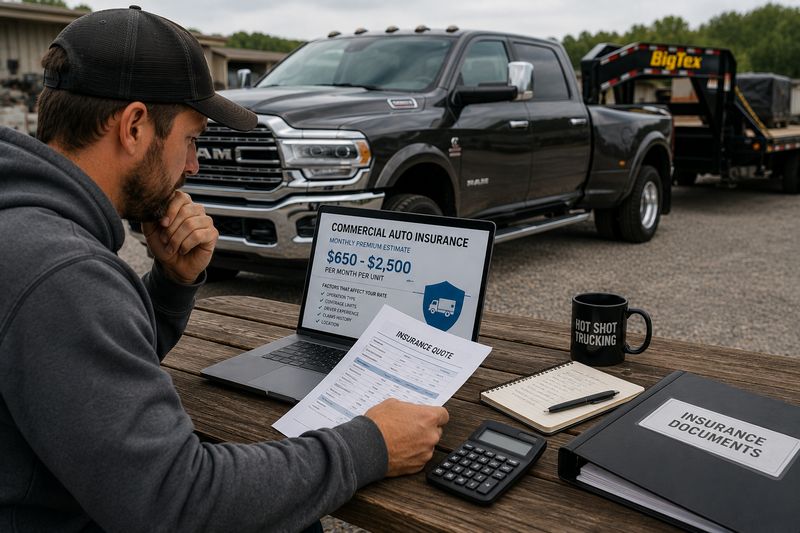
Hot shot insurance commonly falls somewhere between $650 and $2,500 per month per unit, depending on the operation, coverage package, and driver profile. Some operators may pay less, while new businesses with higher-risk profiles may pay more. A 2025 Insureon cost analysis lists an average of $896 per month, or $10,757 per year, for hotshot truckers’ commercial auto insurance.
Progressive Commercial reported that its 2024 national average monthly cost for commercial for-hire truck insurance ranged from $746 to $954, depending on the transportation category. Progressive also notes that rates depend on factors such as inspection history, coverage requirements, vehicle type, cargo, operating radius, and driving history.
For a budget-minded driver, this means insurance should be checked before buying a truck. A pickup may look affordable at auction, but if the insurance quote is $1,800 per month, the business may need more cash flow than expected.
Annual Insurance Premiums
Annual hot shot insurance premiums often range from about $8,000 to $30,000 per year per unit, depending on coverage and risk. Some basic policies may fall below that range, while fuller packages with liability, cargo, physical damage, and extra coverages may cost more. One 2026 trucking insurance guide lists broad hot shot insurance ranges of $8,000 to $30,000 per year per unit, while another estimates motor carrier hot shot insurance at $10,000 to $30,000 per year per vehicle.
The annual number matters because monthly payments can hide the true cost. A driver paying $1,250 per month is spending $15,000 per year before fuel, repairs, tires, registration, permits, parking, accounting, and loan payments.
For example, a new owner-operator may buy a used truck to avoid a large monthly truck payment. That can help. But if the insurance premium is still $12,000 to $18,000 per year, the driver must plan enough loads to cover that expense.
Insurance Costs for New Businesses
New hot shot businesses usually pay more than experienced operators. Insurance companies see new businesses as higher risk because they have no operating history, no claims record as a carrier, and no proof that they can run safely over time.
A new business may face higher premiums because of:
- New authority
- Limited commercial driving experience
- No prior insurance history
- New cargo relationships
- Higher uncertainty for insurers
- More difficulty proving safe operations
InsuranceHub reported that hot shot insurance often ranges from $7,000 to $12,000 per year, with an average of $10,284 per year for new businesses with one truck and trailer. However, actual quotes can be much higher depending on state, coverage, driver history, and authority status.
This is why new drivers should avoid building a startup budget around the lowest quote they hear online. A safer plan is to collect several real quotes before buying equipment. That way, the driver knows whether the business can survive the first year.
Non-CDL Hot Shot Insurance Costs
Non-CDL hot shot insurance may cost less than CDL hot shot insurance in some cases because the equipment is usually lighter and the loads may be smaller. But non-CDL does not automatically mean cheap.
A non-CDL driver still uses the truck for business. The driver may still need commercial auto liability, cargo insurance, physical damage coverage, trailer coverage, and broker-required limits.
For example, someone may use a pickup and smaller trailer to haul motorcycles, small machinery, or auto parts. The setup may stay under CDL limits, but the cargo still belongs to someone else. If that cargo is damaged, the driver may need cargo insurance to respond to the claim.
Non-CDL insurance costs may be affected by:
- Truck value
- Trailer value
- Cargo type
- Operating radius
- State of business
- Driver age
- Driving record
- Coverage limits
- Whether the business has authority
- Whether physical damage is included
For a driver trying to save money, a non-CDL setup can reduce some costs, but the driver should not treat it as a loophole. Insurance companies still rate the business based on commercial risk.
CDL Hot Shot Insurance Costs
CDL hot shot insurance often costs more because CDL drivers may haul heavier freight, operate larger combinations, travel farther, and carry higher-value loads. The higher earning potential can come with higher insurance premiums.
A CDL hot shot operator may need higher liability limits, stronger cargo coverage, and additional filings if operating under their own authority. Brokers may also require more coverage before offering better-paying loads.
For example, a CDL driver hauling construction equipment with a large gooseneck trailer may be able to accept loads a non-CDL driver cannot haul. But if the cargo is worth $150,000 and the route crosses several states, the insurance company sees more risk.
CDL insurance costs can also depend heavily on experience. A CDL driver with a clean record and several years of commercial driving history may look better to insurers than a brand-new CDL holder with no hauling experience.
For drivers on a tight budget, the decision should not be based only on monthly insurance cost. A CDL setup may cost more, but it may also open access to better freight. The key is whether the extra revenue can cover the higher insurance, fuel, maintenance, and compliance costs.
Owner-Operator Insurance Expenses
Owner-operators usually carry more financial responsibility than drivers leased to a carrier. A driver leased to another carrier may operate under the carrier’s primary liability insurance, although they may still need non-trucking liability, physical damage, occupational accident coverage, or other protections.
An owner-operator running under their own authority usually pays for the full insurance package. That can include:
- Primary liability
- Cargo insurance
- Physical damage
- Trailer coverage
- General liability
- Occupational accident coverage
- Required filings
- Additional coverages required by brokers
This is why owner-operator insurance can feel expensive. The driver is not just insuring a pickup truck. The driver is insuring a business.
For example, a person may buy a used truck through BidNDrive to reduce startup cost. That can be a smart way to avoid overpaying for equipment. But before bidding, the driver should estimate insurance, repairs, and setup costs. A cheaper truck helps only if the full business budget still works.
Compare Auction Trucks Before You Commit to High Insurance Costs
Insurance is only one part of your startup budget. Buying the right truck at the right price can improve your cash flow and make your hot shot business more profitable from day one. Browse available auction inventory and bid with confidence through BidNDrive.
- ✅ Heavy-duty pickups from Copart and IAAI
- ✅ Auction history and vehicle information available
- ✅ Competitive prices below many dealership listings
- ✅ Ideal for owner-operators and new trucking businesses
Factors That Affect Hot Shot Insurance Rates
Hot shot insurance rates are not the same for every driver. Two owner-operators can have similar trucks and still receive very different quotes. Insurance companies look at the full risk picture: who is driving, what equipment is used, what cargo is hauled, how far the business travels, and how long the company has been operating. Understanding these factors can help new drivers plan a realistic budget before buying a truck or accepting loads.
Driving Experience and CDL History
Driving experience is one of the biggest factors in hot shot insurance pricing. Insurance companies usually prefer drivers who have several years of safe commercial driving experience. A driver with a clean CDL history may look less risky than a beginner with no trucking background.
This does not mean a new driver cannot get insured. It means the first year may be more expensive. From the insurer’s point of view, a new hot shot operator still needs to prove they can handle long routes, heavy trailers, cargo securement, deadlines, and changing road conditions.
For example, a driver who has hauled equipment for five years with no violations may receive better options than someone who just bought a pickup and trailer last month. Even if both drivers are careful, the experienced driver has a track record.
CDL history can also matter. A CDL driver with a clean record may qualify for better rates than a CDL driver with accidents, violations, or gaps in commercial driving. For non-CDL drivers, insurers may look closely at regular driving history and any business-use experience.
Age and Driving Record
Age and driving record also play a major role in insurance rates. Younger drivers often pay more because insurers may view them as higher risk, especially if they have limited commercial experience. Older drivers are not automatically cheaper, but a long clean record can help.
Insurance companies may review:
- Accidents
- Speeding tickets
- Reckless driving violations
- DUI or DWI history
- License suspensions
- At-fault claims
- Recent moving violations
A single minor ticket may not ruin a quote, but multiple violations can increase premiums quickly. Serious violations can make it much harder to get approved.
For example, a driver trying to start a hot shot business on a tight budget may find an affordable used truck at auction. But if that driver has two recent speeding tickets and an at-fault accident, the insurance quote may be much higher than expected. In that case, the “cheap” truck does not solve the real startup cost problem.
Keeping a clean driving record is one of the simplest ways to protect future insurance rates. Safe driving helps reduce claims, keeps broker relationships stronger, and can make renewals easier.
Type of Truck and Trailer
The truck and trailer setup affects insurance cost because it changes the value, weight, use, and repair cost of the equipment. A newer dually truck with a large gooseneck trailer may cost more to insure than an older pickup with a smaller trailer.
Insurance companies may consider:
- Truck year, make, and model
- Truck value
- Trailer type
- Trailer value
- Gross vehicle weight rating
- Whether the truck is financed
- Whether the trailer is owned, leased, or borrowed
- Repair costs and parts availability
For example, a driver may buy a newer heavy-duty pickup because it looks more reliable. That can be a good business decision, but a more expensive truck usually increases physical damage coverage costs. A financed truck may also require full coverage, which raises the monthly premium.
Trailer type matters too. A flatbed trailer, enclosed trailer, gooseneck trailer, and equipment trailer may carry different risks. A trailer used to haul vehicles or machinery may create different insurance concerns than a trailer used for light palletized freight.
Before buying equipment, new drivers should get insurance quotes for the exact truck and trailer they plan to use. This helps avoid buying a setup that looks affordable but becomes expensive to insure.
Cargo Type and Load Value
Cargo type is another major pricing factor. Insurance companies want to know what the driver will haul because different freight has different risks.
Common hot shot cargo may include:
- Construction equipment
- Vehicles
- Auto parts
- Machinery
- Building materials
- Farm equipment
- Tools
- Generators
- Industrial supplies
Some cargo is easier to insure than other cargo. A load of basic building materials may be less risky than high-value machinery or multiple auction vehicles. Cargo that is easy to steal, hard to replace, fragile, or expensive can raise insurance costs.
Load value also matters. A driver hauling $20,000 loads may need less cargo coverage than a driver hauling $100,000 loads. Brokers and shippers may require higher cargo limits for valuable freight.
For example, a driver may want to haul auction vehicles because the loads seem consistent. But vehicle hauling may require the right cargo coverage and policy wording. If the policy excludes vehicles or limits coverage for certain types of cargo, the driver may not be protected.
A smart driver should tell the insurance agent exactly what types of freight they plan to haul. Hiding cargo details to get a cheaper quote can create serious problems when a claim happens.
Operating Radius and Mileage
Operating radius means how far the driver travels from the home base. A local hot shot operator may stay within 100 miles, while an interstate driver may travel across several states.
The farther the operating radius, the more exposure the insurer sees. Longer routes can mean more time on highways, unfamiliar roads, weather changes, overnight parking, fatigue, and higher mileage.
Insurance companies may rate operations differently based on radius, such as:
- Local
- Regional
- Long-distance
- Interstate
- Nationwide
For example, a driver hauling within one metro area may have a different risk profile than a driver hauling from Georgia to Texas every week. The long-distance driver spends more hours on the road and faces more chances for accidents, breakdowns, theft, or cargo damage.
Mileage also matters. A truck driven 20,000 miles per year for part-time work may cost less to insure than a truck driven 100,000 miles per year for full-time long-haul hot shot operations.
For budget-focused drivers, starting with a smaller operating radius can sometimes help control insurance costs while building experience.
Business Experience and Authority Age
Business experience and authority age can affect hot shot insurance rates. A brand-new motor carrier is usually seen as riskier than a company with several years of safe operation.
Authority age refers to how long the carrier has had active operating authority. New authority can make insurance more expensive because the business has no history with regulators, brokers, or insurers yet.
Insurance companies may ask:
- When was the business started?
- When did authority become active?
- Has the company had prior insurance?
- Has the business operated safely?
- Has the company had any violations or claims?
- Are safety records available?
For example, a driver who starts a new hot shot company today may pay more in the first policy year. After a year or two with no claims and good safety records, the business may have more options at renewal.
This is why new operators should treat the first year as a foundation-building year. It may not be the most profitable year, but it can help create the safety and insurance history needed for better future rates.
Claims History
Claims history is one of the strongest signals insurance companies use when pricing a policy. If a business has filed several claims, insurers may see it as higher risk. This can lead to higher premiums, higher deductibles, or fewer coverage options.
Claims may include:
- At-fault accidents
- Cargo damage
- Theft
- Trailer damage
- Physical damage claims
- Liability claims
- Weather-related losses
Not every claim affects rates the same way. A small windshield claim may not have the same impact as a serious crash with injuries. But frequent claims can still make a business look risky.
For example, a driver may file a claim for damaged cargo after improper securement, then file another claim after backing into a customer’s equipment. Even if the driver keeps working, insurance renewal may become more expensive.
This does not mean drivers should never file claims. Insurance exists for real losses. But drivers should prevent avoidable claims by checking securement, driving safely, parking in safer areas, and maintaining equipment.
Coverage Limits and Deductibles
Coverage limits and deductibles directly affect insurance cost. A higher coverage limit usually costs more because the insurance company may have to pay more after a covered claim. A lower deductible usually costs more because the insurer pays sooner when a loss happens.
A deductible is the amount the insured business pays out of pocket before insurance pays on a covered claim.
For example, a policy with a $1,000 deductible may cost more than a policy with a $2,500 deductible. The lower deductible gives the driver more help after a claim, but the monthly premium may be higher.
Common coverage choices that affect price include:
- Liability limits
- Cargo limits
- Physical damage limits
- Trailer coverage limits
- General liability limits
- Deductible amounts
- Optional coverage add-ons
A new owner-operator should not choose limits only by price. A cheaper policy may not meet broker requirements or may leave the business exposed after a serious accident. The goal is to choose limits that fit legal requirements, broker standards, cargo value, and the driver’s real financial risk.
Credit Score and Business Location
Credit score and business location can also affect insurance rates in many states. Insurers may use insurance-based credit information where allowed by law. A stronger credit profile may help some drivers qualify for better pricing, while poor credit can make insurance more expensive.
Business location matters because accident rates, theft rates, claim costs, traffic density, weather risks, and legal environments vary by area. A driver based in a busy metro area may receive a different quote than a driver based in a rural area.
For example, a hot shot operator located near a large city may have access to more loads, but insurance may be higher because of traffic, theft risk, and claim frequency. A rural operator may have lower local risk but may travel farther to find consistent freight.
Drivers cannot always change their location, but they can control some related risks. Secure parking, GPS tracking, dash cameras, safe routes, and clean business records may help show insurers that the operation is managed responsibly.
How to Lower Hot Shot Insurance Costs
Insurance is one of the largest ongoing expenses for many hot shot businesses, especially during the first few years. While some factors—such as age or location—cannot be changed, many others are within the driver's control. Building a safer operation, making smart coverage decisions, and comparing insurance options can reduce premiums over time without sacrificing the protection your business needs.
Maintain a Clean Driving Record
A clean driving record is one of the best ways to keep insurance costs under control. Insurance companies reward drivers who consistently demonstrate safe driving habits because they are less likely to file expensive claims.
A clean record usually means:
- No at-fault accidents
- No speeding tickets
- No reckless driving violations
- No DUI or DWI convictions
- No license suspensions
- Few or no moving violations
For example, two drivers may own nearly identical trucks and trailers. One has five years of accident-free commercial driving, while the other has multiple speeding tickets and a recent collision. The first driver will often qualify for lower insurance rates.
Safe driving also helps beyond insurance. Brokers may be more willing to work with carriers that maintain good safety records, creating more opportunities for profitable loads.
Simple habits can make a difference:
- Leave extra following distance.
- Drive within posted speed limits.
- Perform pre-trip inspections.
- Avoid distracted driving.
- Secure cargo properly before every trip.
One avoided accident today can save thousands of dollars in future insurance premiums.
Increase Deductibles
A deductible is the amount the business pays before insurance covers a claim. Choosing a higher deductible usually reduces the monthly or annual premium because the insurance company assumes less financial responsibility for smaller claims.
For example:
- A $1,000 deductible generally costs more each month than a $2,500 deductible.
- A $2,500 deductible may lower premiums, but the driver must be prepared to pay that amount if a covered loss occurs.
This strategy works best for businesses with emergency savings. A driver who cannot comfortably afford the deductible after an accident should not increase it simply to reduce monthly payments.
For example, an owner-operator who keeps a $10,000 emergency fund may decide that a higher deductible is a reasonable trade-off for lower annual insurance costs. On the other hand, a new driver with limited cash reserves may prefer a lower deductible to reduce financial stress after a claim.
The goal is to balance affordable premiums with realistic out-of-pocket costs.
Take Safety and CDL Courses
Insurance companies often view drivers who invest in professional training as lower-risk operators.
Completing safety programs or advanced driving courses can improve:
- Defensive driving skills
- Cargo securement techniques
- Accident prevention
- Vehicle inspection knowledge
- Compliance with federal regulations
Drivers who hold a CDL and continue developing their skills may also appear more attractive to insurers than drivers with little commercial experience.
For example, a new hot shot operator may complete a defensive driving course before applying for insurance. While not every insurer offers a direct discount, the additional training demonstrates a commitment to safety and may improve underwriting decisions.
Training also helps drivers avoid expensive mistakes, such as overloaded trailers, poor cargo securement, or unsafe braking techniques that could lead to accidents.
Install GPS and Telematics Systems
Technology can help reduce both accidents and insurance risk. Many hot shot operators install GPS tracking and telematics systems to monitor vehicles and improve fleet management.
These systems may record:
- Vehicle location
- Speed
- Harsh braking
- Rapid acceleration
- Idling time
- Driving hours
- Route history
Some insurers consider telematics data when evaluating risk because it provides evidence of safe driving habits.
For example, if a driver consistently follows speed limits and avoids aggressive driving, telematics reports may support lower risk during future policy renewals.
GPS tracking also provides other business benefits:
- Faster vehicle recovery after theft
- Better route planning
- Improved fuel efficiency
- More accurate delivery estimates
- Better communication with customers
Although installing these systems requires an upfront investment, they may reduce operating costs in several ways beyond insurance.
Bundle Insurance Policies
Many insurance companies offer discounts when multiple policies are purchased together. This is often called bundling.
Instead of buying separate policies from different companies, a hot shot business may combine:
- Commercial auto insurance
- Cargo insurance
- General liability insurance
- Physical damage coverage
- Equipment coverage
- Business owner's policy
Bundling can simplify policy management while reducing overall costs.
For example, a driver who purchases commercial auto insurance from one company and general liability from another may pay more than someone who buys both through the same insurer.
Another advantage is having a single insurance provider that understands the entire business instead of only one part of it.
However, drivers should still compare total coverage—not just discounts. A bundled policy is only worthwhile if it provides adequate protection.
Compare Multiple Insurance Quotes
One of the easiest ways to reduce insurance costs is to compare quotes from several insurance companies.
Insurance carriers calculate risk differently. One company may specialize in experienced CDL drivers, while another may focus on small owner-operators or new trucking businesses.
Two insurers can receive exactly the same information and produce quotes that differ by several thousand dollars per year.
When comparing quotes, drivers should look beyond the premium and review:
- Liability limits
- Cargo limits
- Deductibles
- Policy exclusions
- Trailer coverage
- Physical damage protection
- Claims process
- Customer service
- Financial strength of the insurer
For example, a driver may receive a quote that is $200 cheaper each month. After reading the policy, they discover it excludes the type of equipment they regularly haul. That lower price is not a bargain if the business is left unprotected.
Working with an experienced commercial trucking insurance agent can also help. Agents who understand hot shot trucking often know which companies are more competitive for specific operations.
Choose Appropriate Coverage Limits
Buying the highest available coverage is not always necessary, but buying the lowest limits simply to save money can be risky.
The right coverage depends on factors such as:
- Legal requirements
- Broker requirements
- Cargo value
- Truck value
- Business assets
- Financial risk tolerance
For example, a driver hauling inexpensive construction materials may not need the same cargo limits as someone transporting luxury vehicles or high-value industrial equipment.
At the same time, choosing limits that are too low may prevent the driver from working with larger brokers or handling better-paying loads.
A smart approach is to purchase coverage that matches the business rather than paying for protection that will never be used.
Insurance should support business growth—not become an unnecessary expense.
Gain Operating Experience Before Expanding
Many new hot shot operators want to expand quickly. They may plan to add another truck, hire drivers, or begin hauling higher-value freight within the first year.
While growth is important, expanding too quickly can increase insurance costs significantly.
Insurance companies generally reward businesses that demonstrate:
- Safe operations
- Clean claims history
- Stable revenue
- Good maintenance practices
- Experienced drivers
- Successful policy renewals
For example, a new owner-operator may begin by hauling smaller regional loads within a 150-mile radius. After completing a full year without accidents or claims, the business may qualify for better insurance rates.
At that point, expanding into interstate hauling or adding a second truck may be more affordable than trying to grow immediately.
This gradual approach also allows drivers to build relationships with brokers, improve cash flow, and learn the business before taking on additional risk.
Best Hot Shot Insurance Companies
Choosing the right insurance company is just as important as choosing the right coverage. The cheapest policy is not always the best value if it has poor customer service, limited coverage options, or slow claims handling. A good insurance provider should understand the trucking industry, offer flexible policies, and provide reliable support when something goes wrong.
For owner-operators and small hot shot businesses, the ideal insurer is one that balances competitive pricing with strong financial stability and trucking expertise.
What to Look for in an Insurance Provider
When comparing insurance companies, price should be only one part of the decision. The best provider is the one that offers coverage that matches your business and responds quickly when you need help.
Look for an insurance company that offers:
- Experience with commercial trucking
- Coverage designed for hot shot operators
- Competitive pricing
- Flexible payment options
- Strong customer support
- Fast certificate of insurance (COI) processing
- Easy policy updates
- Simple claims reporting
- Financial stability
- Positive customer reviews
For example, a driver may save $100 per month by choosing a cheaper insurer. But if that company takes several days to issue a certificate of insurance, the driver could lose profitable loads because brokers often require updated insurance documents before dispatch.
The best insurance provider helps keep your business moving—not just your premiums low.
Coverage Options and Policy Flexibility
Every hot shot business is different. One driver may haul construction equipment within one state, while another transports auction vehicles across several states. Because of that, flexible insurance policies are important.
A good insurance company should allow drivers to customize coverage based on their operation.
Common coverage options include:
- Commercial auto liability
- Primary liability
- Cargo insurance
- Physical damage coverage
- Trailer coverage
- General liability
- Occupational accident insurance
- Equipment coverage
- Rental reimbursement
- Downtime coverage
As a business grows, insurance needs often change.
For example, a new owner-operator may begin with one truck and a single trailer. After two years, the business may purchase another truck, hire a driver, or begin hauling more valuable freight. A flexible insurer can adjust the policy without requiring the business to start over with a completely different insurance company.
Drivers should also ask whether temporary equipment changes, seasonal operations, or additional drivers can be added easily if the business expands.
Claims Handling and Customer Service
The real value of an insurance company becomes clear after an accident—not before it.
Fast claims handling can reduce downtime and help a driver get back on the road sooner. Slow claims can leave a truck sitting in a repair shop while bills continue to accumulate.
When comparing insurance providers, ask questions such as:
- Is claims reporting available 24/7?
- How quickly are adjusters assigned?
- Can claims be filed online?
- Does the company have commercial trucking specialists?
- How long do repairs usually take?
- Are preferred repair networks available?
For example, imagine two drivers experience similar accidents.
One driver's insurance company immediately assigns an adjuster, approves repairs quickly, and keeps the driver informed throughout the process.
The other driver waits several days before hearing from the insurance company and spends weeks trying to get updates.
Even if both policies cost the same, the first insurer provides much greater value because downtime directly affects income.
Good customer service is also important outside of claims. Drivers may need updated certificates of insurance, additional insured endorsements, policy changes, or answers about coverage. Responsive customer support saves time and reduces stress.
Financial Strength and Industry Reputation
Insurance is only valuable if the company can pay claims when needed.
This is why financial strength matters.
Independent rating agencies evaluate insurance companies based on their financial stability and ability to meet future obligations. Companies with strong financial ratings are generally considered better prepared to handle large numbers of claims during difficult periods.
Industry reputation is also important.
Look for companies that have:
- Long experience in commercial insurance
- Positive reviews from trucking businesses
- Stable financial ratings
- Good claims satisfaction
- Strong customer retention
- Experience working with owner-operators
A company that has insured commercial trucking businesses for many years is often better equipped to understand the unique challenges of hot shot transportation than a provider focused mainly on personal auto insurance.
Reading reviews from other truck owners can also provide useful insight into claims service, billing practices, and customer support.
Specialized Trucking Insurance Companies
Some insurance companies focus almost entirely on commercial trucking.
These insurers understand:
- FMCSA requirements
- Cargo insurance
- Commercial trailers
- Owner-operators
- Interstate trucking
- Hot shot operations
- Fleet insurance
- Motor carrier filings
Because trucking is their primary business, they often have underwriters and agents who understand the specific risks of hauling freight.
Examples of companies and agencies that commonly serve hot shot operators include:
- OOIDA Risk Retention Group
- Reliance Partners
- CoverWallet
- Commercial Truck Insurance agencies
- Independent trucking insurance brokers specializing in motor carriers
Many specialized agencies work with multiple insurance carriers instead of representing only one company. This allows them to compare several quotes and recommend policies that fit different business models.
For example, a driver hauling construction equipment locally may qualify for a different insurer than someone transporting auction vehicles nationwide.
Working with a trucking-focused insurance agency can sometimes simplify the process because the agent understands industry terminology, FMCSA filings, and broker requirements.
National Commercial Insurance Providers
Large national insurance companies also play a major role in the commercial trucking market. Many owner-operators obtain hot shot insurance through well-known commercial insurers because they offer nationwide service, online account management, and extensive claims networks.
Some of the best-known commercial insurance providers include:
- Progressive Commercial
- The Hartford
- Travelers
- Nationwide
- Berkshire Hathaway GUARD
- Great West Casualty Company
- Sentry Insurance
Each company has different underwriting guidelines, pricing models, and coverage options. One insurer may offer excellent rates for experienced CDL drivers, while another may be more competitive for first-year owner-operators.
For example, two new hot shot businesses with similar trucks may receive quotes that differ by several thousand dollars simply because each insurance company evaluates risk differently.
That is why experienced insurance agents often recommend requesting quotes from several providers before making a decision.
Rather than asking, "Which insurance company is the cheapest?" a better question is, "Which company provides the best protection for my business at a fair price?"
How to Get Hot Shot Insurance
Getting hot shot insurance is usually a straightforward process, but choosing the right policy requires more than filling out an online application. Insurance companies want to understand your business, equipment, driving experience, and the type of freight you plan to haul. The more accurate information you provide, the more accurate your quote will be.
For new owner-operators, preparing the necessary documents before requesting quotes can save time and help get coverage in place faster.
Information Required for a Quote
Before an insurance company can provide an accurate quote, it needs details about both the driver and the business. Every insurer has its own application process, but most ask for similar information.
You will typically need to provide:
- Your full name and contact information
- Business name
- Business address
- USDOT number (if available)
- MC number or operating authority status
- Years of commercial driving experience
- CDL status (if applicable)
- Driver's license information
- Vehicle Identification Number (VIN)
- Truck year, make, and model
- Trailer year, make, and model
- Estimated annual mileage
- Operating radius
- States where you operate
- Types of cargo you haul
- Estimated cargo value
- Current or previous insurance information
For example, a new driver may purchase a used dually pickup and gooseneck trailer with plans to haul construction equipment throughout the Southeast. The insurance company will want to know the equipment specifications, where the business will operate, and how much commercial driving experience the driver has before preparing a quote.
Providing complete and accurate information helps prevent unexpected premium changes after the policy is issued.
Documents Insurance Companies Request
Along with basic information, insurance companies often request documents that verify your identity, business, and equipment.
Common documents include:
- Driver's license
- Commercial Driver's License (if applicable)
- Vehicle registration
- Truck and trailer VIN information
- Business registration documents
- USDOT registration
- MC authority documentation
- Current insurance declarations page (if switching companies)
- Motor Vehicle Record (MVR), which the insurer may obtain with your permission
- Loss runs for existing businesses (claims history)
New businesses may not have all of these documents yet. For example, someone applying for insurance before receiving active operating authority may simply provide proof that the authority application has been submitted.
If multiple drivers will operate the truck, insurers usually request information for each driver because every driving record affects the overall risk.
Having these documents organized before requesting quotes can significantly speed up the approval process.
Choosing Coverage Limits
Choosing coverage limits is one of the most important decisions when buying hot shot insurance.
The minimum legal limits are not always enough to protect a business or satisfy broker requirements. On the other hand, purchasing more coverage than necessary can increase operating costs.
When selecting limits, consider:
- Federal and state insurance requirements
- Broker requirements
- Cargo value
- Truck and trailer value
- Business assets
- Operating radius
- Types of freight
- Financial risk
For example, a driver hauling landscaping equipment worth $20,000 may not need the same cargo coverage as someone transporting expensive construction machinery worth $150,000.
Many freight brokers require:
- $1 million in commercial auto liability coverage
- $100,000 or more in cargo insurance
Choosing limits that meet common broker requirements can help avoid losing load opportunities later.
A good insurance agent can explain how different limits affect both protection and premium costs.
Comparing Insurance Policies
Many first-time hot shot operators compare only the monthly premium. While price matters, it should never be the only factor.
When reviewing insurance policies, compare:
- Liability limits
- Cargo coverage
- Physical damage protection
- Trailer coverage
- Deductibles
- Exclusions
- Optional coverages
- Payment plans
- Claims process
- Customer service
- Financial strength of the insurer
For example, one policy may cost $150 less per month but exclude certain cargo types or provide limited trailer coverage. Another may include broader protection, faster claims handling, and better roadside assistance.
The less expensive policy may actually become more costly if an uncovered loss occurs.
Reading the policy carefully before purchasing helps avoid unpleasant surprises after an accident.
Drivers should also ask for clarification whenever they do not understand policy language. Insurance contracts contain technical terms that can be confusing for first-time business owners.
Working with Insurance Agents and Brokers
Many hot shot drivers purchase insurance through independent insurance agents or commercial trucking insurance brokers rather than buying directly from one insurance company.
An independent agent can often:
- Compare multiple insurance companies
- Explain policy differences
- Recommend appropriate coverage
- Help with FMCSA filings
- Answer underwriting questions
- Assist during renewals
- Provide certificates of insurance quickly
For example, a driver starting a hot shot business may request quotes from an independent trucking insurance broker. Instead of contacting ten insurance companies individually, the broker compares several options and presents the most competitive choices.
This can save both time and money.
Agents who specialize in trucking also understand common broker insurance requirements and can recommend policies that meet industry standards.
However, drivers should still ask questions and understand what they are buying. Even when working with an experienced agent, the final decision belongs to the business owner.
Getting Coverage Quickly for a New Business
Many new owner-operators need insurance as quickly as possible so they can activate their operating authority and begin hauling freight.
The fastest approval usually happens when all required information is prepared before contacting an insurance company.
To speed up the process:
- Gather business documents in advance.
- Know the exact truck and trailer specifications.
- Have VIN numbers available.
- Be ready to describe your planned operations.
- Request quotes from multiple insurers at the same time.
- Respond quickly to requests for additional information.
- Review quotes promptly.
- Make payment as soon as you choose a policy.
For example, a driver who buys a truck through BidNDrive may already know the VIN, truck specifications, and trailer details before applying for insurance. Having this information ready can reduce delays and allow the policy to be issued more quickly.
Once the policy is active, the insurance company can submit any required FMCSA insurance filings if they apply to the operation. After the filings are accepted and all regulatory requirements are met, the business can begin operating legally.
Hot Shot Insurance for New Drivers
New drivers can get hot shot insurance, but the first year is often the hardest and most expensive. Insurance companies want to see safe driving habits, business experience, and proof that the operation is well managed. A beginner may not have all of that yet, so the goal is to start with the right setup, avoid unnecessary risks, and build a clean record from day one.
Challenges New Operators Face
New hot shot operators often face several challenges at the same time. They may be buying a truck, choosing a trailer, applying for authority, comparing insurance quotes, learning load boards, and trying to control startup costs.
Insurance can feel especially difficult because many new drivers expect to pay personal pickup truck rates. In reality, hot shot insurance is commercial insurance, and it is priced for business use.
Common challenges include:
- Higher first-year premiums
- Limited insurance company options
- No commercial hauling history
- New authority status
- Broker approval issues
- Uncertainty about cargo coverage
- Confusion about CDL and non-CDL rules
- Pressure to start hauling quickly
For example, a driver may find a used dually truck at a good price and think the hard part is over. But after requesting quotes, the driver discovers that insurance may cost more than the truck payment. This can be frustrating, especially for someone starting with limited savings.
The best way to avoid surprises is to get insurance quotes before buying equipment. A low purchase price only helps if the full business budget still works.
Minimum Experience Requirements
Insurance companies may have minimum experience requirements for hot shot drivers. These requirements vary by insurer, state, cargo type, and coverage limits.
Some companies may accept new drivers with clean personal driving records. Others may prefer at least one or two years of commercial driving experience. For heavier operations, higher-value cargo, or CDL hot shot trucking, insurers may look more closely at the driver’s CDL history.
Experience may include:
- Commercial driving experience
- CDL driving experience
- Prior towing experience
- Equipment hauling experience
- Clean personal driving history
- Previous work for a trucking company
- Safe operation of similar truck-and-trailer combinations
For example, a driver who worked for a construction company and regularly pulled equipment trailers may look better to an insurance company than someone who has never towed a loaded trailer before.
New drivers should be honest about their experience. Overstating experience to get a lower quote can create problems later, especially if a claim occurs and the insurer reviews the application.
Higher Premiums for Beginners
Beginners often pay higher premiums because insurance companies have less data to evaluate the risk. A new operator has not yet shown whether they can manage long routes, secure cargo properly, avoid claims, and maintain equipment.
Several factors can increase beginner insurance costs:
- New business
- New operating authority
- No loss history
- Limited commercial driving experience
- Younger driver age
- Recent tickets or accidents
- High-value cargo
- Long-distance routes
- Full physical damage coverage on financed equipment
For example, two drivers may both buy similar pickups and trailers. One has five years of safe commercial driving experience. The other is brand new to hauling. Even with the same equipment, the new driver may receive a higher quote because the insurer sees more uncertainty.
This does not mean the business cannot succeed. It means the first year must be planned carefully. New drivers should avoid overbuying equipment, taking risky loads, or accepting routes that are outside their experience level just to make quick money.
A high first-year premium can sometimes improve after the driver builds a clean operating history.
Tips for Getting Approved
New drivers can improve their chances of getting approved by preparing before applying for insurance.
Helpful steps include:
- Keep a clean driving record.
- Choose a realistic truck-and-trailer setup.
- Avoid extremely high-value cargo at the start.
- Start with a smaller operating radius if possible.
- Prepare all business documents before requesting quotes.
- Be clear about the type of freight you plan to haul.
- Compare several insurance companies.
- Work with an agent who understands hot shot trucking.
- Consider safety training or CDL courses.
- Avoid policy gaps or canceled coverage.
For example, a new driver may have a better chance of approval by starting with regional equipment hauling instead of immediately applying to haul expensive vehicles nationwide. A simpler operation can be easier for insurers to understand and price.
Drivers should also avoid applying with incomplete or inconsistent information. If one quote request says the business will haul local freight and another says nationwide vehicle transport, insurers may ask more questions or raise the premium.
A clear, honest business plan helps the insurance company understand the risk.
Building a Safe Driving History
The first year is an opportunity to build a strong foundation. Every safe mile, clean inspection, and claim-free month can help the business become more attractive to insurers over time.
New drivers should focus on habits that reduce risk:
- Perform pre-trip and post-trip inspections.
- Check tires, brakes, lights, and trailer connections.
- Use proper straps, chains, and binders.
- Recheck cargo securement during long trips.
- Avoid speeding.
- Leave extra following distance.
- Plan routes before driving.
- Avoid unsafe parking areas when possible.
- Keep maintenance records.
- Save delivery paperwork and load documents.
For example, a driver who keeps organized maintenance records and avoids claims during the first year may have better options at renewal. The premium may not drop immediately, but a safe record gives the business more leverage when comparing quotes.
New drivers should also treat every load as part of their reputation. Brokers, shippers, and insurers all care about reliability and safety. A clean operating history can help the driver qualify for better loads, better insurance options, and stronger business relationships over time.
Insurance for Different Types of Hot Shot Equipment
Hot shot insurance depends heavily on the equipment used in the business. A pickup truck, dually truck, flatbed trailer, gooseneck trailer, enclosed trailer, or equipment trailer can all create different insurance needs. The more valuable, heavier, or specialized the setup is, the more carefully the policy should be reviewed before the driver starts hauling paid loads.
Pickup Trucks Used for Hot Shot Trucking
Pickup trucks are the foundation of most hot shot operations. Drivers often use heavy-duty pickups such as a Ford F-250, Ford F-350, Ram 2500, Ram 3500, Chevrolet Silverado 2500 HD, or Chevrolet Silverado 3500 HD.
Even though these trucks may look like personal vehicles, they need commercial insurance when used for paid hauling. A personal auto policy usually does not cover business freight operations.
Insurance for a hot shot pickup may include:
- Commercial auto liability
- Physical damage coverage
- Uninsured and underinsured motorist coverage
- Medical payments or personal injury protection, depending on the state
- Non-trucking liability, if applicable
- Rental reimbursement, if offered
For example, a driver may buy a used pickup through an online auction to reduce startup costs. That can be a smart move, but the driver should get insurance quotes before bidding. A newer diesel truck, a high-value trim package, or a financed vehicle can raise physical damage premiums.
The insurance company will usually want the truck’s VIN, year, make, model, value, GVWR, ownership status, and how the truck will be used. If the truck pulls trailers across state lines, the insurer also needs to know that before issuing the policy.
Gooseneck Trailers
Gooseneck trailers are very common in hot shot trucking because they provide strong towing stability and can handle heavier loads than many bumper-pull trailers. They attach inside the pickup bed instead of to a rear hitch, which helps distribute weight more effectively.
Insurance for a gooseneck trailer may include physical damage coverage for the trailer itself, liability coverage while attached to a covered truck, and cargo coverage for the freight being hauled.
A key point is that trailer coverage is not always automatic. Some policies cover owned trailers only if they are listed on the policy. Others may provide limited liability while attached but no physical damage coverage unless the trailer is specifically insured.
For example, a driver may buy a used gooseneck trailer for $12,000 and assume it is fully covered because the truck has commercial insurance. After a crash, the driver may discover the trailer was not listed for physical damage coverage. That mistake can become expensive.
Drivers should provide the trailer VIN, year, make, model, length, GVWR, value, and ownership status when requesting insurance quotes.
Flatbed Trailers
Flatbed trailers are widely used in hot shot trucking because they can haul many types of freight, including construction materials, machinery, pipes, pallets, and equipment. Their open design makes loading easier, but it also creates certain risks.
Since the cargo is exposed, flatbed drivers must pay close attention to load securement, weather protection, and theft prevention. Insurance companies may ask what types of freight the trailer will carry because cargo risk can vary widely.
A flatbed trailer policy may need:
- Trailer physical damage coverage
- Cargo insurance
- Liability coverage while attached
- Equipment and tool coverage for straps, chains, binders, and tarps
For example, a driver hauling steel pipes may face different risks than a driver hauling palletized building materials. The cargo value, securement method, and route can all affect insurance needs.
Flatbed operators should also make sure their cargo policy covers the specific freight they haul. Some policies may exclude certain high-value or difficult-to-secure items unless added by endorsement.
Dually Trucks
Dually trucks have two rear wheels on each side, giving them more towing stability and load support than single-rear-wheel pickups. Many hot shot drivers prefer dually trucks because they can handle larger trailers and heavier loads.
Insurance companies may view dually trucks as more capable commercial equipment, especially when paired with a gooseneck or equipment trailer. That can affect pricing because the truck may be used for heavier freight and longer routes.
A dually truck may require:
- Commercial auto liability
- Physical damage coverage
- Higher liability limits for broker requirements
- Cargo coverage matched to load value
- Trailer coverage
- FMCSA filings, if operating under authority
For example, a driver may purchase a Ram 3500 dually to haul vehicles or equipment across multiple states. The truck may be reliable and strong, but the insurance company will rate the operation based on how it is used—not just the truck itself.
Dually trucks can also be expensive to repair, especially diesel models with advanced towing packages. If the truck is financed, full physical damage coverage is usually required by the lender.
Equipment Trailers
Equipment trailers are designed to haul machinery such as skid steers, compact tractors, small excavators, lifts, and construction tools. These loads can be valuable and heavy, which makes insurance especially important.
Insurance for equipment trailers should address both the trailer and the cargo. Trailer physical damage coverage protects the driver’s trailer after a covered loss. Cargo insurance helps protect the customer’s machinery or equipment while it is being transported.
For example, a driver may haul a used skid steer worth $35,000 from an auction yard to a contractor. If the machine is damaged because it was not secured correctly, the customer may file a cargo claim.
Equipment hauling can also create liability concerns because machinery may have unusual shapes, high centers of gravity, or attachments that require extra securement.
Drivers using equipment trailers should confirm:
- The trailer is listed on the policy.
- The trailer’s GVWR is accurate.
- Cargo limits match the value of the machinery.
- The policy does not exclude used equipment, construction equipment, or auction equipment.
- Securement gear is appropriate for the load.
For budget-conscious drivers, used equipment trailers can help lower startup costs, but they should be inspected carefully before purchase. Weak ramps, worn tires, bad brakes, or damaged frames can increase both accident risk and repair costs.
Enclosed Trailers
Enclosed trailers protect cargo from weather, road debris, and casual theft. They are often used for motorcycles, powersports vehicles, auto parts, tools, electronics, specialty equipment, and other freight that should not be exposed during transport.
Because enclosed trailers hide cargo from view, they can reduce some risks. However, they may also attract theft if parked in unsafe locations. Insurance companies may ask where the trailer is stored and what cargo is transported.
An enclosed trailer may need:
- Trailer physical damage coverage
- Cargo insurance
- Theft protection
- Equipment and tool coverage
- Higher cargo limits for valuable freight
For example, a driver may haul several motorcycles or expensive auto parts in an enclosed trailer. If the trailer is stolen overnight from a hotel parking lot, the claim may involve both the trailer and the cargo inside. Without proper coverage, the driver could be responsible for a large loss.
Enclosed trailers can be a good option for certain hot shot businesses, but the policy must match the cargo. A basic policy may not automatically cover high-value parts, vehicles, tools, or specialty equipment.
Common Insurance Claims in Hot Shot Trucking
Hot shot trucking involves more than driving from one point to another. Drivers secure cargo, pull trailers, work around job sites, park overnight, and operate in changing road and weather conditions. Because of this, insurance claims can happen in several different ways. Understanding common claims helps drivers prevent losses and choose coverage that fits real business risks.
Cargo Damage Claims
Cargo damage is one of the most common risks in hot shot trucking. Since many hot shot loads are carried on open trailers, freight can be exposed to movement, road debris, weather, and improper securement.
Cargo damage may happen when:
- The load shifts during transport.
- Straps, chains, or binders loosen.
- Freight is not protected from rain or snow.
- Equipment is scratched, dented, or broken.
- Cargo is damaged during loading or unloading.
- The driver uses the wrong securement method.
- Road vibration damages sensitive equipment.
For example, a driver may haul a used compact tractor from an auction yard to a small landscaping business. If the tractor is not secured correctly and moves during the trip, it may arrive with bent attachments, scratched panels, or damaged tires. The customer may file a claim for the repair cost.
Cargo insurance may help cover this type of loss, depending on the policy. However, drivers should check policy exclusions carefully. Some cargo policies may limit or exclude certain freight, such as vehicles, used equipment, personal items inside vehicles, or high-value machinery.
The best way to reduce cargo damage claims is to inspect the load, use proper securement equipment, recheck the load during the trip, and document the cargo condition before pickup and after delivery.
Accident and Collision Claims
Accident and collision claims happen when the truck, trailer, or another vehicle is damaged in a crash. These claims can involve the hot shot driver's own equipment, other vehicles, road property, or injuries to other people.
Hot shot trucks often pull heavy trailers, which means they need more stopping distance than a regular pickup. Sudden braking, poor weather, heavy traffic, and tight delivery schedules can increase accident risk.
Collision claims may involve:
- Rear-end accidents
- Lane-change accidents
- Jackknife incidents
- Trailer sway accidents
- Backing accidents
- Parking lot collisions
- Rollovers
- Damage to another vehicle or object
For example, a driver hauling construction equipment may follow traffic too closely on the highway. If traffic stops suddenly, the loaded truck and trailer may not stop in time. The crash could damage the customer’s cargo, the driver’s truck, the trailer, and another vehicle.
Different coverages may respond to different parts of the claim. Commercial auto liability may help cover damage or injuries to others. Physical damage coverage may help repair the driver’s own truck or trailer. Cargo insurance may help cover the customer’s freight if it is damaged.
Theft and Vandalism
Theft and vandalism are serious risks for hot shot drivers, especially when trucks, trailers, tools, or cargo are parked overnight. Drivers often stop at hotels, truck stops, repair shops, auction yards, or customer locations. Some of these areas may have higher theft risk.
Theft claims may involve:
- Stolen trailers
- Stolen cargo
- Stolen tools
- Stolen securement equipment
- Stolen truck parts
- Vehicle break-ins
- Fuel theft
- Vandalized equipment
For example, a driver may park an enclosed trailer overnight at a hotel while transporting motorcycles or auto parts. If the trailer is stolen before morning, the loss may include both the trailer and the customer’s cargo.
Coverage depends on the policy. Cargo insurance may cover the freight, while trailer physical damage may cover the trailer itself. Equipment and tool coverage may be needed for chains, binders, tarps, toolboxes, and other items that belong to the driver.
Drivers can reduce theft risk by using GPS trackers, heavy-duty locks, secure parking, dash cameras, trailer coupler locks, and well-lit parking areas. Even simple precautions can make a trailer less attractive to thieves.
Weather-Related Damage
Weather-related claims can happen quickly, especially for drivers operating across long distances. A hot shot route may start in clear weather and end in heavy rain, snow, hail, high winds, or icy conditions.
Weather-related damage may include:
- Hail damage to the truck or cargo
- Water damage to exposed freight
- Wind damage to tarps or cargo
- Accidents caused by wet or icy roads
- Flood damage
- Tree or debris impact
- Damage from extreme temperatures
For example, a driver may haul machinery on an open flatbed trailer during a long regional route. If the cargo is not covered properly and heavy rain enters sensitive components, the customer may claim that the equipment was damaged during transport.
Weather can also increase accident risk. A loaded trailer can be harder to control in high winds or on slick roads. Drivers should check forecasts before leaving, slow down in bad conditions, and stop when the route becomes unsafe.
Physical damage coverage may help with weather damage to the truck or trailer. Cargo insurance may help with covered cargo losses. However, some policies may deny claims if the driver failed to protect the cargo properly, so securement and weather protection matter.
Trailer Damage Claims
Trailer damage claims are common because trailers are exposed to constant stress. Hot shot trailers carry heavy loads, travel long distances, enter rough job sites, and are often loaded and unloaded frequently.
Trailer damage may happen because of:
- Collisions
- Backing into objects
- Ramp damage
- Tire blowouts
- Axle or suspension damage
- Brake failure
- Jackknife incidents
- Overloading
- Damage during loading or unloading
- Theft or vandalism
For example, a driver may load a skid steer onto an equipment trailer with weak ramps. If the ramp bends or breaks, the trailer may need repairs and the cargo may also be damaged.
Drivers should not assume the trailer is fully covered just because the truck has insurance. Trailer physical damage coverage may need to be added separately and the trailer may need to be listed on the policy.
A good maintenance routine can reduce trailer claims. Drivers should inspect tires, brakes, lights, ramps, axles, couplers, safety chains, and floor condition before hauling loads.
Liability Lawsuits
Liability lawsuits are among the most serious risks in hot shot trucking. A lawsuit can happen after an accident, injury, property damage, cargo dispute, or business-related claim.
A liability lawsuit may involve:
- Injuries to another driver
- Damage to another vehicle
- Damage to customer property
- Cargo damage disputes
- Job site accidents
- Claims of negligence
- Improper load securement
- Missed delivery or business loss claims
For example, a hot shot driver may lose a piece of equipment from a trailer because it was not secured properly. If that equipment hits another vehicle and causes injuries, the claim could become much larger than the cost of the cargo itself.
Commercial auto liability, general liability, and cargo coverage may all play different roles depending on the situation. Legal defense costs alone can be expensive, even before any settlement or judgment.
For owner-operators with limited savings, one lawsuit can threaten the entire business. That is why choosing proper liability limits, following safety rules, documenting loads, and keeping coverage active are all important.
Mistakes to Avoid When Buying Hot Shot Insurance
Buying hot shot insurance can feel confusing, especially for new drivers trying to start a business on a limited budget. It is normal to look for the lowest monthly payment, but insurance should protect the business, not just satisfy paperwork. The wrong policy can lead to denied claims, rejected loads, legal problems, or major out-of-pocket costs after one accident.
Choosing the Cheapest Policy Only
The cheapest hot shot insurance policy is not always the best choice. A low premium may look attractive when startup money is tight, but the policy may come with weak coverage, high deductibles, limited cargo protection, or exclusions that do not fit the business.
For example, a new driver may compare two quotes and choose the one that is $200 cheaper per month. Later, the driver accepts a load of used equipment and damages it during transport. After filing a claim, the driver finds out that the cheaper policy excludes that type of cargo. The small monthly savings can turn into a much larger loss.
When comparing policies, look beyond price. Review what is covered, what is excluded, how much the deductible is, how claims are handled, and whether the policy meets broker requirements.
A better question is not, “Which policy is the cheapest?” It is, “Which policy gives me the protection I actually need at a fair price?”
Buying Insufficient Liability Limits
Liability limits matter because accidents involving a truck and trailer can become expensive quickly. If the policy limit is too low, the business may have to pay the remaining costs after insurance reaches its maximum payout.
Some drivers buy the lowest available liability limit to reduce premiums. This can create problems when working with brokers and shippers. Many brokers require higher liability limits before they approve a carrier.
For example, a driver may purchase a policy that meets a basic requirement but then try to book loads through a broker that requires $1 million in liability coverage. If the driver does not meet that requirement, the broker may reject the carrier setup. That means fewer load opportunities and less income.
Low liability limits can also create financial risk after a serious accident. If another driver is injured or multiple vehicles are damaged, the claim may exceed the minimum coverage.
Drivers should choose liability limits based on legal requirements, broker expectations, cargo type, operating area, and the amount of financial risk they can handle.
Ignoring Cargo Coverage Requirements
Cargo insurance is one of the most important parts of hot shot coverage, but it is also one of the easiest areas to misunderstand.
Some drivers assume that commercial auto liability covers the load. It usually does not. Liability coverage helps protect against injury or property damage claims involving other people. Cargo insurance helps protect the customer’s freight.
For example, a driver hauling an auction vehicle, motorcycle, machine, or construction tool may be responsible if that cargo is damaged, stolen, or lost during transport. Without proper cargo coverage, the driver may have to pay for the loss personally.
Another mistake is buying cargo coverage with limits that are too low. A $50,000 cargo limit may not be enough if the driver regularly hauls vehicles, machinery, or high-value equipment.
Drivers should also check whether the policy covers the exact freight they plan to haul. Some cargo policies may exclude vehicles, personal items, electronics, household goods, hazardous materials, or certain used equipment.
Before accepting a load, a driver should ask: “Is this cargo covered by my policy, and is my cargo limit high enough?”
Failing to Update Business Information
Hot shot insurance must match the real business operation. If the business changes but the policy is not updated, coverage problems can happen.
Drivers should update their insurance company when they change:
- Truck or trailer
- Business address
- Operating radius
- Cargo type
- Driver list
- Authority status
- Business name
- Trailer ownership
- States of operation
- Coverage needs
For example, a driver may start by hauling light freight within one state. Six months later, the same driver begins hauling vehicles across several states. If the policy still describes a local light-freight operation, the driver may have problems during a claim.
This is especially important for new businesses that grow quickly. Adding a second truck, hiring a driver, or switching from non-CDL to CDL operations can all affect insurance.
Updating the policy may raise the premium, but not updating it can be much more expensive if a claim is denied or a broker discovers the policy does not match the operation.
Not Understanding Policy Exclusions
Every insurance policy has exclusions. An exclusion is a situation, cargo type, driver, vehicle, or loss that the policy does not cover.
Many new drivers focus on the coverage page and ignore the exclusions. That can be a serious mistake.
Common exclusions may involve:
- Certain cargo types
- Unlisted drivers
- Unlisted vehicles or trailers
- Personal items inside cargo
- Intentional damage
- Wear and tear
- Mechanical breakdown
- Overloaded vehicles
- Unauthorized use
- Operations outside the approved radius
- Cargo not properly secured
For example, a driver may have cargo insurance but later learn that the policy excludes vehicles being transported for hire. If that driver regularly hauls auction vehicles, the policy does not fit the business.
Drivers should ask the agent to explain exclusions in plain language. It is better to ask questions before buying the policy than to learn about an exclusion after a claim.
A good rule is simple: never assume a load is covered just because you have insurance. Confirm it first.
Allowing Coverage to Lapse
A coverage lapse happens when an insurance policy expires, cancels, or stops before a replacement policy is active. Even a short lapse can create serious problems for a hot shot business.
A lapse may happen because of:
- Missed payments
- Expired policy term
- Canceled automatic payment
- Incorrect billing information
- Failure to renew on time
- Insurance company cancellation
- No replacement coverage filed
If coverage lapses, the driver may not be able to haul legally, work with brokers, or maintain active authority. If an accident happens during the lapse, the business may have no protection.
For example, a driver may miss an insurance payment while waiting for customer invoices to be paid. The policy cancels, but the driver accepts a load anyway to catch up on cash flow. If a crash happens during that trip, the financial damage can be devastating.
Drivers should set payment reminders, monitor renewal dates, keep emergency funds for insurance payments, and confirm that replacement coverage is active before canceling an old policy.
Starting a Hot Shot Business and Insurance Planning
Starting a hot shot business is not only about buying a truck and finding loads. Insurance should be part of the plan from the beginning because it affects legal operation, broker approval, monthly cash flow, and long-term profit. For a new owner-operator with a limited budget, planning insurance early can prevent expensive surprises after the truck and trailer have already been purchased.
Obtaining Operating Authority
Operating authority gives a carrier permission to transport freight for payment under its own business name. Not every hot shot driver needs their own authority. Some drivers lease onto another carrier and operate under that carrier’s authority. Others choose to run independently and handle their own compliance, insurance, billing, and customer relationships.
For drivers who want to operate under their own authority, insurance is a key step. The business may need commercial auto liability coverage and the required filings before authority becomes active. This means a driver cannot simply buy a truck today and legally start hauling interstate loads tomorrow if the authority and insurance filings are not complete.
For example, a driver may buy an affordable used dually through BidNDrive and plan to haul equipment from Georgia to Florida. If that driver wants to operate independently across state lines, they may need a USDOT number, MC authority, insurance filings, and other compliance items before taking the first load.
The mistake many beginners make is applying for authority without understanding the insurance cost. Once the authority process starts, the driver may discover that the required insurance premium is much higher than expected. It is smarter to request insurance estimates before spending money on equipment or applications.
Registering Your Business
A hot shot business should be properly registered before operating. The exact steps depend on the state, business structure, and type of operation. Many owner-operators form an LLC, but some start as sole proprietors. The right choice depends on taxes, liability, state rules, and business goals.
Common business setup steps may include:
- Choosing a business name
- Registering the business with the state
- Getting an EIN from the IRS
- Opening a business bank account
- Registering for state tax accounts if required
- Applying for a USDOT number if needed
- Applying for MC authority if required
- Registering commercial vehicles
- Setting up bookkeeping
Insurance companies usually ask for accurate business information. If the insurance policy lists one name but the authority, registration, or bank account uses another name, delays can happen.
For example, a driver may register “Smith Hot Shot LLC” but request insurance under their personal name. Later, the broker asks for a certificate of insurance that matches the carrier name. If the names do not match, the driver may need policy corrections before getting approved for loads.
Keeping business documents consistent from the start makes insurance, compliance, and broker onboarding much easier.
Meeting Insurance Requirements
Meeting insurance requirements means carrying the coverage needed for legal operation and customer approval. The exact coverage depends on the business model, cargo, equipment, route, and authority status.
A hot shot operator may need:
- Commercial auto liability
- Primary liability
- Cargo insurance
- Physical damage coverage
- Trailer coverage
- General liability
- Occupational accident coverage
- FMCSA filings, if applicable
- State-required coverage
- Broker-required limits
For example, a driver who only hauls light local freight may need a different insurance setup than a driver transporting auction vehicles across multiple states. A driver leased to a motor carrier may also have different requirements than a driver operating under their own authority.
Many brokers commonly request proof of $1 million in commercial auto liability and $100,000 in cargo coverage, though requirements can vary by broker and load type. Some customers may require higher cargo limits for expensive machinery, vehicles, or specialized equipment.
New operators should ask insurance agents direct questions:
- Does this policy cover the exact cargo I plan to haul?
- Does it meet common broker requirements?
- Are my truck and trailer listed correctly?
- Are my operating states and radius accurate?
- Are required filings included?
- What is excluded from cargo coverage?
- What happens if I add another truck or driver?
The goal is not just to buy a policy. The goal is to buy a policy that matches the actual business.
Budgeting Startup Costs
Startup costs can add up quickly in hot shot trucking. Many beginners focus on the truck price but forget about insurance, trailer cost, repairs, registration, tools, and cash reserves.
A realistic startup budget may include:
- Truck purchase or down payment
- Trailer purchase
- Insurance down payment
- Monthly insurance premium
- Business registration
- Authority application fees
- Vehicle registration
- Permits
- ELD, if required
- GPS or tracking tools
- Securement equipment
- Chains, straps, binders, and tarps
- Maintenance and repairs
- Tires
- Fuel
- Emergency fund
- Parking or storage
- Accounting or bookkeeping
For someone trying to save money, buying used equipment can help reduce startup cost. For example, a driver may find a used heavy-duty pickup at auction instead of buying from a retail dealer. That can free up cash for insurance, trailer repairs, and working capital.
But the truck should still be inspected carefully. A cheap truck with hidden mechanical problems can drain the budget before the business starts earning. Insurance also may cost more for certain trucks, drivers, locations, and cargo types.
A smart beginner should get insurance quotes, estimate repairs, and calculate monthly expenses before buying the truck. This helps answer the real question: “Can this business make money after all costs?”
Understanding Ongoing Insurance Expenses
Insurance is not a one-time startup cost. It is an ongoing business expense that must be paid whether the truck is moving or parked. This is one reason hot shot drivers need steady cash flow and careful load selection.
Ongoing insurance expenses may include:
- Monthly premiums
- Policy renewal increases
- Deductibles after claims
- Additional coverage for new cargo types
- Higher limits for broker requirements
- Added cost for new drivers
- Added cost for new trucks or trailers
- Fees related to policy changes
- Potential premium increases after claims or violations
For example, a driver may pay $1,200 per month for insurance. If the driver has a slow month and earns less than expected, that insurance bill still comes due. Missing payments can cause coverage to lapse, which can stop the business from hauling legally and may damage future insurance options.
This is why new hot shot operators should build insurance into every load calculation. If a load pays $800, the driver should not think only about fuel. The load also needs to help cover insurance, maintenance, tires, taxes, phone service, parking, and future repairs.
A simple way to plan is to divide monthly fixed expenses by the number of loads or working days expected each month. This helps the driver understand how much each load must contribute just to break even.
Is Hot Shot Trucking Worth It in 2026?
Hot shot trucking can be worth it in 2026, but it is not easy money. The business can work well for disciplined owner-operators who understand their costs, choose loads carefully, maintain equipment, and keep insurance under control. For drivers with a limited budget, the biggest advantage is the lower startup cost compared with traditional semi-truck operations. The biggest risk is underestimating expenses before the first load is even booked.
Income Potential for Owner-Operators
Hot shot owner-operators can earn money by hauling time-sensitive freight, equipment, vehicles, construction materials, parts, and other smaller loads. The income potential depends on the driver’s location, equipment, cargo type, broker relationships, operating radius, and ability to control expenses.
Some drivers work full time and run regional or interstate loads. Others use hot shot trucking as a side business or part-time income source. A CDL driver with a larger trailer may have access to heavier and better-paying loads, while a non-CDL driver may have fewer options but lower startup complexity.
For example, a driver with a dually truck and gooseneck trailer may haul equipment from an auction yard to a contractor, then book another load on the return route. If the driver plans routes well, keeps deadhead miles low, and avoids cheap freight, the business has a better chance of making money.
However, gross revenue is not the same as profit. A load may pay $1,200, but the driver still has to pay for fuel, insurance, maintenance, tires, tolls, meals, taxes, and future repairs. The owner-operator keeps what is left after all expenses.
Operating Expenses and Insurance Costs
Operating expenses are the main reason some hot shot businesses fail. Many new drivers focus on how much a load pays, but they do not always calculate the true cost of running the truck.
Common hot shot expenses include:
- Insurance premiums
- Fuel
- Truck payment or purchase cost
- Trailer payment or purchase cost
- Maintenance and repairs
- Tires
- Registration and permits
- Authority and compliance costs
- Load board fees
- ELD or tracking tools, if required
- Securement equipment
- Parking or storage
- Accounting and taxes
- Emergency repairs
- Deductibles after claims
Insurance is often one of the largest fixed costs. It must be paid even during slow weeks. A driver may park the truck for several days, but the insurance bill still comes due.
For example, a new owner-operator may buy a used pickup at a lower price to save money. That can help the startup budget. But if the insurance premium is high, the driver still needs enough profitable loads each month to cover that fixed cost.
Before entering the business, drivers should calculate a simple break-even number. How much must the truck earn each week just to cover insurance, fuel, maintenance, and other bills? If that number is not realistic for the local freight market, the business may struggle.
Challenges Facing Hot Shot Drivers
Hot shot trucking has real opportunities, but it also comes with serious challenges. The market can be competitive, especially for new drivers who rely only on load boards. Some loads pay too little after fuel and expenses. Other loads may require insurance limits, equipment, or experience that a beginner does not have yet.
Common challenges include:
- High insurance costs for new operators
- Fuel price changes
- Truck and trailer repairs
- Slow freight periods
- Broker requirements
- Long hours on the road
- Deadhead miles
- Cargo securement responsibility
- Compliance paperwork
- Competition from other carriers
- Waiting for payment
- Finding safe parking
- Managing cash flow
For example, a driver may accept a cheap load because they need money quickly. After fuel, tolls, food, and deadhead miles, the load may produce very little profit. If this happens often, the driver may be busy but still not making enough to grow.
Another challenge is equipment downtime. If the truck breaks down, income stops immediately, but insurance, loan payments, and other fixed costs continue. This is why starting with a reliable truck and keeping an emergency fund is so important.
Tips for Improving Profitability
Hot shot trucking becomes more profitable when the driver treats it like a real business, not just a driving job. Profit depends on planning, discipline, and smart cost control.
Useful ways to improve profitability include:
- Know your cost per mile.
- Avoid loads that do not cover expenses.
- Reduce deadhead miles.
- Build relationships with repeat customers.
- Compare insurance quotes every renewal.
- Maintain a clean driving record.
- Keep the truck and trailer in good condition.
- Choose equipment that fits your target loads.
- Avoid overbuying a truck or trailer too early.
- Use proper cargo securement to prevent claims.
- Keep organized records for taxes and renewals.
- Build cash reserves before expanding.
For example, a driver may be tempted to buy the newest diesel dually with a large monthly payment. But a reliable used truck bought at the right price may create less financial pressure. Lower equipment cost can make it easier to survive slow weeks and high insurance premiums.
This is where platforms like BidNDrive can be useful for budget-conscious buyers. A driver who carefully researches auction vehicles may find a work truck for less than retail pricing. The key is to inspect the vehicle history, estimate repairs, and compare insurance quotes before bidding.
The most profitable drivers usually know their numbers before accepting a load. They understand what the truck costs per mile, how much insurance adds to each month, and which types of freight are worth their time.
Who Should Enter the Hot Shot Industry
Hot shot trucking may be a good fit for people who are self-motivated, organized, careful with money, and comfortable managing both driving and business tasks. It can be especially attractive to people who want to start a transportation business without buying a full-size semi-truck.
A good candidate may be someone who:
- Has a clean driving record
- Understands towing and trailer safety
- Can manage a budget
- Is willing to learn regulations
- Can handle long hours
- Has enough savings for startup costs
- Compares insurance before buying equipment
- Plans routes carefully
- Takes maintenance seriously
- Avoids risky loads and shortcuts
It may not be the right business for someone who expects quick profit without planning. It is also risky for someone who uses all available cash to buy a truck and has nothing left for insurance, repairs, fuel, or emergencies.
For example, a person with limited savings may still enter the industry, but they should start carefully. Buying affordable used equipment, keeping the operation simple, choosing realistic loads, and building experience slowly can be safer than trying to grow too fast.
Hot shot trucking can be worth it in 2026 for the right operator. The best results usually come from drivers who understand that the business is not only about hauling freight. It is about managing risk, controlling costs, protecting the equipment, and making smart decisions before every mile.
Find Your Next Hot Shot Truck at BidNDrive
Whether you're starting your first hot shot business or expanding your fleet, BidNDrive gives you access to thousands of pickup trucks, commercial vehicles, and work-ready equipment from leading U.S. auto auctions. Buy smarter, reduce startup costs, and get on the road faster.
- ✅ Thousands of commercial trucks added every week
- ✅ Buy directly from major U.S. auto auctions
- ✅ 100% refundable bidding deposit
- ✅ Worldwide buyers welcome with expert support
Further Reading
Everything You Need to Know About Freightliner Trucks
Interstate vs Intrastate Trucking: Full Guide for Cost-Conscious Drivers and Dealers
New 14-Hour Rule for Truck Drivers: Complete Guide to FMCSA Hours of Service Regulations
Truck Driver Bookkeeping
Frequently Asked Questions
- What insurance is needed for Hotshot?
- Why is Hotshot insurance so expensive?
- How much does the average Hotshot load pay?
- Is a non-CDL hotshot worth it?