



If you're planning to buy vehicles through dealer-only auctions or simply want to understand how licensed dealerships operate, knowing what a dealer bond is can help you make more informed decisions. This guide explains how dealer surety bonds work, why states require them, what they cover, and how they protect consumers. You'll also learn how dealer bonds affect licensing, auction access, and the credibility of the businesses you choose to work with.
What Is a Dealer Bond?
If you are buying a vehicle through a dealer or an auction broker, you may come across the term "dealer bond." While it sounds complicated, the concept is actually straightforward. A dealer bond is a financial safeguard that helps protect consumers and encourages dealers to follow state laws.
For buyers, understanding dealer bonds can provide additional confidence when working with licensed dealers. For people considering becoming dealers themselves, knowing how these bonds work is often an essential part of the licensing process.
Definition of a Motor Vehicle Dealer Bond
A motor vehicle dealer bond, often called a dealer bond, is a type of surety bond required by many states before an auto dealer can obtain or renew a dealer license.
The bond serves as a financial guarantee that the dealer will operate according to state regulations and conduct business honestly. If the dealer violates certain laws or engages in fraudulent practices, an injured party may be able to file a claim against the bond.
For example, imagine a licensed dealer sells a vehicle but never transfers the title to the buyer. If the situation falls within the terms of the bond and state regulations, the affected customer may have the right to seek compensation through the claims process.
Dealer bonds are common requirements for:
- Independent used car dealers;
- New car dealerships;
- Wholesale vehicle dealers;
- Salvage dealers;
- Dealers participating in dealer-only auto auctions.
The exact bond amount and requirements vary from state to state.
What Is a Surety Bond?
A surety bond is a legally binding agreement involving three separate parties.
The first party is the principal, which is the dealer required to obtain the bond.
The second party is the obligee, usually the state agency responsible for licensing and regulating motor vehicle dealers.
The third party is the surety, which is the bonding company that issues the bond.
The surety guarantees that the dealer will comply with applicable laws and licensing requirements. If the dealer fails to meet these obligations, a claim may be filed.
For example, if a dealer commits odometer fraud or unlawfully collects fees from a customer, the injured party may seek compensation through the bond if state law permits it.
However, the dealer remains financially responsible for reimbursing the surety company for valid claims that are paid.
This is one of the most important aspects of surety bonds that many people misunderstand.
Is a Dealer Bond the Same as Insurance?
No. A dealer bond is not the same as insurance.
Insurance protects the policyholder from covered losses. If a dealership experiences a fire, theft, or certain liability claims, insurance may help cover those expenses depending on the policy terms.
A dealer bond works differently.
The purpose of the bond is to protect consumers, government agencies, and other parties harmed by the dealer's failure to comply with laws or contractual obligations.
If a valid claim is paid, the surety company expects reimbursement from the dealer.
In other words:
- Insurance primarily protects the business.
- A dealer bond primarily protects the public.
For example, if a licensed dealer intentionally misrepresents a vehicle's condition and a customer suffers financial harm, the customer may be able to pursue a claim against the dealer bond. If the surety pays the claim, the dealer generally must repay the surety company.
Understanding this distinction is important for both consumers and prospective dealers.
Why Dealer Bonds Matter in the Automotive Industry
Dealer bonds play an important role in building trust within the automotive marketplace.
Buying a vehicle is a significant financial decision. Most buyers want reassurance that the dealer they are working with is operating legally and ethically.
Dealer bonds help support that confidence by promoting accountability.
Because dealers can face claims, financial consequences, and potential licensing issues if they violate regulations, bonds encourage businesses to follow established rules and professional standards.
For consumers, dealer bonds may provide an additional layer of protection against certain forms of misconduct, including:
- Failure to transfer vehicle titles properly;
- Odometer fraud;
- Misrepresentation of vehicle information;
- Violations of state dealer regulations;
- Failure to pay required taxes and fees in situations covered by law.
For example, a first-time auction buyer may feel uncertain about working with a dealer they have never met in person. Knowing that the dealer must maintain a license and satisfy state bonding requirements can offer some additional peace of mind.
This does not mean that a dealer bond guarantees a perfect transaction. Buyers should still research vehicles carefully, review contracts thoroughly, and work with reputable businesses.
Companies like BidNDrive help simplify access to online auto auctions by working within established licensing frameworks. Dealer licensing requirements, including dealer bonds where applicable, contribute to a more structured and accountable buying environment.
Buy Through a Trusted Auction Broker With Confidence
Understanding dealer bonds highlights why working with licensed businesses matters. BidNDrive helps everyday buyers access online auto auctions through an established, dealer-connected platform designed to simplify the process and reduce uncertainty.
- ✅ Access to dealer-only auction inventory
- ✅ Free vehicle history reports with an active deposit
- ✅ Unlimited bidding opportunities
- ✅ No dealer license required for buyers
What Is the Purpose of a Motor Vehicle Dealer Bond?
A motor vehicle dealer bond exists to create accountability in the auto sales business. It helps protect buyers, supports state licensing rules, and encourages dealers to operate honestly.
For customers, especially those buying cars through auctions or online platforms, this matters because vehicle transactions involve large amounts of money, important documents, and trust. A dealer bond does not remove every risk, but it adds a layer of protection when a licensed dealer violates certain legal or financial obligations.
Protecting Consumers From Fraudulent Dealers
One of the main purposes of a dealer bond is consumer protection.
Buying a vehicle can be stressful, especially when the buyer is trying to save money and may not fully understand titles, disclosures, fees, or auction paperwork. If a dealer acts dishonestly, the buyer can suffer serious financial harm.
A dealer bond may help protect consumers in situations involving certain types of dealer misconduct.
For example, imagine a buyer pays for a used vehicle but never receives the title. Without a title, the buyer may not be able to register, insure, or legally resell the vehicle. If the dealer fails to correct the issue and the situation falls within the bond terms, the buyer may be able to file a claim against the dealer bond.
Other possible issues may include misrepresentation of vehicle information, improper title handling, or violations of state dealer laws.
The bond is not a guarantee that every problem will be paid automatically. Claims must usually be investigated and proven. Still, the existence of the bond gives consumers an additional way to seek compensation when a dealer breaks covered obligations.
Ensuring Compliance With State Regulations
Dealer bonds also help states enforce licensing rules.
Most states regulate motor vehicle dealers because vehicle sales involve consumer protection, title records, tax collection, odometer disclosures, and public trust. Requiring a dealer bond helps ensure that licensed dealers take these responsibilities seriously.
Before a dealer can receive or renew a license, the state may require proof of an active bond in a specific amount.
This requirement creates a financial reason for dealers to follow the law. If they violate state rules and a valid claim is paid, the dealer may have to reimburse the surety company.
For example, a dealer who repeatedly fails to process titles correctly may face claims, licensing penalties, or difficulty renewing the bond in the future.
In simple terms, the bond helps connect dealer licensing with real financial responsibility.
Promoting Ethical Business Practices
Dealer bonds are not only about paying claims. They also encourage better business behavior.
A dealer who understands the bond requirements knows that dishonest or careless actions can have financial consequences. This can discourage fraud, false advertising, title problems, and other harmful practices.
For buyers, this helps create a more trustworthy marketplace.
For example, a first-time auction buyer may feel unsure about working with a licensed dealer or auction broker. Knowing that licensed dealers must meet state rules, including bonding requirements where applicable, can make the process feel more structured and less risky.
Ethical business practices also protect honest dealers. When all licensed dealers must follow the same rules, it becomes harder for bad actors to gain an unfair advantage through dishonest behavior.
This supports a healthier automotive market for buyers, dealers, lenders, and auction platforms.
Providing Financial Accountability for Licensed Dealers
A dealer bond creates financial accountability because the dealer remains responsible for valid claims paid by the surety.
This is one of the biggest differences between a dealer bond and traditional insurance.
With insurance, a covered claim is generally paid by the insurance company according to the policy terms. With a surety bond, the surety may pay an injured party for a valid claim, but the dealer is usually required to repay the surety.
This repayment obligation motivates dealers to avoid actions that could lead to claims.
For example, if a dealer unlawfully collects fees or misrepresents a vehicle and a valid bond claim is paid, the dealer may still owe that money back to the bonding company.
This means the bond does not protect the dealer from responsibility. It protects the public by making sure there is a financial mechanism available when covered misconduct occurs.
For auction buyers, this is why working with licensed and bonded dealers can provide more confidence than dealing with unknown or unverified sellers. Companies like BidNDrive operate within the licensed auction environment, helping buyers access vehicles while reducing some of the uncertainty that can come with online auto purchases.
How Does a Dealer Bond Work?
A dealer bond works as a financial promise that a licensed auto dealer will follow state laws and meet certain business obligations. It does not mean the dealer can avoid responsibility. In fact, the bond exists to make sure the dealer can be held financially accountable if covered misconduct causes harm.
For buyers, this is important because car purchases often involve titles, odometer statements, taxes, fees, and large payments. If something goes wrong because a dealer violates the rules, the bond may provide a path for compensation.
The Three Parties Involved in a Dealer Bond
A dealer bond involves three parties. Each party has a different role in the agreement.
Understanding these roles makes the whole concept much easier to follow.
Principal: The Auto Dealer
The principal is the auto dealer who is required to purchase and maintain the bond.
This may be an independent used car dealer, wholesale dealer, franchise dealer, salvage dealer, motorcycle dealer, or another licensed automotive business.
The dealer is responsible for following the law, handling paperwork correctly, transferring titles properly, and meeting the obligations listed in the bond.
If the dealer violates covered rules and a valid claim is paid, the dealer usually must repay the surety company.
Obligee: The State Licensing Authority
The obligee is usually the state agency that requires the bond.
This may be a Department of Motor Vehicles, Department of Revenue, Motor Vehicle Commission, or another licensing authority depending on the state.
The state requires the bond as part of the dealer licensing process. Its goal is to protect the public and make sure licensed dealers follow state regulations.
For example, if a state requires a $25,000 dealer bond, the dealer must provide proof of that bond before receiving or renewing a license.
Surety: The Bonding Company
The surety is the company that issues the bond.
Before issuing a bond, the surety may review the dealer's credit history, business background, financial condition, and previous claims history.
If a valid claim is filed and approved, the surety may pay the injured party up to the bond limit.
However, this does not mean the surety simply absorbs the loss. The dealer is generally required to reimburse the surety for paid claims.
This is why dealer bonds are different from regular insurance.
How the Dealer Bond Agreement Functions
A dealer bond agreement creates a formal promise between the dealer, the state, and the bonding company.
The dealer agrees to operate according to state laws and licensing rules. The surety agrees to provide financial backing if the dealer fails to meet certain covered obligations. The state requires the bond to help protect buyers and maintain trust in the auto sales industry.
For example, imagine a buyer purchases a vehicle from a licensed dealer but never receives the title. If the dealer refuses or fails to correct the issue, the buyer may file a complaint or bond claim, depending on state rules.
The surety company then investigates the claim. If the claim is valid under the bond terms, the surety may compensate the injured party up to the bond amount.
After that, the dealer is usually responsible for reimbursing the surety.
This process encourages dealers to avoid careless or dishonest behavior because claims can create serious financial and licensing consequences.
What Obligations Does the Dealer Have Under the Bond?
A dealer's obligations depend on state law and the specific bond wording, but the general purpose is similar across many states.
The dealer must operate honestly, follow licensing rules, and avoid actions that financially harm buyers or other protected parties.
Common obligations may include:
- Transferring vehicle titles properly;
- Providing accurate vehicle information;
- Following odometer disclosure rules;
- Paying required taxes and fees;
- Avoiding fraudulent sales practices;
- Complying with state dealer regulations;
- Honoring certain contractual obligations.
For example, if a dealer sells a vehicle with false mileage information or fails to disclose required title details, that conduct may lead to a claim if it violates the bond terms and state law.
For auction buyers, dealer bonds matter because they help show that a dealer is operating within a regulated system. Working with licensed auction brokers like BidNDrive can make the buying process feel more structured, especially for people who do not have direct access to dealer-only auctions.
Why Are Auto Dealer Bonds Required?
Auto dealer bonds are required because vehicle sales involve trust, money, legal documents, and consumer protection. When a dealer sells a car, the buyer depends on that dealer to provide accurate information, handle the title correctly, collect fees legally, and follow state rules.
For auction buyers, this matters because many online and dealer-only auction transactions happen without the buyer seeing the vehicle in person first. Dealer bonds help support a more accountable system and reduce the risks that can come from dishonest or careless business practices.
State Licensing Requirements for Auto Dealers
Most states require auto dealers to obtain a license before selling vehicles as a business.
As part of that licensing process, the state may require the dealer to purchase and maintain a motor vehicle dealer bond. The required bond amount depends on the state and the type of dealer license.
For example, an independent used car dealer, wholesale dealer, motorcycle dealer, or salvage dealer may each face different licensing requirements.
The purpose is not simply to add another cost for dealers. The state uses the bond requirement to make sure dealers have a financial guarantee behind their legal obligations.
If a dealer fails to follow the rules and a valid claim is filed, the bond may help compensate an injured party. The dealer may then be required to reimburse the surety company.
This creates a strong reason for dealers to stay compliant and handle transactions properly.
Consumer Protection Objectives
Dealer bonds are mainly designed to help protect consumers.
Buying a vehicle can be one of the largest purchases a person makes. A buyer may spend savings, arrange financing, pay auction fees, or pay transportation costs before the vehicle is even delivered.
If the dealer mishandles the transaction, the buyer can face serious problems.
For example, a customer may pay for a car but never receive the title. Without a title, the buyer may be unable to register the vehicle, insure it, or legally sell it later.
In another case, a buyer may discover that a dealer misrepresented important vehicle information during the sale.
Dealer bonds give consumers a possible path to recover losses when covered misconduct occurs. They do not replace careful research, but they add an important layer of protection in the licensed dealer system.
Preventing Fraud and Misrepresentation
Fraud and misrepresentation can create major harm in the auto industry.
A dishonest dealer may hide title problems, provide false odometer information, misstate vehicle condition, or collect improper fees. These actions can cost buyers thousands of dollars.
Dealer bonds help discourage this behavior because dealers know that violations can lead to claims, financial repayment obligations, licensing problems, and damage to their business reputation.
For example, if a dealer sells a vehicle while failing to disclose required title information, the buyer may file a complaint or claim depending on state law and bond terms.
This does not mean every dispute automatically becomes a bond claim. The surety company usually investigates the situation before deciding whether the claim is valid.
Still, the possibility of financial consequences helps reduce the incentive for dishonest conduct.
Maintaining Industry Standards and Trust
Dealer bonds help maintain trust in the automotive marketplace.
When dealers are licensed and bonded, buyers have more confidence that the business is operating within a regulated system. This is especially important in online auto auctions, where buyers may be working across state lines and may not meet the seller face to face.
Bond requirements also help separate legitimate dealers from unlicensed or unreliable sellers.
For honest dealers, the bond requirement supports a fairer market. It helps ensure that everyone is expected to follow similar rules regarding titles, disclosures, taxes, fees, and customer treatment.
For buyers using services like BidNDrive, this structure matters. Dealer-only auctions often require licensed access, and working with an established auction broker can make the process easier and more transparent.
A dealer bond does not guarantee a perfect transaction, but it helps create accountability. It supports state oversight, protects consumers from certain losses, discourages fraud, and strengthens trust in vehicle sales.
Who Needs a Dealer Bond?
Dealer bond requirements usually apply to businesses that sell vehicles as part of a licensed operation. The exact rules depend on the state, the license type, and the number of vehicles sold within a certain period.
For buyers, this matters because licensed and bonded dealers are part of a regulated system. For future dealers, understanding who needs a bond is one of the first steps before applying for a license.
Independent Used Car Dealers
Independent used car dealers often need a motor vehicle dealer bond before they can receive or renew a dealer license.
These dealers sell pre-owned vehicles that are not tied to a specific manufacturer franchise. They may operate from a small lot, an online platform, or a larger used car dealership.
For example, a local dealer selling used sedans, SUVs, trucks, and auction vehicles may be required by the state to maintain an active dealer bond.
This bond helps protect customers if the dealer fails to follow covered legal obligations, such as handling titles properly or misrepresenting vehicle information.
New Car Dealers
New car dealers may also need dealer bonds, depending on state requirements.
These businesses sell brand-new vehicles through franchise agreements with manufacturers. Even though they often have more structure than smaller used car dealers, they are still subject to state licensing rules.
A dealer bond helps ensure that the dealership follows regulations related to sales, titles, fees, taxes, and disclosures.
For buyers, the presence of licensing and bonding requirements can provide added confidence that the dealer is operating within a regulated framework.
Wholesale Vehicle Dealers
Wholesale dealers usually sell vehicles to other licensed dealers rather than directly to the public.
Because they operate inside the auto sales industry and handle vehicle titles, transfers, and auction transactions, many states require them to carry a dealer bond.
For example, a wholesale dealer may buy vehicles at auction and resell them to retail dealerships. Even if consumers are not the direct buyers, mistakes or misconduct can still cause financial harm to other businesses.
A bond helps create accountability in these transactions.
Motorcycle and Powersports Dealers
Motorcycle and powersports dealers may also be required to obtain a dealer bond.
This can include businesses that sell motorcycles, ATVs, scooters, side-by-sides, personal watercraft, and similar vehicles.
Requirements vary by state and by vehicle category. Some states treat motorcycle dealers separately from standard auto dealers, while others include them under broader motor vehicle dealer rules.
For example, a dealer selling used motorcycles from auctions may need a specific motorcycle dealer license and a bond before legally operating.
Recreational Vehicle (RV) Dealers
RV dealers often fall under separate licensing rules and may need their own type of dealer bond.
Recreational vehicles are expensive, paperwork-heavy purchases. They may involve financing, title transfers, taxes, registration, and warranty-related documentation.
Because of this, states often require RV dealers to meet licensing and bonding standards.
For buyers, this can be especially important. A mistake with an RV title or disclosure can create major financial problems because these vehicles often cost much more than standard used cars.
Trailer Dealers
Trailer dealers may also need dealer bonds, depending on state law.
This can include dealers selling utility trailers, enclosed trailers, boat trailers, car haulers, and commercial trailers.
Some buyers assume trailers are simpler than cars, but they still involve ownership documents, serial numbers, registration, and legal sales requirements.
If a trailer dealer fails to transfer ownership correctly or violates dealer regulations, a bond may provide a path for covered claims.
Anyone planning to sell trailers as a business should check their state’s licensing rules before operating.
Dealers Participating in Dealer-Only Auctions
Dealers who participate in dealer-only auctions usually need an active dealer license. In many states, maintaining a dealer bond is part of keeping that license valid.
Dealer-only auctions are not open to the general public. They are designed for licensed dealers, wholesalers, auction brokers, and approved automotive businesses.
This is one reason many everyday buyers work with auction brokers instead of trying to access these auctions directly.
For example, a budget-conscious buyer may want access to vehicles sold at wholesale or salvage auctions but may not have a dealer license. A licensed auction broker like BidNDrive can help simplify access while operating within the dealer auction system.
Dealer bonds play a role in this environment because they help support accountability among licensed participants.
Not every business needs the same bond, and not every state has identical rules. But in general, if a business sells vehicles professionally, handles title transfers, or participates in dealer-only auction activity, a dealer bond may be required.
What Types of Dealer Bonds Exist?
Dealer bonds are not always the same. The type of bond a dealer needs depends on the business model, license category, vehicles sold, and state requirements. A small used car dealer, a wholesale dealer, and a salvage dealer may all need bonds, but the wording and rules can differ.
For buyers, understanding these bond types helps explain why licensing matters. For future dealers, choosing the right bond is an important step before selling vehicles legally.
Motor Vehicle Dealer Bonds
A motor vehicle dealer bond is the broad term used for many bonds required from licensed vehicle dealers.
This bond generally applies to businesses that sell cars, trucks, SUVs, or other motor vehicles to the public or to other dealers.
The purpose is to make sure the dealer follows state laws, handles titles correctly, provides accurate information, and avoids fraudulent practices.
For example, if a dealer sells a vehicle but fails to transfer the title properly, a consumer may be able to file a claim against the bond if the issue is covered by state law and the bond terms.
Motor vehicle dealer bonds are among the most common bond types in the auto industry.
Wholesale Dealer Bonds
Wholesale dealer bonds are usually required for dealers who sell vehicles primarily to other licensed dealers instead of retail consumers.
Wholesale dealers often buy and sell vehicles through auctions, dealer networks, and business-to-business transactions.
Even though the general public may not be the direct customer, wholesale dealers still handle titles, payments, odometer disclosures, and vehicle records. Mistakes or misconduct can harm other businesses, lenders, or buyers further down the chain.
For example, if a wholesale dealer sells a vehicle with improper title documents, the problem may affect the next dealer who tries to resell it.
A wholesale dealer bond helps support accountability in these transactions.
Independent Dealer Bonds
Independent dealer bonds are commonly required for used car dealers that are not connected to a specific manufacturer franchise.
These dealers often sell pre-owned vehicles from trade-ins, auctions, repossessions, fleet sources, or wholesale purchases.
Because independent dealers may work with a wide range of vehicle conditions and title histories, bonding requirements help protect buyers from certain forms of misconduct.
For example, a buyer may purchase a used SUV from an independent dealer and later discover that the dealer failed to disclose required title information. If the issue qualifies under the bond terms, the buyer may have a claim option.
Independent dealer bonds are especially important in the used vehicle market, where vehicle history and paperwork accuracy matter greatly.
Franchise Dealer Bonds
Franchise dealer bonds apply to dealerships authorized to sell new vehicles from a specific manufacturer.
These dealers operate under franchise agreements with automakers and often sell both new and used vehicles.
Even though franchise dealers are usually larger and more established, they still must comply with state dealer laws. Depending on the state, they may need a dealer bond as part of the licensing process.
The bond may help protect consumers and the state if the dealer violates covered rules involving titles, taxes, fees, or sales practices.
For example, a new car dealer that mishandles required paperwork or fails to meet certain legal obligations may face claims or licensing consequences.
The bond helps reinforce the idea that all licensed dealers, large or small, must follow the rules.
Salvage Dealer Bonds
Salvage dealer bonds may be required for businesses that buy, sell, dismantle, rebuild, or resell salvage vehicles.
Salvage vehicles can involve special risks because they may have been damaged, declared a total loss, rebuilt, or sold with branded titles.
Because of these risks, states often regulate salvage dealers closely.
A salvage dealer bond may help protect buyers and other parties if the dealer violates rules related to title branding, disclosure, paperwork, or lawful vehicle handling.
For example, if a salvage dealer misrepresents a rebuilt vehicle's title status, a buyer may suffer financial harm. A bond may provide a claim path if the situation is covered.
This type of bond is especially relevant for auction buyers because many salvage vehicles are sold through online auto auctions.
Auction Dealer Bonds
Auction dealer bonds may apply to businesses that operate vehicle auctions or participate in auction-related dealer activity, depending on state rules.
Some auction businesses need licensing and bonding because they handle vehicle sales, titles, payments, and dealer transactions.
Dealer-only auctions are often limited to licensed participants. This helps create a controlled environment where buyers and sellers meet specific requirements.
For example, a dealer purchasing vehicles through an auction may need an active license and bond to participate.
For everyday buyers, this is one reason working with an auction broker like BidNDrive can simplify the process. The buyer can access auction opportunities without personally meeting every dealer-only requirement.
Auction dealer bonds help support trust in auction transactions and reduce risks connected to paperwork, payments, and compliance.
Title Service Bonds
Title service bonds may apply to businesses that help process vehicle titles, registrations, or related documents.
These businesses may not sell vehicles directly, but they still handle important paperwork that affects ownership rights.
If a title service company makes serious mistakes or violates state rules, consumers or agencies may suffer financial harm.
For example, if incorrect title processing prevents a buyer from registering a vehicle, the issue may create major inconvenience and financial loss.
A title service bond helps create accountability for businesses involved in title-related work.
Dealer bond types vary because the auto industry includes many different business models. Retail sales, wholesale transactions, salvage vehicles, auctions, and title services each carry different risks.
For buyers, the main lesson is simple: licensing and bonding help create structure in a market where paperwork and trust matter. For dealers, the correct bond depends on the license type and state requirements.
What Does a Dealer Bond Cover?
A dealer bond may cover certain financial losses caused by a licensed dealer’s failure to follow state laws or bond obligations. It is not a warranty on the vehicle and it does not protect the dealer from normal business risks. Its main purpose is to protect buyers, state agencies, and other affected parties from specific types of dealer misconduct.
For auction buyers, this is important to understand. A dealer bond does not mean every problem after purchase will be paid by the bond. However, it can provide protection in serious situations involving title problems, fraud, misrepresentation, or legal violations.
Failure to Transfer Vehicle Titles Properly
One of the most common issues a dealer bond may cover is failure to transfer a vehicle title properly.
The title proves legal ownership of the vehicle. Without it, the buyer may not be able to register, insure, sell, or export the car.
For example, a buyer may pay for a used SUV through a dealer but never receive the title. The dealer may delay the paperwork, lose documents, or fail to resolve a title issue. If the dealer violates state rules and the bond terms apply, the buyer may be able to file a claim.
This type of protection is especially important for auction vehicles, where titles can vary by state, sale type, and vehicle condition.
A bonded dealer has a legal and financial reason to handle title paperwork correctly.
Fraudulent Vehicle Sales Practices
Dealer bonds may also cover certain fraudulent sales practices.
Fraud can include dishonest actions that cause financial harm to a buyer or another protected party. This may involve false promises, hidden information, improper fees, or intentional deception during the sales process.
For example, a dealer may claim that a vehicle has a clean title when it actually has a branded title. Or a dealer may collect payment for a vehicle and then fail to deliver the vehicle or documents as required.
If the conduct violates state dealer laws and falls within the bond language, the injured party may have a claim.
For budget-conscious buyers, fraud can be especially damaging because one bad transaction can wipe out savings meant for repairs, shipping, or registration.
Misrepresentation of Vehicle Condition
A dealer bond may apply when a dealer misrepresents important information about a vehicle’s condition.
This does not mean the bond covers every mechanical problem after purchase. Used cars can have wear, defects, and repair needs. A bond is not the same as a service contract or warranty.
However, if a dealer knowingly gives false information or hides required disclosures, the situation may become more serious.
For example, a dealer may advertise a vehicle as having no major damage when records show it had severe accident history. Or the dealer may represent a salvage vehicle as road-ready without disclosing key title or condition facts required by law.
In online auto auctions, condition details matter because buyers often make decisions based on photos, reports, and listing information. Accurate disclosure helps buyers estimate repair costs and avoid overpaying.
Violations of State Dealer Laws
Dealer bonds are closely tied to state dealer laws.
Each state sets rules for licensing, advertising, paperwork, fees, disclosures, title handling, and business conduct. If a dealer violates these rules and causes financial harm, the bond may provide a claim option.
Common violations may include improper title processing, unlawful sales practices, failure to provide required documents, or failure to meet licensing obligations.
For example, a dealer may sell vehicles without following required disclosure rules or may fail to maintain proper records for transactions.
The exact coverage depends on the state and the bond form. That is why dealer bonds can vary from one location to another.
For buyers, the key point is simple: a bonded dealer is expected to follow the rules of the state where they are licensed.
Failure to Pay Required Taxes and Fees
Dealer bonds may also cover situations where a dealer fails to pay required taxes, registration fees, or other state-mandated charges connected to a vehicle sale.
In many transactions, buyers pay the dealer certain amounts that are supposed to be forwarded to the state or proper agency. If the dealer collects these funds but does not submit them correctly, the buyer may face registration delays, penalties, or additional costs.
For example, a customer may pay title and registration fees at the time of purchase but later discover that the dealer never processed the paperwork or sent the required payment.
If this failure violates state law and falls within the bond terms, a claim may be possible.
This coverage helps make sure dealers handle collected funds responsibly.
Odometer Fraud and Disclosure Violations
Odometer fraud and mileage disclosure violations are serious issues in the auto industry.
A vehicle’s mileage affects its value, safety expectations, warranty status, and resale potential. If a dealer tampers with mileage, hides odometer issues, or fails to provide required mileage disclosures, the buyer can suffer financial harm.
For example, a buyer may pay more for a car listed with 60,000 miles, only to later discover that the true mileage is much higher. This can reduce the vehicle’s value and create trust and safety concerns.
Dealer bonds may provide protection when odometer-related misconduct violates state or federal rules and is covered by the bond.
For buyers shopping through auctions, mileage accuracy is especially important. Listings may include odometer readings, status codes, or warnings such as “not actual miles.” Understanding these details before bidding can help avoid costly mistakes.
A dealer bond can cover important areas such as title problems, fraud, misrepresentation, legal violations, unpaid required fees, and odometer disclosure issues. Still, coverage is not unlimited. Claims must match the bond terms and state rules.
What Does a Dealer Bond Not Cover?
A dealer bond can protect consumers and other affected parties from certain dealer misconduct, but it is not a general protection plan for every problem connected to a dealership. It does not replace business insurance, vehicle insurance, workers’ compensation, or warranty coverage.
This distinction matters for both buyers and dealers. Buyers should not assume a dealer bond covers every issue after a vehicle purchase. Dealers should not treat a bond as full business protection. A dealer bond has a specific purpose: financial accountability for covered violations of dealer laws or bond obligations.
Business Operating Expenses
A dealer bond does not cover normal business operating expenses.
This means the bond will not pay for rent, employee wages, advertising, utilities, office costs, inventory purchases, software subscriptions, or auction membership fees.
For example, if a dealership struggles to pay its rent or cannot afford transportation costs for vehicles purchased at auction, the dealer bond will not step in to cover those bills.
The bond is not a business loan or emergency fund. It exists to protect eligible parties from specific misconduct, not to help a dealer manage daily expenses.
For dealers, this means proper budgeting is still essential. For buyers, it means a dealer’s bond does not guarantee that the business is financially healthy in every way.
Intentional Criminal Acts Beyond Bond Terms
Dealer bonds may respond to certain fraudulent or unlawful dealer actions when those actions fall within the bond terms and state rules. However, they do not automatically cover every criminal act connected to a dealership.
For example, crimes such as theft, money laundering, identity theft, or other serious criminal conduct may involve law enforcement, courts, insurance policies, or other legal remedies rather than a standard dealer bond claim.
Coverage depends on the exact bond language, the state’s laws, and the facts of the situation.
This is why buyers should still use caution. A bonded dealer is part of a regulated system, but the bond does not make every transaction risk-free.
If a situation involves suspected criminal activity, the injured party may need to contact state regulators, law enforcement, or legal counsel.
Employee Injuries and Workplace Claims
A dealer bond does not cover employee injuries or workplace-related claims.
If an employee is injured while working at a dealership, that issue is usually handled through workers’ compensation insurance, not a dealer bond.
For example, if an employee slips in the service area, is injured while moving vehicles, or suffers a workplace accident, the dealer bond does not pay medical expenses or wage replacement.
The same applies to many employment-related disputes, such as wage claims, discrimination claims, or workplace safety complaints. These matters typically fall under employment law, labor agencies, or separate insurance policies.
Dealer bonds focus on public protection and dealer compliance, not employee benefits or workplace injury coverage.
Damage to Dealer-Owned Inventory
Dealer bonds do not cover physical damage to vehicles owned by the dealer.
If a hailstorm damages inventory, a fire destroys vehicles on the lot, or cars are stolen from the dealership, the dealer bond does not pay for those losses.
These risks are usually handled through garage keepers coverage, dealer open lot insurance, commercial property insurance, or other business insurance products.
For example, if a dealership has ten vehicles damaged during severe weather, the dealer cannot file a claim against its own dealer bond to recover the loss.
This is another reason a dealer bond should not be confused with insurance.
A bond protects others from covered dealer misconduct. It does not protect the dealer’s own inventory from damage.
General Liability Risks
A dealer bond does not replace general liability insurance.
General liability insurance may cover certain third-party injury or property damage claims related to normal business operations. A dealer bond does not serve that role.
For example, if a customer slips and falls at a dealership, damages personal property on the lot, or files a claim related to a physical injury, the dealer bond is generally not the correct coverage.
Likewise, if a dealer’s business operations cause property damage unrelated to a covered dealer law violation, that issue would usually be handled through liability insurance or another legal process.
For buyers, the main takeaway is simple: a dealer bond is not a guarantee that every possible problem is covered. It is one layer of protection focused on specific legal and financial obligations.
For dealers, the lesson is equally important. A dealer bond may be required for licensing, but it should be part of a broader risk management plan that includes proper insurance, accurate paperwork, compliant sales practices, and strong business controls.
Who Can File a Claim Against a Dealer Bond?
A dealer bond claim can usually be filed by a person, agency, or business that suffers a financial loss because a licensed dealer violates covered laws or bond obligations. The exact rules depend on the state and the wording of the bond.
For buyers, this is important because a dealer bond is not just a licensing formality. It can provide a possible path to compensation when a dealer’s actions cause real harm. However, the claim must usually be supported by documents and must fall within the bond’s terms.
Vehicle Buyers and Consumers
Vehicle buyers are one of the most common groups that may file a claim against a dealer bond.
A buyer may have a claim if the dealer fails to transfer the title, misrepresents the vehicle, violates odometer disclosure rules, or collects fees improperly.
For example, a customer may pay for a used vehicle but never receive the title. Without the title, the buyer may be unable to register the car, insure it, or resell it. If the dealer does not fix the issue and the situation is covered by the bond, the buyer may be able to file a claim.
This protection is especially important for budget-conscious buyers. Losing money on one bad vehicle purchase can create serious financial stress.
State Agencies
State agencies may also be able to file claims against a dealer bond.
These agencies regulate dealer licensing, title processing, taxes, fees, and compliance with motor vehicle laws. If a dealer violates state requirements, the agency may use the bond as part of the enforcement process.
For example, if a dealer collects required fees but fails to submit them properly, the state may have grounds to take action.
State agencies may also suspend or revoke a dealer license if serious or repeated violations occur.
This is one reason maintaining a bond is important for licensed dealers. It helps show that the dealer is operating within the state’s regulatory system.
Financial Institutions
Financial institutions may sometimes file a claim if a dealer’s misconduct causes them financial harm and the bond terms allow it.
This may include lenders, banks, finance companies, or lienholders involved in vehicle transactions.
For example, a dealer may fail to properly handle lien payoff paperwork after taking a trade-in vehicle. If the old loan is not paid correctly, the lender and the customer may both face problems.
Another situation may involve a dealer selling a vehicle without properly addressing an existing lien.
Not every financial dispute qualifies for a bond claim. The issue must usually involve a covered violation of dealer laws or bond obligations.
Other Businesses Harmed by Dealer Misconduct
Other businesses may also be eligible to file a claim in certain situations.
This can include auctions, wholesalers, other dealers, transport companies, title service providers, or businesses harmed by a dealer’s failure to follow covered obligations.
For example, a wholesale dealer may sell a vehicle with improper title documents to another dealer. The receiving dealer may later face financial losses because the vehicle cannot be resold legally.
In another case, an auction business may suffer a loss if a dealer violates auction-related legal or financial obligations covered by the bond.
Dealer bond claims are not limited to one type of party in every state. The exact eligibility depends on state law, the bond form, and the facts of the case.
What Situations Can Lead to a Dealer Bond Claim?
A dealer bond claim can happen when a licensed dealer violates covered obligations and causes financial harm to a buyer, state agency, lender, or another protected party. The exact claim rules depend on the state and the bond wording, but many claims involve paperwork problems, false information, unpaid fees, or failure to follow dealer regulations.
For buyers, this section is important because it shows what a dealer bond may actually help with. A bond does not cover every bad deal or every mechanical issue. It is mainly connected to legal and financial misconduct by the dealer.
Failure to Deliver a Vehicle Title
Failure to deliver a vehicle title is one of the most common reasons for a dealer bond claim.
The title is the legal ownership document for the vehicle. Without it, the buyer may not be able to register the car, insure it, export it, or sell it later.
For example, a buyer may pay for a used car through a dealer but never receive the title. The dealer may delay the paperwork, fail to fix a title issue, or sell a vehicle before having proper ownership documents.
For a budget-conscious buyer, this can be a serious problem. The buyer may have already paid for the car, transportation, repairs, and auction fees, but still cannot legally use the vehicle.
If the dealer’s failure violates state law and falls within the bond terms, the buyer may be able to file a claim against the bond.
Selling a Vehicle With Misrepresented Information
A dealer bond claim may also arise when a dealer sells a vehicle using false or misleading information.
Misrepresentation can involve title status, accident history, ownership history, mileage, prior damage, or other important facts that affect the vehicle’s value.
For example, a dealer may advertise a car as having a clean title when it actually has a salvage or rebuilt title. Another dealer may state that a vehicle has no known major damage, even though required records show otherwise.
This type of issue matters because buyers often make decisions based on limited information, especially in online auto auctions.
If a buyer pays more than the vehicle is worth because the dealer provided false information, and the situation is covered by the bond, a claim may be possible.
Odometer Tampering
Odometer tampering is a serious violation that may lead to a dealer bond claim.
Mileage plays a major role in vehicle pricing, financing, resale value, and buyer confidence. A vehicle with 60,000 miles is usually worth more than the same vehicle with 160,000 miles.
If a dealer rolls back the odometer, hides mileage discrepancies, or fails to make required odometer disclosures, the buyer may suffer financial harm.
For example, a buyer may purchase a sedan listed with low mileage, only to discover later that the actual mileage is much higher. This can reduce the vehicle’s value and increase the likelihood of repairs.
Dealer bonds may help protect buyers when odometer fraud or disclosure violations fall within state rules and bond coverage.
Failure to Honor Contractual Obligations
A dealer bond claim may also result from failure to honor certain contractual obligations.
This does not mean every disagreement between a buyer and dealer qualifies as a bond claim. However, if the dealer fails to meet an important obligation that is covered by state law or bond terms, the affected party may have a claim.
For example, a dealer may promise in writing to provide a title, complete registration paperwork, pay off a trade-in lien, or deliver a vehicle after payment. If the dealer fails to do so and the buyer suffers financial loss, the bond may become relevant.
Documentation is very important in these situations.
Buyers should keep purchase agreements, receipts, emails, invoices, payment records, and title-related documents. These records may help support a claim if a serious issue occurs.
Unlawful Collection of Fees
Unlawful fee collection can also lead to a dealer bond claim.
Dealers may collect certain taxes, title fees, registration fees, documentation fees, or other charges depending on state law. However, they must disclose and handle these fees properly.
A problem may occur if a dealer charges illegal fees, misrepresents required fees, or collects money from the buyer but fails to send it to the proper agency.
For example, a buyer may pay title and registration fees at the time of purchase. Later, they discover that the dealer never submitted the paperwork or forwarded the required payment.
This can create delays, penalties, and additional out-of-pocket costs.
If the dealer’s conduct violates applicable rules and is covered by the bond, a claim may be possible.
Breach of State Dealer Regulations
Dealer bonds are closely connected to state dealer regulations.
Each state sets rules for how licensed dealers must operate. These rules may cover advertising, title handling, odometer disclosures, fee collection, recordkeeping, licensing, and consumer protection.
A breach of these regulations can lead to complaints, penalties, license problems, and possibly bond claims.
For example, a dealer may sell vehicles without proper disclosures, fail to maintain required records, or operate outside the limits of their license type.
For buyers, this is why working with licensed and regulated dealers or auction brokers matters. The dealer bond system is designed to create accountability when businesses violate covered obligations.
Companies like BidNDrive help buyers access online auto auctions through a more structured process. While buyers should still review vehicle history and auction terms carefully, working within a licensed auction environment can reduce some of the uncertainty that comes with buying vehicles online.
What Happens When a Claim Is Filed?
When a dealer bond claim is filed, the issue does not get paid automatically. The surety company reviews the complaint, checks the documents, and decides whether the claim is valid under the bond terms and state rules.
For buyers, this process can feel stressful, especially if the problem involves a missing title, false vehicle information, or money already paid. Understanding how the claim process works can help you know what to expect and why keeping records is so important.
How the Claims Process Works
The claims process usually starts when an injured party submits a complaint or claim to the surety company that issued the dealer bond.
The claimant may be a vehicle buyer, state agency, lender, auction business, or another party harmed by covered dealer misconduct.
A claim often includes documents such as:
- Purchase agreement;
- Bill of sale;
- Payment receipts;
- Title paperwork;
- Emails or written communication;
- Odometer statements;
- State complaints or agency notices.
For example, if a buyer paid for a vehicle but never received the title, they may need to show proof of payment, sale documents, and communication with the dealer.
The more complete the documentation, the easier it is for the surety to understand the situation.
Investigation by the Surety Company
After receiving the claim, the surety company investigates.
The surety may contact the claimant, the dealer, state agencies, or other involved parties. The goal is to determine whether the dealer violated a covered obligation and whether the claimant suffered financial loss.
The surety may review contracts, title records, payment records, state licensing rules, and the exact wording of the bond.
For example, if a buyer claims that a dealer misrepresented a vehicle’s title status, the surety may compare the sale documents, title history, and required disclosures.
This investigation helps prevent false or unsupported claims from being paid.
It also gives the dealer a chance to respond and provide their side of the story.
Claim Approval or Denial
After the investigation, the surety company decides whether the claim should be approved or denied.
A claim may be approved if the evidence shows that the dealer violated covered obligations and the loss falls within the bond terms.
A claim may be denied if there is not enough evidence, if the issue is outside the bond coverage, or if the loss does not involve a covered dealer law violation.
For example, a bond claim may be denied if the buyer is only unhappy with normal wear on a used vehicle, but the dealer did not violate any disclosure rules or legal obligations.
This is why buyers should understand that a dealer bond is not a warranty. It does not cover every mechanical problem or every disappointing purchase.
Compensation Paid to the Injured Party
If the claim is approved, the surety company may pay compensation to the injured party.
The payment is limited by the bond amount and the verified financial loss. If multiple claims exist, the available bond amount may need to be shared according to applicable rules.
For example, if a dealer has a $25,000 bond and a valid claim is approved for a covered title issue, the surety may pay the injured buyer up to the amount allowed by the bond and claim findings.
The bond does not always make the claimant fully whole. If losses exceed the bond limit, the injured party may need to pursue other legal options for the remaining amount.
Still, the bond can provide an important recovery path when a dealer’s misconduct causes financial harm.
Dealer Reimbursement Responsibilities
A dealer bond is different from insurance because the dealer usually must repay the surety for valid claims paid.
If the surety pays an injured party, it can seek reimbursement from the dealer. This repayment obligation is part of the reason dealer bonds encourage responsible business behavior.
For example, if a surety pays a buyer because the dealer failed to transfer a title properly, the dealer may owe that amount back to the surety company.
This can create serious financial pressure for the dealer.
The dealer may also face higher bond premiums in the future or difficulty getting bonded again if claims occur.
Consequences of Unresolved Claims
Unresolved bond claims can create major problems for a dealer.
A dealer may face financial repayment demands, legal action from the surety, state regulatory penalties, or licensing issues.
In some cases, the dealer may lose the ability to renew their license or continue operating legally.
Unresolved claims can also damage the dealer’s reputation. Buyers, lenders, auctions, and business partners may become less willing to work with a dealer that has a history of serious complaints.
For example, a dealer who repeatedly fails to deliver titles may face customer claims, state investigations, and difficulty keeping an active bond.
For buyers, this is why working with licensed and accountable businesses matters. Platforms and auction brokers like BidNDrive help buyers operate within a more structured marketplace, where dealer licensing and compliance play an important role.
How Much Does a Dealer Bond Cost?
The cost of a dealer bond depends on several factors, including the bond amount required by the state, the applicant’s credit history, business background, and claim history. Many new dealers are surprised to learn that they do not usually pay the full bond amount upfront. Instead, they pay a smaller premium to the surety company.
For buyers, dealer bond cost may seem like a dealer-only topic. But it still matters because bonding is part of the licensing system that helps create accountability. For future dealers, understanding the cost helps with realistic planning before applying for a license or participating in dealer-only auctions.
Bond Amount vs. Bond Premium Explained
The bond amount and the bond premium are not the same thing.
The bond amount is the maximum coverage limit required by the state. For example, if a state requires a $25,000 dealer bond, that amount represents the possible maximum protection available under the bond, subject to the bond terms.
The bond premium is the actual price the dealer pays to purchase the bond.
In many cases, the premium is only a percentage of the full bond amount. A dealer may pay a few hundred dollars per year for a bond with a much higher coverage limit.
For example, a dealer may need a $50,000 bond but pay only a small annual premium based on credit and underwriting.
This is one reason dealer bonds are often more affordable than people expect. However, if a valid claim is paid, the dealer may still be responsible for reimbursing the surety.
Average Dealer Bond Costs
Dealer bond costs vary widely by state, applicant, and license type.
A dealer with strong credit and a clean business history may pay a relatively low premium. In many cases, this could be around 1% to 5% of the required bond amount.
For example, if the state requires a $25,000 bond, a qualified applicant might pay a few hundred dollars per year.
Applicants with weaker credit, limited business history, or previous bond claims may pay more. High-risk applicants may face rates closer to 5% to 15% or higher, depending on the surety and the situation.
This means a $50,000 bond could cost much less for a low-risk dealer than for an applicant with poor credit or past claims.
The exact price is usually determined after the surety reviews the application.
Factors That Affect Bond Pricing
Dealer bond pricing is based on risk.
The surety company wants to know how likely it is that the dealer may cause a claim and whether the dealer can repay the surety if a claim is paid.
Several factors can influence the final premium.
Required Bond Amount by State
Each state sets its own dealer bond requirements.
Some states require lower bond amounts, while others require higher limits. Requirements may also vary by license type. A retail used car dealer, wholesale dealer, salvage dealer, and auction dealer may not all need the same bond.
For example, one state may require a $25,000 bond for used car dealers, while another may require $50,000 or more.
A higher required bond amount usually increases the premium because the surety is providing a larger financial guarantee.
Before applying, dealers should check the exact requirement with their state licensing agency.
Personal Credit Score
Personal credit score is one of the most important pricing factors for many dealer bonds.
Surety companies often review credit because the dealer must reimburse the surety if a valid claim is paid. A stronger credit profile usually suggests lower financial risk.
Applicants with good credit often qualify for lower premiums.
Applicants with poor credit may still be able to obtain a bond, but the cost may be higher.
For example, two dealers applying for the same $25,000 bond may receive different prices if one has excellent credit and the other has a history of late payments or collections.
Business Financial History
Business financial history can also affect bond pricing.
Sureties may review how long the business has been operating, whether it has stable income, and whether it has a record of responsible financial management.
A well-established dealership with clean financial records may be seen as lower risk than a brand-new business with no operating history.
For new dealers, this does not mean approval is impossible. It simply means the surety may rely more heavily on personal credit, experience, and other underwriting details.
Clear business records can help support a stronger application.
Previous Bond Claims
Previous bond claims can increase the cost of a dealer bond.
If a dealer has a history of claims, the surety may view the business as higher risk. This may lead to higher premiums, stricter underwriting, or difficulty finding approval.
For example, if a dealer previously had claims related to title problems or unpaid fees, a new surety may be cautious before issuing another bond.
A clean claim history helps build trust with bonding companies.
For dealers, avoiding claims is not only important for reputation. It can also reduce future bonding costs.
Can High-Risk Applicants Obtain a Dealer Bond?
Yes, high-risk applicants may still be able to obtain a dealer bond, but they should expect higher costs and closer review.
High-risk applicants may include people with poor credit, limited business history, prior bankruptcies, tax liens, or previous bond claims.
Some surety companies specialize in helping applicants who do not qualify for standard rates. However, the premium may be significantly higher because the surety is taking on more risk.
For example, a dealer with strong credit may pay a low annual premium, while a dealer with damaged credit may pay several times more for the same bond amount.
High-risk applicants can improve their chances by providing accurate information, resolving outstanding financial issues, showing business experience, and working with a bonding agency that understands dealer bonds.
Dealer bond cost is not the same for everyone. The required bond amount sets the coverage limit, but the premium depends on risk. Credit history, business background, state requirements, and previous claims all play a role.
Is a Credit Check Required for a Dealer Bond?
In many cases, yes. Surety companies often perform a credit check when evaluating a dealer bond application. The purpose is not to judge whether someone deserves to become a dealer, but to assess financial risk.
Because a dealer is generally required to reimburse the surety for valid claims paid under the bond, the surety wants to understand the applicant's ability to meet those obligations. The good news is that a lower credit score does not always mean automatic rejection. Many applicants with less-than-perfect credit can still obtain a dealer bond.
Why Surety Companies Review Credit History
Surety companies review credit history because a dealer bond is different from traditional insurance.
With insurance, the insurer expects some claims as part of the business model. With surety bonds, the expectation is that claims will be rare and that the dealer will repay the surety if compensation is paid to an injured party.
Credit history helps the surety evaluate whether the applicant has demonstrated responsible financial behavior in the past.
The review may include factors such as:
- Payment history;
- Outstanding debts;
- Collections or charge-offs;
- Bankruptcies;
- Overall credit utilization;
- Public financial records.
For example, an applicant who consistently pays obligations on time may be viewed as lower risk than someone with multiple unpaid accounts.
This does not mean that credit score alone determines approval, but it is often an important part of the underwriting process.
How Credit Scores Influence Premium Rates
Credit scores can directly affect how much a dealer bond costs.
Applicants with strong credit profiles often qualify for lower premium rates because they are viewed as less likely to create reimbursement problems if a claim occurs.
For example, a dealer with excellent credit may qualify for a premium rate of 1% to 3% of the required bond amount. On the other hand, an applicant with challenged credit may receive a higher rate.
Consider two applicants applying for the same $50,000 dealer bond:
- Applicant A has a long history of on-time payments and strong credit.
- Applicant B has recent collections and a previous bankruptcy.
Both applicants may still receive approval, but Applicant B will likely pay a higher premium.
For future dealers operating on a tight budget, understanding this relationship can help avoid surprises during the licensing process.
Options for Applicants With Poor Credit
Having poor credit does not necessarily prevent someone from obtaining a dealer bond.
Many surety companies offer programs specifically designed for higher-risk applicants. These programs recognize that people can rebuild financially and that credit history is only one part of the overall picture.
Applicants with lower credit scores may still qualify by:
- Working with a surety that specializes in high-risk bonds;
- Providing additional financial information;
- Demonstrating relevant industry experience;
- Showing evidence of improved financial stability;
- Maintaining a clean record with no previous bond claims.
For example, someone opening a small independent dealership after recovering from financial difficulties may still obtain the required bond, even if the premium is higher than standard rates.
While the increased cost may affect the startup budget, it often provides an opportunity to enter the industry legally and build a stronger financial profile over time.
Tips for Improving Bond Approval Chances
Although no one can guarantee approval, there are several steps applicants can take to improve their chances of securing a dealer bond on favorable terms.
First, review your credit report before applying. Errors on credit reports are more common than many people realize. Correcting inaccurate information may improve your credit standing.
Second, pay down outstanding debt when possible. Lower debt levels can strengthen your financial profile.
Third, avoid submitting incomplete applications. Providing accurate information about your business, licensing plans, and financial situation can help the underwriting process move more smoothly.
Fourth, maintain a clean compliance record. Applicants who have avoided previous bond claims, licensing violations, or unresolved regulatory issues are often viewed more favorably.
Finally, work with experienced bonding professionals who understand dealer licensing requirements. Different sureties may have different underwriting approaches, and comparing options can sometimes lead to better outcomes.
For individuals planning to access dealer-only auctions through their own dealership, obtaining the required bond is often one of the final steps before becoming licensed. Taking time to prepare financially can make that process easier.
How Does Bond Wording Affect the Cost of a Dealer Bond?
Many first-time dealers assume that dealer bond pricing is based only on credit score and the bond amount required by the state. While those factors are important, the wording of the bond itself can also influence the final cost.
Different bond forms create different levels of risk for surety companies. The broader the obligations and potential liabilities outlined in the bond, the more carefully the surety may evaluate the application. Understanding how bond wording works can help future dealers better prepare for the licensing process and avoid unexpected expenses.
Why Bond Forms Differ by State
Dealer bond forms vary because each state creates its own licensing laws and consumer protection requirements.
One state may focus heavily on title transfer obligations, while another may include broader language related to taxes, fees, disclosure requirements, or dealer conduct. As a result, surety companies cannot treat every dealer bond as identical.
For example, a used car dealer applying for a license in one state may need to comply with a bond form containing relatively narrow obligations. Meanwhile, a dealer in another state may be subject to a bond that addresses a wider range of potential violations.
The bond amount may even be the same in both states, but differences in the bond language can affect the level of risk perceived by the surety.
This is why dealers in different states often pay different premiums, even when operating similar businesses.
Liability Risks Considered by Sureties
When reviewing a bond application, surety companies assess the likelihood and severity of potential claims.
The bond wording helps define what types of violations could trigger those claims. If a bond form covers a broader range of dealer responsibilities, the surety may view the bond as carrying greater exposure.
Some factors that may influence the surety's evaluation include:
- The types of misconduct addressed in the bond;
- The financial consequences associated with violations;
- The number of parties that may be eligible to file claims;
- The regulatory environment within the state;
- Historical claim trends associated with similar bond forms.
For example, a state with a history of frequent dealer bond claims related to title issues may present a different risk profile than a state where such claims are relatively uncommon.
Sureties use this information, along with the applicant's qualifications, to determine appropriate pricing.
How Bond Terms Influence Pricing
The specific terms included in a dealer bond can directly affect the premium charged to the applicant.
A bond with more extensive obligations may increase the surety's potential financial exposure. In response, the surety may charge a higher premium to compensate for that additional risk.
For example, consider two dealers with similar credit scores and business histories applying for licenses in different states:
- Dealer A operates under a bond form with narrower obligations and lower historical claim activity.
- Dealer B operates under a bond form with broader consumer protection provisions and a higher frequency of claims.
Even if both dealers require the same bond amount, Dealer B may receive a higher premium quote.
This does not mean that one state's requirements are better or worse than another's. It simply reflects the reality that bond pricing is influenced by multiple factors beyond the applicant's personal finances.
Understanding State-Specific Bond Requirements
Because dealer bond requirements vary widely across the United States, future dealers should research their state's licensing rules before beginning the application process.
Important details to review include:
- The required bond amount;
- The type of dealer bond required;
- The exact bond form prescribed by the state;
- Renewal requirements;
- Additional licensing obligations that may apply.
For example, an independent used car dealer in one state may face different bonding requirements than a wholesale dealer or salvage dealer operating elsewhere.
Applicants should avoid assuming that information from another dealer's experience will automatically apply to their own situation.
Working with experienced bonding professionals can help simplify the process and ensure that the correct bond form is obtained. Submitting the wrong bond can delay licensing approval and create unnecessary expenses.
For individuals planning to participate in dealer-only auctions, understanding these requirements is especially important. A valid dealer license and the appropriate bond are often necessary before gaining access to those auctions.
Dealer Bond Requirements by State
Dealer bond requirements are set at the state level, so there is no single nationwide rule that applies to every auto dealer. A dealer may need one bond amount in one state and a different amount in another state. The rules can also change depending on whether the dealer sells retail vehicles, wholesale vehicles, salvage vehicles, motorcycles, trailers, or RVs.
For buyers, this helps explain why licensed dealers follow different rules depending on where they operate. For future dealers, checking state requirements early can prevent licensing delays, wrong bond purchases, and unexpected costs.
Why Dealer Bond Requirements Vary Across States
Dealer bond requirements vary because each state controls its own motor vehicle dealer licensing process.
State agencies decide how much protection is needed, what type of dealers must be bonded, and what obligations the bond should cover. Some states may focus heavily on title transfer issues. Others may include broader rules related to taxes, fees, advertising, odometer disclosures, or dealer conduct.
For example, a state with a larger used car market may require a higher bond amount to provide stronger consumer protection. Another state may set different bond levels for retail dealers and wholesale dealers.
This is why dealers should never assume that requirements from another state will apply to their own business.
A dealer moving from one state to another may need to apply for a new license, obtain a different bond form, and meet different compliance rules.
Typical Bond Amounts Required for Licensing
Dealer bond amounts can vary widely.
Some states may require bonds in lower amounts, such as $10,000 or $15,000. Others may require $25,000, $50,000, $75,000, or more depending on the dealer type and state law.
The required bond amount is not always the amount the dealer pays. It is the coverage limit of the bond. The dealer usually pays a premium, which is a percentage of that amount.
For example, a state may require a $50,000 dealer bond, but a qualified dealer may pay only a small annual premium to obtain it.
Typical bond amounts may depend on:
- Whether the dealer sells retail or wholesale;
- Whether the dealer sells new or used vehicles;
- Whether the dealer handles salvage vehicles;
- The number of vehicles sold;
- State consumer protection rules;
- License category.
For future dealers, confirming the exact bond amount is essential before applying. Buying the wrong bond can delay approval.
Where to Find Your State's Bond Requirements
The best place to find dealer bond requirements is the state agency responsible for dealer licensing.
Depending on the state, this may be the Department of Motor Vehicles, Motor Vehicle Commission, Department of Revenue, Secretary of State, or another licensing authority.
Dealers should look for official licensing guides, dealer application packets, bond forms, and renewal instructions.
Useful places to check include:
- State DMV or motor vehicle agency websites;
- Dealer license application forms;
- State-specific dealer licensing handbooks;
- Official bond forms provided by the licensing agency;
- Communications from the dealer licensing department.
For example, someone planning to open a used car dealership should not rely only on general online articles. They should confirm the exact bond amount, bond wording, license type, and filing instructions with the state agency.
Bonding companies can also help identify the correct bond form, but the official state source should always be the final reference.
Additional Licensing Requirements Beyond the Bond
A dealer bond is usually only one part of the licensing process.
Most states require additional steps before a dealer can legally operate. These may include a business location, zoning approval, dealer training, background checks, insurance, signage, business registration, application fees, and inspection of the dealership premises.
Common requirements may include:
- Registered business entity;
- Approved dealership location;
- Local zoning approval;
- Sales tax registration;
- Dealer education course;
- Background or fingerprint checks;
- Garage liability insurance;
- Display lot or office requirements;
- Dealer plates application;
- Recordkeeping compliance.
For example, a person may obtain the correct dealer bond but still be unable to receive a license because their business location does not meet state rules.
This is why future dealers should review the full licensing checklist, not just the bond requirement.
For auction buyers, these requirements show why dealer-only auctions are not open to everyone. Licensed dealers must meet state rules before gaining access. Services like BidNDrive help buyers access online auto auctions without requiring them to complete the full dealer licensing process themselves.
How to Obtain a Dealer Bond
Obtaining a dealer bond is usually a straightforward process, but it requires careful attention to state rules. The bond must match the license type, state-required amount, and official bond wording. If the wrong bond is submitted, the dealer license application may be delayed.
For future dealers, this step is important because a dealer bond is often required before selling vehicles legally or gaining access to dealer-only auctions. Understanding the process in advance can help avoid mistakes, extra costs, and missed business opportunities.
Determine Your State's Bond Requirement
The first step is to confirm your state’s dealer bond requirement.
Each state sets its own rules for dealer licensing. The required bond amount may depend on the type of dealer license, the vehicles sold, and the business model.
For example, an independent used car dealer may need one type of bond, while a wholesale dealer, salvage dealer, motorcycle dealer, or trailer dealer may need a different bond.
Do not guess based on another dealer’s experience. A dealer operating in a different state may follow completely different rules.
Check the official website of your state licensing agency, such as the DMV, Motor Vehicle Commission, Department of Revenue, or Secretary of State. Look for dealer license applications, bond forms, and licensing checklists.
Gather the Necessary Documentation
Before applying for a dealer bond, gather the information the surety company will likely need.
This may include personal information, business details, license type, state-required bond amount, ownership structure, and sometimes financial or credit information.
Common details may include:
- Legal business name;
- Business address;
- Owner or officer information;
- Dealer license type;
- Required bond amount;
- State bond form;
- Social Security number or tax identification number;
- Business registration documents.
For example, if you are applying as a new independent used car dealer, the surety may ask for your business name, license application details, and personal credit information before issuing a quote.
Having documents ready can make the process faster and reduce back-and-forth communication.
Submit a Bond Application
After confirming the requirement and preparing documents, the next step is to submit a bond application.
Applications are usually submitted through a surety company, bonding agency, or online bond provider.
The application asks the surety to evaluate your risk and provide a price quote for the bond.
Be accurate when filling it out. Incorrect business names, wrong bond amounts, or missing information can create delays.
For example, if the state requires the bond to list the exact legal business name but the application uses a shortened version, the licensing agency may reject the bond.
Accuracy matters because the bond must match state records.
Complete the Underwriting Process
Underwriting is the review process used by the surety company.
The surety may check credit history, business background, financial stability, prior bond claims, and licensing details.
For applicants with strong credit and clean records, underwriting may be quick and simple. Applicants with poor credit, previous claims, or limited business history may face additional review.
This does not always mean denial. Many higher-risk applicants can still obtain a dealer bond, but the premium may be higher.
For example, a new dealer with excellent credit may receive a lower quote than an applicant with recent collections or a prior bond claim.
The surety uses underwriting to decide both approval and pricing.
Pay the Bond Premium
Once approved, the applicant pays the bond premium.
The premium is the actual cost of the bond. It is not the same as the full bond amount.
For example, if a state requires a $50,000 dealer bond, the dealer does not usually pay $50,000 upfront. Instead, the dealer pays a premium based on the surety’s pricing, credit review, and risk assessment.
A qualified applicant may pay only a small percentage of the total bond amount.
After payment, the surety issues the bond document. This document must usually be signed and submitted according to state instructions.
File the Bond With the Appropriate Agency
The final step is filing the bond with the correct state agency.
Some states require the original signed bond form. Others may accept electronic filing or allow the bonding company to submit the bond directly.
Follow the agency’s instructions carefully. Missing signatures, incorrect dates, wrong business names, or outdated bond forms can delay license approval.
For example, if the bond must be filed with the DMV before the dealer license can be issued, failing to submit it properly may prevent the business from operating legally.
Once the bond is accepted and all other licensing requirements are met, the dealer can move forward with the licensing process.
Obtaining a dealer bond is not just paperwork. It is part of becoming a licensed and accountable auto dealer. For people who want access to dealer-only auctions, it is often one of the key steps toward operating legally.
How Long Does a Dealer Bond Last?
A dealer bond does not usually last forever. Most dealer bonds are issued for a set term and must be renewed to keep the dealer license active. The exact length depends on the state, license type, and bond form.
For future dealers, this matters because letting a bond expire can create serious problems. For buyers, an active bond is one sign that a dealer is maintaining required licensing standards.
Typical Bond Terms and Renewal Periods
Most dealer bonds are issued for one year, but some states may use different terms or align the bond period with the dealer license period.
In many cases, the bond must remain active for as long as the dealer license is active. If the dealer renews the license every year, the bond usually needs to be renewed as well.
For example, an independent used car dealer may receive a bond that runs from the license start date through the renewal deadline. Before that period ends, the dealer must renew the bond to avoid a gap in coverage.
Some surety companies send renewal notices before expiration. However, the dealer is still responsible for tracking deadlines and making sure the bond stays active.
What Happens if a Bond Expires?
If a dealer bond expires, the dealer may no longer meet state licensing requirements.
This can affect the dealer’s ability to sell vehicles legally, renew the dealer license, use dealer plates, or participate in dealer-only auctions.
For example, a small used car dealer may forget to renew the bond before the deadline. Even if the business continues operating, the state may consider the license noncompliant until the bond issue is fixed.
An expired bond can also create problems for customers. If a covered issue happens during a period when the bond is not active, claim options may be more limited.
This is why dealers should treat bond expiration dates as seriously as license renewal dates.
How to Renew a Dealer Bond
Renewing a dealer bond is usually easier than applying for a new one, especially if the dealer has a clean record.
The surety company may review the dealer’s current information, claim history, credit profile, and any changes to the license or business structure.
If there are no major concerns, the surety may offer a renewal premium. Once the premium is paid, the bond can continue for the next term.
Dealers should confirm that all bond details remain accurate, including:
- Legal business name;
- Business address;
- License type;
- Bond amount;
- State-required bond form;
- Renewal effective date.
For example, if a dealership changed its legal name or moved to a new location, the bond may need to be updated before renewal.
After renewal, the dealer may need to provide proof to the state licensing agency, depending on state rules.
Consequences of Failing to Maintain an Active Bond
Failing to maintain an active dealer bond can lead to serious consequences.
The state may suspend, deny, or revoke the dealer license. The dealer may also lose access to dealer-only auctions, face penalties, or be required to stop selling vehicles until compliance is restored.
A lapse in bonding can also damage the dealer’s reputation with lenders, auctions, business partners, and customers.
For example, if a dealer tries to buy vehicles at a dealer-only auction but their bond and license are no longer valid, access may be denied.
Repeated bond lapses can make future renewals harder and may raise concerns with surety companies.
For buyers, this is why working with licensed and properly bonded businesses matters. Services like BidNDrive help customers access online auto auctions through a more structured process, without requiring each buyer to obtain a dealer license or dealer bond personally.
Dealer Bond vs. Other Types of Business Insurance
A dealer bond is often confused with insurance, but it works differently from most business protection products. A bond is mainly designed to protect consumers, state agencies, and other affected parties from covered dealer misconduct. Insurance usually protects the business from covered losses, lawsuits, injuries, or property damage.
For dealers, this distinction is important because a bond alone is not enough to protect the business. For buyers, it helps explain why a licensed dealer may need both bonding and insurance to operate responsibly.
Dealer Bond vs. General Liability Insurance
A dealer bond and general liability insurance protect different parties from different risks.
A dealer bond may protect buyers or the state if a dealer violates covered licensing laws or bond obligations. Common examples include failure to transfer a title, odometer disclosure violations, or certain fraudulent sales practices.
General liability insurance protects the business from certain third-party claims involving bodily injury, property damage, or personal injury related to normal business operations.
For example, if a customer slips and falls at a dealership, that would usually be a general liability issue, not a dealer bond claim.
On the other hand, if a dealer sells a vehicle and fails to provide the title, that may involve the dealer bond rather than general liability insurance.
In simple terms, the dealer bond is about compliance and accountability. General liability insurance is about accidents and business liability risks.
Dealer Bond vs. Garage Liability Insurance
Garage liability insurance is designed for businesses in the automotive industry, including dealerships, repair shops, service centers, and garages.
It may cover certain risks connected to operating an automotive business, such as customer injuries on the premises, accidents during test drives, or liability related to business operations.
A dealer bond does not provide that type of protection.
For example, if a dealership employee causes an accident while test-driving a vehicle for business purposes, garage liability insurance may be relevant. The dealer bond would not normally cover that kind of incident.
However, if the dealer violates state title rules or misrepresents required vehicle information, the dealer bond may be the more relevant protection.
Many dealerships need garage liability insurance because they handle vehicles, customers, employees, and test drives every day.
Dealer Bond vs. Errors and Omissions Insurance
Errors and omissions insurance, often called E&O insurance, protects a business against certain claims involving professional mistakes, negligence, or failure to provide proper services.
In the dealership world, E&O coverage may be useful when paperwork errors, disclosure mistakes, or administrative failures create financial harm.
A dealer bond may also involve paperwork-related issues, but the purpose is different.
If a bond claim is valid and paid, the dealer usually must reimburse the surety company. With E&O insurance, covered claims are handled according to the insurance policy terms and may not require repayment in the same way.
For example, if a dealer makes an honest paperwork mistake that causes a customer financial loss, E&O insurance may help depending on the policy. If the issue violates state dealer law and falls under the bond, the bond may also become relevant.
Because coverage details can overlap in some situations, dealers should not assume one product replaces the other.
Why Dealers Often Need Multiple Forms of Protection
Dealers often need multiple forms of protection because each product addresses a different risk.
A dealer bond may be required for licensing and public protection. General liability insurance may protect against injuries or property damage. Garage liability insurance may cover automotive business risks. E&O insurance may protect against certain professional mistakes.
For example, a used car dealer may need:
- A dealer bond to satisfy state licensing requirements;
- Garage liability insurance for dealership operations;
- General liability coverage for customer injury risks;
- E&O insurance for paperwork or disclosure mistakes;
- Inventory coverage for vehicles owned by the dealership.
No single product covers everything.
For buyers, this layered protection helps create a more professional marketplace. A properly licensed, bonded, and insured dealer is more likely to operate within a structured business environment.
For auction buyers using services like BidNDrive, this matters because online vehicle purchases involve titles, payments, condition reports, transportation, and deadlines. Working through established auction channels can reduce confusion and help buyers avoid some of the risks that come with unknown sellers.
Why Dealer Bonds Matter to Auction Buyers
Dealer bonds may sound like a topic only dealers need to understand, but they also matter to auction buyers. When you buy through online auto auctions, you are trusting licensed businesses to handle payments, documents, titles, and auction access correctly.
For budget-conscious buyers, this trust is important. A low purchase price is only a good deal if the transaction is handled properly. Dealer bonds help support accountability in the licensed dealer system and can give buyers more confidence when working with auction brokers and dealer-connected platforms.
How Dealer Licensing Helps Build Buyer Confidence
Dealer licensing helps create structure in the auto auction process.
Licensed dealers must meet state requirements before they can legally sell vehicles or participate in certain dealer-only auction activities. These requirements may include business registration, approved location, insurance, recordkeeping, background checks, and a dealer bond where required.
For buyers, this means the dealer is not just a random seller with no oversight. The dealer is operating under state rules and may face consequences for serious violations.
For example, a buyer looking for a cheaper used SUV at auction may feel nervous about paying for a vehicle before seeing it in person. Working through a licensed auction broker can provide more confidence because the broker operates within a regulated environment.
Licensing does not remove every risk, but it helps make the buying process more organized and accountable.
What a Dealer Bond Says About a Dealer's Credibility
A dealer bond shows that the dealer has met an important licensing requirement and has been approved by a surety company to carry the bond.
This does not guarantee that every transaction will be perfect. It also does not mean the bond will cover every issue. However, it does show that the dealer is part of a regulated system designed to protect consumers and encourage responsible business practices.
For example, if a dealer fails to transfer a title properly or violates certain covered dealer laws, an affected buyer may have a possible claim path through the bond.
For auction buyers, this matters because title problems can be expensive and stressful. A cheap auction vehicle loses much of its value if the paperwork is not handled correctly.
A bonded dealer is generally more credible than an unknown seller who is not licensed, not regulated, and not accountable through the same state systems.
Why Working With Licensed Dealers Reduces Risk
Online auto auctions can offer major savings, but they also require careful attention to vehicle condition, title type, fees, payment deadlines, and transportation.
Working with licensed dealers or auction brokers can reduce some of that risk because they understand the auction process and legal requirements.
A licensed dealer is expected to follow rules related to:
- Title handling;
- Odometer disclosures;
- Sales documents;
- Taxes and fees;
- Auction compliance;
- Buyer communication;
- State dealer regulations.
For example, a first-time buyer may not know the difference between a clean title, salvage title, rebuilt title, bill of sale, or parts-only document. A licensed auction broker can help explain what those terms mean before the buyer places a bid.
This guidance is especially useful for people with limited budgets. Avoiding one bad purchase can save more money than chasing the lowest possible bid.
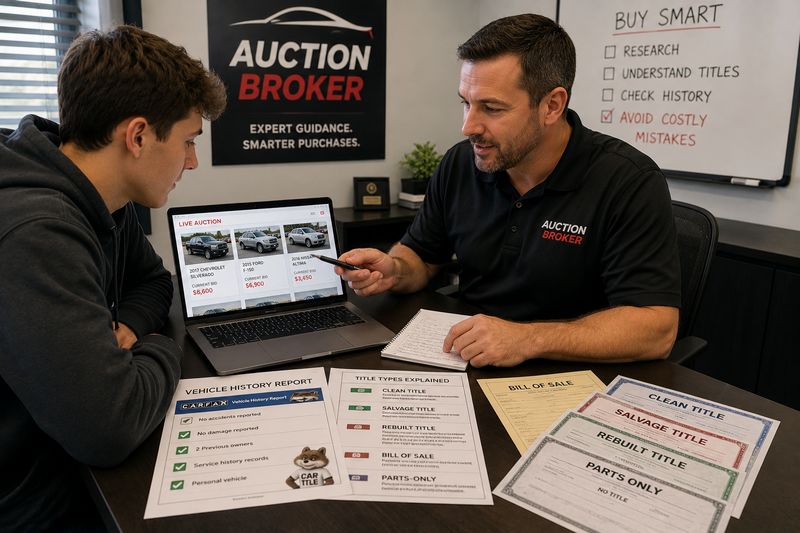
How Auction Brokers Like BidNDrive Simplify the Buying Process
Auction brokers like BidNDrive help regular buyers access online auto auctions without needing their own dealer license.
Many attractive auction vehicles are listed on platforms that may require licensed dealer access. Instead of going through the full dealer licensing process, buyers can work with a broker that already understands auction rules, bidding steps, payment timelines, and vehicle documentation.
BidNDrive can help simplify the process by giving buyers access to auction inventory, supporting the bidding process, and helping them understand key transaction details before purchase.
For example, a buyer with a limited budget may want to buy a used car below retail price but may not know how auction fees, title documents, transportation, or condition reports work. Working with an auction broker can make the process easier to follow and less overwhelming.
Dealer bonds and dealer licensing are part of this bigger trust system. They help create accountability behind the businesses that connect buyers with auction vehicles.
For buyers, the goal is not just to win a low bid. The goal is to buy the right vehicle, understand the risks, and complete the transaction properly. Working with a licensed auction broker like BidNDrive can make that process more practical, especially for first-time buyers trying to save money.
Explore Thousands of Auction Vehicles With BidNDrive
Whether you're searching for a daily driver, salvage vehicle, motorcycle, SUV, or pickup truck, BidNDrive gives you access to major U.S. auto auctions and the support needed to buy with confidence while potentially saving thousands compared to retail prices.
- ✅ Dealer-only auction access without a dealer license
- ✅ Free registration and unlimited bidding
- ✅ Free vehicle history reports with an active deposit
- ✅ Support from auction selection to final purchase
Further Reading:
Car Auction Licenses: Do You Need One?
How to Get an Online Auction License: Step-by-Step Guide
Dealer Principal: Role, Responsibilities, and How to Succeed in the Auto Business
Floorplan Finance Explained: How Dealers Finance Inventory and Manage Cash Flow
Frequently Asked Questions
- How much does a $10,000 surety bond cost?
- How much do you pay on a $100,000 bond?
- How much does a $30,000 bond cost?
- How much does a $50,000 surety bond cost?