



Buying a car online is easier than ever, but many customers still have questions before making a decision. Car dealer live chat helps dealerships provide instant answers, build trust, and turn website visitors into buyers. In this guide, you'll learn how live chat works, why it improves lead generation and sales, and how dealerships use AI, automation, and real-time support to create a better online car-buying experience.
What Is Car Dealer Live Chat?
When people shop for a vehicle online, they often have questions before they are ready to call a dealership or submit a lead form. They may want to know if a car is still available, how much shipping will cost, whether financing is possible, or if a vehicle has a salvage title. Car dealer live chat helps answer these questions immediately, making it easier for buyers to move forward with confidence.
For dealerships, live chat is more than a customer service tool. It is a way to engage website visitors, build trust, and turn interested shoppers into qualified leads. As more car buyers research vehicles online, live chat has become one of the most effective tools for improving communication and increasing sales.
Definition of Automotive Live Chat
Automotive live chat is a real-time communication tool that allows visitors to interact directly with a dealership through its website. Instead of waiting for an email response or making a phone call, customers can open a chat window and receive answers within seconds.
The system may be staffed by dealership employees, dedicated customer support representatives, or AI-powered chatbots. In many cases, live chat combines both automation and human support to provide fast and accurate responses.
For example, a shopper looking at a used SUV may want to know if the vehicle is still available. Rather than filling out a contact form and waiting for a callback, the customer can simply open the chat window and ask the question immediately.
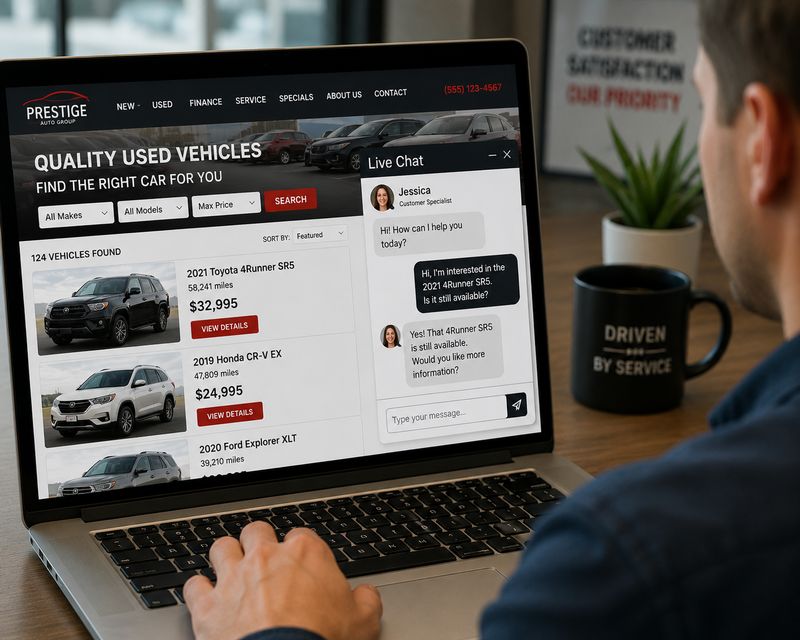
How Live Chat Works on Dealer Websites
Most dealer websites display a chat widget in the corner of the screen. When a visitor arrives on the site, the widget may automatically offer assistance through a greeting such as, "Can we help you find a vehicle today?"
Once the visitor starts a conversation, the message is routed to a live agent, an AI chatbot, or a combination of both. The system can answer common questions, collect contact information, and guide customers to relevant vehicle listings.
For example, a buyer searching for an affordable pickup truck may ask about available inventory under a specific budget. The chat system can quickly provide links to matching vehicles and help narrow down the options.
Modern live chat platforms can also share photos, vehicle reports, financing information, auction details, and shipping estimates. This allows customers to get much of the information they need without leaving the website.
Why Live Chat Has Become Essential for Modern Dealerships
Today's car buyers expect immediate answers. Most people are used to instant communication through messaging apps, social media, and online shopping platforms. Waiting hours or even days for a response can cause potential customers to leave and continue their search elsewhere.
Live chat helps dealerships meet these expectations by providing fast support exactly when customers need it. This is especially important because many buyers research vehicles outside normal business hours.
Consider a customer comparing several used cars late in the evening. If one dealership offers live chat and another only provides a contact form, the dealership with live chat has a much better chance of starting a conversation and capturing the lead.
Live chat is particularly valuable for budget-conscious buyers. These shoppers often compare multiple vehicles, shipping options, auction fees, and financing offers before making a decision. Quick answers can help them evaluate their options faster and avoid missing a good deal.
The Difference Between Live Chat and Traditional Contact Forms
Traditional contact forms require customers to enter their information and wait for a response. Depending on dealership workload, that response may take several hours or even longer.
Live chat removes this delay by creating an immediate conversation. Instead of submitting a question and leaving the website, visitors can receive answers in real time.
Another key difference is engagement. Contact forms are passive. Customers submit their information and hope someone responds. Live chat is interactive and allows both sides to exchange information instantly.
Why Car Dealerships Use Live Chat
The way people shop for vehicles has changed dramatically. Most buyers now spend hours researching cars online before contacting a dealership. They compare prices, review vehicle histories, calculate shipping costs, and look for the best deals from the comfort of their homes. Because of this shift, dealerships need a fast and convenient way to communicate with potential customers.
Live chat helps dealerships connect with visitors at the exact moment they have questions. Instead of losing interested shoppers who leave the website without contacting anyone, dealerships can start conversations, provide assistance, and guide buyers toward a purchase. For many dealers, live chat has become one of the most effective tools for generating leads and increasing sales.
Responding to Customers Faster
Speed matters in the automotive industry. When a customer asks a question about a vehicle, they often expect an answer immediately. If they do not receive one, they may move on to another dealership within minutes.
Live chat allows dealerships to respond in real time. Whether a customer wants to know if a vehicle is available, requests additional photos, or asks about financing options, answers can be provided almost instantly.
Imagine a buyer searching for a reliable used sedan under $10,000. They visit several dealership websites at the same time. The first dealership to answer their questions is often the one that gains their trust and keeps their attention.
Fast responses also reduce frustration. Customers do not have to wait for callbacks or check their email repeatedly. Instead, they receive the information they need while actively shopping.
Increasing Lead Conversion Rates
Many website visitors leave without filling out a contact form or making a phone call. Some are still researching, while others simply do not want to commit to speaking with a salesperson yet.
Live chat creates a lower-pressure way for visitors to start a conversation. A simple question such as, "Is this vehicle still available?" can become the first step toward a sale.
By engaging customers early, dealerships can collect contact information, understand buyer needs, and guide visitors toward the next stage of the buying process. This often leads to higher conversion rates compared to relying solely on traditional lead forms.
For example, a customer interested in a salvage vehicle may initially have concerns about title status or repair costs. Through live chat, those concerns can be addressed immediately, increasing the likelihood that the customer continues exploring the vehicle rather than leaving the site.
Improving Customer Experience
Buying a vehicle can be stressful, especially for first-time buyers. Customers often have many questions and may feel overwhelmed by the amount of information available online.
Live chat improves the customer experience by making support easily accessible. Instead of searching through multiple pages for answers, buyers can simply ask questions and receive personalized assistance.
A positive experience can make a significant difference in how customers view a dealership. Even if they are not ready to purchase immediately, helpful and professional communication can encourage them to return later.
Customers appreciate convenience. Being able to get quick answers without making a phone call makes the shopping process easier and more comfortable for many people.
Helping Buyers Shop From Home
Modern car buyers want flexibility. Many prefer to research vehicles, compare options, and gather information without visiting a dealership right away.
Live chat supports this behavior by allowing customers to complete much of the shopping process remotely. They can ask about vehicle availability, financing programs, shipping options, trade-ins, and vehicle condition without leaving their homes.
This is especially valuable for buyers who live far from the dealership or purchase vehicles through online auto auctions.
For example, a customer in another state may be interested in a vehicle listed online but wants to understand transportation costs before making a decision. Live chat allows them to get answers quickly without scheduling a phone call or visiting the dealership.
The ability to shop remotely has become increasingly important as online vehicle purchasing continues to grow.
Reducing Missed Sales Opportunities
Every unanswered question represents a potential lost sale. If visitors cannot quickly find the information they need, many will simply leave the website and continue their search elsewhere.
Live chat helps dealerships capture opportunities that might otherwise be missed. Proactive chat invitations can engage visitors before they leave, while automated greetings encourage interaction even when customers are unsure about contacting the dealership.
For example, a visitor may spend several minutes reviewing a vehicle listing but hesitate because they are uncertain about financing requirements. A chat message offering assistance can start a conversation that ultimately leads to a completed purchase.
Many dealerships discover that a significant percentage of their chat conversations come from customers who would never have submitted a traditional lead form.
Supporting Budget-Conscious Car Buyers
Budget-conscious buyers often spend more time researching than other customers. They compare prices carefully, calculate total ownership costs, review vehicle histories, and look for the best value available.
These shoppers frequently have questions about auction fees, financing payments, shipping expenses, title status, and vehicle condition. Live chat provides a convenient way to get those answers quickly.
For example, someone considering a used vehicle from an online auto auction may want to know the final cost after transportation and auction fees are included. Through live chat, a representative can explain the expenses involved and help the customer understand whether the vehicle fits their budget.
Live chat also helps buyers avoid surprises. By providing transparent information early in the process, dealerships can build trust and help customers make informed decisions.
Get Answers About Any Auction Vehicle in Minutes
Looking at a vehicle but still have questions? BidNDrive helps buyers understand auction listings, vehicle history reports, title types, transportation costs, and registration requirements before placing a bid.
- ✅ Free vehicle history reports
- ✅ Help understanding salvage and clean titles
- ✅ Shipping and auction fee estimates
- ✅ Support before you place a bid
How Car Dealer Live Chat Works
Many buyers see a live chat window on a dealership website but may not realize what happens behind the scenes. Modern live chat systems are designed to engage visitors, answer questions quickly, and guide potential customers through the buying process. Whether someone is looking for a used sedan, a salvage vehicle, or an affordable SUV, live chat helps connect them with the right information at the right time.
For dealerships, live chat is more than a simple messaging tool. It combines automation, customer support, sales processes, and lead generation into one system that works around the clock.
Starting a Conversation With Website Visitors
The first step is encouraging visitors to begin a conversation. Most dealership websites display a chat widget in a visible location, usually in the corner of the screen. Customers can click the widget whenever they have a question.
Some visitors start the conversation themselves, while others respond to an invitation from the chat system. Questions often begin with simple requests such as:
- Is this vehicle still available?
- What is the mileage?
- Can you ship this vehicle?
- Does the car have a clean title?
- What are the financing options?
These simple questions often become the beginning of a longer conversation that helps move the customer closer to a purchase.
For example, a buyer looking for a budget-friendly pickup truck may ask about availability. During the conversation, they may also learn about financing, transportation costs, and similar vehicles that fit their budget.
Routing Chats to Sales or Support Teams
Not every question should go to the same person. Modern live chat systems automatically route conversations to the appropriate department based on the customer's needs.
Sales teams typically handle questions about inventory, pricing, financing, vehicle features, and purchase options. Support teams may assist with account issues, registration questions, shipping updates, or technical problems.
For example, if a customer asks about auction registration requirements, the conversation may be directed to a support specialist. If another customer wants to discuss monthly payments on a specific vehicle, the chat can be transferred directly to a sales representative.
This routing process helps customers receive accurate answers faster while reducing unnecessary delays.
Using Automated Greetings and Triggers
Many dealership websites use automated messages to engage visitors before they leave the site. These messages are often triggered by specific actions or behaviors.
For example, a chat invitation may appear when:
- A visitor spends several minutes on a vehicle detail page.
- Someone views multiple vehicles in a short period.
- A customer starts the financing application process.
- A visitor appears ready to leave the website.
An automated message might say:
"Hi! Do you have any questions about this vehicle?"
Or:
"Looking for a vehicle under a specific budget? We're here to help."
These greetings encourage interaction without requiring customers to take the first step. Even a simple automated message can significantly increase engagement and lead generation.
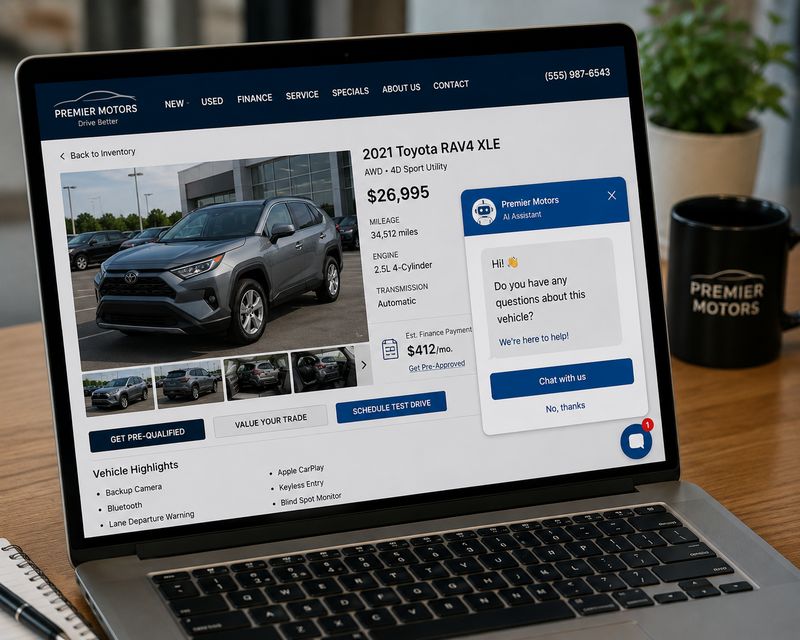
Many systems also use AI-powered chatbots to answer basic questions immediately before transferring more complex conversations to a human agent when needed.
Managing Multiple Customer Conversations
One major advantage of live chat is the ability to handle multiple conversations at the same time. Unlike phone calls, which usually require one employee per customer, chat agents can assist several visitors simultaneously.
This allows dealerships to serve more customers without dramatically increasing staffing costs.
For example, one representative may be helping:
- A customer asking about vehicle availability.
- A buyer requesting shipping information.
- A visitor comparing financing options.
- An international customer asking about export procedures.
Because many questions are straightforward, agents can efficiently manage several conversations while still providing personalized assistance.
Automation also helps reduce workload by answering common questions and collecting basic customer information before a live representative joins the conversation.
Sending Vehicle Links, Photos, and Financing Information
Modern live chat platforms do much more than exchange text messages. Agents can instantly share valuable information that helps buyers make informed decisions.
Depending on the platform, representatives can send:
- Vehicle listing links.
- Additional photos.
- Walkaround videos.
- Vehicle history reports.
- Financing details.
- Auction information.
- Shipping estimates.
- Registration instructions.
For example, a buyer considering a salvage vehicle may ask about damage history. The chat agent can immediately provide additional photos, auction details, and a vehicle history report to help the customer better understand the vehicle's condition.
This quick sharing of information keeps buyers engaged and reduces the need for multiple emails or phone calls.
Following Up After the Chat Ends
The conversation should not end when the chat window closes. Successful dealerships use follow-up communication to continue building relationships and move customers closer to making a purchase.
Most live chat systems collect customer contact information during the conversation. This allows dealerships to send follow-up emails, text messages, or phone calls when appropriate.
For example, after discussing a specific vehicle, a dealership may send:
- Additional photos.
- Updated pricing information.
- Financing offers.
- Similar vehicle recommendations.
- Shipping estimates.
- Auction bidding instructions.
Follow-up is especially important because many customers are not ready to buy immediately. They may spend days or even weeks comparing options before making a decision.
A timely follow-up message helps keep the dealership top of mind and increases the likelihood that the customer returns when they are ready to move forward.
Main Benefits of Live Chat for Car Dealerships
Car dealerships invest in live chat because it delivers measurable results. It helps attract more leads, improve customer communication, and increase sales opportunities. As more people research and purchase vehicles online, live chat has become one of the most effective tools for connecting with potential buyers.
Whether a dealership sells new vehicles, used cars, salvage vehicles, or auction inventory, live chat helps remove barriers that often prevent customers from taking the next step. By providing immediate assistance, dealerships can engage visitors while they are actively shopping and making decisions.
Generating More Qualified Leads
One of the biggest advantages of live chat is its ability to generate qualified leads. Instead of waiting for visitors to complete a contact form, dealerships can start conversations while customers are still browsing.
During the chat, representatives can learn important details such as:
- The type of vehicle the customer wants.
- Their budget range.
- Financing needs.
- Trade-in plans.
- Purchase timeline.
- Shipping requirements.
This information helps identify serious buyers and allows dealerships to focus their efforts on the most promising opportunities.
For example, a customer asking detailed questions about auction fees, transportation costs, and vehicle history reports is likely much closer to making a purchase than someone casually browsing inventory. Live chat helps uncover that intent quickly.
Increasing Vehicle Sales
Live chat helps convert interest into action. Many customers leave websites because they cannot find answers to important questions. When those questions are answered immediately, buyers are more likely to continue the purchasing process.
A quick conversation can help overcome common concerns that often delay buying decisions. Customers may need clarification about financing options, title status, shipping costs, or vehicle condition before they feel comfortable moving forward.
For example, a buyer interested in a salvage vehicle may hesitate because they do not fully understand the damage history. A knowledgeable chat representative can explain the vehicle details, provide additional photos, and help the customer make an informed decision.
By removing uncertainty, live chat increases the likelihood of completing a sale.
Improving Response Times Compared to Email
Email remains an important communication tool, but it is often much slower than live chat. Customers who send emails may wait hours or even days for a response, depending on dealership workload.
Live chat provides answers almost instantly. Visitors can ask questions and receive responses while they are actively viewing vehicles. This speed keeps customers engaged and prevents them from leaving the website to search elsewhere.
Consider a buyer comparing multiple dealerships. If one dealership responds immediately through live chat while another takes several hours to answer an email, the faster dealership gains a significant advantage.
Quick responses also create a more positive customer experience and demonstrate that the dealership values the customer's time.
Building Customer Trust Before the First Visit
Trust plays a major role in every vehicle purchase. Many buyers are cautious when shopping online, especially when considering used or salvage vehicles.
Live chat helps build trust by creating direct communication between the dealership and the customer. Instead of relying solely on website information, buyers can ask questions and receive personalized answers from real people.
Transparency is especially important for budget-conscious shoppers who want to avoid unexpected costs or hidden problems.
For example, a customer may ask about previous damage, title status, transportation costs, or vehicle history reports. Providing clear and honest answers through live chat helps establish credibility and confidence.
In many cases, trust is built long before a customer visits the dealership or places a bid on a vehicle.
Helping Customers Compare Vehicles Faster
Vehicle shoppers rarely consider only one option. Most compare several vehicles before making a final decision. They may evaluate pricing, mileage, condition, features, repair costs, and ownership expenses.
Live chat makes this process easier by helping customers find and compare relevant inventory quickly.
A representative can suggest similar vehicles, explain differences between models, and provide links to alternative listings that better match the buyer's needs.
For example, a customer searching for an affordable SUV may initially focus on one vehicle but later discover several alternatives with lower mileage or better equipment. Live chat helps present these options without requiring the customer to conduct extensive searches on their own.
This faster decision-making process benefits both buyers and dealerships.
Supporting Mobile and Online Car Shopping
A growing number of vehicle shoppers use smartphones and tablets to browse inventory. Many customers conduct their entire research process online before speaking with a dealership.
Live chat fits naturally into this behavior. Mobile-friendly chat systems allow customers to ask questions from anywhere without making a phone call.
Whether someone is commuting, sitting at home, or comparing vehicles during a lunch break, live chat provides immediate access to dealership assistance.
This convenience is particularly important for younger buyers and busy professionals who prefer messaging over traditional communication methods.
As online vehicle shopping continues to expand, live chat helps dealerships remain accessible across all devices and customer preferences.
Capturing Leads Outside Business Hours
Not every customer shops during regular business hours. In fact, many people research vehicles in the evenings, on weekends, or during holidays when dealerships may have limited staffing.
Without live chat, these visitors often leave the website without making contact.
Modern chat systems solve this problem through automation, AI chatbots, and lead capture tools. Even when human agents are unavailable, the system can answer basic questions, collect customer information, and schedule follow-up communication.
For example, a customer browsing used vehicles at midnight may ask about financing options or vehicle availability. The chatbot can provide initial information and collect contact details for a salesperson to follow up the next morning.
This allows dealerships to capture valuable leads around the clock rather than losing potential buyers simply because they visited the website after hours.
What Customers Expect From Car Dealer Live Chat
Live chat has become a standard feature on dealership websites, and customer expectations continue to grow. Modern buyers want quick, accurate, and convenient communication throughout the vehicle shopping process. They expect dealerships to provide answers immediately, help them compare options, and make buying decisions easier.
Whether someone is shopping for a new vehicle, a used car, or an auction vehicle, the quality of the live chat experience can influence whether they stay on the website or continue their search elsewhere. Understanding what customers expect helps dealerships provide better service and generate more successful sales conversations.
Fast Responses and Real-Time Answers
The number one expectation for live chat is speed. Customers use live chat because they want immediate answers. If they were willing to wait several hours for a response, they would simply send an email.
Most buyers expect a response within seconds or at least within a few minutes. Delays can cause frustration and increase the chances of losing a potential customer.
For example, a buyer researching affordable SUVs may be comparing several dealership websites at the same time. If one dealership answers questions immediately while another takes ten or fifteen minutes to respond, the customer is far more likely to continue the conversation with the faster dealership.
Quick responses show professionalism and help keep buyers engaged while they are actively considering a purchase.
Accurate Vehicle Availability Information
Few things frustrate car shoppers more than finding a vehicle online only to discover that it has already been sold.
Customers expect live chat agents to provide accurate and up-to-date inventory information. When they ask if a vehicle is available, they want a reliable answer.
For example, a customer may spend hours researching a specific truck or SUV before contacting the dealership. If they discover the vehicle is no longer available after investing that time, trust can quickly disappear.
Modern live chat systems often connect directly with inventory management software, allowing agents to verify availability in real time. This helps eliminate confusion and provides a better customer experience.
If a vehicle is no longer available, customers also appreciate recommendations for similar alternatives that fit their needs and budget.
Financing and Payment Information
Financing is one of the most common topics discussed through dealer live chat. Many buyers want to understand their payment options before committing to a vehicle.
Customers often ask questions such as:
- Can I finance this vehicle?
- What credit score is required?
- How much will my monthly payment be?
- What down payment is needed?
- Are there financing options for first-time buyers?
Budget-conscious shoppers are especially focused on total costs and monthly affordability. They want clear information that helps them determine whether a vehicle fits their financial situation.
For example, a buyer interested in a used sedan may want to compare monthly payments on several different vehicles. Live chat allows them to receive estimates quickly without filling out lengthy applications or waiting for callbacks.
Transparent financing discussions help customers feel more confident and reduce uncertainty during the buying process.
Trade-In and Delivery Assistance
Many customers want help beyond simply choosing a vehicle. They also need guidance regarding trade-ins, transportation, and delivery services.
Trade-in questions often include:
- How much is my current vehicle worth?
- Can I trade in a financed vehicle?
- What documents are required?
Delivery questions may include:
- Can you ship the vehicle to my location?
- How long will transportation take?
- What are the shipping costs?
This is particularly important for online buyers who may never visit the dealership in person.
For example, someone purchasing a vehicle from another state may need a shipping estimate before making a final decision. Live chat allows the dealership to provide transportation information immediately, helping the customer calculate the total purchase cost.
Friendly and Non-Pushy Communication
Modern buyers want assistance, not pressure. They appreciate helpful conversations that focus on answering questions rather than aggressively pushing for a sale.
Customers expect live chat representatives to be professional, respectful, and knowledgeable. They want guidance that helps them make informed decisions rather than sales tactics that make them feel uncomfortable.
For example, a customer researching salvage vehicles may simply want information about repair costs and title status. A good chat representative will answer those questions honestly without immediately trying to close a sale.
This type of communication builds trust and encourages customers to continue engaging with the dealership.
Many buyers remember how they were treated during their first interaction. A friendly and helpful conversation often creates a positive impression that lasts throughout the entire buying process.
Easy Access From Mobile Devices
Today, a large percentage of vehicle shoppers browse inventory from smartphones and tablets. Many customers conduct research while commuting, traveling, or relaxing at home.
Because of this, buyers expect live chat to work smoothly on mobile devices.
The chat window should be easy to open, simple to use, and responsive on smaller screens. Customers should not have to zoom in, navigate complicated menus, or struggle with slow-loading interfaces.
For example, a shopper browsing affordable vehicles during a lunch break may only have a few minutes to ask questions. If the chat system works well on their phone, they can quickly get the information they need and continue their search.
Features to Look for in Car Dealer Live Chat Software
Not all live chat platforms offer the same capabilities. While basic chat functionality allows dealerships to communicate with website visitors, modern automotive businesses often need much more than simple messaging. The best live chat software helps generate leads, improve customer service, automate routine tasks, and integrate with other dealership tools.
When choosing a live chat solution, dealerships should focus on features that improve both the customer experience and internal efficiency. The right software can help sales teams respond faster, manage more conversations, and convert more website visitors into buyers.
Customizable Chat Widget Design
The chat widget is often the first thing visitors notice when interacting with a dealership's live chat system. A customizable design allows dealerships to create a chat experience that matches their brand identity and website appearance.
Customization options may include:
- Colors and branding elements.
- Company logos.
- Welcome messages.
- Widget placement.
- Chat button styles.
- Personalized greetings.
A well-designed chat widget feels like a natural part of the website rather than a third-party add-on.
For example, a dealership specializing in used and salvage vehicles may customize its welcome message to invite visitors to ask questions about vehicle history reports, auction fees, or shipping options.
A professional appearance helps build trust and encourages more visitors to start conversations.
Automation and AI Chatbots
Automation has become one of the most valuable features in modern live chat software. AI-powered chatbots can answer common questions instantly, even when human agents are unavailable.
Common chatbot tasks include:
- Checking vehicle availability.
- Providing dealership hours.
- Explaining financing options.
- Sharing inventory links.
- Collecting customer information.
- Scheduling appointments.
For example, a visitor browsing vehicles late at night may ask whether financing is available. The chatbot can provide basic information immediately and collect contact details for follow-up the next day.
Automation helps dealerships provide support 24/7 while reducing the workload on sales teams.
CRM and Dealer Management System Integrations
One of the most important features of live chat software is integration with dealership management tools. Without integration, valuable customer information may be lost or require manual entry.
CRM integration allows chat conversations to be automatically connected to customer records. This helps sales representatives track interactions, follow up effectively, and maintain complete communication histories.
Dealer Management System (DMS) integrations can provide access to:
- Inventory information.
- Customer records.
- Financing data.
- Vehicle availability.
- Sales activity.
For example, if a customer previously inquired about a specific vehicle, the sales team can review past conversations before contacting them again.
These integrations help dealerships create a smoother buying experience while improving efficiency.
Chat Transcripts and Conversation History
Every customer interaction contains valuable information. Chat transcript features allow dealerships to save and review conversations after they end.
Conversation histories help sales teams:
- Understand customer needs.
- Prepare for follow-up conversations.
- Monitor service quality.
- Train new employees.
- Resolve customer disputes.
For example, if a customer returns several days later with additional questions, the representative can review previous conversations and continue the discussion without forcing the customer to repeat information.
This creates a more personalized experience and helps build stronger customer relationships.
Proactive Messaging and Popups
Many website visitors leave without contacting the dealership, even when they have questions. Proactive messaging helps engage these visitors before they leave.
Modern live chat platforms can automatically trigger messages based on user behavior.
Common triggers include:
- Time spent on a page.
- Multiple vehicle page views.
- Exit intent behavior.
- Financing page visits.
- Return website visits.
For example, if a visitor spends several minutes viewing a vehicle listing, a popup might appear saying:
"Do you have questions about this vehicle? We're here to help."
These proactive invitations often increase engagement and generate leads that might otherwise be lost.
Mobile Accessibility for Sales Teams
Customers expect quick responses regardless of where dealership employees are located. Mobile accessibility allows sales representatives to manage chats directly from smartphones and tablets.
This flexibility is particularly useful for:
- Sales staff working on the lot.
- Managers attending events.
- Employees working remotely.
- Small dealerships with limited staff.
For example, a salesperson helping customers in the showroom can still respond to website inquiries through a mobile app without returning to a desktop computer.
Mobile access helps dealerships maintain fast response times and improve customer satisfaction.
Multi-Language Support
Many dealerships serve customers from different countries and language backgrounds. Multi-language support helps remove communication barriers and expand market reach.
Some live chat platforms offer:
- Automatic translation.
- Multilingual chatbots.
- Language-specific routing.
- Support for multiple languages within one system.
This feature is especially valuable for dealerships involved in vehicle exports and international auto auctions.
For example, an international buyer may have questions about shipping procedures, title documents, or auction registration. Multi-language support helps ensure those questions are answered accurately and efficiently.
Providing service in a customer's preferred language often improves trust and increases conversion rates.
File and Image Sharing
Vehicle buyers frequently need more information than can be communicated through text alone. File-sharing features allow representatives to provide supporting documents and visual materials instantly.
Common shared content includes:
- Vehicle photos.
- Walkaround videos.
- Vehicle history reports.
- Financing documents.
- Shipping estimates.
- Inspection reports.
- Auction documentation.
For example, a customer interested in a salvage vehicle may request additional photos showing specific damage areas. A chat agent can immediately send those images without requiring a separate email exchange.
This speeds up the decision-making process and keeps customers engaged.
Lead Capture Forms
Generating leads is one of the primary goals of live chat. Lead capture forms help dealerships collect important customer information during conversations.
Typical lead forms gather:
- Name.
- Email address.
- Phone number.
- Vehicle interests.
- Budget range.
- Preferred contact method.
Some systems automatically request contact information before ending a chat session.
For example, after answering several questions about a used vehicle, the system may ask whether the customer would like pricing updates or financing information sent directly to them.
This ensures that dealerships can continue communication even after the visitor leaves the website.
Analytics and Reporting Tools
Without measurement, it is difficult to understand whether live chat is delivering results. Analytics and reporting tools provide valuable insights into performance and customer behavior.
Common metrics include:
- Chat volume.
- Response times.
- Lead conversion rates.
- Customer satisfaction scores.
- Agent performance.
- Sales generated from chat leads.
For example, a dealership may discover that visitors who engage through live chat are twice as likely to become customers compared to visitors who only browse inventory.
Analytics help identify strengths, uncover weaknesses, and improve overall performance.
AI Chatbots vs. Human Live Chat Agents
As live chat technology continues to evolve, dealerships now have more options than ever for handling customer conversations. Many businesses use AI-powered chatbots, while others rely primarily on human agents. In reality, the most effective approach often combines both.
AI can provide instant responses and handle routine tasks around the clock, while human representatives offer expertise, empathy, and personalized support when customers need more detailed assistance. Understanding the strengths and limitations of each option helps dealerships create a better customer experience and improve lead conversion rates.
Benefits of AI-Powered Chatbots
AI chatbots offer several advantages for dealerships, especially when handling large numbers of website visitors. Unlike human agents, chatbots are available 24 hours a day, seven days a week, without requiring breaks or shifts.
One of the biggest benefits is speed. AI can respond instantly to customer questions, reducing wait times and keeping visitors engaged.
Common tasks AI chatbots can handle include:
- Checking vehicle availability.
- Providing dealership hours.
- Explaining financing basics.
- Sharing vehicle links.
- Collecting customer information.
- Scheduling appointments.
- Answering frequently asked questions.
For example, a customer browsing inventory at midnight may want to know whether a vehicle is still available. Instead of waiting until the next business day, the chatbot can provide immediate assistance.
AI also helps dealerships manage high volumes of inquiries without significantly increasing staffing costs.
When Human Agents Are Still Necessary
While AI has become increasingly sophisticated, there are many situations where human interaction remains essential.
Vehicle purchases are often emotional and financially significant decisions. Customers frequently want reassurance, detailed explanations, and personalized recommendations that AI cannot always provide effectively.
Human agents are particularly important when discussing:
- Complex financing situations.
- Vehicle damage assessments.
- Trade-in evaluations.
- Auction bidding strategies.
- International shipping requirements.
- Customer concerns and objections.
For example, a buyer considering a salvage vehicle may have questions about repair costs, title requirements, and resale value. These conversations often require experience, judgment, and personalized explanations that are difficult for automated systems to replicate.
Human representatives can also adapt to unique situations, understand customer emotions, and build trust more naturally than AI alone.
Combining Automation With Real Sales Support
Many successful dealerships use a hybrid approach that combines AI automation with human sales assistance. This strategy allows businesses to take advantage of the strengths of both technologies.
In a typical workflow, AI handles the initial interaction by greeting visitors, answering basic questions, and collecting information. Once the conversation becomes more complex, the chat is transferred to a human representative.
For example:
- A visitor asks whether a vehicle is available.
- The chatbot confirms availability and gathers contact information.
- The customer asks detailed questions about financing and vehicle condition.
- The conversation is transferred to a sales specialist.
This approach provides fast service while ensuring customers receive expert assistance when needed.
It also allows sales teams to focus their time on high-value conversations rather than repeatedly answering simple questions.
How AI Handles Basic Customer Questions
Modern AI chatbots are designed to handle many of the routine questions that dealerships receive every day.
Examples include:
- Is the vehicle still available?
- What is the mileage?
- Do you offer financing?
- Can you ship the vehicle?
- What are your business hours?
- How do online auto auctions work?
- What documents are required for registration?
AI systems can quickly search databases, retrieve inventory information, and provide consistent answers.
For example, a buyer searching for a used SUV under a certain budget can ask the chatbot for available options. The system can instantly provide relevant vehicle listings without requiring assistance from a salesperson.
This ability to answer routine questions immediately helps improve customer satisfaction while reducing response times.
Common Mistakes With Fully Automated Chats
Although AI offers many benefits, relying entirely on automation can create problems. One of the most common mistakes dealerships make is removing human support from the process altogether.
Customers often become frustrated when:
- The chatbot cannot understand their question.
- Responses feel repetitive or generic.
- Complex issues remain unresolved.
- There is no option to speak with a real person.
- The chatbot repeatedly redirects users without providing answers.
For example, a customer asking detailed questions about salvage title regulations or international vehicle shipping may become frustrated if the chatbot continues providing unrelated responses.
Another common mistake is overusing automation to push sales messages rather than provide assistance. Customers generally appreciate helpful recommendations but dislike aggressive automated sales tactics.
The most successful dealerships use AI as a support tool rather than a complete replacement for human interaction. When customers can easily transition from a chatbot to a knowledgeable representative, the overall experience becomes far more effective.
How Live Chat Helps Auto Auction Buyers
Auto auctions give buyers access to thousands of vehicles at prices that are often lower than traditional dealership prices. However, the auction process can be confusing, especially for people who have never purchased a vehicle this way before. Buyers frequently have questions about bidding, vehicle condition, title status, shipping, fees, and registration requirements.
Live chat helps bridge this knowledge gap by providing instant access to support throughout the buying process. Instead of searching through multiple pages for answers or waiting for email responses, auction buyers can get immediate assistance whenever questions arise. This makes the entire experience simpler, faster, and less intimidating.
Assisting First-Time Auction Buyers
Many people are interested in auto auctions because they want to save money, but first-time buyers often feel overwhelmed by the process.
Common questions include:
- How does online bidding work?
- Can anyone buy from this auction?
- What happens if I win?
- How do I pay for the vehicle?
- What fees should I expect?
Live chat provides immediate guidance that helps new buyers understand the process step by step.
For example, a customer browsing affordable used vehicles may find a car that fits their budget but hesitate because they have never participated in an auction before. Through live chat, a representative can explain registration requirements, bidding procedures, payment timelines, and transportation options.
This personalized support helps first-time buyers feel more confident and increases the likelihood that they complete their purchase.
Answering Questions About Salvage and Used Vehicles
Salvage and used vehicles are among the most popular categories at online auto auctions. These vehicles often offer significant savings compared to retail market prices, but buyers usually have questions about condition and title status.
Live chat helps explain important details such as:
- Salvage titles.
- Rebuilt titles.
- Primary damage.
- Secondary damage.
- Auction condition reports.
- Vehicle run-and-drive status.
- Repair estimates.
For example, a customer may find a salvage SUV listed thousands of dollars below market value. Before bidding, they want to understand the extent of the damage and determine whether repairs are financially worthwhile.
A live chat representative can explain the auction listing, clarify terminology, and help buyers evaluate whether a particular vehicle matches their goals and budget.
This guidance is especially valuable for customers who are unfamiliar with salvage vehicles and auction grading systems.
Explaining Auction Fees and Shipping Costs
One of the biggest concerns for auction buyers is understanding the true cost of a vehicle. The winning bid is only one part of the total purchase price.
Customers often ask about:
- Auction fees.
- Broker fees.
- Documentation fees.
- Domestic transportation costs.
- Port handling charges.
- International shipping costs.
Live chat helps buyers calculate these expenses before placing bids.
For example, a buyer may see a vehicle selling for $4,500 and assume that is the final cost. During a live chat conversation, they can learn about additional fees and transportation expenses, allowing them to estimate the total amount they will actually spend.
This transparency helps buyers avoid surprises and make more informed purchasing decisions.
For budget-conscious shoppers, understanding total costs before bidding is often one of the most important parts of the buying process.
Helping Buyers Understand Vehicle History Reports
Vehicle history reports contain valuable information, but many buyers do not fully understand how to interpret the data.
Live chat can help explain information such as:
- Previous accidents.
- Title history.
- Ownership records.
- Mileage records.
- Insurance claims.
- Service history.
- Total loss declarations.
For example, a buyer may notice an accident record on a vehicle history report and wonder whether it represents a serious problem. A knowledgeable representative can explain what the report shows and provide additional context.
Similarly, customers may have questions about odometer readings, ownership history, or title changes. Live chat allows them to receive clarification immediately rather than making assumptions that could affect their purchasing decision.
By helping buyers understand vehicle history reports, dealerships and auction platforms can build trust and improve transparency.
Supporting International Buyers
Many online auto auction platforms serve customers around the world. International buyers often face additional challenges because they must navigate export procedures, shipping logistics, customs requirements, and documentation processes.
Live chat helps simplify these complex transactions by providing direct access to knowledgeable support representatives.
International buyers commonly ask questions about:
- Export documents.
- Shipping schedules.
- Container transportation.
- Port locations.
- Customs procedures.
- Payment methods.
- Delivery timelines.
For example, a buyer located overseas may want to know how long it will take for a vehicle to arrive after purchase. A live chat representative can explain shipping options and provide estimated transit times based on the destination country.
This type of support helps international customers feel more comfortable purchasing vehicles remotely.
Guiding Customers Through Registration and Deposits
Before participating in many online auto auctions, buyers must complete registration requirements and provide a deposit. These steps are straightforward for experienced buyers but can be confusing for newcomers.
Common questions include:
- How do I register?
- Why is a deposit required?
- Is the deposit refundable?
- How much is the deposit?
- What payment methods are accepted?
- When can I start bidding?
Live chat helps answer these questions quickly and accurately.
For example, a customer may be ready to bid on a vehicle but become uncertain when asked to submit a deposit. A live chat representative can explain why the deposit is required, how it works, and under what circumstances it may be refunded.
Providing immediate clarification helps prevent abandoned registrations and encourages buyers to complete the process.
By guiding customers through registration and deposit requirements, live chat removes obstacles that could otherwise discourage participation in online auto auctions.
Know the Total Cost Before You Bid
Smart buyers look beyond the winning bid. BidNDrive helps you estimate auction fees, transportation expenses, and other costs so you can make informed decisions and avoid unexpected surprises.
- ✅ Transparent auction pricing
- ✅ Vehicle shipping assistance
- ✅ Free auction history reports
- ✅ Access to 300,000+ auction vehicles
Best Practices for Car Dealer Live Chat
Having live chat on a dealership website is only the first step. To generate leads, improve customer satisfaction, and increase sales, dealerships must use live chat effectively. Poorly managed chats can frustrate visitors and drive them away, while well-executed conversations can build trust and move buyers closer to making a purchase.
Successful live chat strategies focus on speed, personalization, accuracy, and helpful communication. The goal is not simply to answer questions but to create a positive experience that encourages customers to continue their buying journey.
Responding Within Seconds
Speed is one of the most important factors in live chat success. Most customers expect quick responses, and many will leave the website if they have to wait too long.
A fast response immediately reassures visitors that someone is available to help. Even a simple greeting can keep customers engaged while a representative reviews their question.
For example, if a buyer asks whether a vehicle is still available, responding within seconds creates a positive first impression. Delayed responses can make the dealership appear unorganized or uninterested.
Fast communication is especially important for budget-conscious shoppers who may be comparing multiple websites at the same time. The dealership that responds first often has the best chance of keeping the customer's attention.
Automation and AI can help reduce response times, but human follow-up should still be available when needed.
Avoiding Generic Copy-and-Paste Replies
Customers want answers that address their specific questions. Generic responses often feel impersonal and can make visitors believe they are speaking with a bot rather than a knowledgeable representative.
For example, if a customer asks about shipping costs for a vehicle, a reply such as "Please contact our sales department for more information" is unlikely to be helpful.
A stronger response would acknowledge the question and provide useful information immediately.
Customers appreciate when representatives take time to understand their situation and provide relevant answers. Personalized responses show that the dealership values the conversation and is genuinely trying to help.
Templates can be useful for common questions, but they should always be customized to fit the customer's specific needs.
Asking the Right Qualification Questions
A successful live chat conversation is not just about answering questions. It is also an opportunity to learn more about the customer's goals and identify potential buying opportunities.
Good qualification questions help representatives understand:
- What type of vehicle the customer wants.
- Their budget.
- Whether they need financing.
- Their purchase timeline.
- Their location.
- Whether they have a trade-in.
For example, if a customer asks about a used SUV, the representative might also ask what features are important and whether they are considering other vehicles.
These questions help guide the conversation and allow the dealership to provide more relevant recommendations.
The key is to ask questions naturally without making the interaction feel like an interrogation.
Using Customer Names Naturally
Personalization helps build rapport and creates a more human experience. One simple but effective technique is using the customer's name naturally during the conversation.
When used appropriately, a customer's name makes the interaction feel more personal and attentive.
For example:
"Thanks for reaching out, Michael. Let me check the availability of that vehicle for you."
This approach feels more welcoming than a generic response.
However, names should be used naturally and not excessively. Repeating a customer's name in every message can feel forced and uncomfortable.
The goal is to create a friendly conversation rather than a scripted sales interaction.
Keeping Conversations Short and Helpful
Most customers use live chat because they want quick answers. Long explanations and unnecessary information can make conversations less effective.
Representatives should focus on providing clear, direct responses that address the customer's immediate concerns.
For example, if a buyer asks whether a vehicle can be shipped to another state, they likely want a straightforward answer first. Additional details can be provided if they request them.
Short and focused responses help customers find information quickly and keep the conversation moving efficiently.
This does not mean being abrupt. Representatives should remain friendly and helpful while avoiding information overload.
The best live chat interactions balance efficiency with customer service.
Knowing When to Transfer to a Human Agent
Automation and AI can handle many routine questions, but some situations require human expertise.
A common mistake is forcing customers to remain in automated conversations when they need personalized assistance.
Live chat systems should allow smooth transfers to human representatives when discussions involve:
- Complex financing situations.
- Vehicle condition concerns.
- Salvage title questions.
- Trade-in evaluations.
- International shipping requirements.
- Customer complaints.
For example, a customer considering a salvage vehicle may have detailed questions about repair costs and title regulations. A human specialist is usually better equipped to provide accurate guidance than an automated system.
Recognizing when to involve a real person helps improve customer satisfaction and increases trust.
Following Up After the Initial Conversation
A live chat conversation does not always result in an immediate sale. Many buyers spend days or even weeks researching vehicles before making a decision.
This is why follow-up is an essential part of an effective live chat strategy.
After the conversation ends, dealerships can continue engagement by sending:
- Additional vehicle information.
- Vehicle history reports.
- Financing details.
- Shipping estimates.
- Similar vehicle recommendations.
- Auction registration instructions.
For example, a customer may ask about a vehicle but decide they need more time to think. A follow-up email containing additional photos and pricing information can help keep the dealership top of mind.
The most successful dealerships view live chat as the beginning of a relationship rather than a one-time interaction.
Common Questions Customers Ask in Dealer Live Chat
One of the main reasons customers use live chat is to get quick answers before making a buying decision. Many visitors arrive at a dealership website with specific concerns about pricing, financing, vehicle condition, shipping, or availability. Instead of searching through multiple pages or waiting for an email response, they can ask these questions directly and receive immediate assistance.
Understanding the most common live chat questions helps dealerships prepare better responses, improve customer satisfaction, and increase conversion rates. While every buyer is different, certain questions appear repeatedly across dealership websites, especially among budget-conscious shoppers and online auction buyers.
Is the Vehicle Still Available?
This is often the most common question dealerships receive through live chat.
Vehicle inventory changes constantly, especially for popular used cars, affordable vehicles, and auction listings. Customers want confirmation that a vehicle is still available before investing more time researching it.
For example, a buyer may find a used SUV that fits their budget and immediately open the chat window to ask if the vehicle has been sold.
Quick and accurate inventory updates are essential. If a vehicle is no longer available, representatives should offer similar alternatives whenever possible.
Providing immediate availability information helps keep customers engaged and prevents them from leaving the website to search elsewhere.
Can I Finance This Car?
Financing questions are extremely common because most buyers do not pay the full purchase price upfront.
Customers often want to know:
- Whether financing is available.
- What lenders are accepted.
- If financing is possible with limited credit history.
- Whether specific vehicles qualify for financing.
Budget-conscious buyers are particularly interested in financing because monthly affordability often influences their purchasing decisions more than the total vehicle price.
For example, a customer considering a used sedan may ask about financing options before deciding whether the vehicle fits their budget.
Providing clear financing information helps customers understand their options and move closer to making a purchase decision.
How Much Is the Down Payment?
Many buyers focus on the down payment before they consider monthly payments or financing terms.
This question frequently appears because customers want to know how much money they need available immediately.
The answer may vary depending on:
- Credit history.
- Lender requirements.
- Vehicle price.
- Financing program.
- Promotional offers.
For example, a first-time buyer may have limited savings and need to understand the minimum amount required to begin the financing process.
Live chat allows representatives to explain down payment expectations and help customers identify options that fit their financial situation.
Providing transparent information early in the process helps reduce uncertainty and builds trust.
Can You Ship the Vehicle?
As online vehicle shopping becomes more common, shipping questions continue to increase.
Customers frequently ask:
- Do you ship nationwide?
- Can you ship internationally?
- How much does shipping cost?
- How long will delivery take?
This question is especially important for online auction buyers and customers purchasing vehicles from outside their local area.
For example, a buyer may find a vehicle located several states away and want to calculate transportation costs before placing a bid or submitting an offer.
Live chat provides an easy way to discuss shipping options, delivery timelines, and transportation estimates without requiring a separate phone call.
Do You Accept Trade-Ins?
Many customers want to use their current vehicle to reduce the cost of their next purchase.
Trade-in questions often include:
- Do you accept trade-ins?
- How much is my vehicle worth?
- Can I trade in a financed vehicle?
- What information do you need for an estimate?
For example, a customer shopping for a used truck may want to know whether their current sedan can be used toward the purchase.
While exact trade-in values often require additional evaluation, live chat representatives can explain the process and collect information needed for preliminary estimates.
Helping customers understand trade-in options can make purchasing a new vehicle more affordable and convenient.
What Is the Vehicle’s Condition?
Vehicle condition is one of the most important factors influencing a buyer's decision.
Customers want detailed information about:
- Mechanical condition.
- Cosmetic condition.
- Accident history.
- Previous damage.
- Repair status.
- Mileage.
- Inspection results.
This is particularly common when buyers are considering used or salvage vehicles.
For example, a customer may notice damage listed on an auction report and want clarification before bidding. Live chat allows representatives to explain available information and provide additional details when possible.
Honest communication about vehicle condition helps build trust and reduces the likelihood of misunderstandings later in the process.
Can I See More Photos or Videos?
Many buyers want a closer look before making a decision. Standard listing photos do not always answer every question, especially for used and auction vehicles.
Customers often request:
- Additional exterior photos.
- Interior photos.
- Close-up images of damage.
- Walkaround videos.
- Engine compartment photos.
- Startup videos.
For example, a buyer interested in a salvage vehicle may want detailed photos of specific damage areas before calculating repair costs.
Live chat makes it easy for representatives to share additional visual content immediately, helping customers better evaluate the vehicle.
Providing extra photos and videos can significantly increase buyer confidence and improve conversion rates.
How Do Online Auto Auctions Work?
Many website visitors are interested in auction vehicles but have little or no experience with online bidding.
Common questions include:
- How do I register?
- Do I need a dealer license?
- How does bidding work?
- What happens if I win?
- What fees are involved?
- How do I pay for the vehicle?
First-time auction buyers often use live chat to understand the entire process before deciding whether to participate.
For example, someone searching for an affordable vehicle may discover that auction prices are significantly lower than retail prices. Before registering, they want to understand the steps involved and any additional costs.
Live chat provides immediate guidance that helps simplify the auction process and gives buyers confidence to move forward.
How Live Chat Improves Lead Generation
Generating qualified leads is one of the primary goals of any dealership website. While attracting visitors is important, turning those visitors into potential customers is what drives sales. Live chat has become one of the most effective lead generation tools because it allows dealerships to engage buyers while they are actively researching vehicles and making purchasing decisions.
Unlike traditional contact forms that depend on visitors taking action themselves, live chat creates opportunities for real-time interaction. By answering questions, collecting information, and guiding customers through the buying process, live chat helps dealerships convert more website traffic into valuable sales opportunities.
Capturing Visitors Before They Leave the Website
Most website visitors leave without contacting a dealership. They may be comparing multiple vehicles, researching prices, or simply gathering information. If they leave without engaging, the dealership often loses the opportunity to continue the conversation.
Live chat helps prevent this by creating an immediate point of contact.
For example, a visitor may spend several minutes reviewing a used SUV but still have questions about financing or shipping. Before leaving the website, they can quickly open the chat window and get answers.
This interaction allows the dealership to engage the customer before they disappear and potentially move to a competitor's website.
Even a simple conversation can transform an anonymous visitor into an identifiable lead.
Using Proactive Chat Invitations
Many customers do not initiate conversations on their own, even when they need assistance. Proactive chat invitations help solve this problem by encouraging visitors to engage before they leave.
Modern live chat systems can trigger invitations based on visitor behavior.
Common examples include:
- Spending a certain amount of time on a vehicle page.
- Viewing multiple inventory listings.
- Visiting financing pages.
- Returning to the website multiple times.
- Showing signs of exit intent.
For example, after a visitor spends several minutes reviewing a vehicle, a message might appear saying:
"Do you have questions about this vehicle? We're happy to help."
These invitations create opportunities to start conversations with visitors who otherwise may never contact the dealership.
Many dealerships generate a significant percentage of their leads through proactive engagement rather than waiting for customers to take the first step.
Collecting Customer Contact Information
A successful lead generation strategy requires more than answering questions. Dealerships also need a way to continue communication after the conversation ends.
Live chat systems help collect valuable contact information such as:
- Name.
- Email address.
- Phone number.
- Preferred contact method.
- Vehicle interests.
This information can be gathered naturally during the conversation without creating a disruptive experience.
For example, after helping a customer compare several vehicles, a representative may ask if they would like additional information sent by email. This provides a natural opportunity to collect contact details while offering value to the customer.
The ability to capture contact information allows dealerships to nurture leads and continue the sales process beyond the initial chat session.
Qualifying Leads Automatically
Not every website visitor is ready to purchase a vehicle. Some are simply browsing, while others are actively planning to buy.
Live chat software can help identify serious buyers by automatically collecting qualification information.
Typical qualification questions include:
- What type of vehicle are you looking for?
- What is your budget?
- Do you need financing?
- When are you planning to purchase?
- Are you interested in shipping services?
For example, a customer searching for a used truck under $15,000 and planning to purchase within the next two weeks is likely a stronger lead than someone casually browsing inventory.
AI chatbots and automated workflows can gather this information before a human representative joins the conversation. This helps sales teams prioritize their efforts and focus on the most promising opportunities.
Scheduling Calls and Test Drives
Live chat can help move customers from the research stage to direct engagement with the dealership.
Many live chat platforms allow visitors to:
- Schedule phone calls.
- Request consultations.
- Book test drives.
- Arrange vehicle inspections.
- Schedule financing discussions.
For example, a customer may spend several days researching vehicles online and then use live chat to schedule a test drive for a specific model.
This transition from online interaction to direct engagement represents an important step in the sales process.
Making scheduling easy helps reduce friction and increases the likelihood that interested buyers take action.
Connecting Chat Leads to CRM Systems
Lead generation becomes much more effective when chat data is automatically connected to customer relationship management systems.
CRM integration allows dealerships to:
- Store lead information automatically.
- Track customer interactions.
- Monitor sales progress.
- Schedule follow-up activities.
- Create personalized communication.
For example, if a customer chats about a specific SUV, requests financing information, and later schedules a call, all of that information can be stored within a single customer profile.
This gives sales teams complete visibility into the customer's interests and previous interactions.
CRM integration also helps ensure that no leads are lost. Every conversation can be tracked, organized, and followed up appropriately.
For dealerships handling large volumes of inquiries, this automation significantly improves efficiency while increasing the chances of converting leads into actual vehicle buyers.
How Dealerships Use AI and Automation in Live Chat
Artificial intelligence and automation have transformed the way dealerships communicate with online shoppers. Instead of relying solely on human agents, many dealerships now use AI-powered live chat systems to answer questions, qualify leads, recommend vehicles, and provide support around the clock.
The goal is not to replace human sales teams entirely but to make communication faster, more efficient, and more convenient for customers. By automating routine tasks, dealerships can respond instantly to inquiries while allowing sales representatives to focus on more complex conversations and serious buyers.
Automated Vehicle Recommendations
One of the most useful applications of AI in dealer live chat is providing personalized vehicle recommendations.
When customers visit a dealership website, they may not know exactly which vehicle best fits their needs. AI can help narrow down the options by asking a few simple questions about:
- Budget.
- Vehicle type.
- Preferred make or model.
- Seating requirements.
- Fuel preferences.
- Intended use.
For example, a customer looking for an affordable family vehicle may tell the chatbot they need three rows of seating and a budget under $15,000. The AI system can instantly recommend several matching vehicles from the dealership's inventory.
This saves customers time and helps them discover options they might otherwise overlook.
For dealerships with large inventories, automated recommendations create a more personalized shopping experience while increasing the chances of generating qualified leads.
AI Responses for Common Questions
Many customer questions are repetitive and can be answered automatically without requiring a human representative.
AI chatbots commonly handle questions such as:
- Is the vehicle still available?
- What are your business hours?
- Do you offer financing?
- Can you ship vehicles?
- How do I register for an auction?
- What payment methods do you accept?
Instead of waiting for a salesperson to become available, customers receive answers immediately.
For example, a buyer browsing inventory late at night may ask whether a vehicle is still available. The chatbot can provide an instant response based on current inventory data.
Fast answers improve the customer experience while reducing the workload on dealership staff.
Instant Financing Pre-Qualification
Financing is one of the most important topics for vehicle buyers, especially those shopping on a budget.
Modern AI systems can help customers begin the financing process directly through live chat. Rather than requiring a lengthy phone call, the chatbot can collect basic information and determine preliminary financing eligibility.
The process may include questions about:
- Income range.
- Employment status.
- Credit history.
- Down payment expectations.
- Desired monthly payment.
For example, a customer interested in a used vehicle may want to know whether financing is possible before investing more time in the shopping process. AI can gather information and provide preliminary guidance within minutes.
This faster process helps buyers understand their options and encourages them to continue moving through the sales funnel.
Automated Inventory Updates
Vehicle inventory changes constantly, especially at dealerships that sell used vehicles or auction inventory. Manually updating availability information can be difficult and time-consuming.
AI-powered live chat systems can connect directly with inventory databases to provide real-time updates.
This allows customers to ask questions such as:
- Is this vehicle still available?
- Has the vehicle been sold?
- Are there similar vehicles in stock?
- When will new inventory arrive?
For example, if a vehicle sells earlier in the day, the chatbot can immediately reflect that change and suggest alternative vehicles that meet similar requirements.
Accurate inventory information reduces customer frustration and helps maintain trust throughout the buying process.
Smart Lead Routing
Not every customer inquiry should be handled by the same person. AI helps dealerships improve efficiency by automatically routing leads to the most appropriate department or specialist.
Lead routing decisions may be based on:
- Vehicle interest.
- Financing needs.
- Customer location.
- Purchase timeline.
- Language preference.
- Type of inquiry.
For example, a customer asking detailed financing questions can be directed to a finance specialist, while someone interested in shipping a vehicle overseas can be routed to an export coordinator.
This ensures customers receive assistance from the person best equipped to help them.
Smart routing also reduces transfer times and improves the overall customer experience.
Multilingual AI Chat Support
Many dealerships serve customers from different countries and language backgrounds. Providing support in multiple languages can significantly expand a dealership's reach.
AI-powered translation and multilingual chat systems allow dealerships to communicate with customers who may not speak English fluently.
Depending on the platform, AI can:
- Detect the visitor's language.
- Translate incoming messages.
- Generate responses in multiple languages.
- Route conversations to language-specific representatives.
For example, an international buyer interested in exporting a vehicle may prefer communicating in Spanish, Polish, Arabic, or another language. AI can help facilitate that conversation without requiring the dealership to employ specialists for every language.
This capability is especially valuable for dealerships involved in international vehicle sales and online auto auctions.
By removing language barriers, multilingual AI support improves customer satisfaction and creates new opportunities to reach buyers around the world.
Live Chat for Used Car and Salvage Vehicle Dealers
Live chat is valuable for any dealership, but it can be especially important for businesses that specialize in used cars and salvage vehicles. Buyers in these markets typically have more questions than shoppers purchasing new vehicles. They want to understand title types, damage history, repair requirements, vehicle condition, and overall value before making a decision.
Because many used and salvage vehicle buyers are focused on saving money, they often spend significant time researching options and comparing vehicles. Live chat helps dealerships answer questions immediately, build trust, and guide customers through the buying process with greater confidence.
Helping Buyers Understand Salvage Titles
One of the most common topics discussed in live chat is salvage titles. Many buyers are unfamiliar with salvage vehicles and may not fully understand what a salvage title means.
Customers frequently ask:
- What is a salvage title?
- Can the vehicle be repaired and registered?
- What is the difference between salvage and rebuilt titles?
- Will insurance be available?
- Does a salvage title affect resale value?
Live chat allows representatives to explain these concepts clearly and in simple language.
For example, a customer may find a late-model SUV selling for thousands of dollars below market value because it carries a salvage title. Before placing a bid or making an offer, they want to understand the risks and potential benefits.
Providing accurate information through live chat helps buyers make informed decisions and reduces uncertainty surrounding salvage vehicles.
Explaining Vehicle Damage and Auction Grades
Vehicle damage descriptions and auction grading systems can be confusing, especially for first-time buyers.
Customers often encounter terms such as:
- Front-end damage.
- Rear-end damage.
- Side damage.
- Mechanical damage.
- Hail damage.
- Flood damage.
- Run and drive.
- Non-runner.
- Auction condition grades.
Without proper explanation, these terms may lead to misunderstandings or incorrect assumptions about vehicle condition.
For example, a buyer may see "front-end damage" listed on an auction vehicle and immediately assume the repairs will be extremely expensive. A live chat representative can explain the available information, discuss visible damage, and provide additional photos if available.
Helping customers understand auction terminology and vehicle condition reports creates a more transparent buying experience and reduces hesitation.
Supporting Budget Buyers Looking for Deals
Many people shop for used and salvage vehicles because they want to maximize value and save money. These buyers are often focused on finding the best possible deal within a specific budget.
Live chat helps these customers by providing quick access to information that supports smart purchasing decisions.
Common questions include:
- What is the estimated total cost?
- Are there similar vehicles available?
- How much will repairs cost?
- What are the transportation expenses?
- Are there lower-priced alternatives?
For example, a buyer with a budget of $7,000 may be comparing several auction vehicles. Through live chat, a representative can suggest additional options, explain total costs, and help identify vehicles that provide the best value.
This guidance helps customers avoid costly mistakes while improving their chances of finding a vehicle that fits both their needs and budget.
Building Trust With Transparent Communication
Trust is one of the most important factors in used and salvage vehicle sales. Buyers understand that these vehicles often come with unique histories, and they want honest answers before making a commitment.
Live chat creates an opportunity for dealerships to demonstrate transparency from the very beginning.
Customers appreciate clear communication about:
- Vehicle condition.
- Known damage.
- Title status.
- Repair history.
- Auction disclosures.
- Transportation costs.
- Additional fees.
For example, if a vehicle has visible damage that may require significant repairs, openly discussing those issues helps establish credibility.
Trying to avoid difficult questions or providing vague answers can quickly damage trust. In contrast, honest communication often makes buyers more comfortable moving forward.
Many budget-conscious customers are willing to accept certain risks if they believe they are receiving accurate information and fair pricing.
Sharing Free Vehicle History Reports
Vehicle history reports are among the most valuable tools available to used and salvage vehicle buyers. These reports provide important information that helps customers evaluate potential purchases more effectively.
Common details found in vehicle history reports include:
- Accident records.
- Ownership history.
- Mileage records.
- Title history.
- Insurance claims.
- Service records.
- Total loss declarations.
Live chat allows representatives to quickly provide access to available reports and explain the information they contain.
For example, a buyer may notice an accident record and want to know whether it represents a serious concern. A representative can help interpret the report and answer follow-up questions.
Offering free vehicle history reports through live chat demonstrates transparency and helps customers perform their due diligence before buying.
This level of openness is particularly important for salvage and auction vehicles, where buyers often rely heavily on available documentation when evaluating potential risks.
Live Chat Integration With Dealer Tools
A live chat system becomes much more powerful when it is connected to the other tools dealerships use every day. Modern dealerships rely on multiple platforms to manage inventory, track leads, process financing applications, monitor marketing performance, and communicate with customers. When live chat integrates with these systems, information flows automatically and customer interactions become more efficient.
Instead of operating as a standalone communication tool, live chat can become a central part of the dealership's sales and customer service process. These integrations help reduce manual work, improve response times, and create a better experience for both customers and dealership staff.
CRM Integration
Customer Relationship Management (CRM) systems are among the most important tools used by dealerships. CRM integration allows live chat conversations to be automatically stored within customer profiles.
This means every interaction can be tracked, including:
- Customer contact information.
- Vehicle interests.
- Previous conversations.
- Financing inquiries.
- Follow-up activities.
- Purchase history.
For example, if a customer asks about a used truck today and returns next week, the sales team can review previous conversations before responding.
This creates a more personalized experience because customers do not have to repeat information every time they make contact.
CRM integration also helps sales teams prioritize leads, schedule follow-ups, and track the progress of each customer through the buying process.
Inventory Management Integration
Vehicle availability changes constantly, especially for used car dealers and online auction platforms. Inventory integration allows live chat software to access real-time inventory data directly from the dealership's management system.
This helps answer common questions such as:
- Is the vehicle still available?
- Has the vehicle been sold?
- Are similar vehicles available?
- What is the current price?
For example, if a customer asks about a specific SUV, the chat system can instantly verify whether the vehicle remains in stock.
If the vehicle is no longer available, the system may automatically suggest comparable alternatives that fit the customer's budget and preferences.
Accurate inventory information reduces customer frustration and helps prevent lost sales opportunities caused by outdated listings.
Financing Platform Integration
Financing plays a major role in vehicle purchases, making financing integrations extremely valuable for dealerships.
When live chat connects with financing platforms, customers can receive information more quickly and begin the financing process directly through the chat interface.
Possible functions include:
- Financing pre-qualification.
- Monthly payment estimates.
- Credit application links.
- Loan program information.
- Down payment calculations.
For example, a customer interested in a used vehicle may ask whether financing is available. Rather than waiting for a callback from a finance manager, the chat system can immediately provide basic financing options and direct the customer to the next step.
This streamlined process helps reduce friction and improves lead conversion rates.
Facebook Messenger and WhatsApp Integration
Many customers prefer messaging platforms they already use daily rather than communicating exclusively through a dealership website.
Integrating live chat with messaging applications such as Facebook Messenger and WhatsApp allows dealerships to continue conversations across multiple channels.
Benefits include:
- Faster communication.
- Greater customer convenience.
- Improved response rates.
- Easier follow-up conversations.
- Ongoing customer engagement.
For example, a customer may begin a conversation on the dealership website but prefer receiving updates through WhatsApp afterward.
This flexibility allows customers to communicate using their preferred platform while helping dealerships maintain contact throughout the buying journey.
For international buyers, WhatsApp integration can be especially valuable because it is widely used worldwide.
Mobile App Integration
Modern dealership staff are not always sitting at a desk. Sales representatives may be assisting customers on the lot, attending events, or working remotely.
Mobile app integration allows employees to manage live chat conversations directly from their smartphones or tablets.
This provides several advantages:
- Faster response times.
- Greater flexibility.
- Improved lead management.
- Better customer service.
- Real-time notifications.
For example, a salesperson can respond to a website inquiry while showing vehicles to another customer on the lot.
Without mobile access, valuable leads might wait several minutes or longer for a response. Mobile integration helps ensure that inquiries receive prompt attention regardless of where staff members are located.
Google Analytics and Conversion Tracking
Measuring performance is essential for understanding whether live chat is contributing to business growth.
Integration with analytics platforms allows dealerships to track important metrics related to customer engagement and lead generation.
Common data points include:
- Number of chat conversations.
- Lead conversion rates.
- Chat-assisted sales.
- Customer engagement levels.
- Website behavior before chats.
- Marketing campaign performance.
For example, a dealership may discover that visitors who engage with live chat are significantly more likely to submit financing applications or schedule appointments.
Google Analytics integration can also help identify which traffic sources generate the highest-quality chat leads. This information allows dealerships to optimize advertising campaigns and improve marketing strategies.
By tracking the customer journey from website visit to completed sale, dealerships gain valuable insights that support smarter business decisions.
Common Challenges With Car Dealer Live Chat
Live chat can be a powerful tool for generating leads and improving customer service, but it is not without challenges. Simply adding a chat widget to a website does not guarantee positive results. Poor execution can frustrate visitors, damage trust, and cause dealerships to lose potential buyers.
To maximize the benefits of live chat, dealerships must understand the most common problems and develop strategies to address them. By identifying these challenges early, businesses can create a smoother customer experience and improve overall performance.
Slow Response Times
One of the biggest reasons live chat fails is slow response times. Customers choose live chat because they expect immediate assistance. When responses take several minutes or longer, the experience becomes no different from waiting for an email.
Many visitors leave the website if they feel their questions are being ignored.
For example, a customer comparing several dealerships may ask whether a vehicle is still available. If one dealership responds within seconds while another takes ten minutes, the faster dealership will likely keep the customer's attention.
Slow responses can occur for several reasons:
- Insufficient staffing.
- High chat volumes.
- Poor chat routing.
- Technical issues.
- Lack of automation.
Dealerships that prioritize fast response times generally see higher customer satisfaction and better lead conversion rates.
Poorly Trained Chat Agents
Even fast responses can create problems if representatives lack proper training. Customers expect accurate information and knowledgeable assistance when they use live chat.
Poorly trained agents may:
- Provide incorrect information.
- Fail to answer questions clearly.
- Give inconsistent responses.
- Miss sales opportunities.
- Create confusion about pricing or vehicle details.
For example, a customer may ask about a salvage title and receive a vague or inaccurate explanation. This can quickly reduce trust and discourage the buyer from continuing the conversation.
Effective chat agents should understand:
- Vehicle inventory.
- Financing options.
- Auction procedures.
- Shipping processes.
- Vehicle history reports.
- Common customer concerns.
Ongoing training helps ensure that representatives provide helpful and reliable support.
Inaccurate Inventory Information
Vehicle availability changes constantly, especially for used car dealerships and online auction platforms. When live chat systems display outdated inventory information, customer frustration often follows.
Imagine a buyer spending hours researching a specific vehicle only to discover through chat that it was sold several days ago.
Situations like this can damage credibility and reduce confidence in the dealership.
Inventory-related problems often occur when:
- Systems are not updated regularly.
- Inventory databases are not integrated.
- Staff rely on outdated information.
- Auction listings change rapidly.
The best solution is integrating live chat directly with inventory management systems so availability data updates automatically in real time.
Accurate inventory information improves customer trust and helps avoid unnecessary disappointment.
Overusing Automation
Automation and AI can improve efficiency, but excessive reliance on automated systems can create a poor customer experience.
Many customers become frustrated when:
- Chatbots repeatedly misunderstand questions.
- Conversations feel robotic.
- Complex issues cannot be resolved.
- There is no easy access to a human representative.
For example, a buyer asking detailed questions about vehicle damage may become annoyed if the chatbot continues providing generic answers unrelated to the actual inquiry.
Automation works best when it handles simple tasks such as:
- Answering common questions.
- Collecting lead information.
- Checking vehicle availability.
- Scheduling appointments.
More complex conversations should be transferred to human representatives when necessary.
The most successful dealerships use automation to support customer service rather than replace it entirely.
Losing Leads Due to Weak Follow-Up
Many dealerships focus heavily on the initial chat conversation but fail to follow up effectively afterward.
This can be a costly mistake because most buyers do not make immediate purchasing decisions. They often spend days or weeks comparing vehicles before choosing one.
Without follow-up, interested customers may:
- Forget about the dealership.
- Purchase from a competitor.
- Lose interest altogether.
For example, a customer may request financing information and additional vehicle photos during a chat session. If no one follows up afterward, that lead may disappear despite showing strong buying intent.
Effective follow-up strategies may include:
- Personalized emails.
- Phone calls.
- Text messages.
- Vehicle recommendations.
- Financing updates.
- Auction reminders.
Consistent communication helps keep the dealership top of mind and increases the likelihood of converting leads into buyers.
Managing High Chat Volumes
As dealerships grow, managing large numbers of conversations can become challenging. During busy periods, chat requests may exceed the team's ability to respond quickly.
This can lead to:
- Longer wait times.
- Missed conversations.
- Lower customer satisfaction.
- Agent burnout.
- Reduced lead quality.
For example, a dealership running a major promotion may experience a sudden increase in website traffic and chat requests. Without proper systems in place, response quality may decline.
Managing high chat volumes often requires a combination of:
- AI chatbots.
- Automated routing.
- Additional staffing.
- CRM integration.
- Prioritization tools.
Automation can help handle routine inquiries while human agents focus on more complex conversations and high-value leads.
When managed properly, even large volumes of customer inquiries can be handled efficiently without sacrificing service quality.
Metrics Dealerships Should Track
Implementing live chat is only the beginning. To understand whether the system is actually helping generate leads, improve customer service, and increase sales, dealerships need to monitor performance regularly. Tracking the right metrics allows managers to identify strengths, uncover weaknesses, and make informed decisions about staffing, training, automation, and marketing strategies.
Without measurement, it is difficult to know whether live chat is delivering a positive return on investment. The most successful dealerships use data to continuously improve their customer communication process and maximize the value of every website visitor.
Chat Response Time
Response time is one of the most important live chat metrics. It measures how quickly a customer receives the first reply after sending a message.
Customers choose live chat because they expect immediate assistance. Long wait times often lead to frustration and increase the likelihood that visitors leave the website before receiving help.
For example, if a customer asks whether a vehicle is available and waits several minutes for a response, they may simply move on to another dealership.
Monitoring response time helps dealerships identify potential issues such as:
- Insufficient staffing.
- Poor chat routing.
- Technical problems.
- High chat volumes.
Many dealerships aim to respond within seconds rather than minutes. Faster response times generally lead to higher engagement and better customer satisfaction.
Lead Conversion Rate
Lead conversion rate measures how many chat conversations turn into actual leads.
Not every visitor who starts a chat is ready to buy a vehicle. However, a successful live chat system should consistently convert a portion of those conversations into identifiable prospects.
Examples of conversions may include:
- Collecting contact information.
- Scheduling appointments.
- Submitting financing applications.
- Registering for auctions.
- Requesting vehicle information.
For example, if 100 visitors start a chat and 25 provide their contact information, the lead conversion rate would be 25%.
Tracking this metric helps dealerships evaluate how effectively their chat system generates opportunities for the sales team.
A low conversion rate may indicate that representatives are not asking the right questions or that visitors are not receiving enough value during conversations.
Average Conversation Duration
Average conversation duration measures how long chat sessions typically last.
This metric provides insights into customer engagement and operational efficiency.
Very short conversations may indicate that:
- Customers are not receiving enough information.
- Representatives are ending chats too quickly.
- Visitors are abandoning conversations.
On the other hand, extremely long conversations may suggest:
- Inefficient communication.
- Complex processes.
- Poor agent training.
- Difficulty finding information.
For example, a simple question about vehicle availability should not require a lengthy discussion. However, conversations about financing or salvage vehicles may naturally take longer.
The goal is not necessarily to make chats shorter but to ensure that customers receive the information they need efficiently.
Monitoring conversation duration helps dealerships find the right balance between speed and quality.
Number of Qualified Leads Generated
Generating large numbers of leads is not enough if those leads are unlikely to become customers. This is why many dealerships focus on qualified leads rather than total leads.
A qualified lead is a customer who demonstrates genuine buying intent and meets specific criteria established by the dealership.
Examples may include:
- Active vehicle interest.
- Defined budget.
- Financing readiness.
- Planned purchase timeline.
- Registration completion.
- Auction deposit submission.
For example, a customer planning to purchase a vehicle within the next month and actively comparing inventory is usually more valuable than someone casually browsing without immediate plans.
Tracking qualified leads helps dealerships evaluate the true effectiveness of their live chat program and focus resources on opportunities with the highest sales potential.
Customer Satisfaction Scores
Customer satisfaction scores help dealerships understand how visitors feel about their live chat experience.
Many chat platforms automatically request feedback at the end of conversations using simple surveys such as:
- Was this chat helpful?
- How would you rate your experience?
- Did we answer your questions?
These responses provide direct insight into customer perceptions.
For example, consistently low satisfaction scores may indicate problems such as:
- Slow responses.
- Poor communication.
- Inaccurate information.
- Overuse of automation.
High satisfaction scores often correlate with stronger customer trust and higher conversion rates.
Monitoring customer feedback allows dealerships to identify service issues before they begin affecting sales performance.
Sales Generated From Chat Leads
Ultimately, the most important metric is how many vehicle sales originate from live chat conversations.
This measurement connects chat activity directly to business results and helps determine the true return on investment of the system.
For example, dealerships may track:
- Vehicles sold to chat-generated leads.
- Revenue generated from chat interactions.
- Average sale value from chat customers.
- Percentage of total sales influenced by live chat.
A customer may start by asking a simple question about vehicle availability. Weeks later, after multiple follow-ups and conversations, that interaction results in a completed purchase.
Without proper tracking, the dealership may never realize that live chat played a significant role in generating the sale.
CRM integration is especially important for measuring this metric because it allows dealerships to connect conversations with completed transactions.
How Small Dealerships Can Benefit From Live Chat
Many small dealerships assume that advanced live chat systems are primarily designed for large dealer groups with substantial budgets and large sales teams. In reality, live chat can be even more valuable for smaller dealerships because it helps them maximize every website visitor and compete more effectively with larger competitors.
For businesses with limited marketing budgets and smaller staffs, live chat provides an affordable way to improve customer service, generate leads, and increase sales opportunities. By responding quickly and creating better customer experiences, small dealerships can build stronger relationships with buyers and grow their business without making major investments.
Competing With Larger Dealers
Large dealerships often have advantages such as bigger inventories, larger advertising budgets, and dedicated sales teams. However, live chat helps level the playing field.
Many buyers care more about receiving helpful answers and personal attention than dealing with the biggest dealership in the market.
For example, a customer comparing several websites may contact both a large dealer and a small independent dealership. If the smaller dealership responds faster, answers questions thoroughly, and provides a more personal experience, it may earn the customer's trust despite having fewer vehicles available.
Live chat allows smaller businesses to compete on customer service rather than inventory size alone.
By being accessible and responsive, small dealerships can create positive first impressions that help them stand out in a crowded market.
Providing Better Customer Service on a Budget
Hiring large customer service teams can be expensive. Live chat allows small dealerships to provide excellent support without significantly increasing operating costs.
One representative can often manage multiple chat conversations simultaneously, making live chat far more efficient than relying exclusively on phone calls.
Additionally, AI-powered chatbots can answer common questions such as:
- Vehicle availability.
- Financing basics.
- Business hours.
- Shipping options.
- Registration procedures.
For example, a small dealership with only a few employees can still provide support after hours through automation while focusing staff attention on more complex customer needs.
This combination of automation and human assistance helps improve service quality while keeping costs manageable.
Capturing Leads After Hours
Many people shop for vehicles outside normal business hours. They browse inventory in the evenings, on weekends, and during holidays when dealerships may be closed.
Without live chat, these visitors often leave the website without making contact.
Modern chat systems help solve this problem by allowing dealerships to engage customers around the clock.
For example, a buyer researching affordable used vehicles at 10:00 PM may have questions about financing or vehicle condition. An AI chatbot can answer basic questions, collect contact information, and schedule a follow-up for the next business day.
This ensures that potential leads are not lost simply because the dealership is closed.
For small dealerships that cannot afford extended staffing hours, live chat provides a practical way to remain accessible at all times.
Building Trust With Online Buyers
Trust is critical in vehicle sales, particularly for smaller dealerships that may not have strong brand recognition.
Many online shoppers are cautious when purchasing a vehicle, especially if they have never worked with the dealership before. Live chat helps establish credibility by creating direct communication between the dealership and the customer.
For example, a buyer interested in a used vehicle may have concerns about:
- Vehicle history.
- Accident records.
- Financing options.
- Shipping costs.
- Title status.
Providing clear and honest answers through live chat demonstrates professionalism and transparency.
Customers often remember how they were treated during their first interaction. A helpful conversation can create trust long before a customer visits the dealership or submits a purchase inquiry.
For smaller dealerships, building this trust can be one of the most effective ways to compete against larger competitors.
Increasing Website Conversion Rates Without Large Advertising Costs
Many dealerships focus heavily on increasing website traffic through advertising. While attracting visitors is important, converting those visitors into leads is often even more valuable.
Live chat helps improve conversion rates by engaging customers before they leave the website.
For example, a dealership may already be paying for traffic through:
- Google Ads.
- Social media advertising.
- Marketplace listings.
- Search engine optimization.
If visitors leave without making contact, much of that marketing investment is wasted.
Live chat helps maximize the value of existing traffic by encouraging visitors to ask questions, request information, and provide contact details.
Even a small increase in conversion rates can have a significant impact on overall sales performance.
For instance, if a dealership receives 1,000 website visitors per month and improves lead generation by just a few percentage points, that improvement can result in dozens of additional opportunities without increasing advertising spending.
This makes live chat one of the most cost-effective tools available to small dealerships looking to grow their business.
Choosing the Best Car Dealer Live Chat Provider
Selecting the right live chat provider is an important decision for any dealership. The software will directly affect how customers interact with the business, how leads are generated, and how efficiently sales teams operate. While many live chat platforms offer similar core features, the differences in functionality, integrations, support, and scalability can have a major impact on long-term success.
The best solution is not always the most expensive one. Instead, dealerships should focus on finding software that matches their business size, customer needs, budget, and growth plans. Evaluating providers carefully before making a decision can help avoid unnecessary costs and future complications.
Questions to Ask Before Choosing Software
Before selecting a live chat provider, dealerships should clearly understand their goals and requirements.
Important questions to ask include:
- Does the software support automotive businesses?
- Can it integrate with our existing systems?
- Does it offer AI chatbot functionality?
- Can it handle multiple agents?
- Is mobile access available?
- Does it support after-hours lead capture?
- What reporting features are included?
For example, a dealership specializing in online auto auctions may need advanced automation and multilingual support, while a local used car dealer may prioritize CRM integration and lead management features.
Asking the right questions early helps narrow the list of potential providers and prevents investing in software that lacks essential capabilities.
Comparing Pricing and Features
Price is an important consideration, but it should never be the only factor.
Some providers offer low monthly fees but charge extra for important features such as:
- AI chatbots.
- CRM integrations.
- Advanced reporting.
- Additional users.
- Mobile applications.
- Automation tools.
When comparing options, dealerships should evaluate the total value provided rather than simply choosing the cheapest solution.
For example, a slightly more expensive platform that generates more leads and improves conversion rates may deliver a much higher return on investment than a lower-cost alternative with limited functionality.
It is also important to understand:
- Monthly subscription costs.
- Setup fees.
- Contract requirements.
- User limits.
- Upgrade pricing.
A thorough comparison helps dealerships avoid unexpected expenses later.
Ease of Setup and Integration
A powerful live chat platform is only valuable if it can be implemented effectively.
Some systems can be installed within minutes, while others require extensive technical work and customization.
Dealerships should consider:
- Installation complexity.
- Website compatibility.
- CRM integration options.
- Inventory management connections.
- Financing platform integrations.
- API availability.
For example, a small dealership without a dedicated IT team may prefer a platform that offers simple setup and pre-built integrations.
The easier the software is to implement, the faster the dealership can begin generating value from the system.
Complicated implementations often increase costs and delay results.
Customer Support Quality
Even the best software occasionally requires assistance. Technical issues, integration questions, and configuration challenges can arise at any time.
This is why customer support quality should be a major consideration when evaluating providers.
Important factors include:
- Support availability.
- Response times.
- Training resources.
- Onboarding assistance.
- Knowledge base quality.
- Live support options.
For example, if a dealership experiences problems with chat functionality during a busy sales period, fast support can prevent lost leads and revenue.
A provider with excellent customer service can significantly reduce frustration and help dealerships maximize the value of the platform.
Reading reviews and customer testimonials can provide useful insight into the quality of support offered by different vendors.
Scalability for Growing Dealerships
The needs of a dealership may change over time. A system that works well today should also be capable of supporting future growth.
Scalability becomes especially important when:
- Website traffic increases.
- Additional staff are hired.
- Multiple locations are added.
- Inventory expands.
- Lead volumes grow.
For example, a dealership that starts with two sales representatives may eventually need support for ten or more users.
The live chat platform should be able to grow without requiring a complete system replacement.
Features that support scalability may include:
- Unlimited user options.
- Advanced automation.
- Multi-location management.
- Enhanced reporting.
- Enterprise integrations.
Choosing a scalable solution helps protect the dealership's investment and reduces the need for disruptive platform changes later.
Security and Data Protection
Live chat systems collect valuable customer information, making security a critical consideration.
Dealerships frequently handle sensitive data such as:
- Names.
- Email addresses.
- Phone numbers.
- Financing information.
- Credit application details.
- Vehicle purchase inquiries.
Customers expect this information to be protected.
When evaluating providers, dealerships should look for security features such as:
- Data encryption.
- Secure data storage.
- User access controls.
- Authentication options.
- Compliance with privacy regulations.
- Regular security updates.
For example, a financing conversation may involve personal information that requires strong protection against unauthorized access.
A security breach can damage customer trust, create legal risks, and harm a dealership's reputation.
Choosing a provider with strong security standards helps safeguard both customer information and business operations.
Future Trends in Car Dealer Live Chat
Live chat has already become an essential tool for modern dealerships, but the technology continues to evolve rapidly. Advances in artificial intelligence, automation, customer data analysis, and communication platforms are changing how dealerships interact with buyers online.
In the coming years, live chat will become more personalized, more intelligent, and more integrated into the entire vehicle shopping experience. Dealerships that adopt these innovations early will be better positioned to improve customer satisfaction, generate more leads, and stay competitive in an increasingly digital marketplace.
AI-Powered Virtual Sales Assistants
Traditional chatbots are primarily designed to answer simple questions. The next generation of AI-powered virtual sales assistants will go much further by acting as digital sales representatives.
These systems will be able to:
- Understand customer preferences.
- Recommend vehicles.
- Explain financing options.
- Compare models.
- Schedule appointments.
- Follow up automatically.
For example, a customer searching for an affordable SUV could tell the virtual assistant about their budget, preferred features, and family size. The AI would then recommend suitable vehicles and explain why they match the customer's needs.
Unlike today's rule-based chatbots, future AI assistants will maintain more natural conversations and provide personalized guidance throughout the shopping process.
This technology will help dealerships provide high-quality support at scale while improving the customer experience.
Voice and Video Chat Integration
Text-based chat will remain important, but many customers will increasingly expect more interactive communication options.
Voice and video chat integration will allow buyers to communicate directly with dealership representatives without leaving the website.
Potential use cases include:
- Live vehicle walkarounds.
- Video demonstrations.
- Financing consultations.
- Remote inspections.
- Personalized sales presentations.
For example, a customer considering a used vehicle may request a live video tour instead of relying solely on photos. A sales representative could walk around the vehicle, show specific areas, and answer questions in real time.
This creates a more transparent and engaging experience, particularly for buyers purchasing vehicles remotely.
As online vehicle sales continue to grow, voice and video communication will likely become a standard feature of advanced live chat platforms.
Personalized Vehicle Recommendations
Personalization will play a major role in the future of automotive live chat.
Rather than displaying the same inventory to every visitor, AI systems will analyze customer behavior and preferences to provide highly targeted recommendations.
Information used for personalization may include:
- Browsing history.
- Previous conversations.
- Budget preferences.
- Vehicle interests.
- Geographic location.
- Financing needs.
For example, if a customer repeatedly searches for fuel-efficient sedans under $12,000, the system may automatically recommend similar vehicles during future visits.
This level of personalization helps buyers find suitable options more quickly while increasing the likelihood of generating qualified leads.
For budget-conscious shoppers, personalized recommendations can simplify the search process and help uncover vehicles that offer the best value.
Omnichannel Customer Communication
Future buyers will expect seamless communication across multiple platforms and devices.
Omnichannel communication allows customers to move between channels without losing conversation history or context.
Potential channels include:
- Website live chat.
- Email.
- SMS.
- Facebook Messenger.
- WhatsApp.
- Mobile applications.
- Voice and video calls.
For example, a customer may start a conversation through website chat, continue it through WhatsApp later in the day, and receive follow-up information by email.
The dealership's communication platform will maintain a complete record of all interactions regardless of where they occur.
This creates a more convenient and consistent experience while helping dealerships maintain stronger relationships with potential buyers.
As customer expectations continue to evolve, omnichannel communication will become increasingly important for maintaining engagement throughout the buying journey.
Predictive Lead Scoring and Automation
One of the most powerful future developments in live chat will be predictive lead scoring.
Using artificial intelligence and customer behavior data, live chat systems will be able to estimate which visitors are most likely to become buyers.
The system may analyze factors such as:
- Number of website visits.
- Inventory pages viewed.
- Chat activity.
- Financing inquiries.
- Time spent on vehicle listings.
- Previous interactions.
Based on this information, AI can assign lead scores and automatically prioritize high-value opportunities.
For example, a customer who has visited the website multiple times, viewed several vehicle listings, and requested financing information may receive a much higher score than a casual visitor.
The system can then:
- Route high-priority leads to experienced sales representatives.
- Trigger personalized follow-up campaigns.
- Schedule automatic reminders.
- Recommend specific inventory.
This level of automation helps dealerships focus their efforts where they are most likely to produce results.
As artificial intelligence continues to improve, predictive lead scoring will become more accurate and play a larger role in dealership sales strategies.
Conclusion
Live chat has evolved from a simple customer service feature into one of the most valuable tools available to modern car dealerships. As vehicle shopping continues to move online, customers expect quick answers, personalized assistance, and convenient communication throughout the buying process.
Whether a dealership sells new vehicles, used cars, salvage vehicles, or auction inventory, live chat helps create stronger connections with buyers while improving lead generation and sales performance. From answering basic questions to guiding customers through financing, shipping, and registration, live chat plays an important role in helping dealerships meet the expectations of today's digital shoppers.
Why Live Chat Is Essential for Modern Car Dealers
The automotive industry has become increasingly competitive, and buyers now have more choices than ever before. Most customers begin their search online and often compare multiple dealerships before making contact.
Live chat gives dealerships an opportunity to engage these visitors immediately rather than hoping they complete a contact form or make a phone call.
By providing real-time support, dealerships can:
- Answer questions faster.
- Improve customer experiences.
- Capture more leads.
- Build trust earlier.
- Increase sales opportunities.
For example, a customer researching affordable vehicles may have concerns about financing, shipping costs, or vehicle condition. If those questions are answered quickly through live chat, the dealership has a much better chance of keeping the buyer engaged.
In today's digital marketplace, immediate communication is no longer a competitive advantage—it is often an expectation.
How Live Chat Helps Convert More Buyers
Many website visitors arrive with interest but are not yet ready to make a purchase. They may still be comparing vehicles, evaluating costs, or researching financing options.
Live chat helps move these visitors closer to a buying decision by removing uncertainty and providing timely assistance.
For example, a buyer considering a salvage vehicle may hesitate because they do not fully understand the title status or repair requirements. A quick conversation with a knowledgeable representative can provide the information needed to continue the purchasing process.
Live chat also helps dealerships:
- Identify serious buyers.
- Qualify leads.
- Schedule appointments.
- Share vehicle information.
- Follow up effectively.
Every question answered creates an opportunity to build confidence and move the customer toward the next step.
As a result, dealerships often see higher conversion rates from visitors who engage through live chat compared to those who simply browse the website.
The Importance of Fast and Helpful Communication
Speed and quality of communication have a direct impact on customer decisions.
Today's buyers are accustomed to instant access to information. When they have a question, they expect a response quickly. Delays can cause potential customers to leave the website and continue their search elsewhere.
However, speed alone is not enough.
Customers also expect:
- Accurate information.
- Helpful recommendations.
- Honest answers.
- Professional communication.
- Personalized assistance.
For example, a fast response that fails to answer the customer's question is unlikely to create a positive experience. On the other hand, a knowledgeable and helpful response can build trust and encourage further engagement.
The most successful dealerships combine rapid response times with genuine customer support, creating conversations that are both efficient and valuable.
Why Online Buyers Expect Instant Support
Online shopping has changed customer expectations across every industry, including automotive sales.
People can order products, compare prices, and communicate with businesses instantly through websites, messaging apps, and social media platforms. Vehicle buyers now expect the same level of convenience when shopping for cars.
Many customers browse inventory:
- During evenings.
- On weekends.
- During work breaks.
- While traveling.
- From mobile devices.
When questions arise, they want answers immediately.
For example, a buyer comparing several vehicles may have concerns about financing, vehicle history, or shipping costs. If one dealership provides instant support while another requires a callback request, the dealership offering immediate assistance is far more likely to earn the customer's attention.
This shift in consumer behavior is one of the main reasons live chat has become so important.
As technology continues to advance, customer expectations for fast, convenient, and personalized support will only increase. Dealerships that invest in effective live chat solutions, AI-powered assistance, and strong customer communication strategies will be better positioned to attract buyers, build trust, and generate more sales in the years ahead.
Access Thousands of Cars, SUVs, Trucks, and Salvage Vehicles
Whether you're searching for a daily driver, project car, salvage vehicle, or inventory for your business, BidNDrive gives you access to major U.S. auto auctions and the tools needed to buy with confidence.
- ✅ 300,000+ vehicles available daily
- ✅ No dealer license required
- ✅ Free vehicle history reports
- ✅ Nationwide and international shipping available
Further Reading:
Automotive Ecommerce: Complete Guide to Selling Cars and Parts Online
Facebook Ads for Car Dealerships: Complete Guide to Getting More Buyers
Vehicle Merchandising: How Dealers Sell Cars Faster and Increase Profit
Dealer Management System Software: Complete Guide for Budget-Focused Dealers
Frequently Asked Questions
- Does live chat really help car dealerships sell more vehicles?
- Can AI chatbots replace human sales representatives?
- What information should customers have ready before starting a live chat?
- Is live chat useful for people buying vehicles from online auto auctions?