



Managing car inventory correctly can make the difference between a profitable dealership and vehicles sitting unsold for months. This guide explains how dealerships track inventory, improve turnover, control costs, and use auctions, pricing strategies, and technology to stay competitive. Whether you manage a small used car lot or a growing dealership, understanding inventory management can help improve cash flow and increase long-term profits.
What Is Car Inventory Management?
Car inventory management is one of the most important parts of running a successful dealership. Whether a dealer sells budget sedans, luxury SUVs, salvage cars, or work trucks, inventory directly affects cash flow, profitability, and customer satisfaction.
Good inventory management helps dealerships keep the right vehicles in stock, avoid unnecessary holding costs, and sell cars faster. Poor inventory control can quickly create financial problems, especially in the highly competitive used car market.
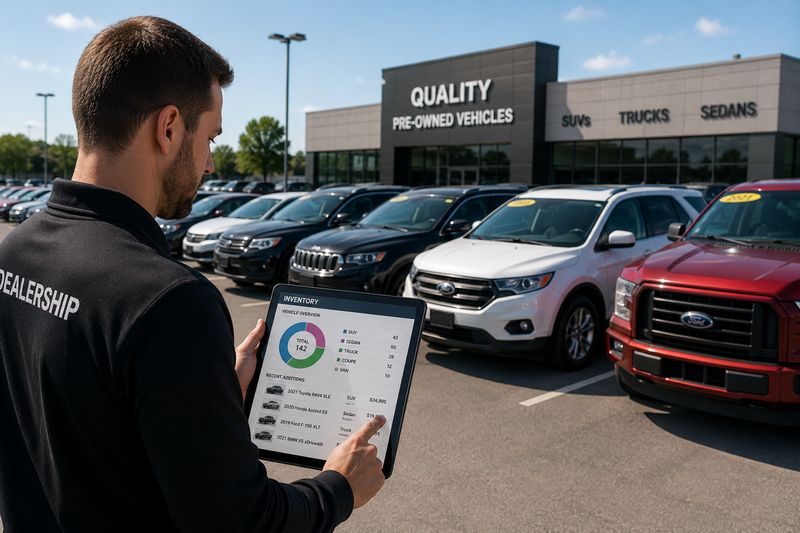
For many independent dealers and auction buyers, inventory management often becomes the difference between growing a profitable business and constantly struggling with aging vehicles and shrinking margins.
Definition of Automotive Inventory Management
Automotive inventory management is the process of tracking, purchasing, pricing, storing, marketing, and selling vehicles efficiently.
It includes managing:
- Vehicle acquisition
- Pricing strategies
- Reconditioning
- Vehicle aging
- Online listings
- Sales performance
- Transportation and storage costs
In simple terms, dealerships must constantly balance:
- Having enough vehicles to attract buyers
- Avoiding too many unsold vehicles sitting on the lot
For example, a dealer who buys too many slow-selling SUVs may tie up thousands of dollars in inventory that does not move for months. On the other hand, a dealer with too few affordable sedans may lose customers to competitors.
Inventory management helps dealerships make smarter buying and selling decisions based on market demand and profitability.
How Dealership Inventory Management Works
Dealership inventory management begins when vehicles are acquired from:
- Auto auctions
- Trade-ins
- Wholesale suppliers
- Lease returns
- Private sellers
After acquisition, dealerships usually:
- Inspect the vehicle
- Estimate repair or reconditioning costs
- Price the vehicle
- List it online
- Monitor customer interest
- Track how long the vehicle remains unsold
Modern dealerships often use inventory management software to monitor:
- Vehicle age
- Market pricing
- Profit margins
- Reconditioning timelines
- Sales performance
For example, if a used pickup truck receives many online views but no serious leads, the dealership may lower the price or improve the listing photos.
Fast-moving inventory is critical because every extra day on the lot creates additional expenses such as:
- Floorplan interest
- Insurance
- Storage costs
- Depreciation
Successful dealerships constantly analyze inventory performance and adjust quickly.
Why Inventory Control Is Critical for Used Car Dealers
Inventory control is especially important for used car dealerships because used vehicle prices change constantly.
Unlike new cars, every used vehicle is different in:
- Mileage
- Condition
- Accident history
- Trim level
- Market demand
A dealership may buy a vehicle at a good price, but poor inventory management can still destroy profitability later.
For example:
- Overpriced vehicles may sit too long
- Delayed repairs may slow sales
- Poor online listings may reduce buyer interest
- Wrong vehicle selection may create aging inventory
Used car dealers also often operate with tighter profit margins and limited cash flow compared to large franchise dealerships.
This makes inventory turnover extremely important.
A smaller independent dealer cannot afford to have large amounts of money tied up in vehicles that are not selling.
Challenges Faced by Modern Car Dealerships
Modern dealerships face many inventory challenges because the automotive market changes quickly.
Some of the biggest challenges include:
- Rapid market price fluctuations
- Online competition
- Changing consumer demand
- High transportation costs
- Floorplan financing expenses
- Reconditioning delays
- Limited affordable inventory supply
Customer expectations have also changed dramatically.
Today’s buyers compare prices online instantly and expect:
- Competitive pricing
- Detailed photos
- Vehicle history transparency
- Fast availability
For example, if one dealership prices a vehicle several thousand dollars above market value, buyers may quickly move to another listing online.
Dealerships must now react faster than ever to market conditions.
The rise of online auto auctions has also increased competition because dealers across the country can bid on the same inventory.
How Poor Inventory Management Hurts Profitability
Poor inventory management can damage dealership profitability very quickly.
Every unsold vehicle creates ongoing expenses, including:
- Depreciation
- Financing interest
- Insurance
- Lot space costs
- Advertising expenses
A vehicle sitting too long may eventually require price reductions that eliminate most of the dealership’s profit.
For example, a dealer may initially expect a strong profit on a used SUV. But if the vehicle remains unsold for 90 days, repeated price cuts and holding costs may reduce profits dramatically.
Poor inventory decisions can also create:
- Cash flow shortages
- Overstock problems
- Weak online performance
- Slower vehicle turnover
- Reduced customer satisfaction
Some dealerships lose money simply because they buy the wrong vehicles at the wrong time.
This is why many dealers use auction data, sales reports, and inventory tracking systems to make smarter purchasing decisions.
Why Is Effective Car Inventory Management Important?
Effective inventory management is one of the biggest factors that determines whether a dealership stays profitable or struggles financially. In the used car business, vehicles lose value over time, market prices change constantly, and customer demand can shift very quickly.
Dealerships that manage inventory properly usually sell vehicles faster, reduce unnecessary expenses, and maintain healthier cash flow. Poor inventory management often leads to aging vehicles, higher financing costs, and lower profit margins.
For independent dealers and auction buyers working with limited budgets, inventory efficiency becomes even more important because every vehicle ties up valuable capital.
Improving Cash Flow and Reducing Holding Costs
Inventory directly affects dealership cash flow.
Every vehicle sitting on the lot represents money that cannot be used elsewhere until the car sells. If too much money becomes tied up in unsold inventory, dealerships may struggle to:
- Buy fresh inventory
- Pay operating expenses
- Cover financing costs
- Handle repairs and transportation
Holding costs continue growing every day a vehicle remains unsold.
These costs may include:
- Floorplan interest
- Insurance
- Storage
- Advertising
- Maintenance
- Depreciation
For example, a dealer may purchase a used SUV expecting a quick sale, but if the vehicle sits for several months, holding costs can reduce most of the expected profit.
Good inventory management helps dealerships move vehicles faster and free up cash for new purchases.
Increasing Vehicle Turnover Rates
Vehicle turnover rate measures how quickly dealerships sell inventory.
Higher turnover rates are usually healthier for dealerships because fast sales:
- Improve cash flow
- Reduce holding costs
- Lower depreciation risk
- Increase inventory flexibility
Dealers with strong turnover rates can often reinvest profits faster into newer inventory that matches market demand.
For example, affordable sedans and fuel-efficient SUVs may sell much faster than expensive luxury vehicles in some markets.
Successful dealers constantly monitor:
- Days-in-inventory
- Online interest
- Market demand
- Vehicle pricing
- Sales trends
to identify which vehicles move quickly and which ones create problems.
Fast inventory turnover is especially important in the used car market because vehicle values change rapidly.
Preventing Overstock and Understock Problems
One of the biggest dealership challenges is maintaining the right inventory balance.
Overstocking happens when dealerships buy too many vehicles that do not sell quickly enough. This creates:
- Excess holding costs
- Aging inventory
- Cash flow pressure
- Storage limitations
Understocking creates different problems.
If a dealership lacks enough desirable inventory, customers may leave without buying anything.
For example:
- A dealer with too many slow-selling luxury SUVs may struggle financially.
- A dealer with too few affordable trucks may lose buyers to competitors.
Effective inventory management helps dealerships maintain a balanced mix of:
- Vehicle types
- Price ranges
- Body styles
- Fuel-efficient models
- Popular local market vehicles
This balance improves both profitability and customer satisfaction.
Improving Customer Satisfaction and Vehicle Availability
Customers expect dealerships to have vehicles that match their needs and budgets.
If buyers cannot find the right vehicle quickly, they often move to another dealership immediately.
Good inventory management helps dealerships maintain:
- Better vehicle selection
- Faster vehicle availability
- More competitive pricing
- Better online listings
For example, a buyer searching for an affordable work truck may become frustrated if every truck on the lot is overpriced or already sold.
Modern customers also expect accurate online inventory information. Incorrect listings or outdated availability can damage dealership reputation and reduce trust.
Dealerships that monitor inventory carefully usually provide:
- Faster response times
- Better vehicle availability
- More accurate pricing
- Improved customer experience
both online and in person.
Reducing Depreciation Losses on Aging Inventory
Used vehicles lose value over time, especially when market demand changes quickly.
The longer a vehicle sits unsold, the greater the risk of:
- Depreciation
- Market price declines
- Reduced buyer interest
Aging inventory often forces dealerships to lower prices repeatedly just to move vehicles off the lot.
For example, a used luxury sedan purchased at a strong wholesale price may lose thousands in value after sitting unsold for several months.
Dealerships often create inventory aging policies that trigger:
- Price adjustments
- Wholesale liquidation
- Auction resale decisions
once vehicles reach certain age limits.
Good inventory management helps reduce these losses by encouraging faster sales and smarter buying decisions from the beginning.
Streamlining Dealership Operations
Inventory management affects nearly every part of dealership operations.
Well-organized inventory systems help staff:
- Track vehicles accurately
- Schedule repairs faster
- Update online listings quickly
- Monitor profitability
- Reduce paperwork errors
Without strong inventory processes, dealerships may experience:
- Lost vehicle records
- Delayed repairs
- Incorrect pricing
- Duplicate expenses
- Miscommunication between departments
Modern inventory software also improves coordination between:
- Sales teams
- Reconditioning departments
- Transportation providers
- Accounting staff
This creates more efficient dealership operations overall.
Smaller independent dealers especially benefit from streamlined systems because limited staff often handle multiple responsibilities at once.
Improving Online and Offline Sales Performance
Today’s buyers shop online before visiting dealerships in person.
This means inventory management now affects:
- Website listings
- Marketplace visibility
- Search rankings
- Customer inquiries
- Lead generation
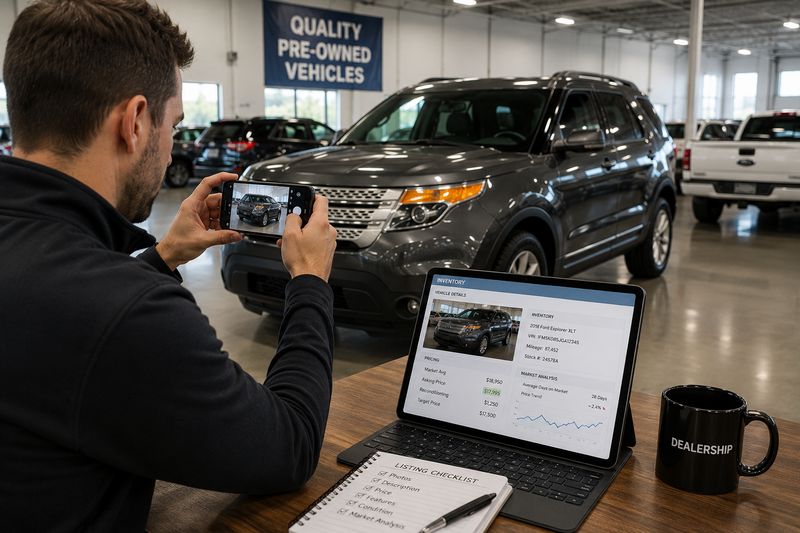
Vehicles with:
- Competitive pricing
- Strong photos
- Accurate descriptions
- Fast online updates
usually attract more buyer attention.
Dealerships that manage inventory effectively can respond faster to market changes and improve both online and offline sales performance.
For example, a dealer monitoring auction pricing data may quickly adjust retail prices to remain competitive against nearby dealerships.
How Does Car Inventory Management Work?
Car inventory management is a continuous process that starts when a dealership acquires a vehicle and ends when that vehicle is sold and profit is recorded. Successful dealerships constantly track inventory performance to keep vehicles moving quickly while controlling expenses.
Modern inventory management involves much more than simply parking cars on a lot. Dealers must monitor pricing, market demand, repairs, online visibility, and vehicle aging every day.
For many dealerships, inventory management systems have become one of the most important tools for staying competitive and profitable in the used car market.
Acquiring Inventory From Auctions, Trade-Ins, and Wholesale Sources
Inventory management begins with vehicle acquisition.
Most dealerships obtain vehicles from:
- Online auto auctions
- Trade-ins
- Wholesale suppliers
- Lease returns
- Fleet sales
- Dealer-to-dealer purchases
Choosing the right inventory is extremely important because buying mistakes can quickly hurt profitability.
Dealers must consider:
- Local market demand
- Vehicle condition
- Expected reconditioning costs
- Mileage
- Title status
- Potential resale value
For example, a dealership in a suburban area may focus heavily on affordable SUVs and pickup trucks because those vehicles sell faster locally.
Many dealerships use auction platforms such as BidNDrive to access wholesale inventory from major U.S. auto auctions at lower prices than traditional retail sources.
Auction buying allows dealers to:
- Expand inventory selection
- Find budget-friendly vehicles
- Source fast-selling models
- Monitor wholesale market trends
more efficiently.
Inspecting and Evaluating Incoming Vehicles
Once vehicles arrive, dealerships inspect them carefully before offering them for sale.
Vehicle evaluations typically include:
- Mechanical inspections
- Body damage checks
- Tire condition
- Interior condition
- Diagnostic scans
- Mileage verification
- Vehicle history review
Dealerships also estimate:
- Repair costs
- Reconditioning timelines
- Expected profit margins
For example, a used truck purchased cheaply at auction may still become unprofitable if unexpected transmission repairs appear later.
Inspection quality is especially important when dealerships buy:
- Salvage vehicles
- High-mileage cars
- Flood-damaged inventory
- Auction vehicles sold “as-is”
Accurate evaluations help dealerships avoid expensive surprises and make better pricing decisions later.
Reconditioning and Preparing Cars for Sale
After inspection, vehicles usually go through reconditioning before being listed for sale.
Reconditioning may include:
- Mechanical repairs
- Oil changes
- Tire replacement
- Paint correction
- Dent repair
- Interior cleaning
- Detailing
- Brake service
The goal is to prepare vehicles quickly while controlling repair costs.
Reconditioning delays can become expensive because vehicles sitting in service departments still create holding costs without generating revenue.
Efficient dealerships often standardize reconditioning procedures to speed up vehicle turnaround times.
For example, some dealerships immediately prioritize:
- Fast-selling vehicles
- High-demand inventory
- Lower-cost repairs
to reduce time-to-market.
Good reconditioning also improves:
- Online presentation
- Customer confidence
- Vehicle pricing potential
- Sales speed
Pricing and Listing Vehicles Online
Once vehicles are ready, dealerships price and list them online.
Modern buyers usually compare inventory across multiple websites before visiting dealerships, so online pricing must remain competitive.
Dealerships often use market data tools to compare pricing against:
- Local competitors
- Auction values
- National listings
- Market demand trends
Vehicle listings usually include:
- Photos
- Vehicle descriptions
- VIN details
- Mileage
- Features
- Pricing
- Financing options
High-quality photos and accurate descriptions are extremely important because poor online presentation can reduce buyer interest immediately.
For example, a clean used sedan with strong photos and competitive pricing may generate many leads within days, while weak listings may receive very little attention.
Dealerships constantly monitor online listing performance to improve lead generation and vehicle turnover.
Monitoring Inventory Performance and Aging
After vehicles are listed, dealerships track inventory performance closely.
Important inventory metrics include:
- Days on lot
- Number of leads
- Online views
- Price changes
- Reconditioning costs
- Gross profit targets
Aging inventory is one of the biggest concerns for used car dealerships.
As vehicles sit longer:
- Depreciation increases
- Interest expenses grow
- Buyer interest often decreases
Many dealerships create inventory aging policies that trigger actions at certain time limits.
For example:
- Price reductions after 30 days
- Additional marketing after 45 days
- Wholesale liquidation after 60–90 days
Fast decision-making helps dealerships avoid losing excessive money on slow-moving vehicles.
Managing Vehicle Transfers Between Locations
Multi-location dealerships often transfer inventory between stores to match local demand.
For example:
- Trucks may sell faster in rural markets
- Compact commuter cars may perform better in cities
- Luxury SUVs may move faster in higher-income areas
Inventory management systems help dealerships track:
- Vehicle location
- Transportation schedules
- Inventory availability
- Inter-store transfers
Efficient transfers help dealerships maximize sales opportunities instead of leaving vehicles sitting unsold in weaker markets.
Without proper tracking, dealerships risk:
- Duplicate listings
- Transportation confusion
- Inventory inaccuracies
- Lost sales opportunities
Real-time inventory visibility becomes especially important for larger dealer groups managing hundreds or thousands of vehicles.
Tracking Sold Vehicles and Profit Margins
Inventory management does not end when the vehicle sells.
Dealerships continue tracking:
- Final sale price
- Gross profit
- Reconditioning expenses
- Transportation costs
- Financing expenses
- Time-to-sale
This information helps dealers understand:
- Which vehicles are most profitable
- Which inventory sells fastest
- Which buying strategies work best
- Which vehicles should be avoided in the future
For example, a dealership may discover that affordable fuel-efficient sedans consistently produce stronger turnover and better margins than older luxury vehicles.
Successful dealers use this data to improve future purchasing decisions and optimize inventory strategy continuously.
Source Smarter Inventory Through Major U.S. Auto Auctions
Finding the right inventory at the right price is one of the biggest dealership challenges. BidNDrive helps dealers and buyers access wholesale auction vehicles nationwide, making it easier to source profitable inventory and improve turnover rates.
- ✅ Access to thousands of auction vehicles daily
- ✅ Affordable wholesale pricing from major U.S. auctions
- ✅ Free auction history reports with active deposit
- ✅ Inventory sourcing support for dealers and resellers
What Are the Biggest Challenges in Dealership Inventory Management?
Dealership inventory management has become much more difficult in today’s automotive market. Vehicle prices change quickly, customer preferences shift constantly, and online competition continues growing every year.
Used car dealers must balance profitability, vehicle selection, cash flow, and market demand while trying to keep inventory moving fast enough to avoid losses.
Even experienced dealerships can struggle if they buy the wrong vehicles, delay pricing decisions, or fail to react quickly to market trends. Understanding the biggest inventory management challenges helps dealerships improve efficiency and reduce costly mistakes.
Managing Aging Inventory
Aging inventory is one of the biggest problems dealerships face.
Every vehicle sitting unsold on the lot creates ongoing expenses such as:
- Floorplan interest
- Insurance
- Storage costs
- Advertising
- Depreciation
The longer a vehicle remains unsold, the harder it often becomes to sell profitably.
For example, a used luxury SUV priced aggressively at first may receive little buyer interest after sitting for 60–90 days. Dealers may eventually need to lower the price repeatedly just to move the vehicle.
Aging inventory also ties up valuable cash that could be used to purchase faster-selling vehicles.
Successful dealerships monitor:
- Days in inventory
- Online lead activity
- Market pricing
- Vehicle demand trends
to identify slow-moving inventory early and make faster decisions.
Predicting Customer Demand Accurately
Customer demand can change quickly based on:
- Fuel prices
- Economic conditions
- Interest rates
- Seasonal trends
- Vehicle availability
Predicting which vehicles will sell fastest is not always easy.
For example:
- Fuel-efficient sedans may become more popular when gas prices rise.
- Larger SUVs and trucks may sell better during strong economic periods.
- Electric and hybrid vehicles may increase in demand as fuel costs climb.
Dealerships that misjudge demand may end up with too many slow-selling vehicles while competitors capture stronger sales opportunities.
Many dealers now use:
- Historical sales data
- Auction pricing trends
- Online search activity
- Local market analytics
to improve inventory forecasting.
Even with strong data, customer behavior can still shift unexpectedly.
Controlling Reconditioning Costs
Reconditioning is necessary for most used vehicles, but repair expenses can quickly reduce dealership profits if not managed carefully.
Common reconditioning costs include:
- Mechanical repairs
- Paint work
- Tires
- Brake service
- Detailing
- Interior repairs
Some vehicles purchased cheaply at auction may require far more repairs than expected.
For example, a dealer may buy a salvage sedan at a strong price, only to discover hidden suspension or transmission problems later.
Reconditioning delays also increase holding costs because vehicles cannot generate revenue while sitting in service departments.
Successful dealerships carefully evaluate:
- Repair estimates
- Vehicle value
- Market demand
- Expected resale profit
before investing heavily in repairs.
Balancing Vehicle Variety and Profitability
Dealerships need enough inventory variety to attract different buyers, but too much variety can create inventory problems.
A dealership may want to stock:
- Trucks
- SUVs
- Sedans
- Luxury vehicles
- Budget commuter cars
- Sports cars
However, not every category sells equally well in every market.
For example:
- Affordable commuter vehicles may sell quickly in urban areas.
- Larger trucks may perform better in rural regions.
- Luxury cars may move slowly during economic downturns.
Too much inventory variety can increase:
- Holding costs
- Complexity
- Reconditioning expenses
- Inventory aging risk
Dealerships must constantly balance customer selection with profitability and turnover speed.
Keeping Up With Market Price Changes
Used car pricing changes constantly.
Vehicle values can rise or fall quickly because of:
- Auction supply levels
- Consumer demand
- Fuel prices
- Interest rates
- Seasonal buying trends
A dealership that overpays for inventory may struggle to remain competitive later.
For example, if wholesale truck prices suddenly decline, dealers holding expensive truck inventory may lose profit margins quickly.
Online pricing transparency has made this challenge even harder because customers compare prices instantly across multiple dealerships and marketplaces.
Dealerships now need to monitor:
- Auction values
- Competitor pricing
- Online listing trends
- Retail demand
almost daily.
Many dealers use inventory software and auction data tools to react faster to changing market conditions.
Managing Floorplan Financing Costs
Many dealerships use floorplan financing to purchase inventory.
Floorplan loans allow dealers to stock vehicles without paying the full purchase price immediately. However, interest costs continue growing while vehicles remain unsold.
This creates pressure to sell inventory quickly.
For example:
- A vehicle sitting for several months may accumulate enough financing costs to eliminate most of the expected profit.
- Rising interest rates can increase holding costs dramatically across large inventories.
Dealerships with poor turnover rates often struggle with floorplan expenses because too much capital remains tied up in aging inventory.
Effective inventory management helps reduce financing pressure by improving sales speed and inventory efficiency.
Handling Seasonal Inventory Fluctuations
Vehicle demand changes throughout the year.
Some common seasonal trends include:
- Convertibles selling better during warmer months
- SUVs and AWD vehicles becoming more popular before winter
- Tax refund season increasing budget vehicle demand
- Trucks selling more strongly during construction seasons
Dealerships that ignore seasonal demand patterns may end up with the wrong inventory at the wrong time.
For example, stocking large amounts of sports cars during winter may create slow turnover in colder regions.
Successful dealerships adjust inventory strategies throughout the year based on:
- Seasonal buying habits
- Regional climate
- Local economic conditions
- Historical sales trends
This helps improve turnover and reduce aging inventory problems.
Competing With Online Vehicle Retailers
Online vehicle retailers have changed the used car industry significantly.
Today’s buyers expect:
- Competitive pricing
- Detailed vehicle photos
- Vehicle history transparency
- Fast online responses
- Home delivery options
- Accurate inventory availability
Large online retailers often use advanced technology and aggressive pricing strategies to attract buyers nationwide.
Smaller dealerships must now compete not only with local dealers but also with online marketplaces and digital retailers.
Poor online inventory management can quickly reduce visibility and lead generation.
For example:
- Weak photos
- Delayed listing updates
- Incorrect pricing
- Missing vehicle information
may cause buyers to skip listings immediately.
Best Practices for Effective Car Inventory Management
Successful dealerships rarely rely on luck when managing inventory. Strong inventory performance usually comes from consistent processes, accurate data, and fast decision-making.
In today’s competitive used car market, dealerships must carefully monitor inventory costs, market demand, pricing, and vehicle turnover. Small mistakes can quickly reduce profits, especially when vehicles sit unsold for too long.
The best-performing dealerships follow clear inventory management strategies that help them reduce aging inventory, improve cash flow, and increase profitability.
Conduct Regular Inventory Audits
Inventory audits help dealerships verify that all vehicle records remain accurate and up to date.
Regular audits allow dealerships to:
- Confirm vehicle locations
- Check VIN accuracy
- Verify pricing information
- Monitor inventory condition
- Identify missing documentation
Without regular audits, dealerships may experience:
- Inventory tracking errors
- Duplicate listings
- Incorrect pricing
- Missing vehicles
- Accounting inconsistencies
For example, a vehicle marked as available online may already be sold or transferred to another location if inventory records are not updated properly.
Many dealerships perform:
- Weekly physical lot inspections
- Monthly inventory reviews
- Quarterly financial inventory audits
to maintain accurate records and avoid operational problems.
Analyze Sales Trends and Market Data
Successful inventory management depends heavily on understanding market demand.
Dealerships should constantly analyze:
- Fast-selling vehicle categories
- Seasonal demand changes
- Fuel price trends
- Auction market pricing
- Local customer preferences
For example:
- Fuel-efficient sedans may sell faster during periods of high gas prices.
- Larger SUVs and trucks may perform better in suburban or rural markets.
Dealers who study sales data carefully can make smarter purchasing decisions and avoid buying slow-moving inventory.
Many dealerships now use:
- Market analytics software
- Auction pricing reports
- Online search trends
- Historical sales data
to improve forecasting and inventory planning.
Set Inventory Turnover Goals
Inventory turnover measures how quickly dealerships sell vehicles.
Strong turnover rates are important because faster sales usually:
- Improve cash flow
- Reduce holding costs
- Lower depreciation risk
- Increase profitability
Many dealerships establish target timeframes for vehicle sales.
For example:
- 30-day targets for high-demand vehicles
- 45-day limits for average inventory
- Wholesale liquidation after 60–90 days
Clear turnover goals help dealerships avoid emotional attachment to inventory and encourage faster pricing decisions.
Dealers that ignore turnover targets often accumulate aging vehicles that reduce profits significantly.
Implement Inventory Aging Policies
Inventory aging policies create clear rules for handling slow-moving vehicles.
These policies help dealerships respond faster when vehicles remain unsold for too long.
Common aging policy actions may include:
- Price reductions
- Additional advertising
- Auction resale
- Wholesale liquidation
- Repositioning inventory between locations
For example, a dealership may automatically lower pricing after a vehicle reaches 45 days on the lot.
Without aging policies, dealerships may delay difficult decisions and allow holding costs to grow unnecessarily.
Strong aging management helps protect:
- Cash flow
- Inventory turnover
- Profit margins
while reducing long-term inventory risk.
Optimize Vehicle Pricing Strategies
Pricing is one of the most important parts of inventory management.
Even desirable vehicles may sit unsold if pricing is too aggressive.
Successful dealerships use market-based pricing strategies that consider:
- Competitor listings
- Auction values
- Vehicle condition
- Mileage
- Local demand
- Market trends
Online buyers compare prices quickly, so dealerships must remain competitive.
For example, a used pickup truck priced several thousand dollars above similar listings may receive very little buyer interest online.
Many dealers now adjust prices dynamically based on:
- Online traffic
- Lead activity
- Days in inventory
- Market changes
to improve turnover rates.
Use VIN Tracking and Barcode Systems
Modern inventory tracking systems help dealerships organize inventory more efficiently.
VIN tracking and barcode systems allow dealers to:
- Locate vehicles quickly
- Update records automatically
- Track vehicle movement
- Reduce paperwork errors
- Improve operational efficiency
Barcode scanning can simplify:
- Vehicle check-ins
- Reconditioning updates
- Lot transfers
- Sales processing
Accurate VIN tracking also improves:
- Vehicle history management
- Online listing accuracy
- Inventory reporting
For larger dealerships managing hundreds of vehicles, automated tracking systems can save significant time and reduce costly mistakes.
Standardize Vehicle Reconditioning Processes
Reconditioning delays are one of the biggest causes of slow inventory turnover.
Standardized reconditioning procedures help dealerships:
- Reduce repair delays
- Control repair costs
- Improve consistency
- Get vehicles market-ready faster
Efficient dealerships often use fixed workflows for:
- Mechanical inspections
- Detailing
- Safety checks
- Photography
- Listing preparation
For example, a dealership may require all incoming vehicles to complete inspection and photography within a specific timeframe.
Faster reconditioning helps vehicles reach the market sooner and reduces holding costs.
Train Staff on Inventory Procedures
Inventory management works best when all employees follow consistent procedures.
Staff training helps reduce:
- Inventory errors
- Pricing mistakes
- Communication problems
- Delayed updates
- Documentation issues
Employees should understand:
- Inventory tracking systems
- Vehicle aging policies
- Pricing procedures
- Reconditioning timelines
- Vehicle transfer processes
Well-trained teams usually respond faster and maintain more accurate inventory records.
This becomes especially important for dealerships with:
- Multiple locations
- High inventory volume
- Frequent auction purchases
Monitor Gross Profit Per Vehicle
Strong inventory management is not only about selling vehicles quickly — profitability matters too.
Dealerships should track:
- Gross profit per vehicle
- Reconditioning costs
- Transportation expenses
- Advertising costs
- Financing expenses
This helps identify which vehicle types generate the strongest returns.
For example:
- Affordable commuter cars may produce faster turnover but smaller margins.
- Specialty trucks may produce larger profits but slower sales.
Dealers who monitor profitability carefully can improve both inventory selection and pricing strategies over time.
Create Fast Decision-Making Processes for Aged Cars
Slow decision-making often creates unnecessary inventory losses.
Dealerships should establish clear rules for handling aging vehicles quickly.
Fast decision-making may involve:
- Immediate price adjustments
- Auction resale
- Wholesale liquidation
- Inventory relocation
- Promotional discounts
For example, waiting too long to lower the price on a slow-moving luxury vehicle may increase depreciation losses significantly.
Successful dealerships avoid emotional attachment to inventory and focus on maintaining healthy cash flow.
Use Data to Improve Buying Decisions
Data-driven buying decisions help dealerships reduce inventory mistakes.
Before purchasing vehicles, dealers should analyze:
- Historical sales performance
- Local demand
- Profit margins
- Turnover speed
- Auction trends
- Seasonal demand patterns
For example, data may show that:
- Compact SUVs consistently sell faster than sedans
- Certain truck models maintain stronger resale values
- Specific luxury vehicles age poorly on the lot
Using data helps dealerships buy smarter inventory and reduce financial risk.
Build Relationships With Reliable Suppliers and Auctions
Strong supplier relationships help dealerships source better inventory consistently.
Reliable auction and wholesale relationships may provide:
- Better vehicle access
- Faster inventory sourcing
- More accurate condition information
- Improved transportation coordination
Many dealerships rely heavily on auction platforms such as BidNDrive to purchase affordable inventory from major U.S. auto auctions.
How Can Dealerships Forecast Vehicle Demand?
Forecasting vehicle demand is one of the most important parts of inventory management. Dealerships that accurately predict what customers want can sell vehicles faster, improve cash flow, and reduce costly aging inventory.
Poor forecasting often leads to overstock problems, slow sales, and shrinking profit margins. In today’s fast-moving used car market, dealerships must constantly monitor customer behavior, market conditions, and pricing trends to make smarter buying decisions.
Successful dealerships rarely rely on guesswork alone. Instead, they use data, sales history, and local market trends to understand which vehicles are most likely to sell quickly and profitably.
Understanding Local Market Trends
Vehicle demand varies significantly depending on location.
A dealership in a rural area may sell more:
- Pickup trucks
- SUVs
- AWD vehicles
- Work trucks
Meanwhile, urban dealerships may see stronger demand for:
- Compact cars
- Fuel-efficient hybrids
- Affordable commuter vehicles
Local income levels, weather conditions, fuel prices, and driving habits all affect customer preferences.
For example:
- Snowy regions often generate stronger demand for AWD SUVs.
- Cities with expensive fuel may increase demand for compact hybrids.
- Areas with growing construction industries may create stronger truck sales.
Dealerships that understand local buying habits can stock inventory more strategically and avoid slow-moving vehicles.
Identifying Fast-Selling Vehicle Categories
Some vehicles consistently sell faster than others.
Fast-selling categories often include:
- Affordable SUVs
- Reliable commuter sedans
- Fuel-efficient hybrids
- Popular pickup trucks
- Budget-friendly family vehicles
Dealerships should regularly analyze which vehicle types:
- Generate the most leads
- Sell fastest
- Produce the best profit margins
- Spend the fewest days on the lot
For example, a dealership may discover that:
- Mid-size SUVs sell within 20 days
- Luxury sedans sit for 70+ days
- Compact hybrids attract strong online traffic
This information helps dealers focus inventory spending on higher-demand categories.
Many successful dealerships reduce risk by concentrating heavily on vehicles with proven turnover history.
Seasonal Demand Patterns in the Used Car Market
Vehicle demand changes throughout the year.
Seasonal patterns strongly influence:
- Vehicle pricing
- Customer interest
- Inventory turnover
- Profitability
For example:
- Convertibles often sell better during spring and summer.
- AWD vehicles and trucks may become more popular before winter.
- Tax refund season often increases demand for affordable used vehicles.
- Fuel-efficient cars may gain popularity during periods of high gas prices.
Dealerships that ignore seasonal patterns may purchase the wrong inventory at the wrong time.
Smart inventory forecasting helps dealers adjust purchasing strategies ahead of market shifts.
For example, many dealers begin stocking trucks and SUVs before colder weather arrives rather than reacting after demand spikes.
Using Historical Sales Data
Historical sales data is one of the most valuable forecasting tools dealerships have.
Past sales records help dealers understand:
- Which vehicles sold fastest
- Which models generated the highest profits
- Seasonal sales patterns
- Customer price preferences
- Average days-to-sale
For example, a dealership may notice that:
- Compact SUVs consistently outperform sedans
- Certain truck models maintain stronger resale values
- Budget vehicles under a specific price range generate the most leads
Historical data also helps dealers avoid repeating past inventory mistakes.
Many modern dealership management systems provide reports that track:
- Inventory turnover
- Lead activity
- Gross profit
- Vehicle aging
- Reconditioning costs
This information improves future inventory planning significantly.
Monitoring Auction Market Prices
Auction prices provide important insight into current market demand.
Wholesale auction trends often change before retail pricing adjusts, making auctions a valuable forecasting tool.
Dealerships monitor:
- Rising wholesale prices
- Falling market demand
- Vehicle supply shortages
- Seasonal inventory shifts
For example:
- Increasing wholesale truck prices may signal growing consumer demand.
- Falling sedan auction prices may indicate slowing retail interest.
Platforms like BidNDrive help dealers access large auction inventories while also observing real-time wholesale pricing trends across the U.S. market.
Dealers who monitor auctions carefully can often identify:
- Emerging demand shifts
- Better buying opportunities
- Oversupplied vehicle categories
before competitors react.
Adjusting Inventory Based on Fuel Prices and Economic Conditions
Economic conditions heavily influence vehicle demand.
Fuel prices, inflation, financing rates, and job market conditions can all change customer buying behavior quickly.
For example:
- Rising fuel prices often increase demand for hybrids and compact cars.
- Lower fuel prices may boost SUV and truck sales.
- High interest rates may push buyers toward lower-cost vehicles.
- Economic uncertainty may reduce luxury vehicle demand.
Dealerships that fail to adapt inventory during economic changes may struggle with slow-moving inventory and shrinking profits.
Successful dealers adjust purchasing strategies quickly based on:
- Consumer affordability
- Financing trends
- Fuel costs
- Economic confidence
This flexibility helps dealerships stay competitive during changing market conditions.
How Consumer Preferences Affect Inventory Planning
Consumer preferences evolve constantly.
Today’s buyers increasingly expect:
- Fuel efficiency
- Modern technology
- Advanced safety features
- Competitive pricing
- Online shopping convenience
Demand for:
- Hybrid vehicles
- Electric vehicles
- Fuel-efficient crossovers
- Tech-focused vehicles
has grown significantly in recent years.
At the same time, some buyers still prioritize:
- Reliability
- Lower maintenance costs
- Affordable monthly payments
- Larger family vehicles
Inventory planning must reflect these changing preferences.
For example, younger buyers may prioritize:
- Smartphone integration
- Driver assistance technology
- Modern interiors
while budget-conscious families may focus more on:
- Reliability
- Fuel economy
- Lower ownership costs
Successful dealerships study customer inquiries, online search behavior, and lead activity to understand what buyers actually want before investing heavily in inventory.
How Should Dealerships Manage Used Car Inventory?
Managing used car inventory requires much more attention than simply buying vehicles and waiting for customers to arrive. Every used vehicle is unique, and dealerships must constantly balance acquisition costs, repairs, pricing, and market demand.
Successful used car dealerships focus heavily on:
- Fast inventory turnover
- Competitive pricing
- Efficient reconditioning
- Accurate market analysis
- Smart purchasing decisions
Poor inventory management can quickly lead to aging vehicles, shrinking profit margins, and cash flow problems. In today’s highly competitive market, dealerships must react quickly to changing customer demand and pricing trends to remain profitable.
Reviewing Trade-Ins Daily
Trade-ins are one of the most important inventory sources for many dealerships.
Every trade-in should be reviewed quickly to determine:
- Vehicle condition
- Market demand
- Reconditioning costs
- Potential resale value
- Wholesale value
Fast evaluations are important because delays can slow inventory turnover and create pricing mistakes.
For example:
- A fuel-efficient commuter sedan may become a strong retail vehicle.
- An older luxury SUV with expensive repair needs may be better suited for wholesale resale.
Dealerships should inspect trade-ins daily and decide quickly whether vehicles should:
- Be retailed
- Sent to auction
- Sold wholesale
- Reconditioned immediately
Fast decision-making helps dealers avoid unnecessary holding costs and improves inventory efficiency.
Choosing the Right Vehicles at Auction
Auction buying is one of the most important parts of used inventory management.
Dealerships that buy the wrong inventory often struggle with:
- Slow sales
- Higher depreciation
- Reconditioning losses
- Weak profit margins
Successful dealers focus on vehicles with:
- Strong local demand
- Reliable resale history
- Affordable repair costs
- Competitive pricing potential
For example, affordable SUVs and pickup trucks may sell faster than specialty luxury vehicles in many markets.
Auction buyers should carefully evaluate:
- Vehicle history reports
- Condition reports
- Mileage
- Title status
- Transportation costs
- Market demand trends
Platforms like BidNDrive help dealerships access large U.S. auction inventories and source vehicles at wholesale prices.
Smart auction purchasing helps dealers:
- Improve turnover rates
- Reduce acquisition costs
- Maintain fresher inventory
- Respond faster to market demand
Reconditioning Used Cars Efficiently
Reconditioning speed plays a major role in inventory performance.
Vehicles sitting in repair departments continue generating:
- Financing costs
- Insurance expenses
- Depreciation losses
without producing revenue.
Efficient dealerships create standardized reconditioning workflows for:
- Mechanical inspections
- Detailing
- Tire replacement
- Brake service
- Cosmetic repairs
- Photography preparation
For example, some dealerships aim to move newly acquired vehicles from auction arrival to online listing within only a few days.
Fast reconditioning helps:
- Increase inventory turnover
- Improve online visibility
- Reduce holding costs
- Generate sales faster
However, dealerships must also control repair spending carefully because excessive reconditioning costs can eliminate profit margins quickly.
Pricing Used Vehicles Competitively
Pricing is one of the most important factors affecting used vehicle sales speed.
Today’s buyers compare prices instantly across:
- Dealership websites
- Online marketplaces
- Auction data
- Vehicle history platforms
If pricing is too high, vehicles may sit unsold for weeks or months.
Successful dealerships use market-based pricing strategies that consider:
- Competitor pricing
- Vehicle condition
- Mileage
- Local demand
- Auction values
- Inventory age
For example, a used truck priced only slightly above similar local listings may receive far fewer leads than competitors.
Many dealerships adjust pricing dynamically based on:
- Lead activity
- Market changes
- Days in inventory
- Online traffic
Competitive pricing improves:
- Lead generation
- Inventory turnover
- Cash flow
- Customer trust
Promoting Pre-Owned Inventory Online
Online visibility is now critical for used car sales.
Most buyers search online before visiting dealerships, which means inventory presentation heavily affects sales performance.
Successful dealerships invest in:
- High-quality vehicle photos
- Accurate descriptions
- Competitive pricing
- Fast listing updates
- Vehicle history transparency
Strong online listings help vehicles stand out in crowded marketplaces.
Dealerships often advertise inventory across:
- Dealer websites
- Marketplace platforms
- Social media
- Search engines
- Automotive listing sites
For example, a clean affordable sedan with detailed photos and accurate pricing may generate strong buyer interest within days.
Poor online presentation can dramatically reduce lead volume even if the vehicle itself is desirable.
Managing High-Mileage and Salvage Vehicles
High-mileage and salvage vehicles require especially careful inventory management.
These vehicles may offer:
- Lower acquisition costs
- Higher potential profit margins
- Strong demand among budget buyers
However, they also involve greater risks.
Dealerships must carefully evaluate:
- Repair history
- Structural damage
- Mechanical condition
- Title branding
- Reconditioning costs
- Customer expectations
For example:
- A clean high-mileage work truck may still sell quickly if priced properly.
- A poorly repaired salvage SUV may create customer trust issues and slower sales.
Transparency becomes extremely important when selling these vehicles.
Dealerships should provide:
- Accurate vehicle disclosures
- Vehicle history reports
- Detailed inspection information
to build customer confidence.
Many budget-conscious buyers specifically search for affordable salvage or high-mileage inventory because it may reduce purchase costs significantly.
When to Wholesale or Liquidate Aged Inventory
Not every vehicle should remain on the retail lot indefinitely.
Some inventory eventually becomes too expensive to hold because:
- Demand weakens
- Depreciation increases
- Repair costs grow
- Interest expenses accumulate
Successful dealerships establish clear rules for when vehicles should be:
- Discounted
- Sent to auction
- Sold wholesale
- Liquidated
For example, a luxury sedan sitting unsold for 90 days may no longer justify additional holding costs.
Wholesale liquidation helps dealerships:
- Recover cash faster
- Reduce inventory pressure
- Improve turnover
- Free space for fresher inventory
Emotion should not drive inventory decisions.
Dealerships that hold aging inventory too long often lose far more money than dealers who make faster liquidation decisions.
What Role Does Technology Play in Car Inventory Management?
Technology has completely changed how dealerships manage inventory. Modern dealers no longer rely only on spreadsheets, handwritten lot records, or manual pricing decisions. Today’s inventory systems help dealerships track vehicles faster, price inventory more accurately, and respond quickly to market changes.
Technology improves nearly every part of inventory management, including:
- Vehicle acquisition
- Inventory tracking
- Pricing
- Reconditioning
- Lead management
- Sales analysis
For dealerships trying to improve turnover and profitability, modern inventory technology has become essential rather than optional.
Inventory Management Software Explained
Inventory management software helps dealerships organize and monitor vehicle inventory efficiently.
These systems allow dealers to track:
- Vehicle locations
- VIN information
- Pricing
- Reconditioning status
- Days in inventory
- Sales performance
- Profit margins
Instead of manually updating records, dealerships can manage inventory through centralized digital systems.
For example, inventory software can automatically alert managers when:
- Vehicles age too long
- Prices become uncompetitive
- Repairs are delayed
- Listings need updates
Many systems also help dealers:
- Upload inventory online
- Monitor lead activity
- Track transportation
- Generate sales reports
Inventory software reduces errors and improves overall operational efficiency.
Cloud-Based Automotive Inventory Systems
Cloud-based systems allow dealerships to access inventory information from almost anywhere.
Unlike older local computer systems, cloud-based platforms store data online and update inventory information in real time.
This allows dealership staff to:
- Access inventory remotely
- Update pricing instantly
- Monitor sales activity
- Coordinate between locations
- Reduce data loss risks
For example, a manager can adjust pricing or review inventory reports directly from a smartphone while attending an auction.
Cloud systems are especially useful for:
- Multi-location dealerships
- Remote sales teams
- Mobile inventory management
- Large inventory operations
Many cloud-based systems also provide automatic software updates and easier integration with online sales platforms.
AI and Automation in Vehicle Inventory Tracking
Artificial intelligence and automation are becoming increasingly important in dealership inventory management.
AI tools can analyze:
- Sales trends
- Market pricing
- Customer behavior
- Vehicle demand
- Competitor pricing
to help dealerships make smarter decisions.
For example, AI systems may recommend:
- Lowering prices on slow-moving vehicles
- Purchasing more high-demand inventory
- Adjusting inventory based on seasonal trends
Automation also helps reduce repetitive tasks such as:
- Updating listings
- Tracking vehicle aging
- Sending alerts
- Scheduling reconditioning workflows
This allows dealership staff to focus more on:
- Sales
- Customer service
- Purchasing decisions
rather than manual inventory updates.
CRM Integration With Inventory Systems
Customer relationship management (CRM) systems help dealerships track leads and customer activity.
When inventory systems connect with CRM platforms, dealerships can better understand:
- Which vehicles generate the most interest
- Which listings produce the most leads
- Customer buying preferences
- Sales conversion rates
For example, if many customers inquire about affordable SUVs, dealerships can adjust future purchasing decisions accordingly.
CRM integration also improves:
- Lead follow-up
- Customer communication
- Sales tracking
- Marketing performance
Dealerships can connect customer activity directly to inventory performance, helping managers identify which vehicles are most profitable and desirable.
Barcode and RFID Tracking Technologies
Barcode and RFID tracking systems improve inventory accuracy and lot management.
These technologies help dealerships:
- Locate vehicles quickly
- Track vehicle movement
- Reduce inventory errors
- Improve lot organization
Barcode scanning allows staff to update vehicle status instantly during:
- Reconditioning
- Transportation
- Sales processing
- Vehicle transfers
RFID systems offer even faster tracking because vehicles can be identified automatically without direct scanning.
Large dealerships with hundreds of vehicles often use these systems to reduce:
- Lost inventory
- Duplicate records
- Manual paperwork
- Tracking mistakes
Improved tracking helps dealerships operate more efficiently and maintain more accurate inventory data.
Real-Time Inventory Monitoring
Real-time monitoring allows dealerships to see inventory updates immediately.
Managers can track:
- Vehicle status
- Lead activity
- Pricing changes
- Reconditioning progress
- Online listing performance
without waiting for manual reports.
For example, if a vehicle receives unusually high online traffic but few inquiries, managers may quickly adjust pricing or improve listing photos.
Real-time monitoring also helps dealerships respond faster to:
- Market changes
- Auction trends
- Inventory shortages
- Customer demand shifts
Fast decision-making becomes much easier when accurate information is available instantly.
Mobile Apps for Dealership Inventory Management
Mobile inventory apps allow dealership staff to manage inventory directly from smartphones or tablets.
These apps often help employees:
- Scan VINs
- Upload photos
- Update pricing
- Track vehicle status
- Access inventory reports
- Monitor lead activity
For example, a salesperson walking the lot can quickly check:
- Vehicle pricing
- Repair status
- Customer lead information
- Inventory age
without returning to an office computer.
Auction buyers also benefit from mobile tools when reviewing vehicles and market pricing during live or online auctions.
Mobile inventory management improves speed, flexibility, and communication throughout dealership operations.
Data Analytics and Reporting Tools
Data analytics tools help dealerships make more informed inventory decisions.
Modern reporting systems can analyze:
- Inventory turnover
- Gross profit per vehicle
- Average days-to-sale
- Lead conversion rates
- Reconditioning costs
- Market pricing trends
This information helps dealerships identify:
- Fast-selling inventory categories
- Weak-performing vehicles
- Pricing problems
- Profit opportunities
For example, reports may reveal that:
- Compact SUVs generate stronger margins than sedans
- Certain trucks sell much faster during specific seasons
- High-mileage luxury vehicles age poorly on the lot
Dealerships using strong analytics can improve:
- Buying decisions
- Pricing strategies
- Inventory turnover
- Profitability
Platforms like BidNDrive also provide dealers access to auction inventory and market pricing data that can support smarter inventory planning and purchasing strategies.
What Features Should Automotive Inventory Management Software Include?
Modern dealerships depend heavily on inventory management software to stay organized, competitive, and profitable. Managing dozens or hundreds of vehicles manually is difficult, especially when prices, customer demand, and market conditions change constantly.
Good inventory software helps dealerships:
- Track vehicles efficiently
- Improve inventory turnover
- Reduce holding costs
- Monitor profitability
- Improve customer response times
The best systems combine inventory tracking, pricing tools, sales management, and market analysis into one platform. Choosing the right features can significantly improve dealership operations and overall profitability.
Vehicle Acquisition and VIN Decoding Tools
Vehicle acquisition tools help dealerships organize inventory purchases more efficiently.
Modern software should allow dealers to:
- Add vehicles quickly
- Import auction inventory
- Decode VIN numbers automatically
- Access vehicle specifications
- Track acquisition costs
VIN decoding tools are especially important because they automatically provide:
- Trim information
- Engine details
- Factory options
- Vehicle specifications
- Model information
This saves time and reduces manual data entry errors.
For example, a dealer purchasing vehicles from auctions can upload VINs directly into the system and instantly view detailed vehicle information before pricing or listing inventory.
Strong acquisition tools also help dealers compare:
- Auction values
- Transportation costs
- Estimated profit margins
before purchasing inventory.
Inventory Aging Reports
Inventory aging reports are one of the most important dealership management tools.
These reports show:
- How long vehicles remain unsold
- Which inventory categories age fastest
- Which vehicles require pricing adjustments
- Holding cost exposure
Aging reports help dealerships avoid letting vehicles sit too long on the lot.
For example:
- A vehicle reaching 45 days in inventory may trigger automatic price reviews.
- Inventory over 60–90 days may require wholesale liquidation decisions.
Without aging reports, dealerships may overlook slow-moving inventory until holding costs and depreciation significantly reduce profits.
Effective aging management improves:
- Inventory turnover
- Cash flow
- Pricing discipline
- Profitability
Pricing and Market Comparison Tools
Pricing tools help dealerships remain competitive in a rapidly changing market.
Modern software should compare dealership inventory against:
- Local competitors
- Online marketplaces
- Auction pricing data
- Market demand trends
For example, if similar trucks nearby are selling for lower prices, the system may alert managers that pricing adjustments are needed.
Pricing tools often include:
- Market-based pricing suggestions
- Dynamic pricing recommendations
- Competitor monitoring
- Profit margin calculations
Accurate pricing is critical because today’s buyers compare listings instantly online.
Even slightly overpriced vehicles may generate fewer leads and slower turnover.
Dealerships that price inventory competitively usually improve:
- Lead generation
- Online visibility
- Sales speed
while reducing inventory aging risks.
Reconditioning Workflow Tracking
Reconditioning delays are one of the biggest causes of slow inventory turnover.
Good inventory software should track every step of the reconditioning process, including:
- Inspections
- Mechanical repairs
- Body work
- Detailing
- Photography
- Listing preparation
Managers should be able to monitor:
- Repair timelines
- Pending repairs
- Technician assignments
- Reconditioning costs
For example, a dealership may discover that certain vehicles spend too long waiting for parts or approvals before reaching the sales lot.
Workflow tracking improves:
- Vehicle turnaround time
- Service department efficiency
- Cost control
- Inventory availability
Faster reconditioning helps vehicles reach buyers sooner and reduces holding costs.
Integration With Dealer Websites and Marketplaces
Modern dealerships depend heavily on online sales.
Inventory software should automatically connect with:
- Dealer websites
- Automotive marketplaces
- Online classified platforms
- Social media inventory feeds
This allows dealers to:
- Update listings instantly
- Synchronize pricing
- Remove sold vehicles automatically
- Reduce duplicate data entry
For example, when a vehicle sells, the system should automatically remove it from all online platforms to avoid customer frustration.
Integrated listings also help dealerships maintain:
- Accurate inventory availability
- Consistent pricing
- Faster lead generation
Strong online integration improves both customer experience and operational efficiency.
Accounting and Financing Integration
Inventory software should connect directly with dealership accounting and financing systems.
This integration helps dealerships track:
- Vehicle acquisition costs
- Floorplan financing
- Gross profit
- Reconditioning expenses
- Taxes and fees
- Transportation costs
For example, managers can quickly calculate true profit margins after including:
- Repairs
- Financing interest
- Advertising expenses
- Transportation charges
Integrated accounting systems reduce:
- Manual entry errors
- Delayed reporting
- Financial inconsistencies
while improving financial visibility across dealership operations.
Multi-Location Inventory Management
Dealership groups with multiple locations need centralized inventory management tools.
Multi-location systems help dealers:
- Track inventory across stores
- Transfer vehicles between locations
- Monitor regional demand
- Balance inventory distribution
For example:
- Trucks may sell faster in rural stores.
- Fuel-efficient sedans may perform better in urban markets.
Centralized systems allow dealerships to move inventory strategically instead of letting vehicles age in weaker markets.
Multi-location visibility improves:
- Inventory efficiency
- Sales opportunities
- Turnover rates
- Operational coordination
especially for growing dealer groups.
Auction and Wholesale Platform Integration
Auction integration has become increasingly important for modern dealerships.
Inventory software should connect directly with:
- Online auctions
- Wholesale marketplaces
- Vehicle sourcing platforms
This allows dealerships to:
- Import auction inventory quickly
- Monitor wholesale pricing
- Analyze market trends
- Compare acquisition opportunities
Platforms like BidNDrive help dealers access wholesale auction inventory from major U.S. auctions, making it easier to source affordable vehicles and react quickly to changing demand.
Auction integration also improves:
- Purchasing speed
- Inventory planning
- Market visibility
- Acquisition efficiency
For many dealerships, wholesale sourcing is one of the most important parts of maintaining healthy inventory turnover.
Customer Lead Tracking and CRM Features
Inventory systems should also include customer relationship management (CRM) features.
CRM tools help dealerships track:
- Customer inquiries
- Lead sources
- Vehicle interest
- Follow-up communication
- Sales conversion rates
For example, managers may notice that:
- Certain SUVs generate large numbers of leads
- Specific price ranges attract stronger customer interest
- Some listings produce poor conversion rates
CRM integration improves:
- Customer response times
- Lead follow-up
- Sales organization
- Inventory forecasting
Dealerships can use customer behavior data to make smarter future inventory decisions.
How Can Dealerships Improve Inventory Turnover?
Inventory turnover is one of the most important indicators of dealership performance. Faster turnover usually means healthier cash flow, lower holding costs, and stronger long-term profitability.
Vehicles that sit too long on the lot create ongoing expenses and often lose value over time. Successful dealerships focus heavily on moving inventory quickly while still maintaining reasonable profit margins.
Improving turnover requires a combination of:
- Smart pricing
- Fast reconditioning
- Strong online marketing
- Accurate market analysis
- Quick decision-making
Dealerships that consistently improve turnover rates usually operate more efficiently and remain more competitive in the used car market.
Understanding Inventory Turn Rate Metrics
Inventory turn rate measures how quickly a dealership sells inventory during a specific period.
Higher turnover rates generally indicate:
- Strong inventory selection
- Competitive pricing
- Healthy demand
- Efficient operations
Low turnover rates often signal problems such as:
- Overpricing
- Weak vehicle selection
- Poor marketing
- Slow reconditioning
Dealerships commonly track:
- Average days-to-sale
- Inventory turn ratio
- Aging percentages
- Gross profit per vehicle
For example:
- A dealership selling most vehicles within 30 days usually has healthier turnover than a dealership averaging 90-day sales cycles.
Tracking turnover metrics helps dealers identify:
- Fast-selling inventory categories
- Slow-moving vehicles
- Pricing issues
- Inventory purchasing mistakes
Regular reporting allows managers to react faster before holding costs become excessive.
Setting Maximum Days-in-Inventory Limits
Successful dealerships usually establish maximum inventory age limits.
These limits create accountability and force faster decisions on aging vehicles.
Common inventory age targets may include:
- 30-day review points
- 45-day pricing adjustments
- 60–90-day liquidation decisions
Without clear age limits, dealerships may hold vehicles too long while hoping for unrealistic profit margins.
For example, a slow-moving luxury sedan sitting for 90 days may continue generating:
- Financing costs
- Insurance expenses
- Depreciation losses
while producing no revenue.
Strong aging policies help dealerships:
- Improve cash flow
- Reduce holding costs
- Maintain fresher inventory
- Avoid emotional inventory decisions
Fast action is often more profitable than waiting too long for the “perfect” buyer.
Pricing Vehicles Based on Market Demand
Pricing has a major impact on inventory turnover.
Today’s buyers compare prices instantly online, making competitive pricing extremely important.
Dealerships should price vehicles based on:
- Local market demand
- Competitor listings
- Auction values
- Vehicle condition
- Mileage
- Seasonal trends
Overpriced inventory usually receives:
- Fewer online views
- Lower lead activity
- Slower sales
For example, a used SUV priced several thousand dollars above similar market listings may sit unsold for months.
Many dealerships now use dynamic pricing strategies that automatically adjust prices based on:
- Inventory age
- Lead activity
- Market changes
- Competitor pricing
Competitive pricing improves:
- Lead generation
- Sales speed
- Inventory turnover
- Customer trust
Using Promotions and Discounts Strategically
Promotions can help dealerships move aging inventory faster.
Strategic discounts may include:
- Temporary price reductions
- Financing promotions
- Seasonal sales events
- Trade-in bonuses
- Special online pricing
The goal is not simply lowering prices aggressively but creating urgency and attracting additional buyer attention.
For example:
- Trucks may sell faster during seasonal construction demand promotions.
- Fuel-efficient vehicles may perform better during periods of rising gas prices.
However, dealerships should avoid excessive discounting too early because it may unnecessarily reduce profit margins.
Successful dealers use promotions strategically for:
- Aging inventory
- Slower market periods
- Overstocked vehicle categories
while still protecting overall profitability.
Improving Vehicle Photography and Listings
Online presentation plays a huge role in inventory turnover.
Most buyers now shop online before visiting dealerships, meaning poor listings can dramatically reduce sales opportunities.
Strong vehicle listings should include:
- High-quality photos
- Accurate descriptions
- Competitive pricing
- Vehicle history details
- Clear equipment information
For example, a clean affordable sedan with professional photos may generate many more leads than a similar vehicle with poor lighting or incomplete descriptions.
Good photography helps buyers feel more confident and increases online engagement.
Dealerships that invest in strong online presentation usually improve:
- Lead generation
- Customer trust
- Inventory visibility
- Sales speed
Listing Inventory on Multiple Online Platforms
Limiting inventory exposure can slow turnover significantly.
Successful dealerships advertise inventory across multiple platforms such as:
- Dealer websites
- Automotive marketplaces
- Social media
- Search engines
- Classified listing sites
Broader exposure increases the chances of reaching:
- Local buyers
- Out-of-state customers
- Budget shoppers
- Specialty vehicle buyers
For example, a rare work truck may attract stronger interest from buyers outside the dealership’s local market.
Multi-platform marketing improves:
- Online visibility
- Lead volume
- Inventory exposure
- Sales opportunities
Automated inventory systems also help synchronize listings across platforms to reduce errors and keep availability updated in real time.
Quickly Reconditioning Newly Acquired Vehicles
Fast reconditioning is critical for strong inventory turnover.
Vehicles sitting in service departments still create:
- Holding costs
- Depreciation
- Financing expenses
without generating revenue.
Successful dealerships prioritize:
- Rapid inspections
- Fast parts ordering
- Efficient detailing
- Immediate photography
- Quick online listing preparation
For example, some dealers aim to list vehicles online within only a few days after acquisition.
Delays in reconditioning often create bottlenecks that reduce inventory availability and slow sales.
Efficient reconditioning improves:
- Time-to-market
- Customer interest
- Cash flow
- Inventory freshness
while reducing unnecessary expenses.
Wholesale Strategies for Slow-Moving Cars
Not every vehicle is worth keeping on the retail lot.
Some vehicles eventually become more profitable to wholesale rather than continue holding for retail sale.
Dealerships often wholesale:
- Aging luxury inventory
- High-mileage vehicles
- Slow-selling specialty cars
- Overstocked categories
- Vehicles with shrinking market demand
Wholesale liquidation helps dealerships:
- Free up capital
- Reduce holding costs
- Improve lot space availability
- Maintain healthier turnover rates
For example, a dealership may decide to wholesale an aging sports car rather than continue lowering retail pricing for months.
Buy Fast-Selling Vehicles at Competitive Auction Prices
Strong inventory turnover starts with smart purchasing decisions. BidNDrive gives dealerships access to affordable SUVs, trucks, sedans, hybrids, and salvage vehicles from major U.S. auctions to help reduce acquisition costs and improve profitability.
- ✅ Real-time access to wholesale market inventory
- ✅ Vehicle history transparency before bidding
- ✅ Auction pricing data for smarter buying decisions
- ✅ Nationwide transportation and export options available
How Does Pricing Affect Inventory Management?
Pricing is one of the most important factors in dealership inventory management. Even strong inventory can become a financial problem if pricing is inaccurate. In today’s automotive market, buyers compare vehicles online instantly, which means dealerships must constantly adjust pricing based on real market conditions.
Good pricing strategies help dealerships:
- Improve inventory turnover
- Increase lead generation
- Reduce aging inventory
- Protect profit margins
- Improve cash flow
Poor pricing decisions can quickly slow sales and create expensive holding costs. Successful dealerships treat pricing as an active process rather than a one-time decision.
Market-Based Pricing Strategies
Market-based pricing means setting vehicle prices according to current market demand and competitor pricing instead of relying only on acquisition cost or desired profit margins.
Dealerships analyze:
- Local listings
- Online marketplaces
- Auction values
- Vehicle demand
- Mileage and condition
- Seasonal trends
to determine competitive pricing.
For example, if similar SUVs in the local market are priced lower, buyers will likely ignore overpriced listings even if the vehicle itself is in good condition.
Market-based pricing helps dealerships:
- Stay competitive
- Generate more leads
- Increase sales speed
- Reduce inventory aging
Dealerships that ignore market conditions often struggle with slow-moving inventory and frequent price reductions later.
Dynamic Pricing for Used Cars
Dynamic pricing allows dealerships to adjust vehicle prices continuously based on changing market conditions.
Used vehicle prices can change quickly because of:
- Auction supply levels
- Fuel prices
- Seasonal demand
- Economic conditions
- Competitor activity
Modern inventory systems often track:
- Online traffic
- Lead volume
- Days in inventory
- Competitor pricing
and recommend pricing updates automatically.
For example:
- A fuel-efficient hybrid may increase in value during periods of high gas prices.
- Pickup truck prices may rise during strong construction demand seasons.
Dynamic pricing helps dealerships react faster to changing market conditions rather than waiting until inventory becomes severely aged.
Dealerships using dynamic pricing strategies often improve:
- Inventory turnover
- Customer engagement
- Online visibility
- Profitability
while reducing long-term holding costs.
How Overpricing Slows Inventory Turnover
Overpricing is one of the biggest reasons vehicles remain unsold too long.
Today’s buyers research vehicles carefully and compare pricing across multiple platforms before contacting dealerships.
Even slightly overpriced vehicles may experience:
- Fewer online views
- Lower lead activity
- Longer days on lot
- Increased holding costs
For example, a used truck priced several thousand dollars above market value may sit for months while similar vehicles sell quickly nearby.
As inventory ages, dealerships often face:
- Depreciation losses
- Additional financing expenses
- Insurance costs
- Repeated price reductions
Eventually, overpricing may reduce profits far more than competitive pricing would have from the beginning.
Successful dealerships understand that:
- Faster turnover often creates stronger long-term profitability
- Holding inventory too long usually increases financial risk
In many cases, selling vehicles slightly faster is more profitable than trying to maximize every individual margin.
Monitoring Competitor Prices
Competitor monitoring is now a critical part of inventory management.
Dealerships must regularly compare pricing against:
- Local dealers
- Online retailers
- Marketplace listings
- Auction trends
Customers can compare vehicles instantly online, making pricing transparency extremely important.
For example:
- If nearby dealerships lower pricing on SUVs, other dealers may need to adjust prices quickly to remain competitive.
- A dealership ignoring local market changes may lose online visibility and buyer interest rapidly.
Many inventory systems now provide automatic competitor tracking tools that help managers:
- Identify pricing gaps
- Monitor market changes
- Adjust pricing strategies faster
Competitive pricing improves:
- Online ranking visibility
- Lead generation
- Sales conversion rates
- Inventory turnover
while helping dealerships maintain stronger market positioning.
Balancing Profit Margins With Fast Sales
One of the biggest dealership challenges is balancing:
- Strong profit margins
- Fast inventory turnover
Higher pricing may increase potential profit per vehicle, but it can also slow sales significantly.
Meanwhile, lower pricing may:
- Reduce individual margins
- Increase turnover speed
- Improve cash flow
- Reduce holding costs
Successful dealerships carefully balance these factors.
For example:
- A dealership selling vehicles quickly may generate more total annual profit even with slightly lower margins.
- A dealership holding inventory too long may lose profit through depreciation and financing costs.
Strong inventory management focuses not only on gross profit per vehicle but also on:
- Total inventory performance
- Annual turnover
- Cash flow efficiency
- Long-term profitability
Dealerships that understand this balance often outperform competitors that focus only on maximizing individual vehicle profits.
Using Auction Data to Set Competitive Prices
Auction pricing data provides valuable insight into real market conditions.
Wholesale auction trends often reflect changing demand before retail pricing adjusts.
Dealerships monitor:
- Auction sale prices
- Vehicle supply levels
- Market demand shifts
- Seasonal pricing trends
to help set more accurate retail pricing.
For example:
- Rising auction prices for trucks may indicate growing retail demand.
- Falling wholesale SUV values may signal weakening buyer interest.
Platforms like BidNDrive help dealerships access large wholesale auction inventories while also observing real-time market pricing trends across major U.S. auctions.
How Can Dealerships Reduce Inventory Costs?
Inventory costs can quickly reduce dealership profitability if they are not controlled carefully. Every vehicle on the lot creates ongoing expenses, and small inefficiencies can become expensive when multiplied across dozens or hundreds of vehicles.
Successful dealerships constantly look for ways to lower:
- Financing costs
- Repair expenses
- Transportation fees
- Insurance costs
- Depreciation losses
Reducing inventory costs helps improve:
- Cash flow
- Profit margins
- Inventory turnover
- Long-term financial stability
In today’s competitive used car market, controlling expenses is just as important as generating sales.
Lowering Floorplan Interest Expenses
Floorplan financing allows dealerships to purchase inventory without paying the full cost upfront. However, interest charges continue accumulating while vehicles remain unsold.
The longer inventory sits on the lot, the more floorplan expenses increase.
For example:
- A truck sitting unsold for several months may generate hundreds or even thousands of dollars in interest charges.
- Large inventories with slow turnover can create major financing pressure.
Dealerships reduce floorplan expenses by:
- Improving inventory turnover
- Avoiding overstocking
- Buying faster-selling vehicles
- Pricing inventory competitively
- Liquidating aging inventory quickly
Fast inventory movement is one of the most effective ways to reduce financing costs.
Some dealerships also negotiate better financing terms or use smaller inventory levels to reduce interest exposure during slower market periods.
Reducing Reconditioning Delays
Reconditioning delays increase inventory costs significantly.
Vehicles waiting for repairs, detailing, or inspections still generate:
- Financing expenses
- Insurance costs
- Depreciation
- Lost sales opportunities
without producing revenue.
Efficient dealerships create standardized reconditioning processes to reduce delays.
This often includes:
- Immediate inspections after acquisition
- Faster parts ordering
- Scheduled repair workflows
- Prioritized high-demand inventory
For example, dealerships may aim to move vehicles from acquisition to online listing within only a few days.
Reducing reconditioning time helps:
- Increase inventory turnover
- Improve cash flow
- Reduce holding costs
- Get inventory market-ready faster
Controlling repair spending is equally important because excessive repairs can quickly eliminate profit margins.
Preventing Depreciation Losses
Used vehicles lose value over time, especially when market demand changes quickly.
Every additional day on the lot increases the risk of:
- Depreciation
- Market price declines
- Lower buyer interest
For example:
- Luxury vehicles may depreciate faster than affordable commuter cars.
- Certain electric vehicles may lose value quickly as newer technology enters the market.
Dealerships reduce depreciation losses by:
- Pricing inventory competitively
- Monitoring market trends
- Avoiding slow-moving vehicle categories
- Liquidating aging inventory quickly
Strong inventory turnover is one of the best protections against depreciation losses.
Successful dealerships focus on maintaining fresh inventory instead of holding vehicles too long while chasing unrealistic profits.
Optimizing Transportation and Delivery Costs
Transportation expenses can become a major inventory cost, especially for dealerships purchasing vehicles from out-of-state auctions.
Costs may include:
- Vehicle shipping
- Fuel
- Driver expenses
- Multi-location transfers
- Delivery coordination
Dealerships reduce transportation costs by:
- Planning bulk shipments
- Using reliable transport providers
- Buying inventory closer to target markets
- Coordinating delivery schedules efficiently
For example:
- Shipping several vehicles together usually costs less per unit than transporting vehicles individually.
- Buying inventory strategically by region can reduce long-distance shipping expenses.
Efficient logistics management helps dealerships improve overall inventory profitability.
Managing Insurance and Storage Expenses
Insurance and lot storage costs increase as inventory grows.
Every unsold vehicle requires:
- Insurance coverage
- Lot space
- Security
- Maintenance monitoring
Large aging inventories can create significant overhead expenses.
For example:
- A dealership with excessive slow-moving inventory may pay much higher monthly insurance and storage costs compared to a dealership maintaining faster turnover.
Dealerships reduce these expenses by:
- Improving turnover rates
- Avoiding overstocking
- Liquidating aging inventory
- Organizing lot space more efficiently
Some dealers also reduce storage costs by:
- Consolidating inventory locations
- Rotating inventory faster
- Reducing unnecessary vehicle transfers
Maintaining leaner inventory levels often improves both operational efficiency and profitability.
Negotiating Better Supplier and Auction Deals
Inventory acquisition costs strongly affect dealership profitability.
Successful dealerships build strong relationships with:
- Auctions
- Wholesale suppliers
- Transportation providers
- Reconditioning vendors
Better supplier relationships may lead to:
- Lower acquisition costs
- Preferred inventory access
- Reduced fees
- Faster transportation
- More consistent inventory quality
Platforms like BidNDrive help dealerships and buyers access wholesale inventory from major U.S. auctions at competitive prices.
Dealerships can reduce costs further by:
- Monitoring auction trends carefully
- Avoiding bidding wars
- Purchasing inventory strategically
- Focusing on vehicles with strong turnover potential
What KPIs Should Dealerships Track?
Key performance indicators, or KPIs, help dealerships measure how efficiently inventory is performing. Without accurate performance data, dealerships may struggle to identify pricing problems, slow-moving inventory, or weak profit margins.
Successful dealerships constantly monitor inventory metrics to improve:
- Vehicle turnover
- Cash flow
- Profitability
- Marketing performance
- Inventory efficiency
KPIs allow managers to make faster and more informed decisions instead of relying on guesswork.
In today’s competitive used car market, tracking the right numbers can help dealerships reduce costly mistakes and improve long-term business growth.
Average Days to Sell
Average days to sell measures how long vehicles remain in inventory before being sold.
This KPI is one of the most important indicators of inventory health.
Lower average days-to-sale usually mean:
- Strong inventory demand
- Competitive pricing
- Efficient operations
- Better cash flow
Higher averages may indicate:
- Overpricing
- Weak inventory selection
- Poor marketing
- Slow reconditioning
For example:
- Affordable commuter cars may sell within 20–30 days.
- Luxury vehicles or specialty inventory may remain unsold much longer.
Dealerships closely monitor days-to-sale to identify inventory problems early before holding costs increase significantly.
Inventory Turnover Ratio
Inventory turnover ratio measures how many times a dealership sells and replaces inventory during a specific period.
Higher turnover ratios generally indicate:
- Faster inventory movement
- Strong sales performance
- Better inventory selection
- Healthier cash flow
Low turnover often creates:
- Aging inventory
- Increased financing expenses
- Depreciation losses
For example:
- A dealership selling inventory rapidly may reinvest profits into fresher inventory more often throughout the year.
- Slow turnover can trap large amounts of capital in unsold vehicles.
Strong turnover rates are especially important for independent dealerships working with tighter operating budgets.
Gross Profit Per Vehicle
Gross profit per vehicle tracks how much profit dealerships earn on each sale before operating expenses.
This KPI helps dealerships understand:
- Which vehicles are most profitable
- Which inventory categories perform best
- Whether pricing strategies are effective
For example:
- Trucks may generate higher profit margins than compact sedans.
- Luxury vehicles may produce larger profits but slower turnover.
Dealerships must balance:
- High profit margins
- Fast inventory movement
because maximizing gross profit on every vehicle can sometimes slow turnover and increase holding costs.
Tracking gross profit per unit helps dealerships improve:
- Pricing strategies
- Purchasing decisions
- Inventory planning
over time.
Reconditioning Cost Per Unit
Reconditioning costs directly affect profitability.
This KPI measures average repair and preparation expenses for each vehicle before sale.
Reconditioning may include:
- Mechanical repairs
- Detailing
- Tires
- Brake service
- Paint correction
- Cosmetic repairs
For example:
- One dealership may spend heavily on unnecessary cosmetic repairs.
- Another may standardize repairs to reduce costs and improve speed.
Tracking reconditioning cost per unit helps dealerships:
- Identify excessive repair spending
- Improve repair efficiency
- Control service department costs
- Protect profit margins
Dealerships that carefully monitor repair expenses usually manage inventory more profitably.
Lead-to-Sale Conversion Rates
Lead-to-sale conversion rate measures how effectively dealerships turn customer inquiries into actual sales.
This KPI helps managers evaluate:
- Sales team performance
- Inventory quality
- Pricing competitiveness
- Online listing effectiveness
For example:
- A vehicle generating many leads but few sales may be overpriced or poorly presented.
- Strong conversion rates may indicate healthy pricing and attractive inventory.
Dealerships often track:
- Phone inquiries
- Website leads
- Marketplace contacts
- Walk-in traffic
to identify which inventory categories convert best.
Improving conversion rates helps dealerships increase profitability without necessarily increasing advertising costs.
Aging Inventory Percentages
Aging inventory percentage measures how much inventory exceeds target age limits.
For example, dealerships may track:
- Vehicles over 30 days
- Vehicles over 60 days
- Vehicles over 90 days
High aging percentages usually indicate:
- Slow turnover
- Pricing issues
- Weak inventory selection
- Delayed liquidation decisions
Aging inventory creates significant financial pressure because vehicles continue generating:
- Financing costs
- Insurance expenses
- Depreciation losses
Dealerships use aging reports to trigger:
- Price reductions
- Promotions
- Wholesale liquidation
- Inventory transfers
before losses grow larger.
Strong aging control is one of the most important parts of successful inventory management.
Average Acquisition Cost
Average acquisition cost tracks how much dealerships pay to acquire inventory.
This includes:
- Purchase price
- Auction fees
- Transportation
- Initial repair estimates
Monitoring acquisition costs helps dealerships:
- Protect profit margins
- Improve purchasing discipline
- Avoid overpaying at auction
For example:
- Rising auction prices may reduce profitability if retail pricing does not increase equally.
- Lower acquisition costs may allow more competitive retail pricing.
Platforms like BidNDrive help dealerships source wholesale inventory from major U.S. auctions, allowing dealers to compare acquisition opportunities and manage purchasing costs more effectively.
Smart inventory acquisition is critical for maintaining long-term profitability.
Online Listing Performance Metrics
Most buyers now shop online before visiting dealerships, making online listing performance extremely important.
Dealerships track metrics such as:
- Listing views
- Click-through rates
- Lead generation
- Photo engagement
- Customer inquiries
Strong online performance often indicates:
- Competitive pricing
- Good vehicle presentation
- High market demand
Weak listing performance may signal:
- Poor photos
- Inaccurate pricing
- Weak descriptions
- Low-demand inventory
For example:
- A used SUV with strong photos and competitive pricing may generate high online engagement quickly.
- Poorly photographed vehicles may receive very little buyer attention.
How Can Auctions Help With Car Inventory Management?
Online auto auctions have become one of the most important inventory sources for modern dealerships. Auctions allow dealers to access large vehicle inventories quickly while purchasing cars at wholesale prices that are often much lower than retail market values.
For dealerships trying to improve inventory turnover and reduce acquisition costs, auctions offer:
- Greater inventory selection
- Faster sourcing opportunities
- Flexible buying options
- Access to clean and salvage title vehicles
Many independent dealers rely heavily on auctions because strong inventory sourcing directly affects profitability and competitiveness in the used car market.
When managed properly, auction buying can help dealerships maintain fresher inventory, improve margins, and respond faster to changing customer demand.
Finding Affordable Inventory Through Online Auctions
Online auctions give dealerships access to thousands of vehicles from across the country.
Dealers can purchase inventory from:
- Insurance companies
- Fleet operators
- Lease returns
- Banks
- Rental companies
- Wholesale sellers
This creates opportunities to find vehicles below traditional retail prices.
For example:
- A dealership may purchase affordable commuter sedans during periods of high demand for fuel-efficient vehicles.
- Pickup trucks purchased at wholesale prices may generate strong retail margins later.
Online auctions also help dealers:
- Expand inventory variety
- Source hard-to-find models
- React quickly to market shortages
For smaller dealerships working with tighter budgets, auctions often provide access to inventory that would otherwise be difficult to obtain affordably.
How BidNDrive Helps Dealers and Buyers Source Vehicles
BidNDrive helps dealers and buyers access inventory from major U.S. online auto auctions.
The platform allows users to browse:
- Clean title vehicles
- Salvage cars
- Trucks
- SUVs
- Commercial vehicles
- Luxury inventory
from multiple auction sources in one place.
For dealerships, this helps simplify:
- Inventory sourcing
- Vehicle comparisons
- Market research
- Wholesale purchasing
BidNDrive also provides tools that help buyers review:
- Vehicle history information
- Auction photos
- Damage reports
- Market pricing trends
This helps dealerships make smarter purchasing decisions and reduce acquisition risk.
For budget-conscious dealers, auction access can become one of the most effective ways to maintain competitive inventory pricing.
Buying Fast-Selling Cars at Wholesale Prices
Successful dealerships focus heavily on inventory turnover, which means purchasing vehicles that are likely to sell quickly.
Auctions allow dealers to target:
- High-demand SUVs
- Affordable commuter vehicles
- Popular pickup trucks
- Fuel-efficient hybrids
- Budget-friendly family cars
at wholesale prices.
For example:
- A dealership may purchase affordable midsize SUVs that consistently sell within 30 days locally.
- Compact sedans may move quickly during periods of high fuel prices.
Buying inventory below retail market value gives dealerships more flexibility to:
- Price competitively
- Improve margins
- Increase turnover speed
Dealers who understand local demand trends can use auctions strategically to source vehicles with the strongest resale potential.
Using Auction Data to Understand Market Trends
Auction pricing provides valuable insight into changing vehicle demand.
Wholesale auction prices often react faster than retail prices, making auctions an important market forecasting tool.
Dealerships monitor auction data to understand:
- Rising demand categories
- Weakening vehicle segments
- Seasonal pricing shifts
- Inventory shortages
- Depreciation trends
For example:
- Increasing truck auction prices may signal growing consumer demand.
- Falling luxury sedan prices may indicate weakening retail interest.
Auction data also helps dealers:
- Avoid overpaying for inventory
- Adjust retail pricing faster
- Improve inventory planning
Dealerships using auction analytics can often react more quickly to market changes than competitors relying only on retail sales data.
Salvage and Clean Title Inventory Opportunities
Auctions offer both:
- Clean title vehicles
- Salvage title inventory
Each category creates different opportunities.
Clean title vehicles often appeal to:
- Retail buyers
- Financing customers
- Buyers seeking lower-risk inventory
Salvage vehicles may attract:
- Budget-conscious buyers
- Repair shops
- Export customers
- Rebuilders
For example:
- A lightly damaged salvage SUV may still provide strong profit potential after repairs.
- Clean title fleet vehicles may offer reliable inventory at lower acquisition costs.
Some dealerships specialize heavily in salvage inventory because lower acquisition costs can create larger profit margins when repairs are managed efficiently.
However, salvage inventory requires careful inspections and accurate repair estimates to avoid unexpected expenses.
Vehicle History Reports and Auction Transparency
Vehicle history transparency is extremely important when buying inventory at auction.
Dealerships should always review:
- Accident history
- Title status
- Odometer records
- Flood damage reports
- Prior ownership information
Many auction platforms now provide:
- Vehicle history reports
- Damage photos
- Condition reports
- Seller disclosures
This information helps dealers reduce purchasing risk and make more informed buying decisions.
For example:
- A vehicle with hidden flood damage may create major repair problems later.
- Multiple prior accidents may reduce resale value significantly.
Strong transparency improves buyer confidence and helps dealerships avoid costly inventory mistakes.
Risks to Avoid When Buying Inventory at Auction
Auction buying can create strong opportunities, but it also involves risks.
Common risks include:
- Hidden mechanical problems
- Underestimated repair costs
- Flood damage
- Salvage title complications
- Transportation expenses
- Overpaying during bidding
For example:
- A low-priced SUV may appear profitable initially but require expensive suspension or electrical repairs later.
- Transportation costs from distant auctions may reduce expected profit margins.
Successful dealerships reduce risk by:
- Researching vehicle history carefully
- Reviewing auction photos thoroughly
- Monitoring market pricing
- Avoiding emotional bidding
- Setting strict purchase limits
Experience and discipline are critical during auction purchasing.
How Can Dealerships Manage Multi-Location Inventory?
Managing inventory across multiple dealership locations can become very complex without strong systems and clear procedures. Vehicle demand often varies by region, and dealerships must constantly balance inventory between locations to maximize sales and reduce holding costs.
Multi-location inventory management requires:
- Accurate tracking
- Fast communication
- Standardized processes
- Real-time inventory visibility
Without proper coordination, dealerships may experience:
- Inventory shortages
- Overstock problems
- Transportation delays
- Pricing inconsistencies
- Slower turnover
Successful dealership groups use centralized systems and data-driven strategies to keep inventory moving efficiently across all locations.
Centralized Inventory Management Systems
Centralized inventory management systems allow dealerships to monitor all inventory from one platform.
These systems help managers:
- View inventory across every location
- Monitor vehicle status in real time
- Track pricing and inventory age
- Coordinate transfers
- Analyze sales performance company-wide
Instead of each dealership operating separately, centralized systems create a single inventory network.
For example:
- A dealership manager can instantly see which store has excess SUV inventory or low truck availability.
- Corporate teams can monitor turnover and profitability across all locations from one dashboard.
Centralized systems improve:
- Inventory visibility
- Decision-making speed
- Reporting accuracy
- Operational efficiency
They also reduce:
- Duplicate inventory records
- Communication errors
- Pricing inconsistencies
which become more common as dealership groups grow.
Transferring Vehicles Between Dealerships
Vehicle transfers help dealerships move inventory to locations where demand is stronger.
For example:
- Trucks may sell faster in suburban or rural markets.
- Fuel-efficient commuter cars may perform better in urban locations.
- Luxury SUVs may attract more buyers in higher-income areas.
Instead of letting vehicles age in slower markets, dealerships can transfer them strategically.
Successful transfer management requires:
- Fast communication
- Transportation coordination
- Accurate inventory tracking
- Clear approval procedures
Dealerships should evaluate:
- Transfer costs
- Potential profit improvement
- Local demand differences
- Inventory age
before moving vehicles.
Well-managed transfers can improve:
- Inventory turnover
- Lead generation
- Customer satisfaction
- Profitability
while reducing aging inventory risks.
Tracking Inventory Across Multiple Lots
Tracking inventory becomes more difficult as dealership groups expand.
Without accurate tracking systems, dealerships may experience:
- Lost inventory
- Duplicate listings
- Incorrect pricing
- Customer confusion
- Delayed sales processing
Modern inventory software helps dealerships track:
- Vehicle location
- Reconditioning status
- Transfer history
- Online listing updates
- Sales activity
Many dealerships also use:
- VIN tracking
- Barcode systems
- RFID technology
- Mobile inventory apps
to improve inventory accuracy.
For example, sales teams should be able to instantly verify whether a vehicle is:
- Available
- In transit
- Under repair
- Reserved
- Sold
Real-time visibility helps dealerships respond faster to customer inquiries and avoid operational mistakes.
Balancing Supply Between Different Markets
Different markets often have different vehicle preferences.
For example:
- AWD SUVs may sell faster in colder regions.
- Compact hybrids may perform better in cities with expensive fuel.
- Work trucks may have stronger demand in construction-heavy markets.
Dealerships managing multiple locations must constantly balance inventory based on:
- Regional demand
- Seasonal trends
- Local pricing
- Economic conditions
For example:
- One location may experience excess truck inventory while another location struggles with shortages.
- Certain SUVs may move quickly in one city but slowly in another.
Balancing supply correctly helps dealerships:
- Improve turnover
- Reduce holding costs
- Increase sales opportunities
- Avoid overstock situations
Data analysis and historical sales reports are extremely important for understanding these regional demand patterns.
Standardizing Inventory Procedures Company-Wide
Consistent inventory procedures help dealership groups operate more efficiently.
Standardized processes ensure that all locations follow the same rules for:
- Vehicle inspections
- Reconditioning
- Pricing
- Photography
- Listing updates
- Inventory aging policies
- Transfer approvals
Without standardization, dealership groups may face:
- Inconsistent pricing
- Uneven inventory quality
- Operational confusion
- Reporting problems
For example:
- One location may delay reconditioning while another lists vehicles immediately.
- Some stores may overprice inventory compared to company guidelines.
Standardized procedures improve:
- Inventory consistency
- Employee training
- Reporting accuracy
- Customer experience
They also make it easier for management to compare performance across multiple locations.
Many dealership groups also centralize:
- Inventory purchasing
- Auction buying
- Market analysis
- Pricing decisions
to improve overall inventory control.
Platforms like BidNDrive can help dealership groups source wholesale inventory efficiently across multiple locations while monitoring market pricing and vehicle availability nationwide.
What Are Common Mistakes in Car Inventory Management?
Inventory management mistakes can quickly damage dealership profitability. Even dealerships with strong sales teams may struggle financially if inventory is not managed properly.
Common inventory problems often lead to:
- Aging vehicles
- Slow turnover
- Higher holding costs
- Cash flow pressure
- Reduced profit margins
In today’s competitive used car market, dealerships must constantly monitor inventory performance and react quickly to changing conditions.
Many inventory problems are preventable when dealerships follow clear processes and rely on accurate data instead of guesswork or emotional purchasing decisions.
Overstocking Slow-Moving Vehicles
One of the biggest inventory mistakes is buying too many vehicles that do not sell quickly.
Overstocking creates:
- Higher financing costs
- Increased insurance expenses
- Lot space problems
- Depreciation losses
- Reduced cash flow
For example:
- A dealership may purchase too many luxury sedans in a market where buyers mainly want affordable SUVs and trucks.
- Specialty vehicles may sit unsold much longer than expected.
Every unsold vehicle ties up money that could be invested in faster-selling inventory.
Successful dealerships focus heavily on:
- Local demand
- Sales history
- Inventory turnover
- Market trends
before purchasing large amounts of inventory.
Maintaining balanced inventory is critical for long-term profitability.
Ignoring Inventory Aging Reports
Inventory aging reports help dealerships identify vehicles sitting too long on the lot.
Ignoring these reports can create serious financial problems because aging inventory continues generating:
- Floorplan interest
- Insurance costs
- Depreciation
- Storage expenses
For example:
- A truck sitting unsold for 90 days may lose significant market value while still accumulating monthly expenses.
Some dealerships avoid lowering prices because they hope to maintain higher profit margins. However, delaying decisions often increases losses later.
Successful dealerships create clear aging policies that trigger:
- Price adjustments
- Additional marketing
- Wholesale liquidation
- Auction resale
once vehicles exceed target age limits.
Fast action is usually less expensive than holding inventory too long.
Failing to Analyze Sales Data
Many dealerships collect sales data but fail to use it effectively.
Without proper analysis, dealers may continue buying inventory that:
- Sells slowly
- Generates weak margins
- Creates excessive reconditioning costs
Sales data helps dealerships understand:
- Fast-selling vehicle categories
- Seasonal demand trends
- Customer preferences
- Inventory profitability
For example:
- Historical reports may show that compact SUVs consistently outperform sedans in a specific market.
- Certain luxury vehicles may produce poor turnover despite strong online traffic.
Dealerships that ignore data often rely too heavily on assumptions or personal preferences when buying inventory.
Strong data analysis improves:
- Purchasing decisions
- Pricing strategies
- Inventory planning
- Overall profitability
Delayed Reconditioning Processes
Reconditioning delays are one of the most common causes of slow inventory turnover.
Vehicles waiting for:
- Repairs
- Inspections
- Detailing
- Parts
- Photography
still create expenses even though they are not ready for sale.
For example:
- A vehicle sitting in the service department for several weeks may miss strong market demand opportunities.
- Delayed repairs increase holding costs and reduce potential profits.
Efficient dealerships standardize reconditioning workflows to:
- Reduce downtime
- Improve turnaround speed
- Control repair expenses
Fast reconditioning helps vehicles reach the market sooner and improves inventory turnover significantly.
Poor Vehicle Pricing Strategies
Incorrect pricing can quickly slow inventory movement.
Overpriced vehicles often receive:
- Fewer online views
- Lower lead activity
- Longer days on the lot
while underpriced vehicles may unnecessarily reduce profits.
Many dealerships make pricing mistakes by:
- Ignoring competitor pricing
- Failing to monitor market changes
- Relying only on acquisition cost
- Avoiding necessary price adjustments
For example:
- A used SUV priced several thousand dollars above local market value may remain unsold even if it is in excellent condition.
Successful dealerships use:
- Market-based pricing
- Auction data
- Competitor analysis
- Inventory aging reports
to maintain competitive pricing strategies.
Pricing flexibility is extremely important in today’s rapidly changing used car market.
Inaccurate Inventory Records
Inventory tracking errors create operational confusion and customer frustration.
Inaccurate records may lead to:
- Duplicate listings
- Incorrect pricing
- Lost vehicles
- Sales delays
- Customer trust problems
For example:
- A customer may contact the dealership about a vehicle that was already sold but never removed from online listings.
- Incorrect mileage or VIN information may create legal or financing complications.
Dealerships reduce inventory errors by using:
- Inventory management software
- VIN tracking systems
- Barcode scanning
- Real-time updates
Accurate inventory records improve:
- Customer experience
- Operational efficiency
- Reporting accuracy
- Sales performance
especially for dealerships managing large inventories or multiple locations.
Weak Online Marketing for Inventory
Most buyers now search online before visiting dealerships.
Weak online marketing can dramatically reduce:
- Lead generation
- Vehicle visibility
- Customer interest
- Inventory turnover
Common online marketing mistakes include:
- Poor vehicle photos
- Weak descriptions
- Inaccurate pricing
- Missing vehicle details
- Limited platform exposure
For example:
- A clean affordable sedan may receive little attention simply because of poor lighting or incomplete listing information.
Successful dealerships invest heavily in:
- Professional photography
- Competitive pricing
- Strong listing descriptions
- Multi-platform advertising
to improve inventory exposure.
Online presentation now plays a major role in how quickly vehicles sell.
Buying Vehicles Without Market Research
Buying inventory without proper research is one of the fastest ways to create inventory problems.
Some dealerships purchase vehicles based on:
- Personal preferences
- Impulse buying
- Emotional bidding at auctions
instead of actual market demand.
For example:
- A dealer may overpay for specialty sports cars in a market where family SUVs sell much faster.
- Certain luxury vehicles may appear attractive at auction but create slow turnover later.
Successful dealerships research:
- Local demand
- Auction trends
- Historical sales data
- Competitor pricing
- Seasonal buying patterns
before making inventory decisions.
Platforms like BidNDrive help dealerships access auction inventory while monitoring wholesale pricing and market trends more effectively.
How Is the Automotive Inventory Industry Changing?
The automotive inventory industry is changing faster than ever before. Technology, online retailing, changing consumer preferences, and new vehicle categories are transforming how dealerships buy, track, market, and sell inventory.
Traditional dealership strategies that worked years ago are no longer enough in today’s competitive market. Modern dealerships must react quickly to:
- Online pricing changes
- Digital customer behavior
- Inventory shortages
- Market demand shifts
- New vehicle technologies
Dealerships that adapt to these changes can improve profitability, increase inventory turnover, and stay more competitive in the evolving used car industry.
Growth of Online Vehicle Auctions
Online auto auctions have become one of the biggest changes in inventory sourcing.
In the past, dealerships often relied heavily on:
- Local auctions
- Trade-ins
- Dealer-to-dealer purchases
Today, online auctions allow dealerships to purchase vehicles nationwide without leaving their offices.
Dealers can now access:
- Insurance inventory
- Lease returns
- Fleet vehicles
- Salvage cars
- Wholesale inventory
from across the country.
Platforms like BidNDrive help buyers and dealerships source vehicles from major U.S. auto auctions more efficiently.
Online auctions provide:
- Larger inventory selection
- Faster purchasing opportunities
- Real-time market pricing
- Better inventory flexibility
However, increased online access has also created more competition because dealers nationwide can bid on the same inventory.
Successful dealerships now rely heavily on auction data and fast decision-making to remain competitive.
AI-Driven Inventory Forecasting
Artificial intelligence is becoming increasingly important in dealership inventory management.
AI systems help dealerships analyze:
- Sales trends
- Customer behavior
- Inventory turnover
- Market demand
- Seasonal changes
- Competitor pricing
This allows dealers to forecast which vehicles are most likely to sell profitably.
For example:
- AI tools may identify growing demand for hybrids during periods of high fuel prices.
- Certain SUV categories may show stronger local demand based on online search behavior.
AI-driven forecasting helps dealerships:
- Reduce overstock problems
- Improve inventory turnover
- Make smarter buying decisions
- Respond faster to market changes
Instead of relying only on experience or intuition, dealerships can now use large amounts of data to improve inventory planning.
Increased Demand for Electric and Hybrid Vehicles
Demand for electric and hybrid vehicles continues growing rapidly.
More buyers are now looking for:
- Fuel-efficient hybrids
- Affordable EVs
- Plug-in hybrid vehicles
- Electrified SUVs
because of:
- Rising fuel prices
- Government incentives
- Expanding charging infrastructure
- Environmental concerns
This shift is changing dealership inventory strategies significantly.
For example:
- Dealers may now dedicate larger portions of inventory budgets to hybrids and EVs.
- Certain gasoline vehicle categories may experience weaker demand in some markets.
However, electric vehicle inventory management also creates new challenges such as:
- Battery condition evaluation
- Charging education
- Specialized repairs
- Pricing volatility
Dealerships that adapt early to electrified vehicle demand may gain strong competitive advantages in future inventory markets.
Digital Retailing and Virtual Dealerships
Consumers now expect dealerships to offer more digital buying experiences.
Many buyers complete most of the shopping process online before visiting a dealership physically.
Digital retailing now includes:
- Online financing applications
- Virtual vehicle tours
- Digital paperwork
- Remote deposits
- Home delivery services
Some dealerships even operate almost entirely online with limited physical inventory lots.
For example:
- Customers may compare pricing, calculate payments, and reserve vehicles directly from their smartphones.
- Buyers increasingly expect instant inventory updates and transparent online pricing.
This shift has made online inventory presentation extremely important.
Dealerships must now invest heavily in:
- Professional vehicle photos
- Fast listing updates
- Accurate descriptions
- Online customer support
to remain competitive.
Real-Time Pricing Algorithms
Vehicle pricing has become far more dynamic than in the past.
Real-time pricing algorithms now help dealerships adjust pricing automatically based on:
- Market demand
- Competitor pricing
- Inventory age
- Lead activity
- Auction trends
For example:
- A used truck receiving strong online traffic may maintain higher pricing.
- Aging inventory may trigger automatic price reductions.
These systems help dealerships react faster to changing market conditions.
Real-time pricing improves:
- Inventory turnover
- Lead generation
- Online visibility
- Pricing competitiveness
while reducing the risk of vehicles becoming severely aged.
Modern buyers compare prices instantly online, so pricing flexibility has become critical for successful inventory management.
Consumer Expectations for Faster Vehicle Availability
Today’s customers expect vehicles to be available quickly.
Buyers now demand:
- Real-time inventory accuracy
- Faster financing approvals
- Rapid vehicle preparation
- Immediate online updates
- Shorter delivery times
Long delays can cause buyers to move to competitors immediately.
For example:
- A customer searching for an affordable SUV may choose another dealership if inventory status is unclear or reconditioning delays slow delivery.
This pressure has forced dealerships to improve:
- Inventory tracking
- Reconditioning speed
- Listing accuracy
- Communication systems
Customers also expect:
- Transparent pricing
- Vehicle history access
- Faster responses to inquiries
which means dealerships must operate more efficiently than ever before.
The dealerships adapting fastest to these changing customer expectations are often the ones achieving stronger inventory turnover and higher long-term profitability.
Final Thoughts on Car Inventory Management
Car inventory management plays a major role in dealership success. In today’s competitive used car market, dealerships must balance inventory costs, customer demand, pricing, and turnover speed carefully to remain profitable.
Strong inventory management helps dealerships:
- Improve cash flow
- Reduce aging inventory
- Increase profit margins
- Respond faster to market changes
- Improve customer satisfaction
Dealerships that make smarter inventory decisions are often the ones that grow faster and remain more stable during changing market conditions.
Why Inventory Management Is Key to Dealership Profitability
Inventory is one of the largest financial investments most dealerships make.
Every vehicle on the lot affects:
- Cash flow
- Financing costs
- Insurance expenses
- Storage costs
- Profit potential
Poor inventory management can quickly create financial problems through:
- Slow turnover
- Overpricing
- Overstocking
- Depreciation losses
For example:
- Vehicles sitting too long on the lot continue generating expenses even when they are not producing revenue.
- Excessive aging inventory may reduce overall dealership profitability significantly.
Successful dealerships focus heavily on:
- Buying the right vehicles
- Pricing inventory competitively
- Moving inventory quickly
- Monitoring inventory performance constantly
Healthy inventory turnover is often more important than maximizing profit on every single vehicle.
How Technology Improves Inventory Efficiency
Modern technology has transformed inventory management completely.
Today’s dealerships use inventory systems to:
- Track vehicles in real time
- Monitor inventory age
- Analyze pricing trends
- Manage reconditioning workflows
- Track customer leads
- Forecast market demand
Technology helps dealerships operate faster and more efficiently.
For example:
- Inventory software can alert managers when vehicles become overpriced or aged.
- AI tools can help forecast which vehicle categories are likely to sell fastest.
Online inventory systems also improve:
- Pricing accuracy
- Vehicle tracking
- Customer communication
- Marketing performance
Dealerships using strong technology systems often reduce mistakes and improve turnover rates significantly.
Why Smart Buying Decisions Matter in the Used Car Industry
Inventory profitability begins with smart purchasing decisions.
Dealerships that buy the wrong vehicles may struggle with:
- Slow sales
- High reconditioning costs
- Weak margins
- Aging inventory
Successful dealers study:
- Local demand
- Auction pricing
- Seasonal trends
- Customer buying habits
- Historical sales data
before purchasing inventory.
For example:
- Affordable SUVs and pickup trucks may sell quickly in some markets.
- Luxury sedans or specialty vehicles may remain unsold much longer.
Smart buying decisions help dealerships:
- Reduce financial risk
- Improve turnover
- Increase pricing flexibility
- Maintain healthier cash flow
Experienced dealers understand that inventory selection often matters just as much as sales ability.
How BidNDrive Helps Buyers and Dealers Access Affordable Inventory
BidNDrive helps buyers and dealerships access inventory from major U.S. online auto auctions.
The platform allows users to source:
- Used cars
- SUVs
- Trucks
- Salvage vehicles
- Commercial vehicles
- Clean title inventory
at wholesale auction prices.
For dealerships, auction access can help:
- Lower acquisition costs
- Expand inventory selection
- Improve profit margins
- Source fast-selling vehicles
BidNDrive also provides access to:
- Vehicle history information
- Auction photos
- Pricing data
- Auction transparency tools
which help buyers make more informed purchasing decisions.
For budget-conscious dealerships and independent buyers, auctions can provide opportunities to save thousands compared to traditional retail purchasing channels.
The Importance of Fast Inventory Turnover in Competitive Markets
Fast inventory turnover is one of the biggest competitive advantages a dealership can have.
Vehicles that sell quickly usually create:
- Better cash flow
- Lower holding costs
- Reduced depreciation losses
- Stronger annual profitability
Meanwhile, slow-moving inventory often creates:
- Higher financing expenses
- Insurance costs
- Price reductions
- Storage problems
For example:
- A dealership selling vehicles within 30 days may outperform competitors holding similar inventory for 90 days or longer.
Modern buyers expect:
- Competitive pricing
- Fast vehicle availability
- Accurate online listings
- Quick responses
which means dealerships must move inventory efficiently to stay competitive.
Successful inventory management is not simply about stocking vehicles — it is about maintaining the right balance between:
- Inventory volume
- Market demand
- Pricing strategy
- Operational speed
Dealerships that consistently improve turnover rates while controlling costs are usually the ones that achieve the strongest long-term success in the used car industry.
Access Affordable Auction Vehicles With BidNDrive
Whether you manage a dealership, buy inventory for resale, or search for budget-friendly vehicles, BidNDrive helps you access clean title and salvage inventory from major U.S. auctions with tools designed to support smarter buying decisions.
- ✅ Thousands of vehicles available from U.S. auctions
- ✅ Free auction history reports for active members
- ✅ Competitive pricing on clean and salvage inventory
- ✅ Support with bidding, transportation, and export logistics
Further Reading:
Vehicle Acquisition: Complete Guide to Buying Cars Smart and Saving Money
Dealer Management System Software: Complete Guide for Budget-Focused Dealers
Vehicle Merchandising: How Dealers Sell Cars Faster and Increase Profit
Automotive Ecommerce: Complete Guide to Selling Cars and Parts Online
Frequently Asked Questions
- How much commission does a car salesman make on a $30,000 car?
- What is the 80 20 rule in inventory management?
- How to manage car inventory?
- What should you never reveal to the dealer when negotiating?