



Looking for an affordable car but worried about titles? A theft recovery title can offer significant savings, but it comes with unique considerations. This guide explains what a theft-recovered vehicle is, how it differs from salvage or rebuilt titles, and what to check before buying. Learn how to navigate auctions, inspections, and insurance, so you can make smart, budget-friendly car purchases with confidence.
What Is a Theft Recovery Title?
When you’re shopping for a used car on a budget, you’ll likely come across listings marked as “theft recovery.” These cars often look like a great deal — and in many cases, they are — but it’s important to understand what this title means before buying. A theft recovery title tells you that the car was once reported stolen and later found. Even if the car wasn’t damaged, the title can still carry this label, which affects its value and resale potential.
Definition and how it differs from a regular or clean title
A clean title means the car has never had major issues like accidents, flood damage, or theft. It’s the type of title most people want — simple, straightforward, and easy to resell.
A theft recovery title, on the other hand, is given to a car that was stolen and then recovered. The key difference is that this vehicle has a history, even if it’s in great condition today. Sometimes thieves strip parts, damage the interior, or the car sits unclaimed for months. Once it’s found, the insurance company may already have paid out the claim, making the car technically “salvaged” in paperwork — even if it still runs perfectly.
How a vehicle gets a theft recovery title after being stolen
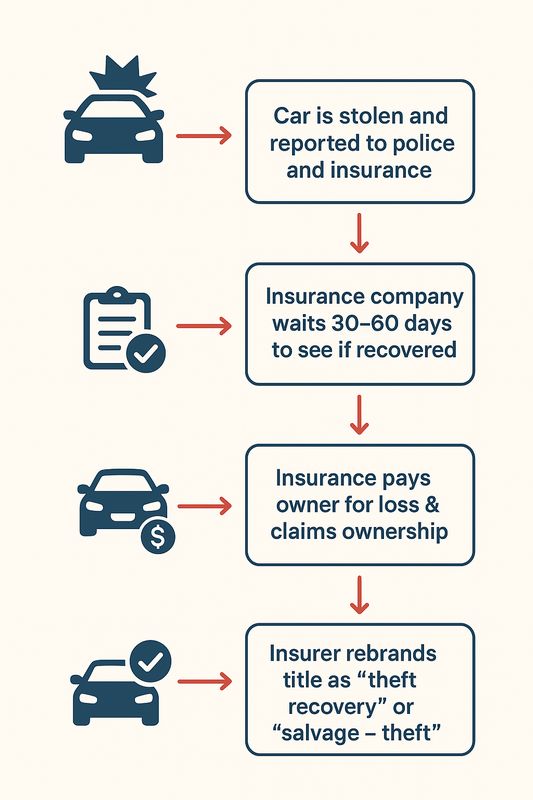
Here’s how it usually happens:
- A car is stolen and reported to the police and the owner’s insurance company.
- The insurance company waits a certain period (often 30–60 days) to see if it’s recovered.
- If the car isn’t found, the insurance company pays the owner for the loss and claims ownership of the stolen car.
- If the car is later recovered — sometimes weeks or even years later — it legally belongs to the insurer, who will then inspect it, repair it if needed, and rebrand its title as “theft recovery” or “salvage – theft” before selling it, often through online auctions.
The process of rebranding a title after recovery
Once recovered, the car must go through a few steps before it can be sold again:
- Inspection: Authorities or state agencies check the car for safety and verify that stolen parts haven’t been replaced illegally.
- Repair (if needed): If the car was damaged or stripped, it’s repaired to meet road standards.
- Title rebranding: The DMV (Department of Motor Vehicles) updates the title from “stolen” to “theft recovery” or “rebuilt,” depending on state laws and the car’s condition.
After this process, the vehicle can be listed for sale — often on platforms like Copart or IAAI — at a much lower price than similar models with clean titles.
Example scenarios of theft-recovered cars
- Example 1: Maria finds a 2019 Toyota Camry with a theft recovery title at an online auction. The car was stolen but recovered untouched just two weeks later. It runs perfectly and costs 30% less than similar models with clean titles.
- Example 2: Jamal buys a 2017 Honda Civic that was missing its seats and stereo after being recovered. He replaces the parts himself and still spends less than he would on a clean-title Civic.
- Example 3: A 2021 Ford F-150 was stolen and found months later with minor scratches and a dead battery. The insurance company had already paid out the claim, so the truck was rebranded as theft recovery and sold at auction for a fraction of its retail value.
When and Why a Theft Recovery Title Is Issued
A theft recovery title isn’t something a car automatically gets the moment it’s stolen. The title depends on how the theft and recovery are handled by insurance companies and state authorities. Understanding this process helps buyers know what kind of car they’re bidding on — and whether it’s a smart deal or a potential headache.
How insurance companies handle stolen and recovered vehicles
When a car is reported stolen, the owner usually contacts both the police and their insurance company. The insurer opens a claim and waits for a certain period (usually 30–60 days) to see if the vehicle is found.
If the car isn’t recovered in time, the insurance company pays the owner the car’s value — this is called a total loss payout. At that point, the insurance company becomes the legal owner.
Later, if the car is recovered, it’s already been “written off” financially. Even if the car is still in great condition, it’s now part of the insurer’s inventory and typically sold through auctions. That’s when the title often changes to “theft recovery.”
This is why buyers can find perfectly drivable cars with this title — they were simply recovered after the payout was processed.
Why some theft-recovered vehicles are labeled “salvage”
Not all theft-recovered vehicles are equal. Some are returned in excellent condition, while others are stripped, damaged, or missing key components.
If a recovered car has significant damage or missing parts, the insurance company marks it as salvage. This title signals that the car needs repairs before it can be legally driven again.
In other cases, even if the car looks fine, it may still be branded as salvage simply because it was paid out as a total loss claim. From a legal standpoint, the insurer already declared the vehicle “beyond economic repair,” even if the actual damage was minor or non-existent.
For budget buyers, this means a salvage theft recovery car could be a hidden gem — but only if you inspect it carefully or get a professional evaluation before purchase.
When a recovered vehicle is still eligible for road use
Not all theft-recovered cars end up as salvage. Some vehicles are recovered quickly, suffer no damage, and can legally stay on the road with only a theft recovery title.
Once the car passes an inspection confirming that:
- It has no structural or safety issues, and
- All identification numbers (like VINs) match the original records,
it can be reissued a rebuildable or rebuilt title and registered for normal use.
These vehicles are often the best finds for auction buyers — they cost far less than clean-title cars but don’t require major repairs or extra paperwork to drive legally.
State laws and title branding differences
One tricky part of buying a theft recovery car in the U.S. is that title rules vary by state. Each state decides how to label and handle recovered vehicles.
For example:
- In California, a recovered stolen car that was paid out by insurance usually gets a “salvage – theft” title, even if it’s undamaged.
- In Texas, a recovered car may keep its clean title if it was found quickly and not declared a total loss.
- Some states require additional inspections before issuing a rebuilt title, while others focus mainly on verifying VINs and ownership.
Theft Recovery vs. Salvage vs. Rebuilt Titles
When shopping for cars on online auctions, you’ll notice different title types — theft recovery, salvage, and rebuilt. They might sound similar, but each title tells a different story about the car’s past. Understanding these labels helps you decide which one offers the best value and what risks come with each purchase.
Key differences between these title types
Let’s break them down simply:
- Theft Recovery Title: The car was stolen and later found. It might have little to no damage, but because an insurance company already paid out a claim, the title is marked as theft recovery. These vehicles often run perfectly fine and just need a basic inspection to confirm they’re roadworthy.
- Salvage Title: This title means the car has been declared a total loss — either because of an accident, flood, fire, or severe damage. The insurance company decided it would cost more to repair than the car’s value. Salvage cars can’t be driven legally until repaired and inspected.
- Rebuilt Title: A rebuilt title is what a salvage car gets after it’s repaired and passes inspection. This means the car is now safe and road-legal again, though it will always carry the rebuilt mark in its history.
So, while a theft recovery title usually signals a past theft rather than physical damage, salvage and rebuilt titles focus on the car’s repair and safety condition.

Which option offers better value for budget buyers
For buyers trying to save money, the best option often depends on how much risk you’re willing to take.
- Theft Recovery Cars: These can be amazing deals because some are barely damaged. You might get a vehicle that’s 20–40% cheaper than a clean-title one simply because it has a “theft” label. It’s perfect for buyers who don’t mind a title mark as long as the car runs well.
- Salvage Cars: These are the cheapest upfront but come with more uncertainty. Repairs can cost more than expected, and not all parts of the damage may be visible until later. They’re better for buyers who have repair experience or access to affordable mechanics.
- Rebuilt Cars: They’re a middle ground — already repaired and ready to drive but still more affordable than clean-title cars. The catch is resale value; rebuilt cars sell for less because of their history.
For most budget-conscious buyers, a theft recovery title offers the best mix of savings and usability — especially if you confirm the car wasn’t seriously damaged.
How damage level determines the title status
The title a car receives depends heavily on how much damage it suffered during or after the theft:
- No or minor damage: The car may simply be given a theft recovery title and remain roadworthy.
- Moderate damage or missing parts: It becomes a salvage title, meaning repairs are required before it can hit the road again.
- Fully repaired and inspected: Once fixed, it can qualify for a rebuilt title.
For example, if a stolen car was recovered with a broken window and missing stereo, it might just be theft recovery. But if it was found without seats, wheels, or an engine, it would likely move into the salvage category.
Can a theft-recovery title be upgraded or cleared?
In most cases, a theft recovery title cannot be cleared completely, even if the car is in perfect condition. The title mark is part of the vehicle’s permanent record. However, some states allow it to be reclassified as rebuilt if the car required repairs and passed inspection.
That said, the car’s history will always show that it was once reported stolen. Buyers should see that as a warning, not a dealbreaker. Many theft-recovered cars perform just as well as clean-title ones — they just come with a lower price tag.
Pros and Cons of Buying a Theft-Recovered Car
Buying a theft-recovered car can be a smart way to save money — but like any deal that looks too good to be true, it comes with pros and cons. Understanding both sides helps you make an informed decision and avoid unpleasant surprises after the purchase.
Pros:
Lower purchase price compared to clean titles
The biggest advantage of a theft-recovered vehicle is the price. These cars are often 20%–40% cheaper than similar models with clean titles. For buyers with a tight budget, that difference can mean upgrading to a newer model or getting a car with better features without overspending.
For example, someone looking for a $10,000 clean-title car might find a theft-recovered version for $6,000–$7,000 in similar condition. That’s real savings that can cover registration, insurance, or even future maintenance.
Often little or no physical damage
Many stolen cars are recovered within days or weeks — and often return almost exactly as they were. Some may have minor cosmetic issues like a broken lock, missing stereo, or scratched paint. Others are completely intact, yet still rebranded because of the insurance claim.
This means you can sometimes buy a car that runs and looks great for a fraction of its normal price. It’s one of the few situations in the used car market where the title history doesn’t necessarily reflect mechanical condition.
Potential for excellent resale if properly maintained
While a theft recovery title will always stay on the record, a well-maintained car can still hold good resale value. If you keep detailed maintenance records, provide inspection reports, and show the vehicle’s solid performance, you can resell it later to another budget-minded buyer.
Since more people are becoming aware of how theft-recovered cars work, the resale gap between clean and theft recovery titles is narrowing, especially for cars with low mileage and no serious damage history.
Cons:
Harder to insure or finance
One of the main challenges with theft-recovered cars is insurance and financing. Some insurance companies refuse to offer full coverage, limiting you to liability only. Others might insure it, but at a higher premium or lower payout value.
Likewise, banks and credit unions are cautious about lending for branded-title vehicles. If you’re planning to buy through financing, it’s best to check with your lender first — otherwise, you might need to pay in cash.
Lower resale value due to branded title
Even if your theft-recovered car runs perfectly, its title history will always affect resale. Many buyers shy away from branded titles, fearing hidden problems. Dealers often offer less on trade-ins, too.
On average, a theft recovery or rebuilt car might sell for 20%–30% less than a clean-title equivalent. That said, if you bought it cheaply enough, you can still come out ahead when you sell it later.
Hidden electrical or interior issues from theft recovery
Not every recovered car comes back untouched. Some have hidden problems caused during the theft — cut wiring, damaged ignition systems, missing sensors, or tampered electronics. Thieves often try to start the car by force or remove valuable parts like airbags or GPS units.
These issues might not be obvious at first glance, but they can lead to costly repairs later. That’s why a pre-purchase inspection is essential before bidding. A certified mechanic can check for electrical damage, missing parts, or VIN tampering — giving you peace of mind before you buy.
Who Buys Theft-Recovered Cars — and Why
Theft-recovered cars attract a special kind of buyer — someone who values smart savings over spotless history. While many car shoppers avoid branded titles out of caution, others recognize the opportunity behind them. These buyers know that with the right inspection and a little patience, a theft-recovered car can deliver excellent value for less money.
Budget-conscious drivers looking for affordable deals
For everyday drivers on a budget, theft-recovered cars are often the most cost-effective way to get behind the wheel of a newer or better-equipped vehicle.
Think of someone who needs a reliable car for work or school but doesn’t want to take out a big loan. A theft-recovered car can offer the same reliability as a clean-title vehicle — at a much lower price. For instance, instead of settling for an older model with high mileage, a buyer might get a newer car with modern features for the same amount.
These buyers usually care more about function than prestige. They’re practical, they do their homework, and they see past the label. As long as the car passes inspection and drives well, the title mark isn’t a dealbreaker.
Car enthusiasts who can inspect and restore cars themselves
Then there are the hands-on enthusiasts — people who love working on cars, restoring them, or finding undervalued gems. For them, a theft-recovered title isn’t a red flag — it’s an opportunity.
These buyers have the skills to spot whether a car truly has issues or if it’s simply branded due to paperwork. A car missing a few interior parts or minor electronics isn’t a problem for them; it’s a weekend project. By repairing or replacing what’s needed, they can restore the vehicle to full condition for a fraction of its retail price.
Car enthusiasts also appreciate the satisfaction of bringing a car “back to life.” A theft-recovered title means they can buy low, fix smart, and drive high value — or even resell later for profit if they choose.
Export buyers seeking savings on international markets
Outside the U.S., theft-recovered and other branded-title cars are in high demand among export buyers. In many countries, the title branding doesn’t carry the same stigma it does in the U.S. Once exported, the car is re-registered under local regulations, often without the “theft recovery” label.
This makes these vehicles highly attractive for exporters and international dealers, who can buy them cheaply at U.S. auctions like Copart or IAAI, then sell them overseas at a strong margin.
Export buyers focus on the car’s condition, make, and model, not its title history. For them, the lower auction price creates a wide profit window — especially for popular brands like Toyota, Honda, Ford, or BMW, which have strong resale markets abroad.
What to Check Before Buying a Theft-Recovered Vehicle
Buying a theft-recovered vehicle can save you thousands, but only if you know what to look for. While many of these cars are in good shape, others might hide issues that aren’t visible in photos or auction listings. Taking the time to verify the car’s history, condition, and paperwork will protect your investment and help you spot the true bargains.
Request a full vehicle history report (Carfax, AutoCheck, etc.)
Your first step should always be to check the vehicle’s history using trusted sources like Carfax, AutoCheck, or the National Motor Vehicle Title Information System (NMVTIS). These reports show when and why the car was branded as theft recovery, how long it was missing, and whether it’s had previous accidents or insurance claims.
A clean report can confirm that the car was simply stolen and recovered quickly — with no structural or flood damage. On the other hand, if you see multiple title transfers, salvage branding, or inconsistent odometer readings, that’s a sign to proceed with caution.
A $40 history report can save you thousands in unexpected repairs or legal complications later.
Inspect for hidden or cosmetic damage from theft or recovery
Even if the auction listing says the car is “recovered in good condition,” don’t assume it’s perfect. Stolen cars are often tampered with, and thieves may cause hidden damage while trying to start or strip the vehicle.
Check for:
- Scratches or dents around doors, locks, and ignition
- Missing airbags, stereos, or navigation units
- Replaced windows or damaged interior panels
- Signs of water exposure if the car was abandoned outdoors
Many of these issues are fixable, but you’ll want to factor repair costs into your total budget before buying.
Verify VIN and ownership documentation
Always make sure the Vehicle Identification Number (VIN) on the car matches the one on the title, dashboard, door frame, and engine bay. In rare cases, stolen vehicles may have tampered or replaced VIN plates — a serious red flag that can cause legal trouble later.
It’s also wise to confirm that the seller or auction house legally owns the vehicle. On legitimate auction platforms like Copart or IAAI, ownership is usually transferred through the insurance company, so the documentation is secure. Still, double-check that all paperwork is complete and accurate before finalizing the deal.
Compare market prices and repair estimates
A great price isn’t always a great deal. Before bidding, compare prices of similar models with clean titles to understand how much you’re really saving. Theft-recovered cars should be 20–40% cheaper than clean-title equivalents to justify the branded title.
If the vehicle needs repairs — for example, a new ignition, locks, or cosmetic fixes — get estimates from a trusted repair shop. Knowing the potential costs upfront helps you set a bidding limit and avoid overpaying for a car that might require more work than expected.
Consider a mechanic’s inspection before bidding or purchase
If possible, arrange for a professional mechanic to inspect the car before you buy — especially if it’s a high-value or newer model. Many auction yards allow pre-bid inspections for a small fee.
A qualified mechanic can spot electrical issues, missing safety components, or poor-quality repairs that aren’t visible in photos. They can also confirm that the engine, transmission, and major systems are working properly.
Even if you can’t inspect it in person, hiring a local inspector near the auction site is a small investment that can prevent big losses.
Insurance and Financing for Theft-Recovered Cars
Insurance and financing are two of the most common concerns for buyers of theft-recovered vehicles. While these cars can offer big savings, they also come with limitations when it comes to coverage and loans. Understanding how insurers and lenders treat branded titles will help you plan ahead, avoid rejections, and make sure your purchase stays a smart investment.
Will insurance cover theft-recovered cars?
Yes — but not always in the way you expect. Most insurance companies do cover theft-recovered vehicles, though coverage options are often more limited than for clean-title cars.
In general, you can expect to get liability coverage without much trouble. This basic protection covers damage you cause to others but doesn’t include repairs to your own car.
However, getting comprehensive or collision coverage can be more difficult. Some insurers hesitate because they can’t accurately assess the vehicle’s risk or resale value after recovery. Others may agree to cover it but offer reduced payouts in case of another claim.
For example, if your theft-recovered car is valued at $12,000 but the insurer discounts it by 30% due to the title history, you’d only be covered for $8,400 in the event of another loss.
Financing challenges with branded titles
Banks and credit unions are generally cautious about financing cars with branded titles, including theft recovery. From a lender’s perspective, these vehicles carry lower resale value and higher risk if the borrower defaults.
As a result, many buyers need to pay in cash or use personal loans rather than traditional auto financing. Some smaller lenders or online financial institutions may approve loans for branded-title cars, but they often require:
- A larger down payment (25–40%)
- Higher interest rates
- Shorter loan terms
If you’re planning to buy a theft-recovered car through an online auction, it’s best to secure your financing before bidding — or budget to pay in full at the time of purchase.
How to find insurers that accept theft-recovered vehicles
While some major insurance companies limit coverage for theft-recovered titles, others specialize in insuring rebuilt, salvage, and branded vehicles.
Look for companies or agents with experience handling non-standard policies. Regional insurers and independent agencies tend to be more flexible than national corporations. They may also take the time to review the vehicle’s inspection report or repair records before making a final decision.
When shopping for quotes, always provide:
- The vehicle’s full VIN and title status
- Any inspection certificates
- Photos or documentation of repairs (if applicable)
This transparency helps insurers understand that your car is safe and properly restored, which can lead to better rates and coverage options.
Tips for getting fair coverage and premiums
To improve your chances of getting affordable insurance for a theft-recovered car:
- Provide detailed documentation. Show proof of repairs, inspection results, and maintenance history. Insurers are more likely to cover a car that’s been clearly verified as roadworthy.
- Get multiple quotes. Compare offers from at least three companies — coverage and pricing can vary widely for branded titles.
- Bundle policies. If you already have home or renter’s insurance, adding your car policy with the same company may qualify you for a discount.
- Choose a higher deductible. This can lower your monthly premium while still protecting against major losses.
- Avoid exaggerating the vehicle’s value. Insurers base coverage on the car’s current market worth, not the price you paid or its clean-title equivalent.
Reselling a Theft-Recovered Vehicle: What to Expect
Selling a theft-recovered car is not as straightforward as selling one with a clean title, but it’s absolutely possible — especially if you’ve maintained the vehicle well and are transparent about its history. Buyers are becoming more informed about branded titles, and many are willing to consider them if the price and condition make sense. Knowing how title branding affects resale value and how to present your car the right way can help you get a fair deal.
How title branding affects resale value
A theft-recovery title always leaves a mark on a car’s resale value. Even if your vehicle looks and runs perfectly, the title branding signals to potential buyers that it was once stolen — and that history alone can make some people hesitant.
Typically, theft-recovered cars sell for 20% to 40% less than comparable models with clean titles. The exact discount depends on:
- The car’s make, model, and age
- How long it was missing before recovery
- Whether it suffered any damage or needed repairs
- How well it’s been maintained since the recovery
While this lower resale value can be frustrating, it’s also part of what made the car affordable in the first place. The key is to minimize the perceived risk for your future buyer through honesty and documentation.
Best ways to advertise and disclose the vehicle’s history
When it’s time to sell, the best approach is complete transparency. Trying to hide the theft-recovery title will only backfire, since buyers can easily check the title through Carfax or other databases.
Instead, include the title status clearly in your listing, for example:
“2019 Toyota Camry — Theft-Recovered Title, Excellent Condition, No Damage, Fully Inspected.”
Be upfront but reassuring. Focus on the positive aspects: the car’s clean history since recovery, low mileage, strong performance, and recent maintenance. Add clear photos of the exterior, interior, and engine bay, and include the VIN so buyers can run their own report.
Honest listings attract serious, informed buyers — especially those who understand how branded titles work and are looking for a good deal.
When theft-recovered cars can still appeal to buyers
Despite the title stigma, many buyers are open to theft-recovered vehicles if the condition and price are right. These buyers include:
- Budget-conscious drivers who value savings over brand perception.
- Mechanics and car enthusiasts who recognize a good mechanical deal.
- Export buyers, who often don’t face title branding restrictions overseas.
A theft-recovered car can also appeal to local buyers looking for reliable daily drivers, especially when it’s been maintained well and shows no signs of electrical or cosmetic issues.
If your car is in great condition, passes inspections, and comes with a detailed history report, it can stand out as one of the better-value options in the used car market.
Restoring trust with documentation and maintenance records
The most effective way to overcome buyer hesitation is through proof — detailed records that show your car’s reliability and care.
Include the following documents when selling:
- Vehicle history report (Carfax, AutoCheck, or NMVTIS)
- Inspection reports from a licensed mechanic
- Repair receipts for any parts replaced after recovery
- Maintenance logs showing regular oil changes, tire rotations, and service visits
- Photos of before-and-after repairs (if applicable)
Providing this paperwork builds confidence and demonstrates that the car has been responsibly owned and maintained since recovery.
Buyers appreciate transparency, and documented proof can often reduce the impact of the branded title — helping you sell faster and closer to your asking price.
Buying Theft-Recovered Vehicles at Online Auctions
Online car auctions have transformed the way people buy used vehicles, especially those with branded titles like theft-recovered cars. These platforms connect buyers directly with insurance companies, banks, and dealers — cutting out middlemen and offering prices that traditional dealerships can’t match. For smart buyers, this means an opportunity to get reliable vehicles at a fraction of their usual market value.
Why online auctions offer the best deals
Theft-recovered cars often enter the auction market through insurance settlements. Even if the vehicles are found undamaged, insurance companies may not return them to their original owners — instead, they sell them quickly to recover costs. This leads to significant discounts, sometimes 30–60% below retail prices.
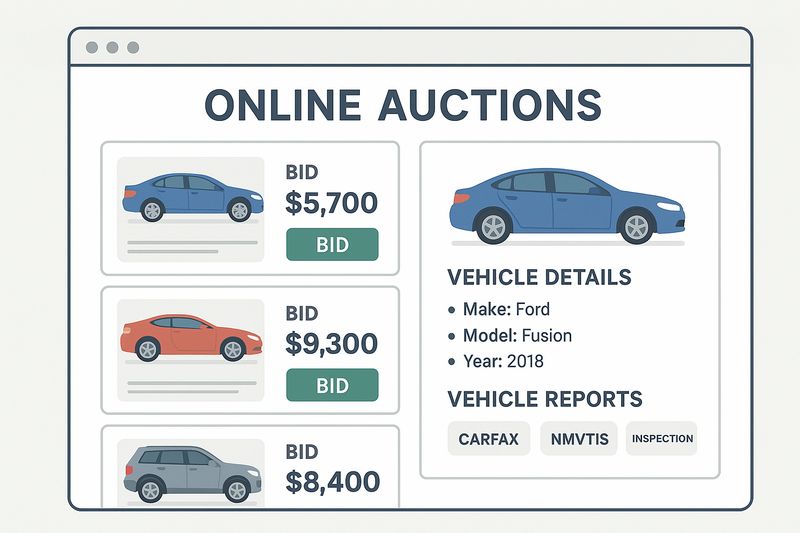
Online auctions let you:
- Compare hundreds of listings instantly across different makes, models, and years.
- Access vehicle reports (Carfax, NMVTIS, or internal inspection notes).
- Bid in real time from anywhere, without needing a dealer’s license (on some platforms).
This transparency and accessibility make auctions the go-to choice for buyers looking to save on theft-recovered cars while still getting quality vehicles.
Trusted auction platforms for theft-recovered vehicles
Not all online auctions are created equal. Some platforms specialize in salvage and theft-recovery vehicles, offering verified listings and export support. Among the most trusted options are:
- Copart – One of the world’s largest vehicle auction sites, with a huge inventory of theft-recovered, salvage, and clean-title cars. Offers global shipping and live bidding.
- IAAI (Insurance Auto Auctions) – Known for its wide selection of insurance-claimed vehicles, detailed condition reports, and reliable bidding system.
- ACV Auctions – A growing U.S. platform offering dealer-grade inspections and digital transparency.
These platforms ensure that listings are legitimate and provide buyers with detailed photos and condition information — crucial when purchasing a theft-recovered vehicle remotely.
Bidding tips for first-time buyers
Buying at auction can be exciting, but it’s also competitive. To avoid costly mistakes, follow these essential tips:
- Set a clear budget before bidding — include buyer fees, taxes, and shipping.
- Review the vehicle report carefully to understand title type, damage notes, and recovery details.
- Check market prices for similar clean-title cars to gauge the true value of your potential savings.
- Watch a few live auctions before bidding to understand timing and patterns.
- Don’t get caught in bidding wars — emotional overbidding can erase your discount.
- Ask about inspection options, especially if the car is stored at a nearby yard.
Smart bidders treat auctions like data-driven purchases, not impulse buys. With preparation and patience, you can win a great deal without unnecessary risks.
Shipping and export options for international customers
Online auctions aren’t just for U.S. buyers — they’re a major gateway for international car importers looking for affordable inventory. Many platforms now offer integrated shipping and export services to simplify the process.
Typical steps for international buyers include:
- Winning the bid and completing payment.
- Arranging domestic transport from the auction yard to the nearest port.
- Choosing container or RoRo (roll-on/roll-off) shipping, depending on vehicle type.
- Completing customs documentation with the help of the platform or a logistics partner.
Popular export destinations for theft-recovered cars include Europe, the Middle East, and Africa, where branded titles often carry less stigma.
To streamline the process, some buyers partner with logistics companies like EasyHaul, CFR Rinkens, or YK Freight, which handle pickup, shipping, and delivery coordination from start to finish.
Common Misconceptions About Theft-Recovered Titles
Theft-recovered titles often carry a negative reputation, but not all assumptions about these vehicles are accurate. Many buyers avoid them because of myths and misunderstandings, missing out on cars that are actually reliable and affordable. Separating fact from fiction is essential for anyone considering a theft-recovered car.
“All theft-recovered cars are damaged” — not always true
One of the most common misconceptions is that theft-recovered cars are automatically damaged or unsafe. In reality, many stolen vehicles are recovered quickly and returned in excellent condition. Some may have only minor cosmetic issues like a scratched door, a broken lock, or missing stereo components.
For example, a 2020 Honda Civic might be stolen and recovered within a week with no mechanical or structural damage, yet it will still carry a theft-recovered title. The title reflects the insurance claim process, not necessarily the car’s physical state. Buyers who inspect these vehicles carefully often find fully functional, safe cars at a lower price than clean-title equivalents.
“They can’t be insured or registered” — depends on the state
Another myth is that theft-recovered cars cannot be insured or legally driven. While some insurers are cautious and may limit coverage options, many companies do offer liability, collision, and comprehensive insurance — though premiums and payouts might differ from clean-title cars.
Registration rules also vary by state. Some states allow a theft-recovered car to be registered normally after passing inspection, while others require additional steps, such as safety or emissions checks. A car with a theft-recovered title can often be driven legally once it meets local regulations.
“They’re impossible to resell” — wrong with proper paperwork
Many people assume that a theft-recovered title makes a car unsellable. In truth, these vehicles can be resold successfully if the seller is transparent and provides proper documentation. A detailed vehicle history report, inspection records, and maintenance receipts can reassure potential buyers about the car’s condition.
While resale value may be lower than a clean-title car — typically 20–40% less — a well-maintained theft-recovered vehicle can still attract budget-conscious buyers, enthusiasts, or export customers. The key is honesty and documentation, which helps restore trust and makes the car easier to sell.
Final Thoughts: Is a Theft-Recovered Car Worth It?
Deciding whether to buy a theft-recovered car comes down to understanding the risks, evaluating the savings, and knowing how to navigate auctions and inspections. For many budget-conscious buyers, these vehicles can offer substantial value — but only if approached carefully and strategically.
When buying a theft-recovery title makes financial sense
Purchasing a theft-recovered vehicle makes the most sense when the discount outweighs potential risks. For example, if a car is 25–40% cheaper than a clean-title equivalent and has minimal or no damage, the savings can be significant. This is particularly appealing for:
- Daily drivers who need a reliable car at a lower cost
- Buyers willing to perform minor repairs or cosmetic updates themselves
- Export customers who can sell or register the vehicle in markets with fewer restrictions
In essence, a theft-recovered car is financially sensible if the price difference justifies extra precautions, such as inspections or minor repairs, and the buyer is prepared for slightly lower resale value.
How to balance savings with long-term reliability
Savings are important, but a low price shouldn’t come at the expense of reliability. Before buying:
- Check vehicle history reports for accidents, claims, or odometer inconsistencies
- Inspect for hidden damage from theft or recovery
- Verify VIN and ownership documents
- Consider a professional mechanic’s evaluation
By following these steps, buyers can minimize risks and ensure that the car remains a dependable long-term investment, not just a bargain purchase.
Why auctions can be the smartest route for budget-conscious buyers
For budget-conscious buyers, online auctions like Copart, IAAI, often provide the best deals on theft-recovered vehicles. Auctions allow buyers to:
- Access a wide selection of vehicles at competitive prices
- Review detailed condition reports and photos before bidding
- Save money by cutting out dealership markups
- Utilize export and shipping services if buying from abroad
When approached strategically, auctions let buyers turn title branding into savings without compromising safety or quality. With careful research, inspection, and bidding strategy, a theft-recovered car purchased at auction can be a smart, cost-effective way to get more car for less money.
Are you interested in buying a vehicle from Online Auto Auctions?
With this being said – you can still export vehicles and save up a few thousand dollars with Bidndrive. We have an inventory of over 150k plus vehicles with titles you can export for you to choose from. Once you have placed your bid and won the auction a Bill of Sale document is then emailed to you as proof of purchase – after full payments have been made.
To gain access and get started on your purchase, sign up for free.
Further Reading:
Salvage Titles Due to Theft: What It Means for Buyers
Salvage Title: What Does It Mean and Should You Buy One?
Navigating Title Types: A Guide to Clean, Rebuilt, and Salvage Titles for Smart Buyers
Should You Buy a Car with a Salvage or Rebuilt Title?
Frequently Asked Questions
- Is it worth buying a theft recovery car?
- Why does theft cause salvage titles?
- What happens when a car is stolen and recovered?
- What happens to the title of a stolen car?